Got a pint of fresh blueberries that you just can't finish before they turn? Instead of watching them soften and mold in the fridge, you can transform them into a shelf-stable, intensely flavored snack in just a few hours. Dehydrating blueberries in an air fryer is one of the easiest ways to preserve the season, and the results are far tastier than anything you'll find in a store-bought bag.
This guide walks through the entire process: selecting berries, prepping them correctly, dialing in the right temperature, and knowing exactly when they're done. No guesswork, no soggy results — just perfectly chewy, concentrated berries every time. You can also read our guide on best blender for protein shakes.
Why Dehydrate Blueberries? 3 Key Benefits You'll Love
1. Nutrients Stay Concentrated
When you remove water from a fresh blueberry, you don't remove its nutritional value. Dehydrated blueberries retain most of their dietary fiber, vitamin C, vitamin K, and a healthy dose of antioxidants. The USDA FoodData Central confirms that dried blueberries keep a strong nutritional profile because the dehydration process simply removes water — it doesn't strip away the beneficial compounds.
In practice, this means a small handful of dried berries gives you a concentrated boost. Remember that the fiber and sugars become more concentrated too, so portion control is smart. You can also read our guide on what to look for when buying an air fryer.
2. Extends Shelf Life Dramatically
Fresh blueberries typically last around one to two weeks in the refrigerator. Dehydrated blueberries, properly stored, stay good for months — often up to a year in ideal conditions. You free up fridge space, cut down on food waste, and always have a healthy snack or baking ingredient on hand, no matter the season.
3. Incredible Versatility in the Kitchen
Once dried, blueberries become a pantry workhorse. They'll add bursts of tart-sweet flavor to your morning oatmeal, yogurt, or smoothie. They're perfect for baked goods — think muffins, scones, and pancakes where rehydrated berries won't turn the batter blue. They also make an excellent addition to trail mix, granola, and salads, where their chewy texture and concentrated taste really shine. For more on this, see our guide on frozen cheese sticks in air fryer.
How to Choose the Best Blueberries for Dehydrating
Your final product's quality depends entirely on your starting berries. Look for fruit that is:
- Firm and plump — they should not be wrinkled or leaking juice
- Deep blue with a silverish bloom — this natural dusting indicates freshness
- Uniformly sized — consistent berry size leads to even drying
- Free from bruises, spots, or mold
Avoid berries that feel mushy, look dull, or smell overly sweet or fermented. If you can, buy from a local farmers market; berries in season are typically firmer and more flavorful than imported ones. Slightly underripe berries work fine for dehydrating because moisture removal concentrates their natural tartness. Organic berries are a good choice if you want to minimize exposure to pesticide residue; just look for official certification labels if that's important to you.
Step 1: Wash and Prep Blueberries for Dehydrating in an Air Fryer
Proper prepping makes the difference between berries that dry evenly and berries that shrink into hard pellets.
Rinse and Dry Thoroughly
Rinse the blueberries under cool running water, gently swishing them to dislodge any dirt or debris. Discard any that look bruised or have begun to mold — one bad berry can affect the drying batch. After rinsing, the single most important step: pat them completely dry with a clean kitchen towel or paper towels. Any lingering moisture on the outside dramatically increases drying time and can lead to uneven results. For more on this, see our guide on best way to air fryer steak.
The Key Step: Puncture the Skin
Here's a professional trick. Blueberries have a naturally waxy skin that moisture struggles to escape through. If you dehydrate them whole without pre-treatment, the outside dries first and can trap moisture inside, which leads to shriveled exteriors and under-dried centers.
Take a toothpick or a clean needle and gently pierce each berry once or twice. It's tedious but worth it. If you're processing a large batch, you can skip the individual work and pour the berries onto a cutting board, then gently roll a rolling pin over them — not enough to crush, just enough to crack the skins. This simple step allows steam to escape, resulting in faster, more uniform drying. For more on this, see our guide on when to use air fryer liners.
Some people also dip berries in a lemon juice and water mixture (roughly one tablespoon of lemon juice per cup of water) to help preserve their bright color. Others use a light sugar syrup dip for a sweeter result. Both are optional; plain berries dry wonderfully without any pre-treatment.
 A single layer of prepared blueberries, punctured and dry, ready to load into the air fryer basket.
Step 2: Set Up Your Air Fryer for Blueberry Dehydration
Not all air fryers dehydrate equally, so understanding your machine is the first step.
Find the "Dehydrate" Setting or Set a Low Temperature
Most modern air fryers come with a dehydrate function that automatically runs at a low temperature, usually around 135–140°F. If your model lacks this preset, you can manually set the temperature. For blueberries, aim for 135°F (57°C) . Resist the urge to crank it up. Higher temperatures will cook the berries rather than dehydrate them, turning them into sticky burnt-sugar raisins with a bitter flavor.
Use the Right Accessories
The standard air fryer basket often works, but a dehydrator rack or a perforated tray is far superior. These accessories promote maximum air circulation, which is the heart of the dehydration process. If you have them, stack racks allow you to dry multiple batches at once evenly. If not, a single layer in your existing basket will do — just be prepared for a bit of rotating.
Step 3: The Foolproof Dehydrating Method (Step-by-Step)
Now you're ready for the main event. Follow these steps carefully for perfect results.
Dry at the Right Temperature
Place the prepared blueberries in a single layer on your air fryer rack or tray. Crucially, leave space between the berries. They shouldn't be touching; airflow is what does the work. Overcrowding traps moisture and extends drying time considerably.
Set your air fryer to 135°F. If your machine's minimum temperature is higher (some only go down to 150°F), that still works; just check your berries slightly more frequently.
The Time Factor
This is where patience pays off. Dehydrating blueberries takes between 8 and 12 hours in an air fryer, depending on the model, humidity, and berry size. This is significantly longer than roasting or baking, which is why a dedicated dehydrate function is so handy — your machine runs low and slow without you having to watch it.
Rotate and Monitor
Every 2–3 hours, open the air fryer and give the basket a good shake or gently turn the berries. This encourages even moisture evaporation. You'll notice the blueberries gradually shrivel and darken. After about 6 hours, start checking them every 30 minutes. They are done when they feel leathery and slightly chewy — not crunchy like a cracker, but not sticky or soft either.

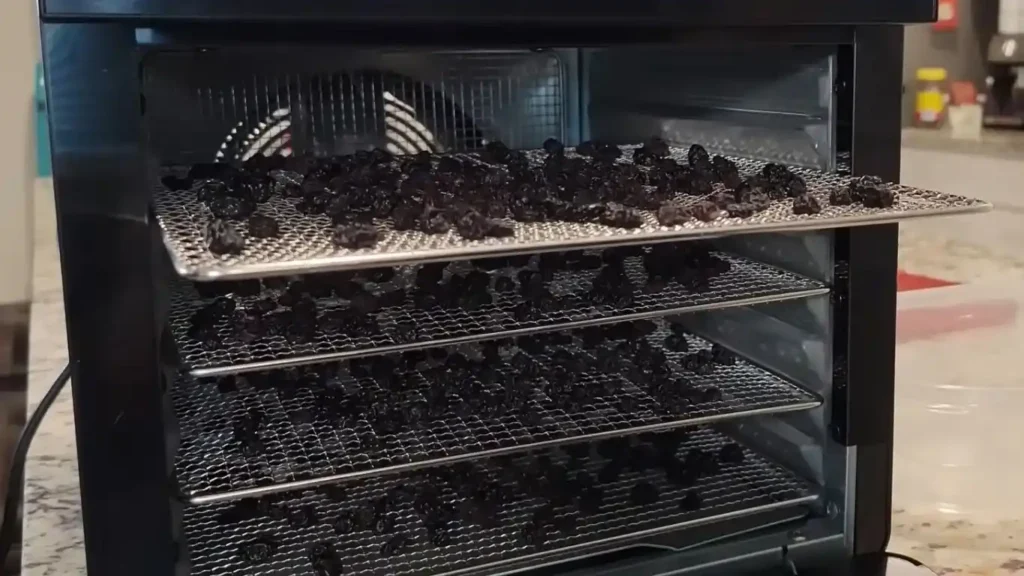
Credit: recipethis.com Finished dried blueberries will look shriveled, dark, and feel leathery with no wet spots inside when cut open.
How to Tell If Dehydrated Blueberries Are Done
The biggest mistake is pulling them too early. Here's how to be certain.
The Cut-Open Test
The most reliable check is to remove one berry from the air fryer, let it cool for a minute, and cut it in half with a sharp knife. If you see any liquid or visual moisture inside, it needs more time. A fully dehydrated blueberry will have a dense, uniform interior with no visible wetness.
The Texture Test
Press the berry between your fingers. It should feel leathery, not sticky. If it's soft with a chewy center, it's under-dried. If it crumbles or feels like hard plastic, you've over-dried it — which is still edible, just less enjoyable.
Don't Over-Dry
There's a fine line between "perfectly chewy" and "tough." Over-dried blueberries lose their pleasant texture and flavor intensity. The good news: because individual berries vary, a few over-dry while others might be perfect. This is normal. Remove the berries as they finish drying.
 Testing dried blueberries for the leathery, no-moisture texture that signals they're ready to cool and store.
How to Store Dehydrated Blueberries for Long-Term Freshness
Proper storage is what converts your hard work into a pantry staple that lasts.
Equipment Needed
You'll need:
- Airtight containers — glass mason jars, or high-quality resealable plastic bags
- Oxygen absorbers (optional) — these help extend shelf life considerably, especially for long-term storage
- Labels to note the date
The Cooling Step
Before you seal anything up, let the dehydrated blueberries cool completely to room temperature. Sealing warm berries creates condensation inside the container, which introduces the moisture you just worked so hard to remove — and that can cause mold.
Storage Conditions
Store your containers in a cool, dark, dry place — a pantry or cupboard away from the stove and oven is ideal. Avoid direct sunlight and humid areas. Why is temperature stability important? Fluctuations can cause condensation inside the container, which degrades quality over time. The National Center for Home Food Preservation recommends this environment for all dried goods; you can review their detailed drying guidelines for more about proper food preservation practices. Properly stored, dehydrated blueberries will keep for six months to a year, though they'll likely be long gone by then.
How to Rehydrate Dehydrated Blueberries
Dehydrated blueberries are a fantastic snack as-is, but you'll often want to rehydrate them for baking or cooking.
- Quick soak: Cover them with hot (not boiling) water and let them sit for 10–15 minutes until plump.
- In baking: Use the liquid they were soaked in to replace part of the liquid in your recipe. This adds a lovely blueberry flavor to your batter.
- In oatmeal: Toss them in with your oats and water at the start of cooking — the moisture is absorbed as everything heats up.
Using Dehydrated Blueberries in Your Everyday Cooking
Back in the kitchen, you can also fold them into your favorite muffin batter for a concentrated berry burst without the soggy texture fresh berries sometimes cause. When you're learning to bake without standard equipment, these dried bites offer flexibility.
Beyond baking, dried blueberries are incredibly convenient:
- Top them on yogurt or granola for a quick breakfast
- Mix into trail mix with nuts and dark chocolate chips
- Add to salad for a sweet-tart texture
- Blend into smoothies — they work from dried, no soaking required
- Fold into pancake or waffle batter for an easy flavor boost
- Create homemade energy bars or add to baked oatmeal
They're also perfect for snacking straight from the jar — sweet, chewy, and satisfying without added sugar.
FAQs: Dehydrating Blueberries in an Air Fryer
How Long Does It Take to Dehydrate Blueberries in an Air Fryer?
It typically takes 8 to 12 hours. The exact time depends on the model, berry size, and how much moisture is in the fruit. Always check for doneness by texture and the cut-open test, not just the clock.
Do You Need to Pre-treat Blueberries Before Dehydrating?
Yes, lightly piercing or puncturing the skin is essential. This allows moisture to escape and prevents the skins from hardening while the centers remain moist. You can skip this technically, but you'll take longer and risk under-dried berries.
What Temperature Is Best for Dehydrating Blueberries?
Set your air fryer to 135°F (57°C). This low heat removes moisture gradually without cooking the berries. Keeping the temperature low also helps preserve heat-sensitive vitamins like vitamin C.
Can You Dehydrate Frozen Blueberries in an Air Fryer?
Yes, you can. Thaw them completely first, then pat them very dry with paper towels before following the same prep and dehydration process. Frozen berries will be softer and may need slightly less drying time.
How Should I Store Dehydrated Blueberries?
In an airtight container or resealable bag, kept in a cool, dark, dry place. This preserves their texture and extends their shelf life for months.
Are Dehydrated Blueberries Still Nutritious?
Yes. They retain most of their vitamins, fiber, and antioxidants. The primary change is water removal, which concentrates the nutrients — and the sugars — in a smaller package.
Final Thoughts: Enjoying Air Fryer Dehydrated Blueberries
Making your own dehydrated blueberries in an air fryer turns a fleeting seasonal fruit into a year-round kitchen staple. The process rewards patience: careful prep, a low temperature, and a watchful eye are all it takes.
Once you master the basic method, don't be afraid to experiment. Toss your prepared berries in a little cinnamon before drying for a spiced twist. Use them as a replacement for raisins in any recipe. And if you're craving the perfect homemade granola or baked goods to use them in, our roundup of top-rated muffin pans will help you get great results every time.
Happy snacking, and enjoy the incredible flavor of summer — in any season!