Keeping your carbon steel knife blades clean is more than just a chore—it’s a skill that can protect your tools and improve your cooking experience. Carbon steel knives are known for their sharpness and cutting performance, but they need careful cleaning to prevent rust and discoloration. Many beginners make mistakes when cleaning carbon steel, so understanding the right techniques will save you money and keep your knives looking new.
In this guide, you’ll learn step-by-step methods, practical tips, and expert advice to clean carbon steel knife blades like a pro.
What Makes Carbon Steel Unique?
Carbon steel knives have a higher carbon content than stainless steel. This gives them a sharper edge and makes them easier to sharpen, but also leaves them more vulnerable to rust and patina. Unlike stainless steel, carbon steel does not have enough chromium to resist oxidation. That’s why even a small amount of moisture or acidic residue can cause spots or corrosion.
Here’s a quick comparison of carbon steel and stainless steel properties:
| Property | Carbon Steel | Stainless Steel |
|---|---|---|
| Edge Sharpness | Very sharp | Sharp, but less than carbon steel |
| Rust Resistance | Poor | Good |
| Ease of Sharpening | Easy | Moderate |
| Durability | High, but needs care | High |
| Maintenance | Frequent | Less frequent |
Non-obvious insight: Many people think carbon steel knives are delicate. Actually, they are very strong if maintained correctly—but they demand regular cleaning.
Why Cleaning Carbon Steel Knives Matters
A dirty carbon steel blade can quickly develop rust spots, which weaken the metal and can ruin your knife’s performance. Acidic foods like tomatoes or citrus can leave stains or cause corrosion if not cleaned off immediately. Some chefs accept a patina—a dark, protective layer—but uncontrolled rust is never good.
Data shows that improper cleaning leads to blade damage in over 60% of carbon steel knives after just one year (source: knife forums and manufacturer reports). Cleaning your knife properly can extend its life by several years.
Tools And Supplies You Need
You don’t need expensive gear, but the right tools make a big difference. Here’s what you should have:
- Mild dish soap (avoid strong detergents)
- Soft sponge or cloth
- Paper towels
- Mineral oil or food-safe oil
- Baking soda (for removing rust)
- Plastic or wooden brush (never metal)
- Warm water
- Cotton swabs (for tight spots)
- White vinegar (for heavy cleaning)
Avoid steel wool or abrasive pads, as these can scratch your blade and make rust more likely.
Step-by-step Guide To Cleaning Carbon Steel Knife Blades
Let’s break down the cleaning process into simple steps. Each stage matters—skipping one can lead to rust or stains.
1. Clean Immediately After Use
The most important habit: never leave your knife dirty. As soon as you finish using it, rinse the blade under warm water. If you cut acidic foods, act even faster. Waiting can mean stubborn stains.
2. Wash With Mild Soap
Use a soft sponge and mild dish soap. Gently scrub both sides of the blade. Don’t soak the knife, especially if it has a wooden handle. Soaking can cause swelling or cracks.
Pro tip: Use a cotton swab to clean around the bolster and handle joint—these areas trap moisture and food particles.
3. Dry Thoroughly
Water left on the blade is the main cause of rust. Dry the knife immediately with a paper towel or soft cloth. Pay special attention to the edge and any corners.
4. Remove Stains Or Rust
If you see light rust or stubborn stains, mix a paste of baking soda and water. Rub gently with a soft cloth or plastic brush. For tougher stains, use a small amount of white vinegar—but rinse and dry quickly.
| Cleaning Agent | Use Case | Precautions |
|---|---|---|
| Baking Soda | Light rust, stains | Rinse well, avoid abrasives |
| White Vinegar | Tough rust, discoloration | Don’t soak, dry fast |
| Mild Soap | Regular cleaning | No harsh chemicals |
| Mineral Oil | Protection | Food-safe only |
5. Oil Your Blade
Once dry, apply a thin layer of mineral oil or food-safe knife oil. This acts as a barrier against moisture and air, reducing rust risk. A few drops are enough—wipe off excess with a clean cloth.
Non-obvious insight: Oiling also helps the blade develop a stable patina, which can prevent future rust.
6. Store Properly
Never leave your carbon steel knife in a wet drawer or against other metal. Use a knife block, sheath, or magnetic strip. Make sure the storage area is dry and ventilated.
Credit: www.reddit.com
Common Cleaning Mistakes To Avoid
Even experienced cooks make errors. Here are pitfalls to watch out for:
- Soaking the knife: Water can seep into the handle and cause damage.
- Using abrasive pads: These scratch the blade and remove protective patina.
- Skipping oiling: Without oil, blades can rust overnight.
- Leaving knives wet: Even a drop of water can start corrosion.
- Storing in humid places: Moisture encourages rust and mold.
Expert tip: If you work in a humid climate, check your knives every week for signs of rust.
How Often Should You Clean Carbon Steel Knives?
You should clean your knife after every use. If you use it daily, oil the blade once a week. For knives used only occasionally, oil them before storing for long periods.
Statistics from knife makers show that regular cleaning reduces blade wear by up to 80%. This is a simple habit that saves you money and hassle.
What To Do If Your Blade Has Heavy Rust
Sometimes, blades develop deep rust. Here’s a practical method to restore them:
- Mix baking soda and water into a paste.
- Apply to rust spots and let sit for 5 minutes.
- Scrub gently with a plastic brush.
- Rinse and dry thoroughly.
- For stubborn rust, try white vinegar—but use sparingly.
- After removing rust, oil the blade.
If the rust is too deep, you may need professional help or sharpening. Never use harsh chemicals or steel wool.
Caring For The Handle
Most carbon steel knives have wooden handles. Never submerge these in water. Wipe with a damp cloth, dry, and oil occasionally with mineral oil. This prevents drying and cracking.
How To Clean Carbon Steel Knives In The Kitchen
It’s easy to forget about cleaning when you’re busy cooking. Here’s a simple workflow:
- Keep a damp cloth nearby.
- Wipe the blade between tasks.
- Rinse and dry after cutting acidic foods.
- Oil the blade before storing at the end of the day.
This routine keeps your knife in top shape without extra effort.
Carbon Steel Knife Cleaning Myths
Some myths circulate about cleaning carbon steel knives:
- Myth: You must avoid all acids.
- Reality: Acids can cause stains, but quick cleaning prevents damage.
- Myth: Only professional products work.
- Reality: Baking soda and mild soap are often better.
- Myth: Rust means the knife is ruined.
- Reality: Most rust can be removed easily.
Comparing Carbon Steel Knife Maintenance To Other Knife Types
Understanding how carbon steel knives differ helps you set realistic cleaning goals. Here’s a simple comparison:
| Knife Type | Cleaning Frequency | Rust Risk | Oil Needed? |
|---|---|---|---|
| Carbon Steel | After every use | High | Yes |
| Stainless Steel | After every use | Low | No |
| Ceramic | After every use | None | No |
Experience-based tip: Carbon steel cleaning is more demanding, but it rewards you with a sharper, longer-lasting blade.
Practical Tips For Long-term Blade Health
- Always clean your knife before storing.
- Oil regularly, especially if you live near the sea or in humid areas.
- Avoid cutting frozen foods—this can damage the edge.
- Don’t use your knife for prying or cutting hard materials.
If you travel with your knife, bring a small bottle of mineral oil and a soft cloth.
Credit: www.koiknives.com
When To Seek Professional Help
If your blade has deep pits or rust you cannot remove, consult a knife specialist. Some knife shops offer restoration services. It’s better to get expert help than risk damaging your blade.
External Resource
For more information on knife maintenance and blade materials, visit Wikipedia’s Carbon Steel page.
Frequently Asked Questions
What Is Patina On Carbon Steel Knives?
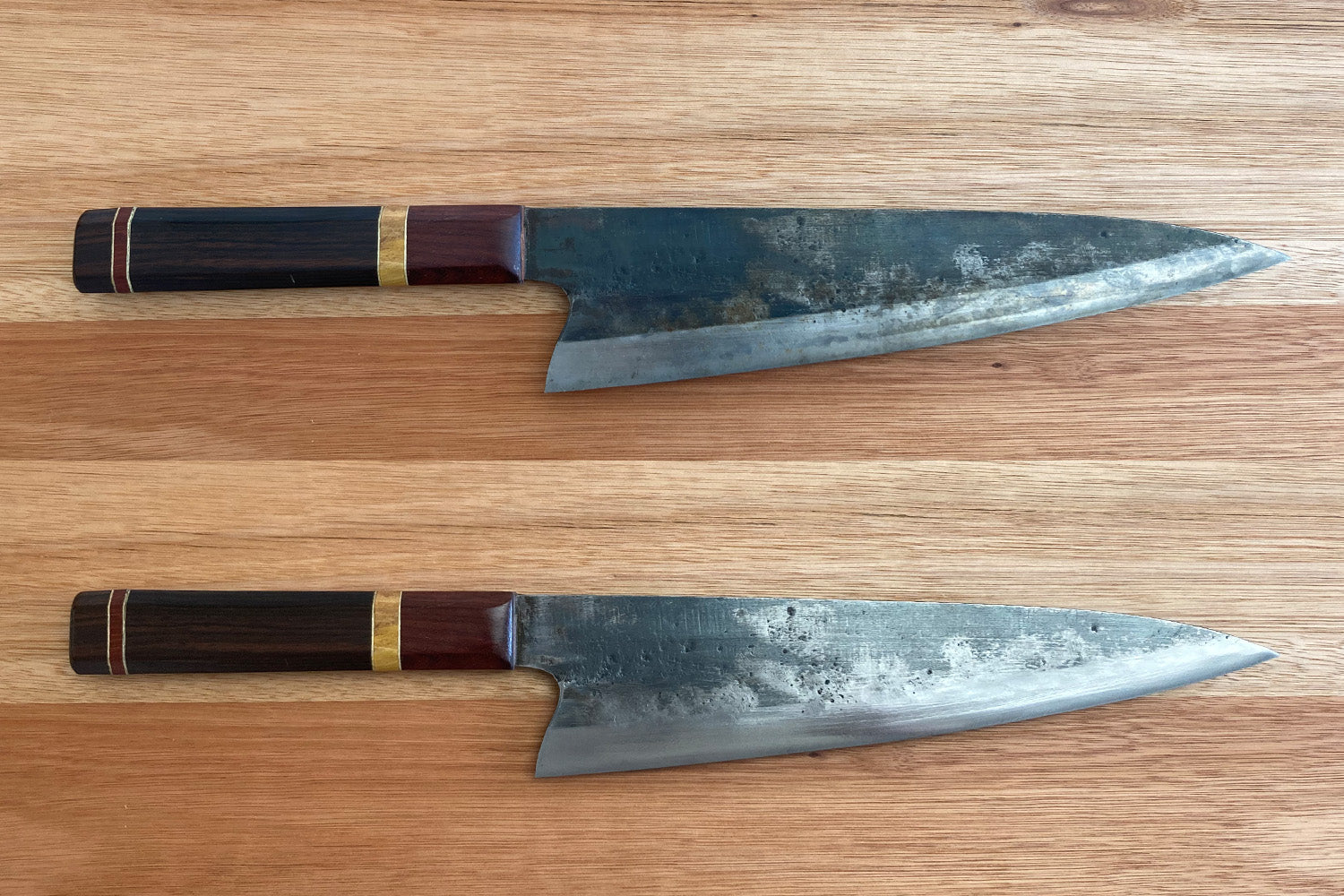
A patina is a dark layer that forms naturally on carbon steel blades. It helps protect the knife from rust and is safe. Many chefs prefer a stable patina because it gives the knife character and reduces corrosion.
Can I Use Lemon Juice Or Vinegar To Clean Rust?
Lemon juice and vinegar can remove rust, but use them carefully. Apply for a short time, rinse immediately, and dry the blade. Extended exposure can damage the steel.
How Should I Clean A Carbon Steel Knife With A Wooden Handle?
Wipe the handle with a damp cloth, dry thoroughly, and oil with mineral oil. Never submerge in water or use harsh cleaners. This keeps the wood from cracking and the blade from rusting.
Is It Safe To Use Mineral Oil On Kitchen Knives?
Yes, food-safe mineral oil is safe for carbon steel knives. It creates a protective layer. Make sure the oil is labeled for kitchen use—never use industrial oils.
How Do I Know If My Carbon Steel Knife Needs Cleaning?
If you see water spots, stains, or any rust, clean immediately. Even if it looks clean, wash and dry after every use. Regular cleaning prevents problems before they start.
Keeping your carbon steel knife blades clean protects your investment, keeps your kitchen safer, and improves your cooking. With the right habits and tools, you’ll never worry about rust or damage again.