If you own a steam mop, you probably want to keep your floors sparkling clean and your mop running smoothly. But what type of water should you use in your steam mop? Many people ask, “Can you use distilled water in a steam mop?
” This question is more important than it seems. Choosing the right water affects not just cleaning results, but also how long your mop will last. Let’s explore why distilled water can be a smart choice, how it compares with tap water, and what you need to know to make the best decision for your home.
Why Water Choice Matters For Steam Mops
Steam mops are simple but powerful cleaning tools. They use heated water to make steam, which loosens dirt and kills germs. The water you pour into the mop turns into steam, so anything in that water—minerals, chemicals, particles—can end up inside the mop’s system.
Over time, these extras can cause problems.
Minerals in tap water can build up inside the mop, blocking small pipes and the heating element. This is called scale or mineral buildup. It makes your mop less effective and can even cause it to break. Using the wrong water can lead to:
- Reduced steam production
- White streaks on floors
- Shorter mop lifespan
- Costly repairs
Surprisingly, even water that looks clean might contain minerals that harm your mop. That’s why understanding the differences between water types is key.
Distilled Water Vs. Tap Water: What’s The Difference?
Let’s compare distilled water and tap water side by side. The distinction is not just about cleanliness, but about what’s in the water.
| Feature | Distilled Water | Tap Water |
|---|---|---|
| Mineral Content | Nearly zero | Varies (often high) |
| Potential for Scale | Very low | High |
| Purity | Very pure | May contain chlorine, calcium, magnesium |
| Cost | More expensive | Cheap/free |
| Availability | Supermarkets, pharmacies | Home faucet |
Distilled water is made by boiling water, collecting the steam, and cooling it back into liquid. This process removes almost all minerals and impurities. Tap water comes straight from your faucet and usually contains minerals like calcium and magnesium—especially if you live in an area with hard water.
Benefits Of Using Distilled Water In Your Steam Mop
Choosing distilled water for your steam mop offers several advantages. Some are obvious, but others are often overlooked:
- Prevents mineral buildup: Distilled water contains almost no minerals. This means no scale forms inside your mop, keeping it running smoothly.
- Cleaner floors: Tap water can leave white spots or streaks on floors. Distilled water avoids this, giving a spotless finish.
- Longer mop life: Mineral buildup is a major cause of steam mop failure. Using distilled water extends the life of the heating element and other parts.
- Better performance: Steam output stays strong and consistent, helping you clean faster and more effectively.
- No odor or residue: Tap water sometimes has chlorine or other chemicals that leave a smell or sticky residue. Distilled water is neutral.
Non-obvious insight: Many steam mop owners notice that their mop’s steam gets weaker over time. Often, this is not a mechanical problem—it’s mineral deposits from tap water. Using distilled water prevents this subtle drop in performance.
Steam Mop Manufacturer Guidelines
Most steam mop manufacturers recommend using distilled water or at least warn against hard tap water. Here’s a quick comparison of what popular brands say:
| Brand | Recommended Water | Reason |
|---|---|---|
| Bissell | Distilled or demineralized | Prevents scale, protects warranty |
| Shark | Distilled preferred | Reduces buildup, better cleaning |
| Hoover | Distilled or filtered | Improves longevity, avoids clogs |
| O-Cedar | Distilled recommended | Prevents deposits |
Some brands say you can use tap water, especially if it’s “soft” (low in minerals). But in areas with hard water, using tap water can void your warranty.

Credit: www.amazon.com
Risks Of Using Tap Water In Your Steam Mop
Tap water is cheap and easy, but it comes with hidden risks:
- Mineral deposits: Calcium and magnesium can form hard crusts inside the mop.
- Clogged jets: Small openings can get blocked, reducing steam output.
- Heating element damage: Scale makes heating less efficient, so parts wear out faster.
- Floor streaks: Minerals can settle on floors, leaving dull marks.
- Warranty issues: Some warranties do not cover damage from mineral buildup.
One common mistake is assuming tap water is fine because it works for a while. But damage builds up slowly, often showing up after several months.
How To Use Distilled Water In A Steam Mop
Switching to distilled water is simple, but there are a few tips to make the most of it:
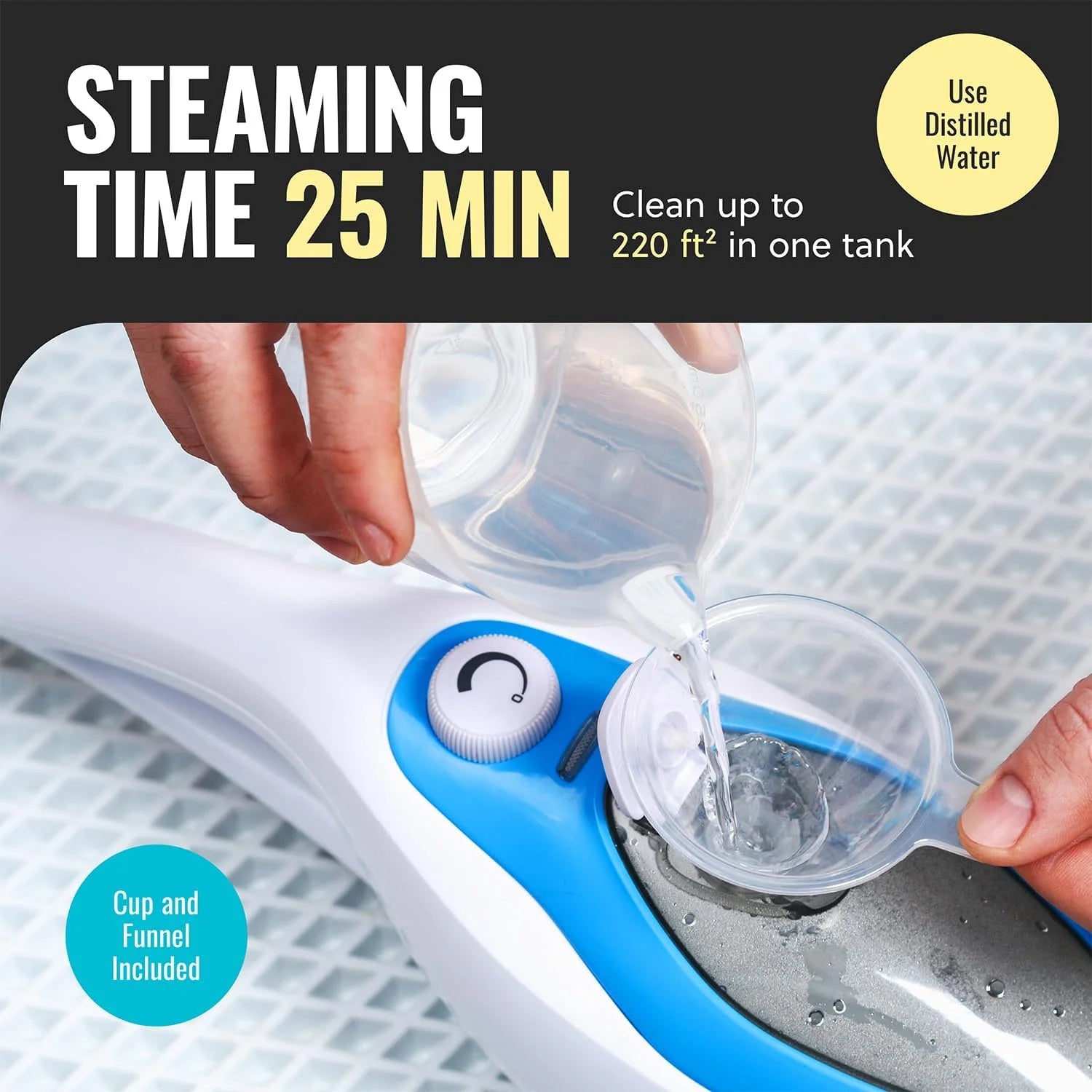
- Buy the right amount: Steam mops use about 0.5–1 liter per cleaning session. A gallon (3.8 liters) lasts several uses.
- Store properly: Keep distilled water sealed to avoid contamination.
- Fill carefully: Pour slowly to avoid spills in the mop’s water tank.
- Clean the tank regularly: Even with distilled water, wipe the tank every few weeks to prevent mold.
- Don’t add anything: Avoid mixing additives or fragrances, as these can cause buildup.
Example: If your steam mop has a 500 ml tank, and you clean three times a week, a 1-gallon jug will last nearly three weeks.
Alternatives To Distilled Water
Sometimes Distilled Water Isn’t Available. What Can You Use Instead?
- Filtered water: Removes some minerals, but not all. Better than tap, but not as good as distilled.
- Demineralized water: Similar to distilled; often sold for irons or humidifiers.
- Reverse osmosis water: Good if you have an RO filter at home.
These alternatives are helpful, but always check the mineral content. If you live in a hard water area, distilled is safest.
Cost Comparison: Is Distilled Water Worth It?
Let’s look at the cost of using distilled water versus tap water over time.
| Water Type | Cost per Gallon | Yearly Cost (3 uses/week) | Potential Repair Savings |
|---|---|---|---|
| Tap Water | Free | $0 | $0 |
| Distilled Water | $1.00–$1.50 | $52–$78 | $50–$200 (repair/replacement) |
Distilled water costs more up front. However, it can save you money in the long run by avoiding expensive repairs or buying a new mop sooner.
Real-world Data: Steam Mop Lifespan
Studies and user reports show a clear link between water choice and mop lifespan:
- Steam mops using distilled water often last 2–3 years longer than those using tap water.
- Average repairs due to mineral buildup cost $50–$100 per incident.
- In hard water areas, up to 80% of steam mop failures are caused by scale.
Non-obvious insight: Even if your tap water feels soft, seasonal changes can increase mineral content. Using distilled water gives consistent protection year-round.
Common Mistakes When Using Water In Steam Mops
Many beginners make these errors:
- Assuming tap water is “good enough”: Problems might not show for months, but scale builds up quietly.
- Adding vinegar or cleaning agents: These can damage the heating element or leave residue.
- Not emptying the tank after use: Standing water (even distilled) can breed mold.
- Using bottled drinking water: It often contains minerals; it’s not the same as distilled.
- Ignoring manufacturer advice: Each mop is different; always check your manual.

Credit: www.reddit.com
Expert Tips For Steam Mop Care
To maximize your steam mop’s performance and lifespan:
- Always use distilled water when possible.
- Clean the water tank monthly, even if using pure water.
- Store your mop dry and upright.
- If you must use tap water, descale the mop every month with a manufacturer-approved solution.
- Check your warranty terms—using the wrong water can void it.
For more detailed information about water types and cleaning appliances, see the Wikipedia page on distilled water.
Frequently Asked Questions
What Happens If I Use Tap Water In My Steam Mop?
Tap water contains minerals that can build up inside your mop. Over time, this causes scale, which can block pipes, reduce steam, and damage the heating element. It may also leave streaks on your floor and can void your warranty.
How Often Should I Clean My Steam Mop’s Water Tank?
Even with distilled water, wipe the tank every few weeks. If you use tap water, clean it more often and use a descaling solution monthly to prevent buildup.
Is Filtered Water Safe For Steam Mops?
Filtered water is better than tap water but still contains some minerals. It reduces buildup but doesn’t eliminate it. Distilled or demineralized water is best.
Can I Add Cleaning Solutions To Distilled Water?
No, you should only use pure water (distilled or demineralized) in your steam mop. Adding solutions or fragrances can damage the heating element and leave residue.
Where Can I Buy Distilled Water For My Steam Mop?
Distilled water is sold in supermarkets, pharmacies, and online. Look for bottles labeled “distilled.” It’s often found near bottled water or cleaning supplies.
Steam mops are a smart way to keep your floors clean and germ-free. The water you use is a small detail, but it has a big impact on how well your mop works and how long it lasts. Distilled water is the best option for most steam mops, helping you avoid mineral buildup, streaks, and costly repairs. By choosing distilled water and following basic care tips, you can enjoy reliable cleaning and get the most value from your steam mop.
Credit: pursteam.com