Most people use their kitchen counters every day, but few stop to think about their height. The height of your kitchen counter can make cooking easier, safer, and more comfortable. If the counter is too high, you might strain your arms or shoulders.
If it’s too low, you may hurt your back. So, how high are kitchen counters? Let’s explore the standard measurements, variations, and why choosing the right height matters for every home.
Standard Kitchen Counter Heights
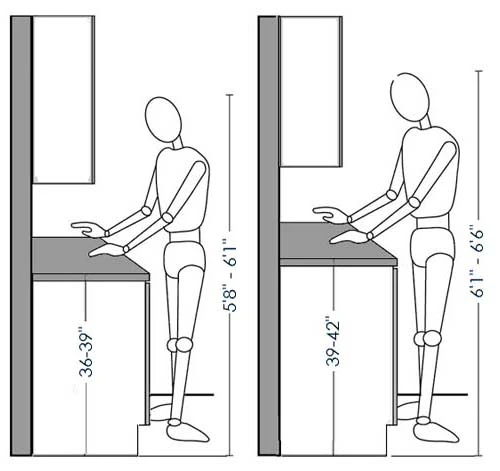
The most common height for kitchen counters in the United States is 36 inches (about 91 centimeters) from the floor to the top of the counter. This measurement fits most people who are between 5’3” and 5’10” tall. Builders use this height because it works well for food preparation, cooking, and cleaning.
If you look at most new kitchens, you will find this standard height. It allows enough space for most appliances, like dishwashers and ovens, to fit under the counters. Cabinets are also made to match this measurement. For example, the base cabinet height is usually 34.5 inches, and the countertop adds about 1.5 inches.
Here’s a quick comparison of standard kitchen counter heights in different countries:
| Country | Standard Height (inches) | Standard Height (cm) |
|---|---|---|
| United States | 36 | 91 |
| United Kingdom | 36 | 91 |
| Australia | 35.4 | 90 |
| Japan | 33.5 | 85 |
As you can see, most countries use a height between 33.5 and 36 inches. Small differences are often because of average height and kitchen style in each country.
Why Counter Height Matters
Picking the right counter height is not just about looks. It affects your comfort and health. If you spend a lot of time cooking, the wrong height can cause pain in your wrists, back, or neck.
For example, someone who is 6 feet tall might find a 36-inch counter too low, causing them to bend forward. Shorter people may struggle to reach or chop food safely on a higher counter. Using the wrong height for long periods can lead to long-term problems.
Another important point is the function of the counter. Some counters are for cooking, others for eating, and some for baking. You might need different heights for each task. For instance, a baking counter is often a bit lower, around 32 inches, to make kneading dough easier.

Credit: marble-concepts.com
Types Of Kitchen Counters And Their Heights
Kitchens often have more than one counter. Each has its own purpose and height. Let’s look at the most common types:
Standard Work Counter
This is where you prepare food, chop vegetables, and cook. As mentioned, the usual height is 36 inches.
Breakfast Bar
A breakfast bar is higher than a standard counter. It is usually 42 inches (107 cm) tall. The extra height makes it comfortable for sitting on bar stools.
Island Counter
Kitchen islands can be the same height as the main counter, but sometimes, they have a split height. One side is 36 inches, and the other is 42 inches for seating.
Baking Station
Some kitchens have a special lower counter for baking. This height is usually 32 inches (81 cm). It helps people knead dough without raising their shoulders.
Here’s a summary of these counter heights:
| Counter Type | Typical Height (inches) | Purpose |
|---|---|---|
| Standard Work Counter | 36 | Food preparation |
| Breakfast Bar | 42 | Eating, drinks |
| Island Counter | 36/42 | Cooking and seating |
| Baking Station | 32 | Baking tasks |
Adjusting Counter Height For Comfort
Not everyone is the same height, so a fixed counter may not suit all. If you are much taller or shorter than average, you may need a custom height. Some builders offer custom kitchen counters that fit your needs.
Here are some tips to choose the right height:
- Stand straight at the counter. Your elbows should bend at about a 90-degree angle while your hands rest on the surface.
- If you often cook with children or older adults, consider a lower or adjustable counter.
- Try different heights before deciding. Many kitchen showrooms have sample counters you can test.
A common mistake is choosing the counter height only for looks. Always focus on function first. It is better to have a comfortable workspace than a stylish but uncomfortable kitchen.
Counter Thickness And Its Impact
Counter height is not only about the cabinet. The thickness of the countertop changes the final height. Most countertops are between 1 and 1.5 inches thick. Some materials, like stone, are thicker and heavier.
Here’s a comparison of common countertop materials and their thickness:
| Material | Standard Thickness (inches) | Impact on Height |
|---|---|---|
| Laminate | 1 – 1.25 | Minor impact |
| Granite | 1.25 – 1.5 | Adds height |
| Quartz | 1.25 | Adds height |
| Solid Surface | 0.75 – 1.25 | Minor impact |
If you choose a thick countertop, the overall height increases. Make sure to include this when planning your kitchen.
Counter Height For Accessibility
Accessible kitchens are important for people with disabilities, seniors, or those in wheelchairs. Standard counters are often too high. For wheelchair users, the ideal height is 28 to 34 inches. The space below the counter should be open for knees and legs.
ADA (Americans with Disabilities Act) guidelines recommend:
- Counter height: 28-34 inches
- Knee space: At least 27 inches high, 30 inches wide, 19 inches deep
Accessible counters make the kitchen usable for everyone, not just people of average height. If you need more information on ADA guidelines, you can check the official resource: ADA.gov.
Trends In Kitchen Counter Heights
Modern kitchens are changing. Some people want higher counters for more storage space below. Others prefer lower counters for comfort. Trends now include:
- Adjustable counters that move up and down
- Split-level islands for cooking and eating
- Lower baking stations for specialty tasks
Smart homes may use electric lifts to change counter height. However, most homes still use the standard 36 inches for main counters.
How To Measure And Plan Your Kitchen Counter Height
If you are building or remodeling your kitchen, careful planning is key. Measuring your space and needs will help you choose the best height.
Follow these steps:
- Measure from the floor to the top of the finished counter.
- Consider the thickness of your countertop material.
- Test the height with your daily tasks—chopping, mixing, washing.
- If multiple people use the kitchen, try to find a height that works for everyone.
- Don’t forget about appliances—make sure dishwashers, ovens, and refrigerators fit under the counter.
It’s also wise to use a tape measure and simulate tasks before making a final decision.
Credit: www.regattaexports.com
Non-obvious Insights Beginners Miss
Many beginners forget these two important points:
- Counter height affects lighting. If your counters are too high, overhead lights may not shine directly onto your workspace, creating shadows. Plan your lighting with your counter height.
- Counter height changes appliance fit. Some appliances, like built-in coffee makers or microwaves, need a certain height. If your counter is higher or lower than usual, you may need to adjust their placement.
These small details can make a big difference in daily kitchen use.
Frequently Asked Questions
What Is The Standard Kitchen Counter Height?
The standard height is 36 inches (91 centimeters) from the floor to the top. This fits most adults for cooking and food preparation.
Can I Have A Custom Counter Height?
Yes, custom heights are possible. If you are taller or shorter than average, or have special needs, you can ask your builder for a custom counter. Just remember to consider all tasks you do in the kitchen.
What Is The Best Height For A Breakfast Bar?
A breakfast bar is usually 42 inches (107 centimeters) tall. This fits bar stools and makes eating comfortable.
How Do I Make My Kitchen Accessible?
For accessibility, use a counter height between 28 and 34 inches. Leave open space below for knees and legs. Follow ADA guidelines to make your kitchen safe and usable for everyone.
Do Countertop Materials Change The Height?
Yes, materials like granite or quartz are thicker and add to the final height. Always include the thickness of your countertop when planning.
Choosing the right kitchen counter height is more important than most people realize. It can improve your comfort, safety, and the way you use your kitchen. Whether you stick to the standard 36 inches or need a custom height, take your time to plan.
Consider your needs, your family’s needs, and the tasks you do most. A well-chosen counter height will make your kitchen a place you love to use every day.