Cleaning a Dutch oven may seem simple, but if you want to keep it in good shape for years, you need to follow the right steps. Dutch ovens are famous for their durability and cooking performance. You can use them for baking bread, simmering stews, or roasting meat.
But the real secret to long-lasting results is proper cleaning and care. Many people unknowingly damage their Dutch ovens by using harsh tools or wrong methods. Here, you’ll learn how to clean a Dutch oven safely, spot common mistakes, and get expert tips that most beginners miss.
Understanding Your Dutch Oven
Dutch ovens come in two main types: cast iron and enameled cast iron. Each type needs its own cleaning approach. Cast iron Dutch ovens are usually dark and heavy, with a rough surface. Enameled Dutch ovens have a smooth, colorful coating that protects the iron underneath.
Cast Iron Dutch Ovens
These are strong and can last decades. They need seasoning to keep food from sticking. Cleaning must protect this seasoning layer.
Enameled Dutch Ovens
The enamel coating makes cleaning easier and prevents rust. But, enamel can crack or chip if not handled carefully.
Here’s a quick comparison to highlight their differences:
| Feature | Cast Iron | Enameled Cast Iron |
|---|---|---|
| Surface | Rough, needs seasoning | Smooth, coated |
| Cleaning | Careful to protect seasoning | Gentle to avoid chipping |
| Rust Risk | High if wet | Low unless enamel cracks |
| Use | Camping, baking, slow cooking | Everyday kitchen use |
Basic Cleaning Steps
Most Dutch ovens only need simple cleaning after regular use. Follow these steps right after cooking:
- Let it cool: Never put a hot Dutch oven in cold water. Sudden temperature change can cause cracks or warping.
- Remove food: Scrape out leftovers using a wooden or silicone spatula. Avoid metal tools.
- Use warm water: Rinse with warm water. If food sticks, fill the pot with water and let it soak for 10–15 minutes.
- Clean with a soft sponge: Wipe gently. For cast iron, avoid soap if possible. For enameled, mild dish soap is safe.
- Dry thoroughly: Wipe with a towel and let air dry. Moisture causes rust, especially for cast iron.
Most people stop here, but there are two non-obvious steps that make a big difference:
- Always dry the lid separately, as trapped moisture leads to rust.
- For cast iron, apply a thin layer of oil after drying to keep the seasoning strong.
Credit: www.bonappetit.com
Deep Cleaning For Tough Stains
Sometimes, burnt food or stubborn stains need extra attention. Here’s how to clean them without damaging your Dutch oven.
For Cast Iron
- Avoid harsh scrubbing: Do not use steel wool or abrasive pads. They remove the seasoning layer.
- Make a paste: Mix coarse salt with a little water to form a paste. Rub gently with a soft cloth.
- Rinse and re-season: After cleaning, rinse and dry well. Rub with oil and bake at 350°F for 1 hour to restore seasoning.
For Enameled Dutch Ovens
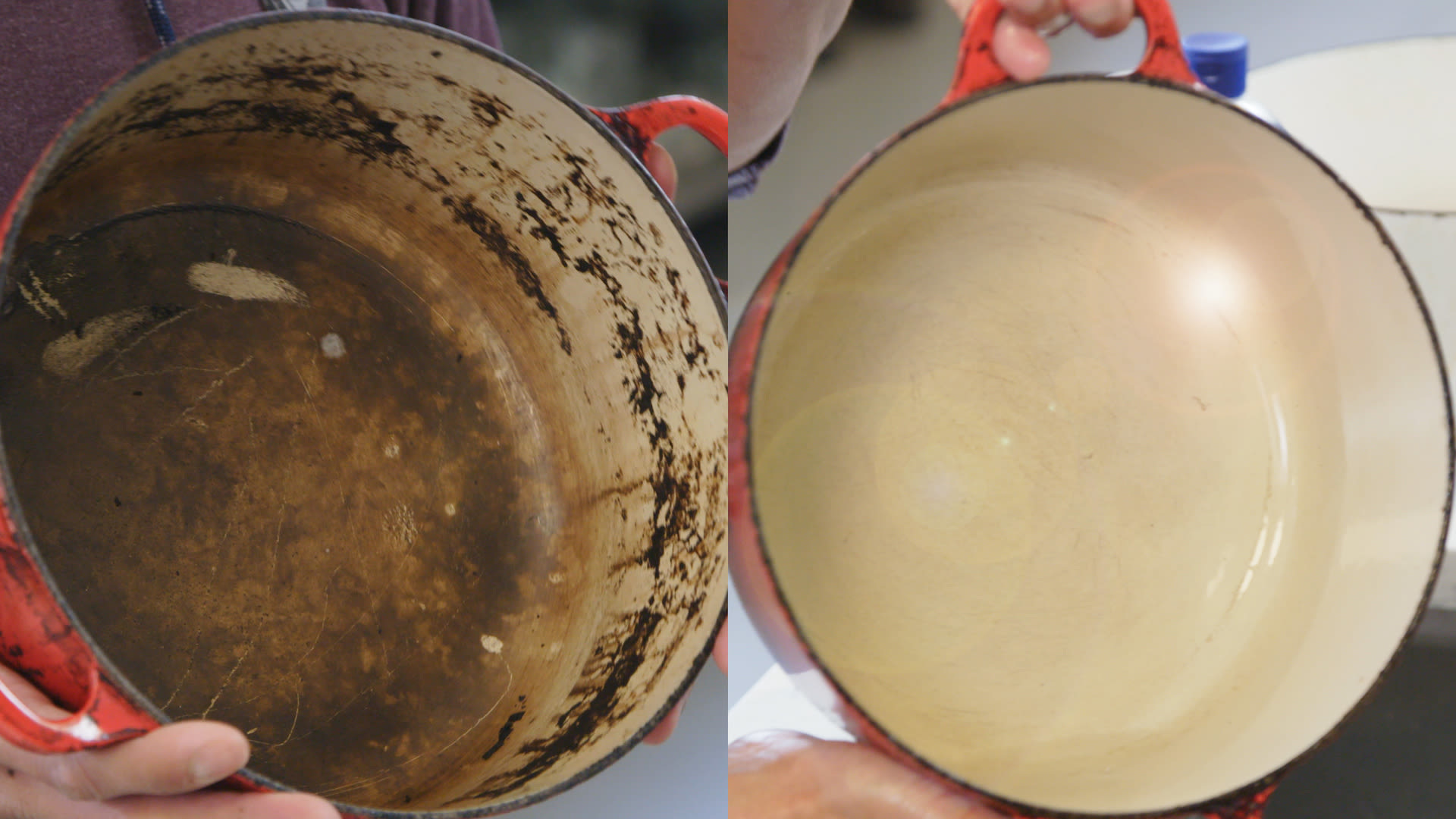
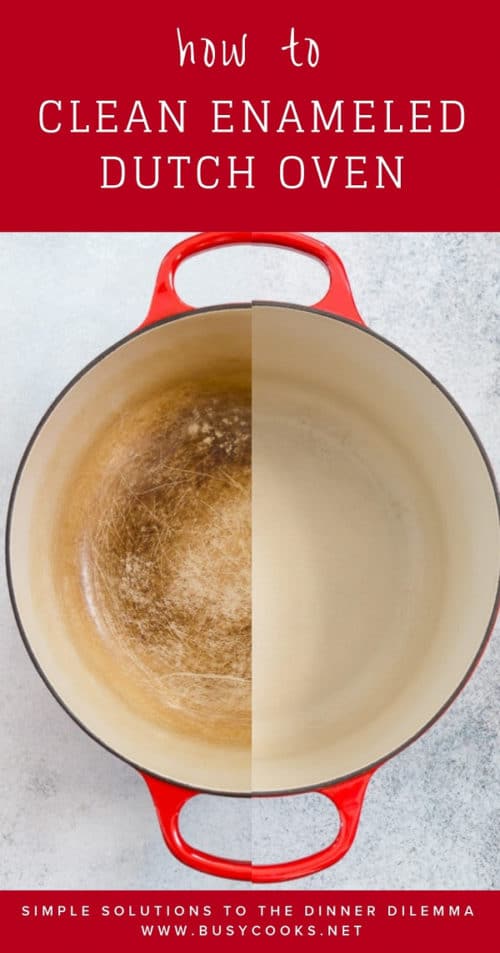
- Soak with baking soda: Fill with warm water and add a few tablespoons of baking soda. Let it sit for 30 minutes.
- Use non-scratch tools: Clean with a nylon brush or sponge. Avoid anything that could scratch the enamel.
Here’s a table comparing safe cleaning tools:
| Tool | Cast Iron | Enameled |
|---|---|---|
| Wooden Spoon | Safe | Safe |
| Nylon Brush | Safe | Safe |
| Steel Wool | Risky | Unsafe |
| Soft Sponge | Safe | Safe |
| Metal Scraper | Unsafe | Unsafe |
Removing Odors
Dutch ovens sometimes hold smells from strong spices or garlic. To remove odors:
- Fill with warm water.
- Add 1–2 tablespoons of baking soda.
- Let soak for 1 hour.
- Rinse and dry.
For cast iron, re-season after odor removal. This keeps the pot ready for next use.
:max_bytes(150000):strip_icc()/How-to-clean-a-dutch-oven-main-image-2000-14354c78b1914784b83c69cd7b644d86.jpg)
Credit: www.allrecipes.com
Preventing Rust And Damage
Rust is the biggest enemy of cast iron Dutch ovens. Enamel can chip if not handled carefully. Here’s how to protect your investment:
- Never soak overnight: Prolonged soaking weakens seasoning and causes rust.
- Avoid dishwasher: Both types should be cleaned by hand. Dishwasher heat and detergent can ruin enamel and seasoning.
- Store dry and open: Don’t store with lid on. Airflow prevents moisture buildup.
Many beginners miss that even small chips in enamel can let moisture reach the iron, starting rust. If you see chips, dry the pot very well and avoid soaking.
Tips For Long-term Care
Dutch ovens can last a lifetime with proper care. Here are expert tips to keep yours in top shape:
- Use oil for seasoning: For cast iron, vegetable oil or flaxseed oil works best. Thin layers are key.
- Cook with care: Avoid high heat, especially for enameled ovens. Gradual heating prevents cracks.
- Check for cracks: Inspect regularly. Small cracks can grow and cause failures.
- Handle gently: Never bang or drop your Dutch oven. Enamel chips easily, and iron can break.
- Store with paper towel: Place a paper towel between pot and lid to absorb moisture.
Here’s a quick comparison of seasoning oils for cast iron:
| Oil Type | Smoke Point | Seasoning Quality |
|---|---|---|
| Vegetable Oil | 400°F | Good |
| Flaxseed Oil | 225°F | Excellent |
| Canola Oil | 400°F | Good |
| Olive Oil | 375°F | Fair (not ideal) |
Common Cleaning Mistakes
Most Dutch oven owners make at least one cleaning mistake. Avoid these errors for best results:
- Using soap on seasoned cast iron (it strips seasoning).
- Scrubbing too hard, especially with metal tools.
- Soaking for too long, which causes rust.
- Storing with lid on, trapping moisture.
- Putting enameled Dutch oven in dishwasher.
One insight beginners miss: Using a small amount of oil after each use keeps seasoning strong and prevents rust, even if you only use your Dutch oven occasionally.
Cleaning Outside And Lid
The outside and lid often get ignored, but they need cleaning too. For both types:
- Wipe with warm soapy water using a soft sponge.
- Avoid abrasive pads, especially on enamel.
- Dry completely before storing.
For cast iron lids, apply a thin oil layer after drying. For enameled lids, check for chips and cracks.
How To Clean A Dutch Oven After Camping
When using your Dutch oven outdoors, cleaning is more challenging. Here’s what works best:
- Let cool before cleaning.
- Scrape out food with a wooden spoon.
- Use warm water if available. If not, wipe with dry paper towels.
- Avoid river water, which can contain minerals that damage seasoning.
- Dry with a towel and re-season at home.
A non-obvious tip: Don’t store your Dutch oven in a wet bag or box after camping. Moisture causes rust fast.
When To Re-season Your Cast Iron Dutch Oven
Seasoning is the protective layer that keeps cast iron non-stick and rust-free. You should re-season when:
- Food starts sticking.
- Surface looks dull or gray.
- After deep cleaning with salt or baking soda.
To re-season:
- Clean and dry the Dutch oven.
- Rub inside and outside with oil.
- Bake upside down at 350°F for 1 hour.
- Let cool before storing.
Credit: busycooks.com
Frequently Asked Questions
How Often Should I Clean My Dutch Oven?
Clean your Dutch oven after every use. For regular cooking, basic cleaning is enough. Deep cleaning and re-seasoning should be done if food sticks or stains appear.
Can I Use Soap On My Cast Iron Dutch Oven?
It’s best to avoid soap on seasoned cast iron. Soap removes the protective seasoning layer. If you must use soap, re-season the Dutch oven afterward.
Is It Safe To Put My Dutch Oven In The Dishwasher?
No. Dishwashers can damage both cast iron and enamel. Always wash by hand for safest results.
What Should I Do If My Dutch Oven Gets Rusty?
Remove rust by scrubbing gently with coarse salt and water. Dry well and re-season. For heavy rust, repeat the process until the surface is smooth.
Can I Use Metal Utensils In My Dutch Oven?
Avoid metal utensils. They scratch the seasoning on cast iron and chip enamel. Use wood, silicone, or nylon tools for best results.
Taking care of your Dutch oven doesn’t have to be complicated. A few careful steps will keep it working and looking good for many years. Remember, the right cleaning tools, proper drying, and regular seasoning are the secrets to success. For more tips on cast iron care, visit Lodge Cast Iron Official Care Guide. With these expert methods, you’ll enjoy cooking with your Dutch oven for a lifetime.