Standing in the kitchen with a potato in one hand and a fork in the other, you’ve got choices to make. Are baked potatoes better in the oven or microwave? That question usually hits right before dinner, when time is tight and patience is thinner.
The honest answer is: the oven makes a better potato, but the microwave makes a faster one. Your job is figuring out which trade-off matters more tonight.
Under USDA grading standards, the ideal baked potato has an internal temperature around 205 to 210 degrees Fahrenheit. That’s when the interior turns light and fluffy and the skin gets that crackle. As of 2026, a conventional oven takes 60 to 75 minutes to get there, while a microwave can do it in a tenth of that time.
Let’s look at how each method really cooks the potato.
Quick Answer
Are baked potatoes better in the oven or microwave? The oven, by far. It gives you crispy skin and fluffy flesh.
The microwave is faster but rubbery. Use both to save time.
Why the Cooking Method Changes the Potato
A potato isn’t just a solid lump of starch. It’s a water balloon with starch granules floating inside. Raw potato flesh is dense and moist, and when you heat it, all that moisture starts moving.
In a conventional oven, heat surrounds the potato evenly. The surface dries out and firms up, while the interior slowly steams from the inside out. The starch granules absorb water, swell, and then burst at around 200 degrees Fahrenheit.
That’s what gives you the familiar mealy, fluffy texture.
A microwave flips that process on its head. Instead of surrounding heat, you get microwaves that excite water molecules directly. The inside heats up fast, very fast, which means the starch granules expand quickly.
There’s also intense steam building up beneath the skin, since the moisture has nowhere to go.
That trapped steam is the main culprit behind two classic microwave problems: dense, gummy flesh and rubbery skin. The skin never gets a chance to dry out and crisp, because it’s being constantly steamed from underneath.
The USDA FoodData Central confirms that a raw russet potato is about 80 percent water by weight. When you heat all that water too quickly, you get a different structure than when you let it escape gradually. Slow and steady wins the texture battle, every time.

The Oven Method: What You Get for the Wait
If you want a classic baked potato, the oven is the way to go. There’s no shortcut that produces the same combination of crispy skin and fluffy interior.
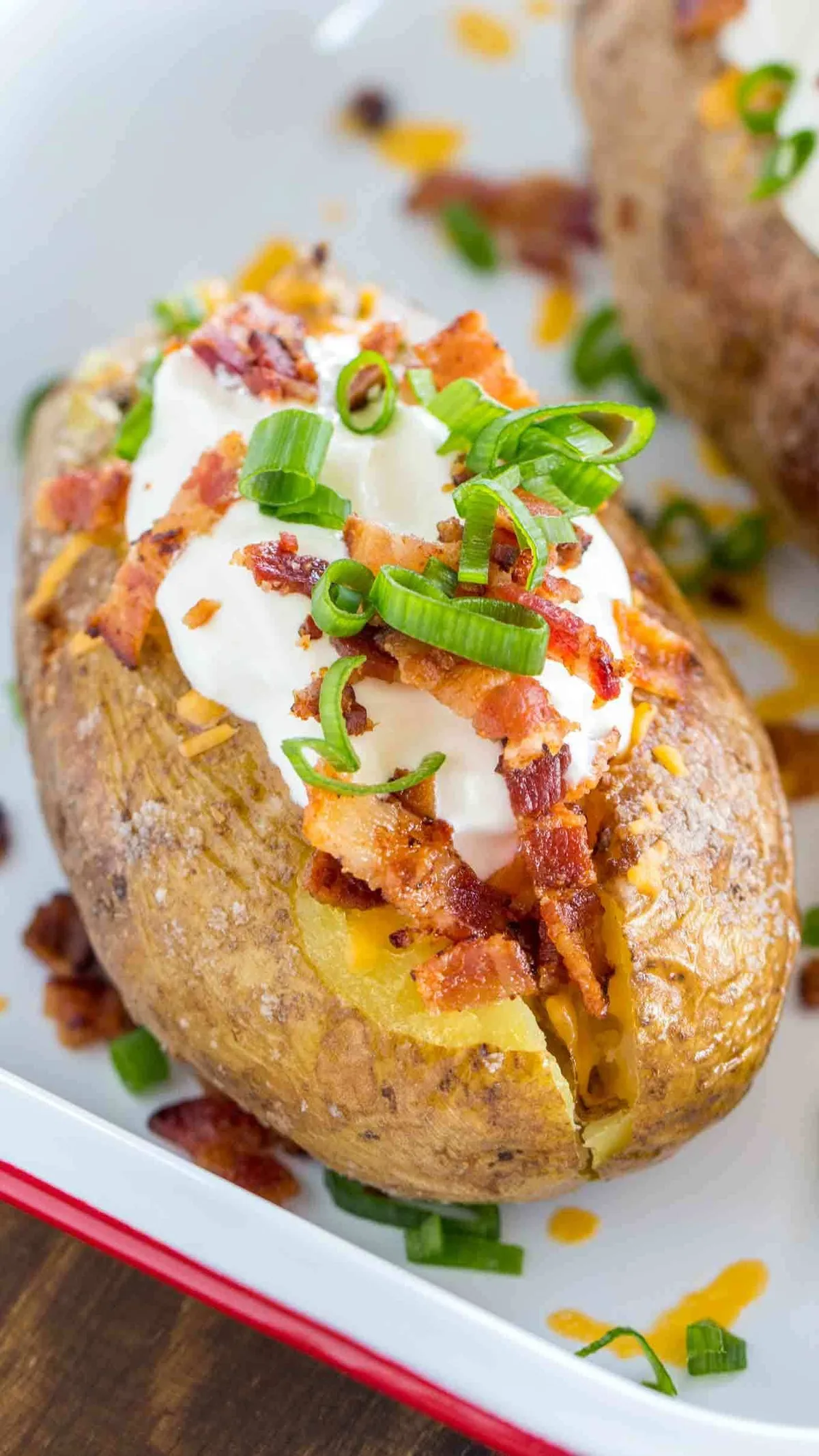
The standard method is straightforward. Preheat your oven to 425 degrees Fahrenheit, scrub the potato, pat it completely dry, rub it with a little oil, and sprinkle it with salt. Then bake unwrapped on a rack or baking sheet for 60 to 75 minutes, depending on the size.
The oil matters more than most people think. It helps the skin dry out instead of steaming, and the salt adds a subtle seasoning that soaks into the flesh. The result is a crackly, golden exterior with a pillow-like inside that soaks up butter beautifully.
Here’s what you get:
- Crispy, crackling skin that’s not just edible but genuinely delicious.
- A fluffy, evenly cooked interior with no hard spots.
- Batch capacity for a family dinner or meal prep. You can bake six potatoes at once without any extra effort.
- Better topping absorption. Butter and sour cream melt into the flesh instead of sliding off.
The downsides are real, though. An oven takes over an hour, requires a 15-minute preheat, and can turn your kitchen into a sauna in mid-July. If you’re cooking for one and you’re starving, that’s a heavy commitment.
That’s why the microwave method exists. But before you write off the oven, remember that meal prep often benefits from batch baking. Spend one hour on a Sunday and you’ve got potatoes for the entire week.
The Microwave Method: Speed With Trade-Offs
The microwave is the convenience champion. No preheat, no oil, no waiting. You can go from fridge to fork in about ten minutes flat.
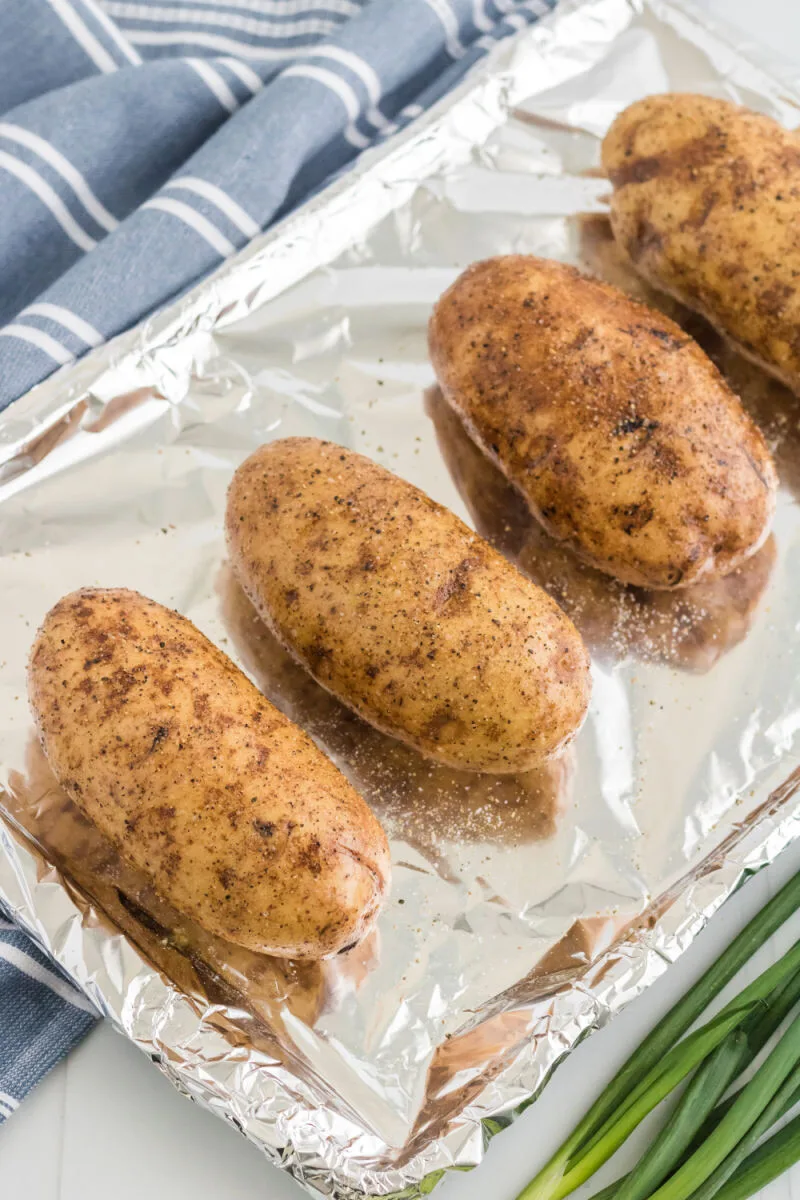
The basic process is simple. Pierce the potato with a fork several times, place it on a microwave-safe plate, and cook on high for 5 to 10 minutes, flipping halfway through.
That speed comes with sacrifices. The interior cooks fast, but it’s often uneven. You’ll get a soft outer layer and a firm center that needs extra time, and by the time the center is done, the outside is overcooked.
The skin is the biggest letdown. Instead of cracking like the lid of a pork pie, it comes out chewy and rubbery. That’s because the moisture in the potato turns to steam and collects beneath the skin, keeping it damp.
Here’s the realistic trade-off:
- Five to ten minutes total, including prep.
- Zero preheat and no heating up the kitchen.
- Much lower energy use, which matters if you’re watching the utility bill.
- Interior can be fluffy if you nail the timing, especially with a single medium potato.
- Skin is usually rubbery, no matter what you do.
- Uneven doneness is common, especially with larger potatoes.
The microwave also doesn’t love batches. You can cook two potatoes, but they’ll take longer and cook even more unevenly. And if you forget to pierce the skin, you’re risking a small potato explosion inside your microwave.
With all that said, the microwave has one huge advantage: it turns a baked potato into a weekday meal, not a weekend project. A potato with cottage cheese and chives is a healthy 10-minute lunch. That’s genuinely useful.
Oven vs. Microwave: Side-by-Side Comparison
To see the full picture, here’s how both methods stack up. This table covers the traits that actually matter when you’re staring at a raw potato.
| Factor | Oven | Microwave |
|---|---|---|
| Cooking time | 60 to 75 minutes | 5 to 10 minutes |
| Preheating | Required | None |
| Skin texture | Crisp and crackling | Chewy and rubbery |
| Interior texture | Fluffy and even | Tender but often uneven |
| Batch capacity | Multiple potatoes easily | One or two max |
| Energy usage | Around 1.5 kWh per batch | Around 0.2 kWh |
| Kitchen heat | Heats the entire room | Minimal |
| Best toppings | Immersive and absorbent | Can slide off |
The energy numbers come from typical household appliances. A 1,000-watt microwave running for 8 minutes uses roughly 0.13 kWh. A full-size electric oven heating at 375 degrees for an hour works out to roughly 1.5 to 2 kWh.
The oven is more expensive to run, no contest.
But energy cost isn’t the only metric. If you’re feeding four people, the oven uses about the same energy as two microwaved potatoes cooked back to back, and the texture is far better.
Here’s a simple rule of thumb. If you want a side dish for a family meal or a meal-prep staple, use the oven. If you need one potato right now and you don’t care much about the skin, use the microwave.
And if you’ve got 25 minutes, there’s a third path that combines both, which we’ll cover later in this guide.