So you’ve got a nice chef’s knife already, and you’re wondering if a santoku is actually better for cutting meat. It’s a fair question. The honest answer is: yes, a santoku is good for cutting meat, but only for specific kinds of meat and cutting styles.
If you’re tackling boneless chicken breasts, fish fillets, or beef tenderloin, a santoku shines. If you’re hacking through a bone-in pork shoulder or a whole chicken, you’ll want a different tool.
Manufacturer specifications indicate that a typical santoku blade measures 165 to 180mm (6.5 to 7 inches) with a Rockwell hardness of 60 to 62 HRC. That hard, thin edge is fantastic for clean push cuts, but it’s also brittle. As of 2026, the santoku remains one of the most popular all-purpose Japanese knives, but its reputation for meat work is often misunderstood.
Let’s break down exactly where it belongs in your kitchen.
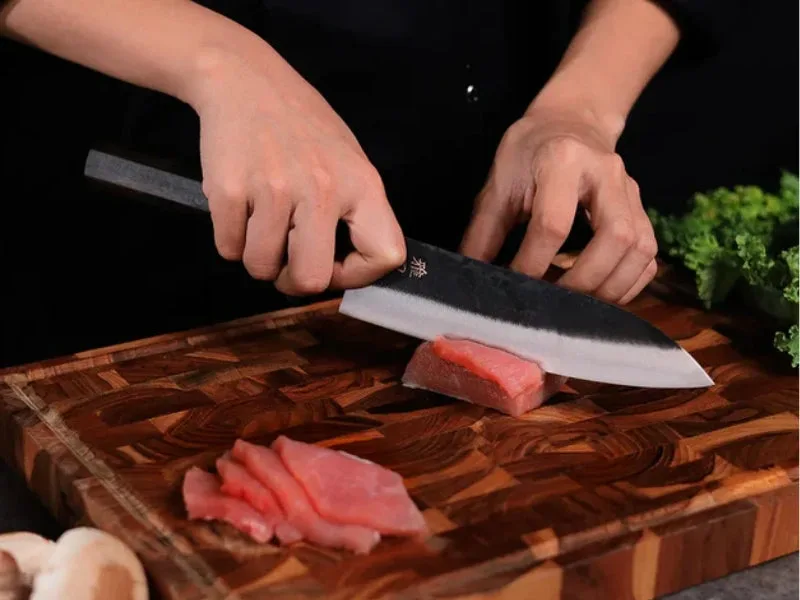
Image source: Web (Bing) / kasumijapan.com (Web image (fair-use with source credit))
Quick Answer: Are Santoku Knives Good for Cutting Meat?
Yes, a santoku is good for cutting boneless meat. It excels at clean, precise slices. Use it for chicken breasts, fish fillets, and beef tenderloin.
Do not use it on bone-in meat or frozen meat. The thin edge will chip. For heavy bone work, reach for a chef’s knife or a cleaver.
Keep it sharp and use a push-cut technique.
Santoku vs. Chef’s Knife vs. Sujihiki for Cutting Meat
The real question isn’t “is it good?”, it’s “good for what compared to what?” Let’s look at the three main contenders for meat cutting side by side.
| Feature | Santoku | Chef’s Knife (German) | Sujihiki (Slicing Knife) |
|---|---|---|---|
| Blade profile | Flat edge, slight belly | Curved belly | Long, narrow, straight |
| Best for | Push cuts on boneless meat | Rock chopping, bone-in work | Slicing cooked roasts, raw fish |
| Edge angle | 15-17 degrees | 20 degrees | 15 degrees |
| Hardness (HRC) | 60-62 | 55-58 | 61-63 |
| Weight | Light (140-200g) | Heavier (200-280g) | Light (120-180g) |
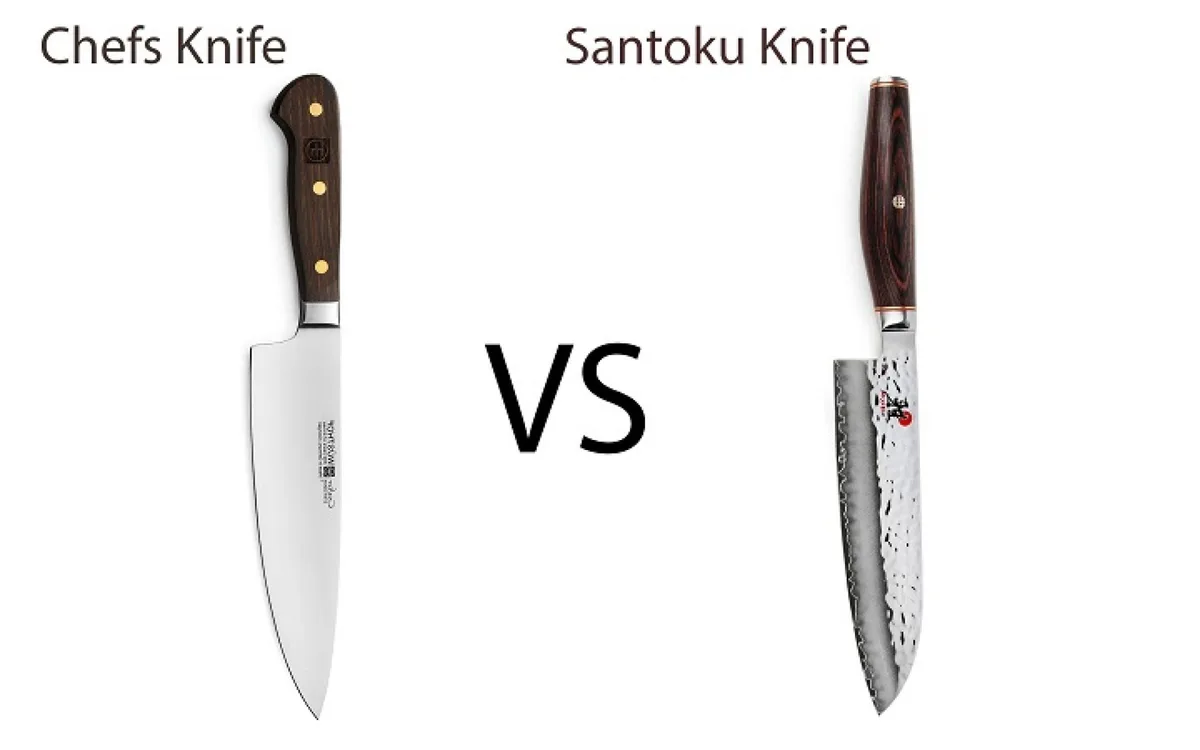
The santoku’s flat edge makes it ideal for the push-cut technique. You slice straight down through the meat, rather than rocking forward like you would with a chef’s knife. This gives you cleaner, more uniform slices on boneless proteins.
The chef’s knife, with its curved belly, is better for rocking through herbs and for breaking down chicken with bones. The sujihiki is a specialist for long, thin slices of cooked roast or raw fish, it’s longer and thinner than a santoku.
For the home cook who wants one knife for both vegetables and boneless meat, the santoku is the better choice. If you regularly break down whole chickens or cut through joints, stick with a chef’s knife. If you slice a lot of cooked brisket or roast beef, a sujihiki is worth considering.
Best Use Cases: Where a Santoku Earns Its Keep
A santoku is not a one-size-fits-all meat knife, but it dominates in specific scenarios. Here’s where it really shines:
- Boneless chicken breasts: The thin, hard edge glides through raw breast meat with minimal drag. You’ll get clean, even slices for stir-fries or salads.
- Fish fillets: Whether you’re portioning salmon or slicing tuna for sashimi, the santoku’s flat blade and sharp edge make precise cuts easy.
- Beef tenderloin: For trimming silverskin and cutting medallions, the santoku is nimble and accurate. It’s a favorite for this job in many home kitchens.
- Pork loin or tenderloin: Similar to beef, these boneless cuts are ideal for a santoku’s push-cut motion.
- Vegetable prep alongside meat: If you’re cooking a stir-fry, you can use the same knife to slice peppers, onions, and chicken without switching tools. That’s the real strength of the santoku.
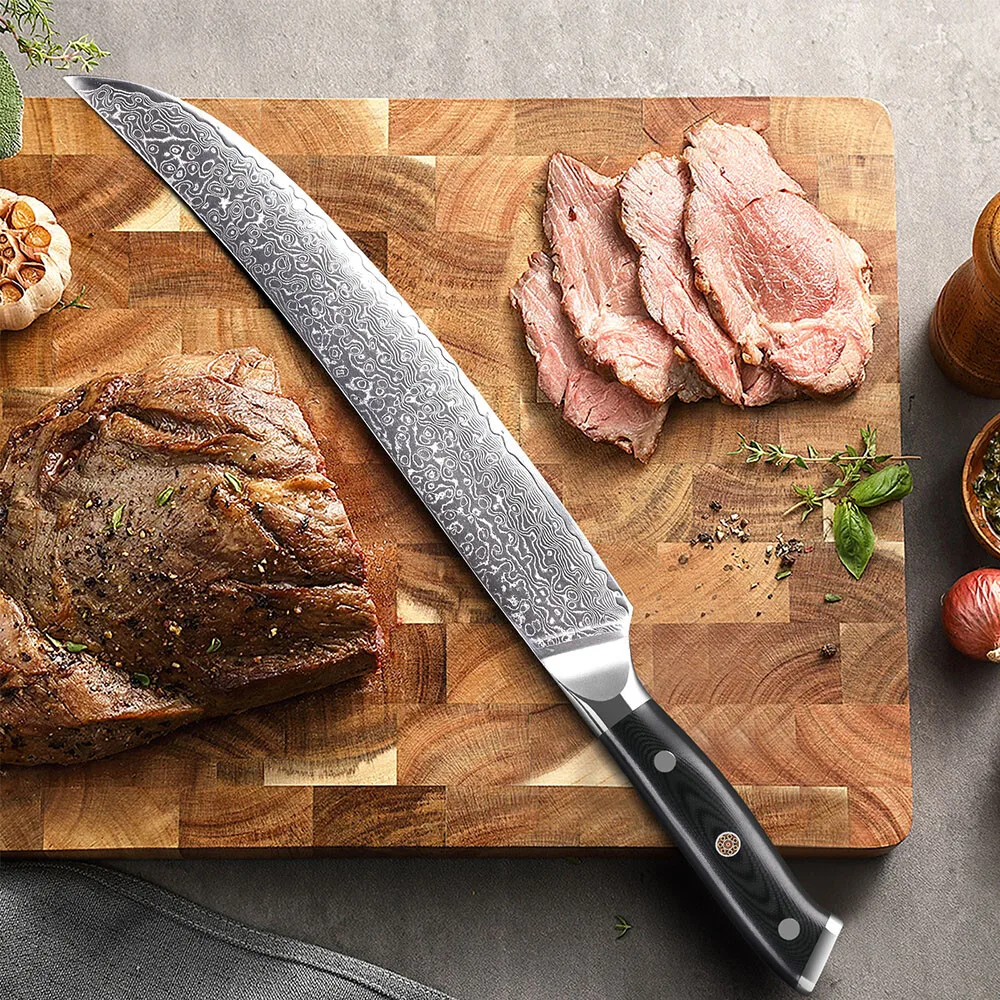
The common thread is boneless, relatively tender meat. The santoku is not the tool for breaking down a whole bird or cutting through ribs. But for everyday meal prep involving boneless proteins, it’s a fantastic choice.
Many home cooks find that using a santoku for their routine meat prep reduces wrist fatigue compared to a heavier chef’s knife.
You might find this helpful: Best Santoku Knife
Common Mistakes to Avoid When Cutting Meat with a Santoku
The santoku’s thin, hard steel is both its strength and its weakness. Here are the mistakes that will damage your knife or ruin your meat:
- Using it on bone-in meat. A chicken drumstick, pork chop bone, or beef rib will chip the edge. The hard steel (60+ HRC) is brittle. Use a chef’s knife or a cleaver for bone work.
- Cutting frozen meat. Same problem. The blade is too hard to absorb the shock. Let the meat thaw completely before slicing.
- Twisting the blade. When you’re cutting around a joint or trying to pry meat off a bone, the santoku blade can snap. Use a boning knife for that job.
- Using a rocking motion. The flat edge is designed for push cuts, not rock chopping. Rocking can dull the edge unevenly and put stress on the blade.
- Using a glass or stone cutting board. These are too hard and will dull the edge quickly. Use wood or soft plastic.
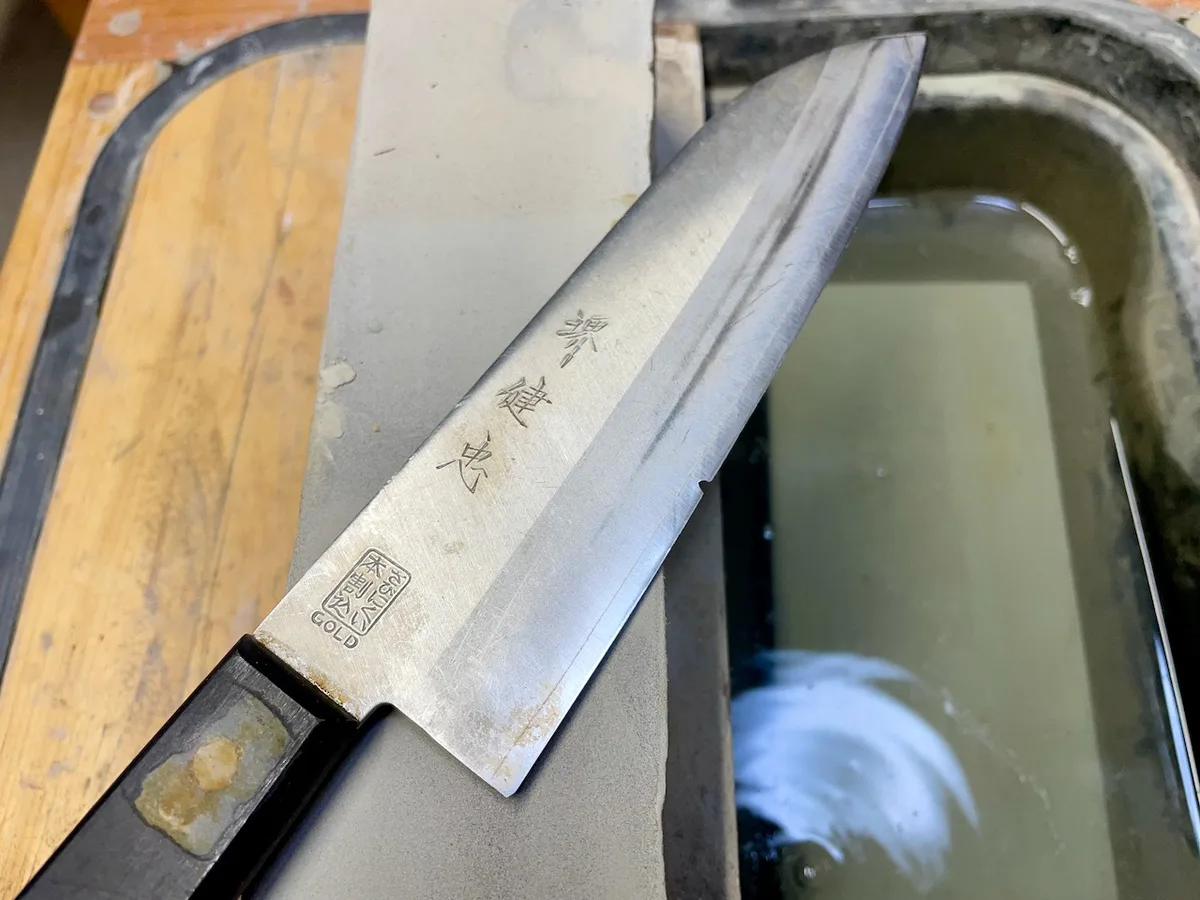
- Neglecting sharpening. A dull santoku is dangerous because you have to apply more force. The thin edge needs regular honing and occasional sharpening on a whetstone.
One more thing: don’t put it in the dishwasher. The high heat and harsh detergents will damage the handle and dull the edge. Hand wash and dry immediately.
Treat it like a precision tool, because it is.
Final Verdict: Who Should Use a Santoku for Meat? (Plus Quick FAQ)
The santoku is an excellent choice for the home cook who primarily prepares boneless meat and wants a single, versatile knife. It’s lighter and more precise than a German chef’s knife, and it handles vegetables just as well as meat. If you break down whole chickens, cut through ribs, or slice frozen meat regularly, stick with a chef’s knife or a cleaver.
For most home cooks, a santoku is a great addition to the knife block. It’s not a replacement for a chef’s knife, but it’s a fantastic specialist for boneless meat and vegetable prep. If you’re looking for a single knife that does 80% of kitchen tasks well, a santoku is a strong contender.
Frequently Asked Questions
Can you cut chicken with a santoku?
Yes, for boneless chicken breasts and thighs. The thin edge works well. For bone-in chicken pieces, use a chef’s knife or a cleaver to avoid chipping.
Is a santoku good for slicing beef?
Yes, for boneless cuts like tenderloin, sirloin, or roast beef. It produces clean, even slices. For brisket or large roasts, a sujihiki is better for long, thin slices.
What is the best knife for cutting meat?
It depends on the meat. For boneless meat, a santoku or chef’s knife works. For bone-in, a chef’s knife or cleaver.
For cooked roasts, a sujihiki. No single knife is best for everything.
Can a santoku cut through bone?
No. The hard, thin edge will chip or break. Use a cleaver or a heavy chef’s knife for bone work.
Always cut meat away from the bone with a santoku.
How do you sharpen a santoku for meat cutting?
Use a whetstone with a 15 to 17 degree angle per side. Start with a 1000 grit stone, then finish with a 3000 to 6000 grit stone. A honing rod helps maintain the edge between sharpenings.