Skip to content
Your coffee maker works hard every morning, but it also works against you quietly as mineral scale and old coffee oils build up inside. That buildup doesn't just affect taste—it can slow brew times, cause heating problems, and shorten the life of your machine. The good news? A simple vinegar descaling routine fixes all of it. The question is simple: how often should you clean a coffee maker with vinegar? The answer: once a month for most households. Below, you’ll find a clear schedule, the exact 3-step method, and practical tips to keep every cup tasting as good as the day you unboxed the machine.
Why Vinegar Is the Go-To Cleaning Agent
Vinegar works because it’s acidic. White vinegar contains about 4–6% acetic acid, which dissolves the calcium carbonate and magnesium deposits left behind by hard water. These minerals don't just affect flavor—they also clog water lines, restrict flow, and force the heating element to work harder. Regular descaling with vinegar prevents these issues without harsh chemicals.
Vinegar also offers three specific advantages:
- Cost-effective – A bottle of white vinegar costs a fraction of commercial descaler.
- Food-safe – It leaves no toxic residue when rinsed properly.
- Multi-purpose – You can use the same solution to clean other small appliances.
Of course, vinegar isn't perfect. It has a strong smell that requires thorough rinsing. But once you understand how to rinse correctly, vinegar becomes your easiest maintenance tool.
How Often Should You Clean a Coffee Maker with Vinegar?
The general rule is once per month. This frequency works well for the average household that brews 2–4 cups daily with standard tap water. If you use filtered water, you may stretch this to every 6–8 weeks. If you have very hard water, or you press the brew button three or more times a day, clean every two to three weeks.
Your machine's manual is the final authority. Most manufacturers—including Mr. Coffee, Cuisinart, and Breville—recommend descaling every 40–80 brew cycles. A monthly schedule almost always falls within that window.
Does that mean you should clean every coffee maker the same way? Drip machines, single-serve pod brewers, and espresso machines all need slightly different steps. But the vinegar principle stays the same. For espresso machines, you may want to use a dedicated descaling solution if the manufacturer warns against vinegar. If you're in the market for a new espresso machine, remember to factor in how easy it is to descale when shopping for your next espresso machine.
Signs Your Coffee Maker Needs Cleaning Before a Month Is Up
Even with a monthly schedule, don't ignore these warning signs:
- Slower brewing – If a full pot takes noticeably longer, mineral scale is likely restricting water flow.
- Loud hissing or gurgling – Scale can create steam pockets and uneven heating.
- Off-tasting coffee – Bitterness or a flat, metallic note often means old residue is tainting the brew.
- Visible white flakes – If you see chalky particles in your reservoir or carafe, descale immediately.
- Elderly machine performance – If your coffee maker seems to brew at unpredictable temperatures, scale is the culprit.
Once any of these symptoms appear, don't wait for the month to end. Run a vinegar cycle right away, then return to your regular schedule.
The 3 Easy Steps to Clean Your Coffee Maker with Vinegar
The entire process takes about 45 minutes, but most of that is waiting time. You only need white vinegar, water, and a few minutes of active work.
Step 1: Prepare the Vinegar Solution
Mix equal parts white vinegar and filtered water in the coffee maker’s reservoir. For a standard 10–12 cup machine, that means about 4 cups of vinegar and 4 cups of water. Use fresh vinegar each time—don't dilute it further unless your machine is very sensitive to smell.
If you have heavy, crusty buildup, you can use a 2:1 water-to-vinegar ratio (8 cups water, 4 cups vinegar). For a first cleaning on a severely neglected machine, even a 1:1 mix may not break through everything; in that case, run the cleaning cycle twice.
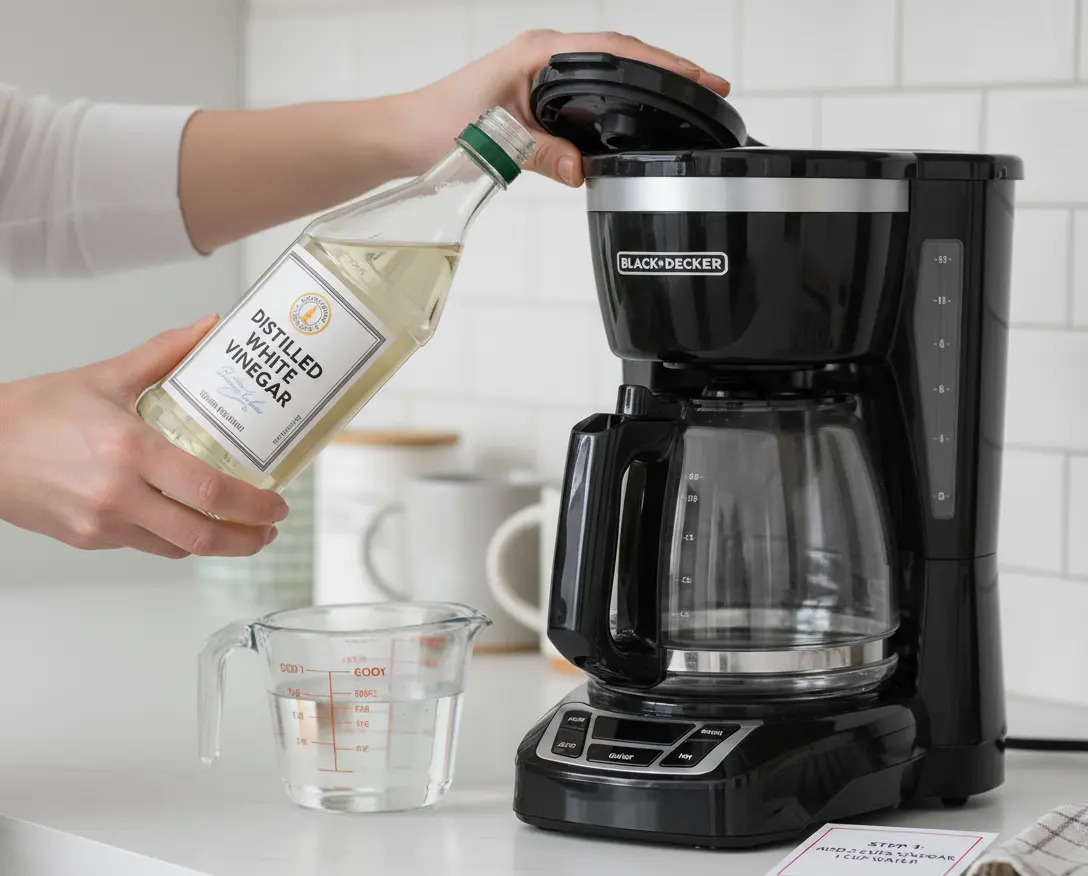
Start with a 50/50 mix of white vinegar and filtered water for a standard brew cycle.
Place a clean paper filter in the basket (or use the reusable filter if your machine lacks a basket—just remove any old grounds). This filter catches loose scale particles as they loosen.
Step 2: Run the Cleaning Cycle and Let It Soak
Start a regular brew cycle but stop it halfway through—after the water has completely filled the carafe or after about one-third of the cycle. Turn off the machine and let the hot vinegar solution sit in the reservoir, heating element, and internal tubes for 30 to 60 minutes. This soaking time is what actually dissolves the limescale. Without the soak, you're just flushing warm vinegar through the system without giving it time to work.
After the soak, restart the brew cycle and let the remaining vinegar-water mixture run all the way through. Do not reuse this liquid. Pour it down the sink and discard the paper filter.
Step 3: Rinse Thoroughly with Fresh Water
Rinsing is just as important as cleaning—skip this and your next cup will taste like a salad dressing. Run two to three full cycles of plain, fresh water. Use the hottest setting if your machine allows it, and replace the water between each cycle. A good test: if you can smell vinegar in the steam from the second rinse, run a third or fourth cycle.
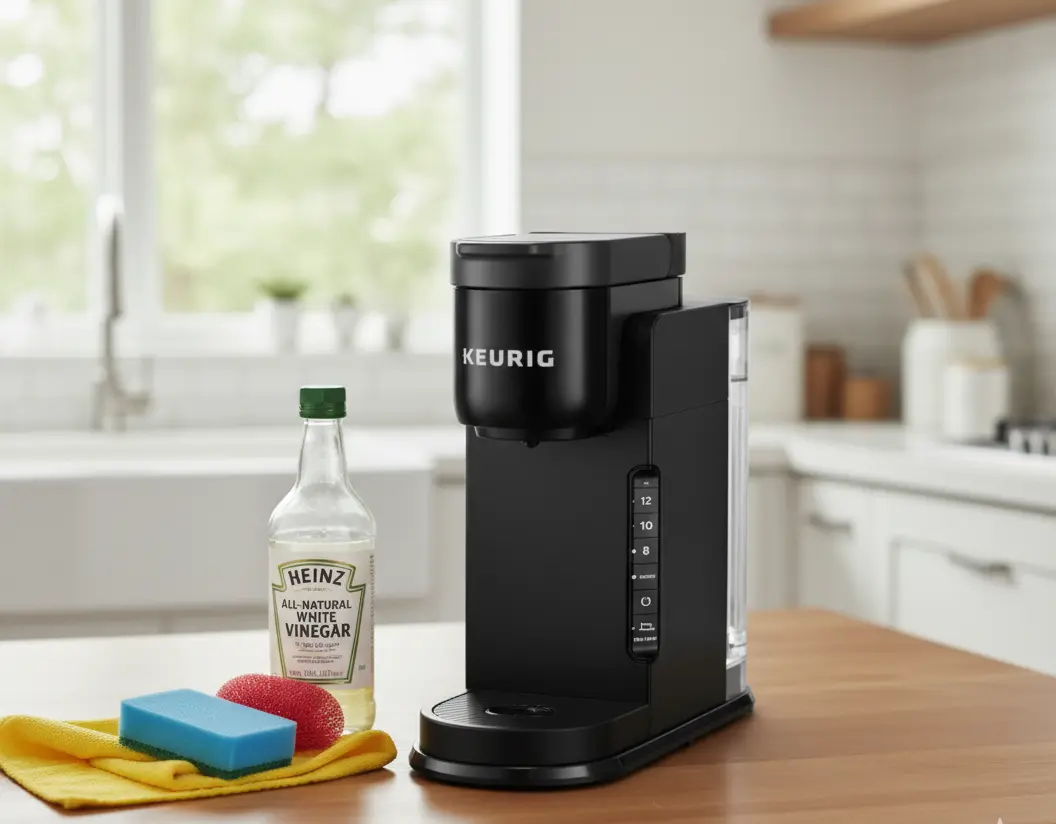
After the vinegar cycle, flush the system with fresh water until no vinegar smell remains.
Finally, remove the carafe, filter basket, and any other removable parts. Wash them in warm, soapy water, then dry completely before reassembling. For stubborn spots on the carafe, use a soft sponge and a little baking soda.
Tips for Making the Descale Routine More Effective
- Use hot water when preparing the vinegar solution – warm vinegar breaks down scale faster.
- Don't skip the soak – 30 minutes minimum, 60 is better for hard water.
- Adjust for hardness – If you have hard water, cut the soak time but increase the concentration slightly.
- Clean the outside too – Coffee drips on the heating plate can bake on. Wipe the exterior with a damp cloth during the rinse phase.
- Track your schedule – Put a note on your calendar or set a phone reminder for the first Sunday of each month.
If your coffee maker has a self-cleaning cycle, you can use it for Step 2. Many models from Cuisinart and Breville have a dedicated “clean” button that automatically runs the soak and rinse. Check your manual—if not, the manual cycle above works just as well.
Regular appliance care extends beyond your coffee maker. For example, your range hood also needs periodic cleaning to keep grease from building up. A simple maintenance routine for your kitchen exhaust will prevent fire hazards and keep the air in your kitchen fresh.
Vinegar vs. Commercial Descalers: Which Should You Use?
Both options work, but they serve different situations.
| Aspect | Vinegar | Commercial Descaler |
|---|---|---|
| Cost | Very low | Moderate |
| Speed | Slower – needs soak | Fast – often no soak required |
| Residue | Strong smell if not rinsed | Usually odorless |
| Effectiveness | Good for light to moderate scale | Excellent for stubborn, baked-on deposits |
| Safety | Food-safe, but can corrode aluminum parts over time | Formulated for coffee maker internals, but may contain acids |
If your machine is made with any aluminum components, check the manual. Prolonged exposure to acetic acid can pit aluminum. In that case, a commercial descaler that's safe for aluminum is worth the extra cost. For stainless steel and plastic interiors, vinegar is perfectly fine.
Homemade alternatives include lemon juice (citric acid) and baking soda for surface cleaning. Lemon juice works similarly to vinegar but leaves a citrus scent, which some people prefer. Baking soda is better for scrubbing the carafe, not for dissolving scale inside the internal tubes.
Common Mistakes To Avoid When Descaling
- Using too much vinegar – A concentrated vinegar solution can damage seals and leave a lingering odor. Stick to a 1:1 ratio unless you have visible buildup.
- Skipping rinse cycles – This is the #1 reason people stop using vinegar. Two rinses are the minimum; three is safer.
- Neglecting the filter basket and carafe – These parts hold oils and grounds that the internal rinse can't reach. Wash them by hand after every other cleaning.
- Cleaning too often – Descaling weekly (or more) is unnecessary and can wear down the machine faster. Stick to monthly unless your water is extremely hard.
- Ignoring the manufacturer's warnings – Some espresso machines specifically prohibit vinegar. If your manual says use a proprietary descaler, follow that advice.
If you're also troubleshooting other kitchen ventilation issues, you might find that a dirty range hood can cause noise or poor airflow. Check out our guide on why your range hood isn't venting properly to keep both appliances in top shape.
Frequently Asked Questions
How many times should I run vinegar through my coffee maker?
For a standard monthly clean, one vinegar cycle is enough. If the machine hasn't been cleaned in months or has visible scale, run two vinegar cycles back-to-back, with a water rinse in between.
Is vinegar safe for all coffee makers?
It's safe for most drip, pour-over, and pod machines with plastic/steel interiors. Some espresso machines with aluminum boilers may be damaged by vinegar. Always consult your manual first.
Can I use vinegar to clean a Keurig or other single-serve pod machine?
Yes, but for pod machines you'll want to use the "maintenance" cycle if available, and run the vinegar-water solution through the needle that punctures the pod. Afterward, run at least 5–6 plain water cycles to ensure no vinegar remains in the needle.
What happens if I don't descale my coffee maker?
Mineral buildup will restrict water flow, reduce brew temperature, and cause your coffee to taste bitter or burnt. Over time, scale can clog the pump and lead to premature failure. Regular descaling prevents costly repairs.
Can I use lemon juice instead of vinegar?
Yes, lemon juice contains citric acid that dissolves scale. Use a 1:1 mix of lemon juice and water, but expect a citrus scent that may persist after rinsing. Most people find vinegar works better for consistent results.
Conclusion
The answer to "how often should you clean coffee maker with vinegar" is simple: once a month for most households. Run a 50/50 vinegar-water brew cycle, let it soak for at least 30 minutes, and then flush the machine with two or three cycles of fresh water. This 15-minute routine prevents mineral buildup, keeps coffee tasting fresh, and extends the lifespan of your brewer.
Make it a habit. Set a monthly reminder on your phone or calendar, and you'll never have to drink a bitter, poorly-brewed cup again. Your coffee maker—and your taste buds—will thank you.