Keeping your rice cooker sparkling clean is important for good food and for making it last. Many people wonder how to clean rice cooker with vinegar because it seems tricky at first. You might worry about harsh chemicals or damaging your appliance.
But do not worry, it is actually very simple! We will walk you through each easy step to get your rice cooker looking like new again. Read on to learn how to do it yourself.
Key Takeaways
- Vinegar is a safe and effective cleaner for rice cookers.
- You will learn how to remove tough stains and smells.
- The steps are simple and suitable for beginners.
- Cleaning your rice cooker regularly keeps it working well.
- This method avoids harsh chemicals that can affect food.
Why Vinegar for Your Rice Cooker
Rice cookers are fantastic kitchen helpers. They make perfect rice every time with little effort. But after cooking, sometimes sticky rice bits and burnt smells can linger.
These can be hard to scrub away. This is where vinegar shines. White vinegar is a natural wonder cleaner.
It is acidic enough to break down food residue and neutralize odors. It also helps to remove mineral deposits from hard water. Using vinegar means you are not putting strong chemicals near where you cook your food.
This makes it a safe choice for everyone.
Understanding the Cleaning Process
Cleaning a rice cooker is not complicated. It mainly involves using the cooker itself to do some of the work. You will create a cleaning solution that gently loosens grime.
This process works on both the inner pot and other parts. It targets stains and smells that regular washing might miss. The beauty of this method is its simplicity.
You likely already have the main cleaning agent at home. This post will guide you through each part of the cooker that needs attention.
What You Will Need
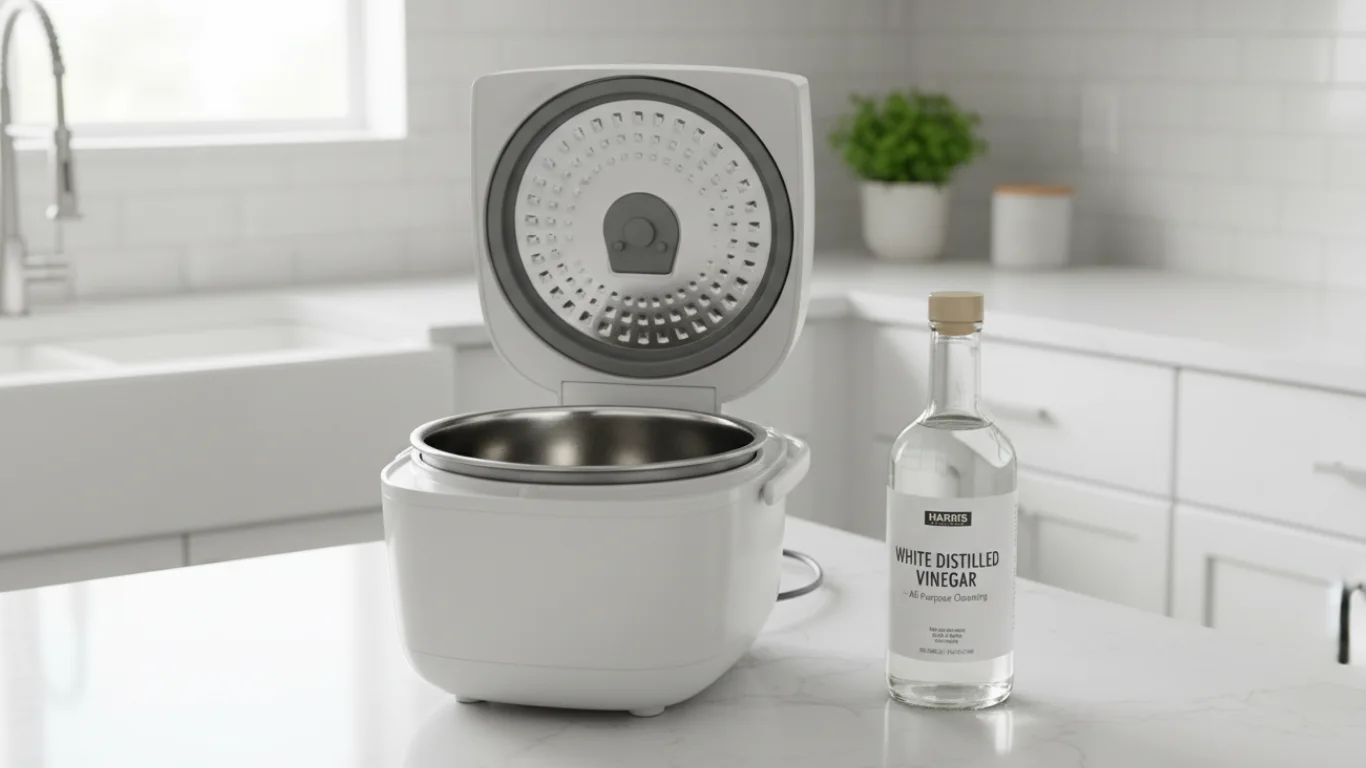
Gathering your supplies makes cleaning smooth. You do not need much for this job. The main ingredient is white vinegar.
Make sure it is plain white vinegar, not apple cider or any other flavored kind. You will also need water. A soft cloth or sponge is useful for wiping down the outside.
For the inside pot, a soft sponge or scrubber works best to avoid scratches. If your cooker has a removable inner lid, have that ready too.
Step-By-Step Guide: How To Clean Rice Cooker With Vinegar
Let us get started. Follow these steps carefully for a clean rice cooker.
Step 1 Prepare the Rice Cooker
First, make sure your rice cooker is unplugged. It must be completely cool before you begin. Remove the inner pot from the cooker base.
Check for any loose rice grains or debris and brush them away. This initial step ensures safety and prepares the parts for cleaning.
Step 2 Create the Vinegar Solution
This is the core of how to clean rice cooker with vinegar. In the removable inner pot, add one part white vinegar to two parts water. For example, if your pot is small, you might use 1 cup of water and 1/2 cup of vinegar.
For larger pots, use more, always keeping the 1:2 ratio. Fill the pot enough so that the solution covers any stains or burnt-on food at the bottom.
Step 3 Heat the Solution
Place the inner pot back into the rice cooker base. Make sure it is seated properly. Now, close the lid.
Turn on the rice cooker and select a ‘cook’ or ‘steam’ setting if available. Let the solution heat up and simmer for about 10-15 minutes. The steam and heat will help loosen stubborn residue and smells.
Step 4 Let It Soak
After 10-15 minutes, turn off the rice cooker. Unplug it again for safety. Leave the vinegar and water solution inside the inner pot.
Let it sit and soak for at least 30 minutes. For very tough stains, you can leave it to soak for an hour or even overnight. This soaking time is key to letting the vinegar do its work.
Step 5 Scrub and Rinse the Inner Pot
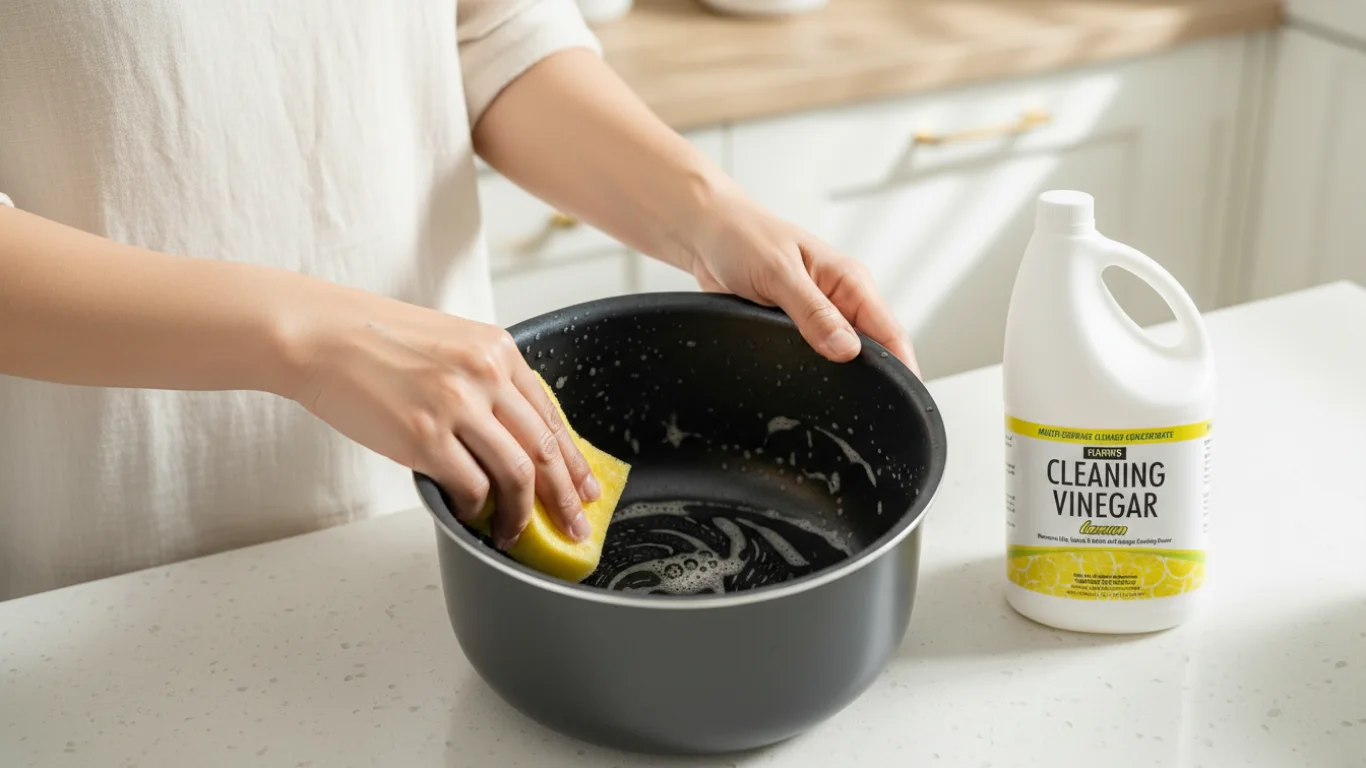
Carefully remove the inner pot. Pour out the dirty vinegar solution. Now, use a soft sponge or a non-abrasive scrubber to gently clean the inside of the pot.
The stains and residue should come off much easier now. Rinse the inner pot thoroughly with clean water until all vinegar smell is gone.
Step 6 Clean Removable Parts
Many rice cookers have a removable inner lid or a steam vent cap. Take these parts off. Wash them separately in warm, soapy water.
If these parts also have stubborn marks, you can soak them in a diluted vinegar and water solution for a short time. Rinse them well and let them air dry completely.
Step 7 Clean the Exterior
Do not forget the outside of your rice cooker. Use a damp cloth with a little mild dish soap to wipe down the exterior. For the heating plate area beneath the inner pot, be careful.
Unplug the cooker and make sure it is cool. Wipe it gently with a damp cloth. Avoid getting water into any electrical components.
Dry the exterior with a clean, soft towel.
Step 8 Reassemble and Dry
Once all parts are clean and dry, put your rice cooker back together. Ensure the inner pot is dry before placing it inside. Make sure the inner lid and any other components are securely in place.
Letting everything air dry completely prevents mold or mildew.
Dealing With Tough Stains and Smells
Sometimes, even with vinegar, very stubborn burnt-on food can remain. If this happens, you can repeat the heating and soaking process. For incredibly tough spots, you might need a bit of gentle scrubbing with a baking soda paste.
Mix baking soda with a little water to form a paste. Apply this paste to the stain and let it sit for a few minutes before gently scrubbing. Rinse very well afterward.
Vinegar is excellent for smells. If a strong odor persists, leaving a bowl of plain vinegar inside the cooker overnight with the lid closed can help absorb it.
How Often Should You Clean Your Rice Cooker?
Regular cleaning is best for your rice cooker. It is a good idea to do a quick clean after every use. This means washing the inner pot with soap and water.
A deeper clean using the vinegar method is recommended about once a month. If you use your rice cooker very often, you might want to do a vinegar clean more frequently. This keeps it in great shape and ensures your rice always tastes fresh.
Troubleshooting Common Issues
What if the pot is still stained after cleaning? You might need to try the vinegar soak longer. For very old, burnt-on messes, it might take a couple of attempts.
If there is a persistent smell, try leaving a small bowl of baking soda inside the cooker with the lid closed overnight. This absorbs odors. Always ensure you are using the correct ratio of vinegar to water and allowing adequate soaking time.
Why This Method Works
The effectiveness of this method lies in the properties of white vinegar. Its acetic acid helps to break down mineral buildup, food particles, and grease. When heated, these properties are enhanced, making the cleaning process more efficient.
The steam generated also helps to loosen stuck-on bits. This combination of heat, steam, and acidity makes how to clean rice cooker with vinegar a powerful and natural way to restore your appliance. It is a safe and eco-friendly alternative to harsh chemical cleaners.
Benefits of Using Vinegar
There are many great reasons to use vinegar for cleaning your rice cooker. Firstly, it is inexpensive and readily available. Secondly, it is non-toxic, making it safe for food contact surfaces.
Thirdly, it is an excellent deodorizer, effectively eliminating lingering cooking smells. Lastly, it is gentle on most rice cooker materials, preventing damage that can occur with abrasive cleaners. This makes it a smart choice for both your appliance and your health.
Maintaining Your Rice Cooker
Once your rice cooker is clean, maintaining it is easy. Always allow it to cool completely before cleaning. Wipe down the inner pot after each use.
Avoid using steel wool or harsh scrubbing pads that can scratch the non-stick coating. Store your rice cooker in a dry place. Regularly inspecting the steam vent for blockages is also a good practice.
Frequently Asked Questions
Can I use other types of vinegar to clean my rice cooker?
It is best to use plain white vinegar. Other vinegars like apple cider vinegar or balsamic vinegar may contain sugars or colors that could potentially stain or leave residue.
How often should I do the vinegar cleaning process?
For most users, cleaning with vinegar once a month is sufficient. If you cook rice daily or notice significant buildup, you can do it more often.
Will the vinegar smell remain after cleaning?
If you rinse thoroughly and let the cooker air out, the vinegar smell should dissipate. You can also run a plain water cycle to help remove any lingering scent.
What if I don’t have a ‘cook’ or ‘steam’ setting?
If your rice cooker only has an ‘on’ or ‘off’ switch, you can simply turn it on and let the solution simmer for about 10-15 minutes, then turn it off and let it soak.
Can I use vinegar to clean the heating element directly?
No, you should be very careful around the heating element. Only wipe it gently with a damp cloth when the cooker is unplugged and cool. Never submerge it in liquid or spray cleaner directly onto it.
Final Thoughts
Cleaning your rice cooker with vinegar is a simple, effective, and safe way to keep it in great condition. You have learned exactly how to tackle stains and smells using this common household item. Just follow the easy steps for a sparkling clean appliance.
Enjoy your perfectly cooked rice every time!