Skip to content
Cooking breakfast on a Blackstone griddle brings the diner experience right into your backyard or kitchen. With its wide, flat surface and powerful burners, the Blackstone griddle makes it easy to cook multiple foods at once, all with that signature sear and sizzle. Whether you’re new to griddle cooking or looking to up your game, this guide shows you every step—from setup and essential tools to recipes and cleanup. You’ll learn how to make classic breakfasts and discover tips even seasoned users often miss.
Why Choose A Blackstone Griddle For Breakfast?
The Blackstone griddle stands out because it heats evenly and handles large quantities of food. You can cook eggs, bacon, pancakes, and hash browns all at once, making it perfect for families or gatherings. The griddle’s surface helps develop flavors you can’t achieve with a regular pan, and the grease management system keeps things less messy.
A Blackstone griddle also offers:
- Versatility: Prepare everything from omelets to sausage.
- Speed: Multiple burners mean you can cook different items at various temperatures.
- Easy Cleanup: Less time scrubbing compared to traditional stovetops.
Essential Tools And Ingredients
Before you start, gather a few key items. Having the right tools makes griddle cooking smoother and more enjoyable.
Tools You’ll Need
- Griddle spatulas (long and wide for flipping pancakes and eggs)
- Oil bottles (for spreading oil evenly)
- Scraper or chopper (for cleaning and moving food)
- Tongs (for bacon and sausage)
- Griddle cover (optional, for steaming or melting cheese)
- Heat-resistant gloves (for safety)
Core Ingredients For Classic Breakfast
You can mix and match, but most Blackstone breakfasts use:
- Eggs (fresh or pasteurized)
- Bacon or sausage
- Bread or English muffins
- Potatoes (for hash browns or home fries)
- Butter or oil (avocado oil, vegetable oil, or clarified butter work best)
- Milk or cream (for scrambled eggs or pancakes)
- Pancake mix or flour, baking powder, sugar
- Vegetables (onions, peppers, spinach)
- Cheese (optional, for omelets or breakfast sandwiches)
For each meal, adjust quantities based on servings. For example, four people typically need 8 eggs, 8 strips of bacon, 2 cups of pancake batter, and 2 potatoes.
Setting Up Your Blackstone Griddle
Proper setup ensures safety and perfect results. Here’s what to check before turning on the burners.
- Choose a flat, stable surface outdoors or in a well-ventilated area.
- Connect the propane tank tightly. Check for leaks by brushing soapy water on the connection—bubbles mean a leak.
- Preheat the griddle on medium-high for 10-15 minutes. This helps burn off any residue and creates a non-stick surface.
- Season the griddle if it’s your first time. Coat with a thin layer of oil, let it smoke off, and repeat 2-3 times. Even if your griddle is pre-seasoned, a little extra oil helps.
Many beginners forget to preheat fully, which can cause sticking and uneven cooking. Another overlooked step is checking for levelness; a tilted griddle causes oil and batter to run to one side.
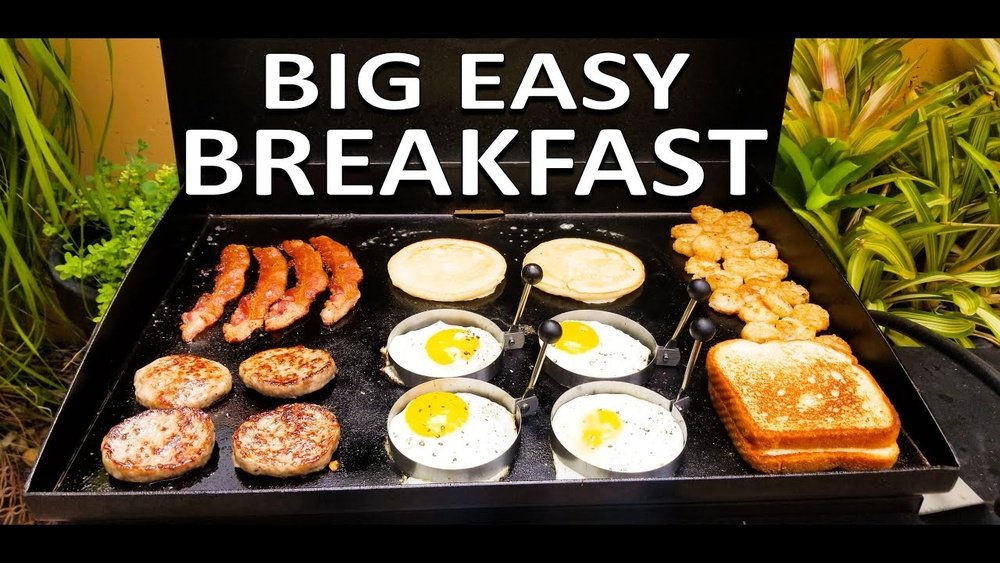
Cooking Breakfast: Step-by-step Instructions
Let’s break down how to cook a full breakfast on your Blackstone. We’ll cover each component with timing and tips.
1. Cooking Bacon Or Sausage
Start with proteins—they take the longest and flavor the surface for other foods.
- Lay bacon strips or sausage links on one side of the griddle.
- Cook at medium heat. Bacon takes 8-10 minutes; sausage may need 12-15 minutes.
- Flip halfway for even browning.
- Move to a cooler spot or warming rack when done.
Tip: Don’t crowd the meat. Give each piece space to crisp.
2. Making Hash Browns Or Home Fries
These go on next, so they soak up some of the bacon flavor.
- Shred potatoes for hash browns, or dice for home fries.
- Squeeze out excess moisture (especially for hash browns).
- Add a thin layer of oil before spreading potatoes on the griddle.
- Press them down with a spatula for crispiness.
- Cook for 5-6 minutes per side, turning once.
Practical Insight: Hash browns crisp better if you avoid moving them too soon. Wait until the edges brown before flipping.
3. Cooking Pancakes
Move to the middle or a clean section of the griddle.
- Pour batter using a ladle or squeeze bottle.
- Cook on medium-low heat until bubbles form and edges look dry (2-3 minutes).
- Flip and cook 1-2 minutes more.
Common Mistake: Turning pancakes too early leads to sticking and uneven color. Always wait for the bubbles.
4. Preparing Eggs
Eggs are quick, so cook them last.
- For fried eggs: Add a small amount of oil. Crack eggs directly on the griddle. Cover with a griddle dome for over-easy or over-medium eggs.
- For scrambled eggs: Whisk eggs with milk, pour, and use a spatula to gently fold until just set.
- For omelets: Cook veggies first, then pour eggs, add cheese, and fold.
Non-Obvious Tip: Scrambled eggs are softer if you cook at lower heat and remove them slightly underdone—they’ll finish from residual heat.
5. Toasting Bread Or English Muffins
As you finish, use the warmest part of the griddle to toast bread.
- Butter one side and place it down.
- Toast for 1-2 minutes until golden.
This step is simple but adds the final touch to a diner-style breakfast.
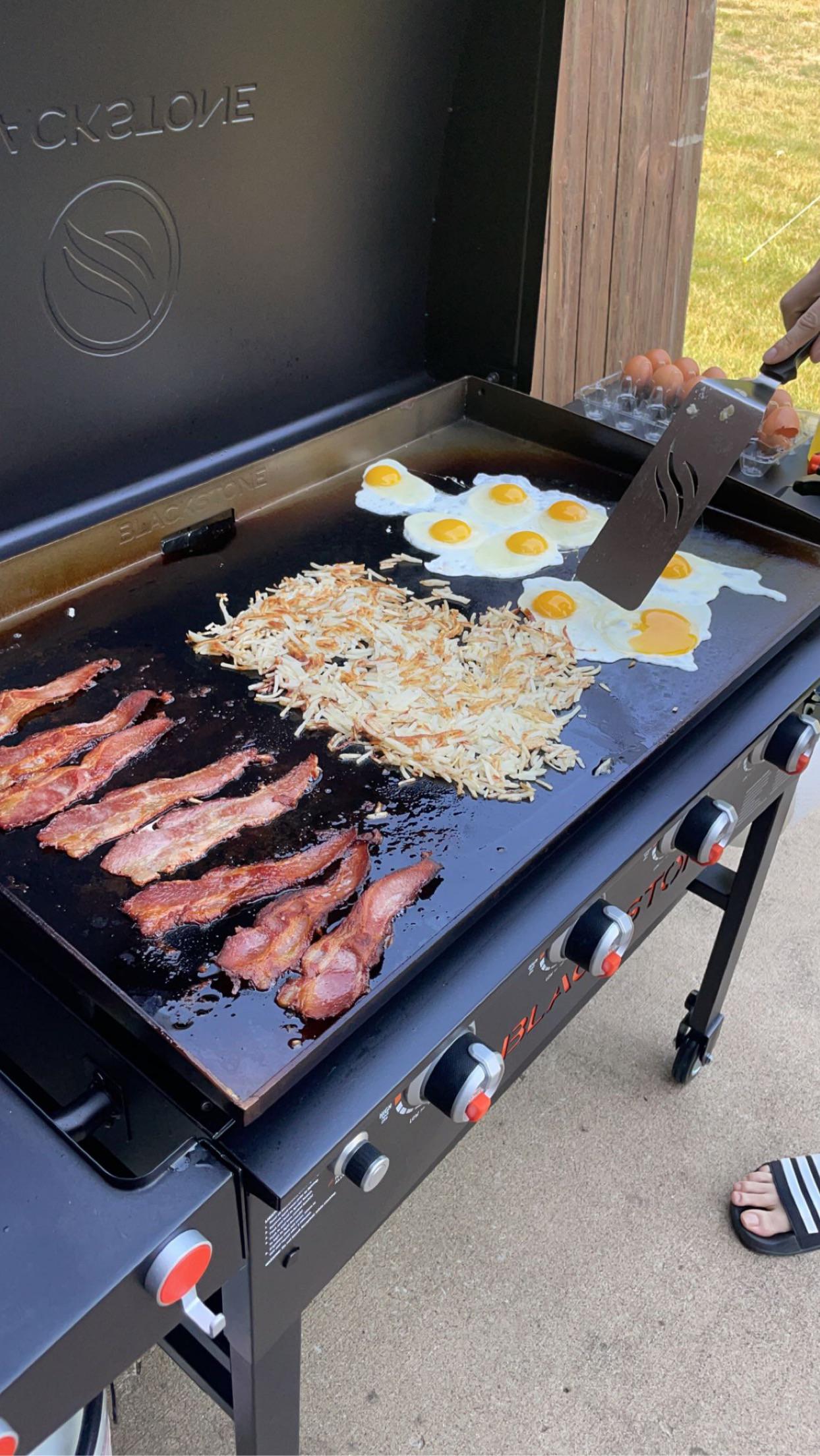
Credit: jenaroundtheworld.com
Example Blackstone Breakfast Menu
Here’s how a classic breakfast lineup looks, with approximate cooking times:
| Item | Quantity (for 4) | Cooking Time | Griddle Zone |
|---|---|---|---|
| Bacon | 8 strips | 8-10 min | Hot side |
| Hash Browns | 2 cups shredded | 10-12 min | Medium side |
| Pancakes | 2 cups batter | 2-3 min/side | Center |
| Eggs | 8 eggs | 2-4 min | Coolest zone |
| Toast | 4 slices | 1-2 min | Any |
Managing Heat Zones For Best Results
The Blackstone griddle shines because you can create different temperature zones. This is key for cooking several foods at once.
- High heat: For crisping bacon and searing potatoes
- Medium heat: For pancakes and home fries
- Low heat: For eggs and keeping food warm
To set zones, turn burners to different levels. For example, set the left burner to high, middle to medium, and right to low. This way, you move food around as needed.
Example Heat Zone Setup
| Zone | Burner Setting | Best For |
|---|---|---|
| Left | High | Bacon, Sausage |
| Center | Medium | Pancakes, Hash Browns |
| Right | Low | Eggs, Toast |
Pro Tip: If you notice food browning too fast, slide it to a lower-heat area rather than turning down the whole griddle.
Cleanup And Maintenance
A well-maintained Blackstone lasts longer and cooks better. Here’s how to keep it in top shape:
- Scrape the surface with a griddle scraper while the griddle is still warm.
- Wipe with a paper towel or cloth, pushing grease toward the grease trap.
- Add a thin layer of oil after each use to prevent rust.
- Deep clean every few weeks with warm water and a drop of dish soap (avoid harsh chemicals).
Many first-time users forget to oil the surface after cleaning, which can cause rust or sticking during the next use.
Creative Breakfast Ideas For The Blackstone Griddle
Once you master the basics, try new recipes. The griddle makes it easy to cook for a crowd or experiment with flavors.
- Breakfast Quesadillas: Fill tortillas with eggs, cheese, and cooked bacon, then grill until crispy.
- French Toast: Dip bread in egg-milk mixture and toast on the griddle.
- Veggie Omelet Wraps: Cook veggies, pour eggs, then roll up in a tortilla.
- Breakfast Sandwiches: Grill sausage patties, toast English muffins, and assemble with eggs and cheese.
- Banana Pancakes: Mash bananas into pancake batter for a sweet twist.
Don’t be afraid to try international flavors. For example, add curry powder to hash browns or use chorizo instead of sausage.
Common Mistakes And How To Avoid Them
Even seasoned cooks make errors on a griddle. Here’s what to watch for:
- Overcrowding the surface: This drops the temperature and causes steaming instead of browning.
- Skipping preheat: Cold griddles lead to sticking.
- Using too much oil: Excess oil makes food greasy and can cause flare-ups.
- Not cleaning right away: Dried-on food is much harder to remove later.
Non-Obvious Insight: Let the griddle fully cool before covering it. Trapped steam can cause rust, even on seasoned surfaces.
Blackstone Vs. Other Griddles: How Does It Compare?
Here’s a look at how the Blackstone griddle stands against other popular options:
| Feature | Blackstone | Electric Griddle | Cast Iron Pan |
|---|---|---|---|
| Cooking Surface | Large, flat, non-stick | Small, non-stick | Small, heavy, needs seasoning |
| Heat Control | Multiple zones | Single temperature | Manual, less precise |
| Capacity | Feeds 4-8 people | Feeds 2-4 people | Feeds 1-2 people |
| Portability | Outdoor, some indoor models | Indoor only | Indoor/outdoor |
For more about different griddle types, you can visit Wikipedia’s griddle page.
Frequently Asked Questions
How Do I Prevent Food From Sticking To My Blackstone Griddle?
Make sure the griddle is well-seasoned and preheated before cooking. Use a thin layer of oil and avoid placing food on a cold surface. Scrape off any residue after each use and apply oil to maintain the non-stick layer.
Can You Cook An Entire Breakfast At Once On The Blackstone?
Yes, the large surface and multiple heat zones allow you to cook bacon, eggs, pancakes, and potatoes at the same time. Start with items that take longer, like bacon, then add quicker-cooking foods as you go.
What Oil Is Best For Griddle Cooking?
Avocado oil, canola oil, or vegetable oil are good choices because they have high smoke points. Avoid butter for initial seasoning, but use it for flavor when cooking.
How Do You Clean A Blackstone Griddle After Breakfast?
While still warm, scrape off food bits with a griddle scraper. Wipe with paper towels, then add a thin layer of oil. For deep cleaning, use water and mild soap, but dry and oil immediately to prevent rust.
Is The Blackstone Griddle Safe For Indoor Use?
Most Blackstone griddles are designed for outdoor use due to propane gas. Some electric models can be used indoors, but always check the manufacturer’s instructions and ensure proper ventilation.
Cooking breakfast on a Blackstone griddle brings people together. With the right tools, ingredients, and a little practice, you’ll serve up golden pancakes, crispy bacon, and fluffy eggs—just like your favorite diner. Remember, success comes from good prep, smart heat control, and quick cleanup.
Enjoy the process, and let your griddle become the heart of your morning routine.