Storing meat safely in the fridge is more than just tossing it onto a shelf. If you get it right, your meat stays fresh, tastes better, and is safer to eat. If you get it wrong, you risk food poisoning, wasted money, and ruined meals.
Many people don’t realize that meat storage is a science—temperature, packaging, placement, and timing all play a role. In this guide, you’ll learn the best ways to store meat in your fridge, avoid common mistakes, and make sure your meals are healthy and delicious every time.
Understanding Meat Spoilage
Meat is highly perishable. It can spoil quickly because it attracts bacteria and molds. The main cause of spoilage is microbial growth. These organisms thrive when meat is left at temperatures above 40°F (4°C). According to the USDA, bacteria multiply fastest in the “danger zone” between 40°F and 140°F. This is why keeping meat cold is crucial.
Signs of meat spoilage include:
- Slimy texture
- Bad odor
- Discoloration
- Sticky surface
Most people don’t know that even small temperature changes can dramatically speed up spoilage. For example, beef left at 50°F for a day can become unsafe.
Choosing The Right Fridge Temperature
Your fridge should always be set at or below 40°F (4°C). This temperature slows down bacteria growth but doesn’t freeze the meat. The freezer should be at 0°F (-18°C). Many fridges have adjustable temperature settings, but not all are accurate.
Here’s a quick comparison of temperature effects:
| Temperature | Bacteria Growth Rate | Meat Safety |
|---|---|---|
| Above 40°F (4°C) | Fast | Unsafe in hours |
| 40°F (4°C) | Slow | Safe for days |
| 0°F (-18°C) | Stopped | Safe for months |
It’s smart to use a fridge thermometer. Place it on the middle shelf—not the door—because temperatures can vary. Adjust your fridge until the thermometer shows 40°F or lower.
How To Package Meat For Fridge Storage
Packaging is often overlooked but it’s key to keeping meat fresh. Air, moisture, and bacteria can enter through poor wrapping. There are several good ways to package meat:
- Store in original packaging if you plan to use it within 1-2 days.
- Rewrap tightly in plastic wrap or aluminum foil for longer storage.
- Use airtight containers. This prevents leaks and keeps odors from spreading.
- Vacuum sealing is the best option. It removes air, extending shelf life by days.
Here’s a quick table to compare packaging methods:
| Method | Protection Level | Recommended Storage Time |
|---|---|---|
| Original packaging | Low | 1-2 days |
| Plastic wrap/foil | Medium | 3-4 days |
| Airtight containers | High | 4-5 days |
| Vacuum sealed | Very High | 5-7 days |
Many people don’t know that wrapping meat too loosely is a major cause of early spoilage. Always squeeze out excess air.
Where To Place Meat In The Fridge
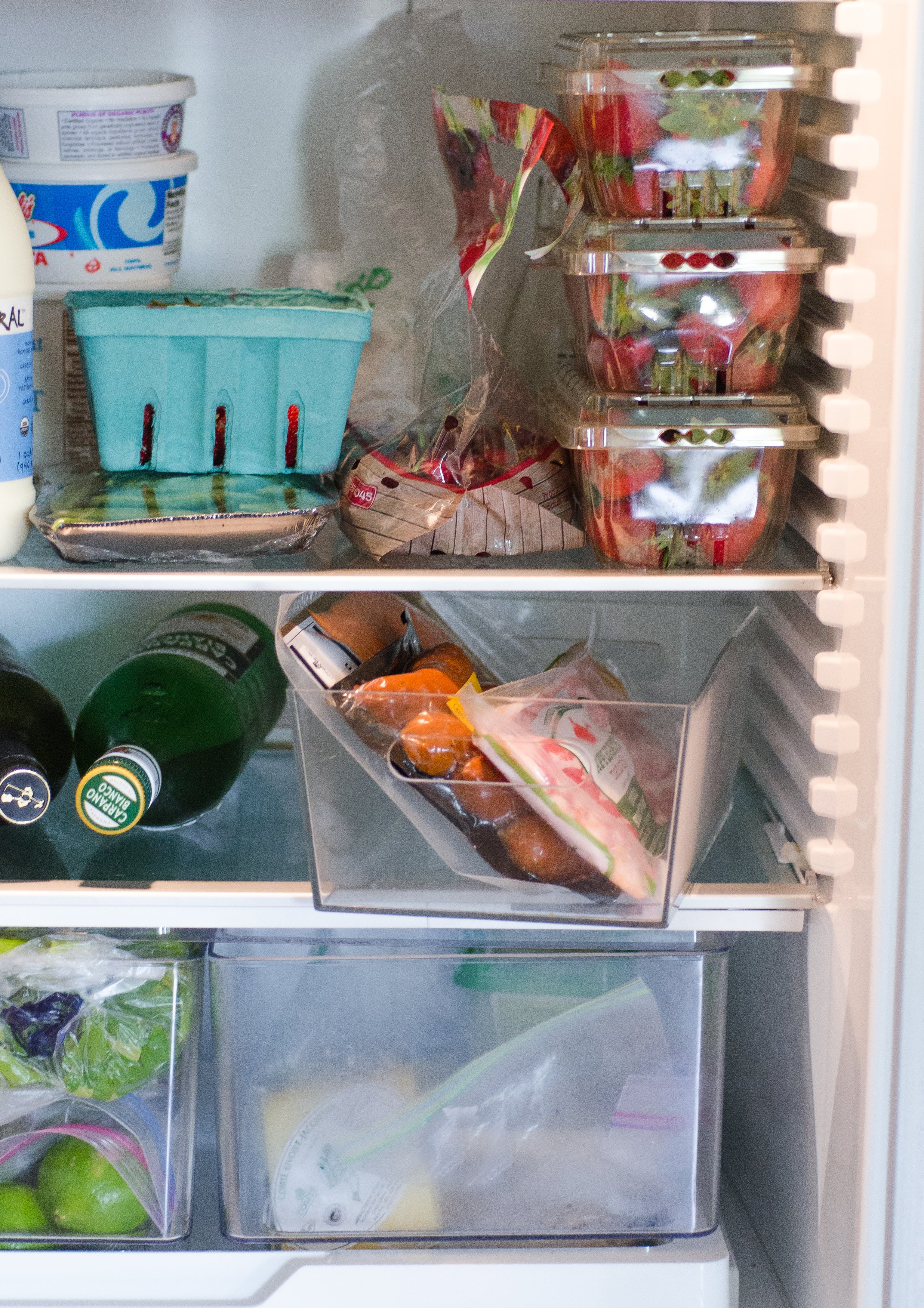
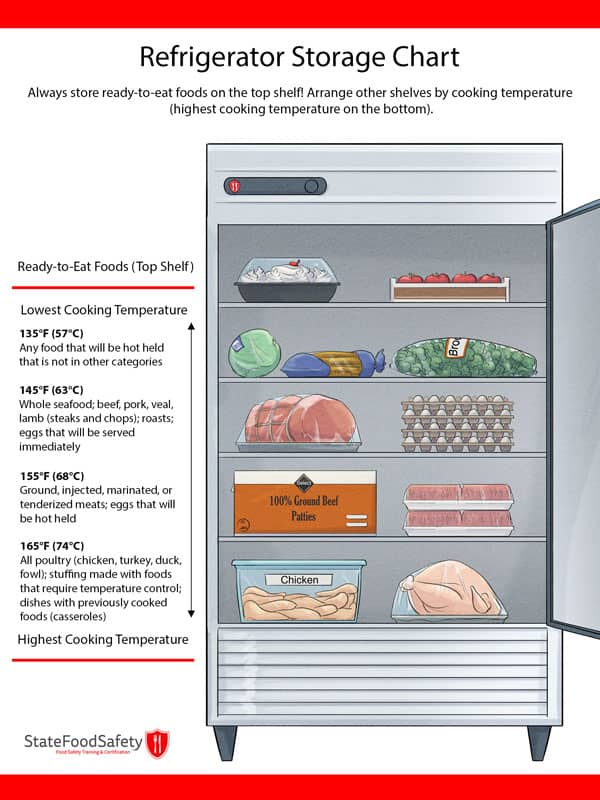
Placement matters. The fridge is not the same temperature everywhere. The coldest spot is usually the bottom shelf, above the vegetable drawer. This is where you should keep raw meat.
Why?
- Cold air sinks, so the bottom is colder.
- It prevents drips from contaminating other foods.
Never store meat on the fridge door. The door is warmer and often fluctuates when opened.
Raw Vs Cooked Meat Storage
Raw and cooked meats need different handling.
Raw Meat
- Always store raw meat in sealed containers.
- Use within 1-2 days for poultry, 3-5 days for beef/pork.
- Keep away from ready-to-eat foods.
Cooked Meat
- Cool cooked meat quickly (within 2 hours).
- Store in airtight containers.
- Use within 3-4 days.
Mixing raw and cooked meat is risky. Raw meat can introduce bacteria to cooked food.
How Long Can Meat Stay In The Fridge?
Different meats last for different times. Here’s a quick guide:
- Chicken/turkey: 1-2 days
- Ground meat: 1-2 days
- Beef/pork/lamb: 3-5 days
- Sausages: 1-2 days
- Cooked meat: 3-4 days
If you can’t use meat within these times, freeze it. Freezing stops bacteria completely.
Avoiding Cross-contamination
Cross-contamination happens when bacteria from raw meat spread to other foods. It’s a common mistake. Always:
- Store meat in the lowest part of the fridge.
- Use separate containers for each meat type.
- Clean spills immediately.
Use separate cutting boards and knives for raw and cooked meat.
Practical Tips For Storing Meat
Here are some expert tips that can help:
- Label and date each package. This prevents forgetting meat and lets you track freshness.
- Don’t overload the fridge. Air needs to circulate to keep meat cold.
- Use absorbent pads under meat packages to catch drips.
- Marinate in the fridge, not on the counter.
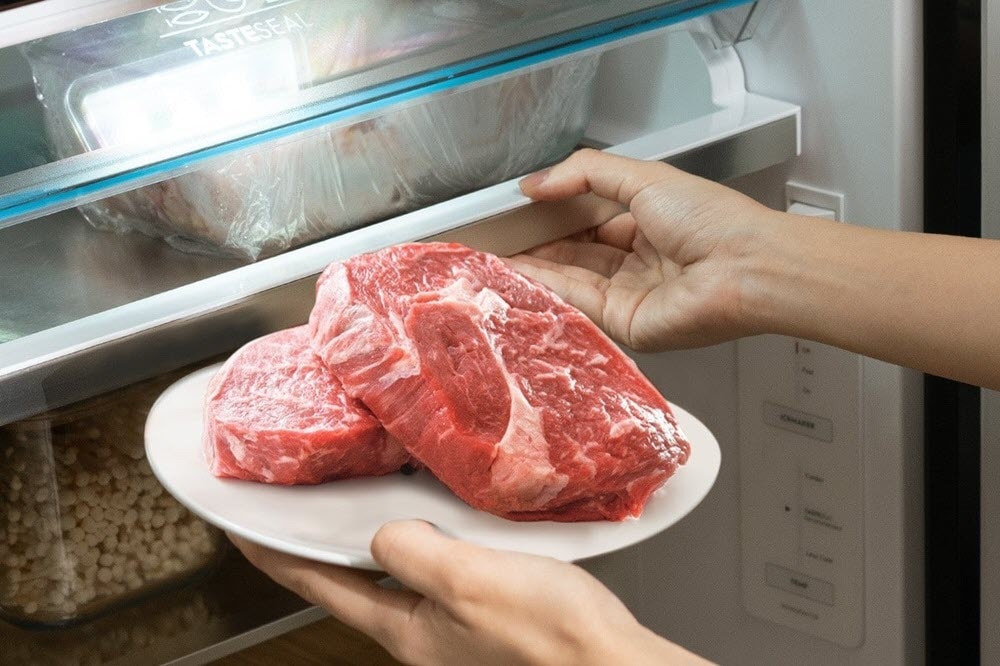
- Defrost meat in the fridge, never at room temperature.
Many beginners don’t realize that meat left on the counter for even an hour can become unsafe.
Credit: www.electroluxarabia.com
Comparing Storage Methods: Refrigerator Vs Freezer
Sometimes, you need to decide between fridge and freezer storage. Here’s a simple comparison:
| Storage Method | Meat Freshness | Maximum Storage Time | Preparation Required |
|---|---|---|---|
| Refrigerator | High (if used soon) | 1-5 days | None |
| Freezer | Very High (long-term) | 6-12 months | Wrap tightly |
Freezing is better for long-term storage, but fridge storage is perfect for short-term use.
Common Mistakes When Storing Meat In The Fridge
Many people make simple mistakes without realizing it. Avoid these:
- Storing meat on the door: It’s too warm.
- Not wrapping properly: Air gets in, meat dries out.
- Mixing raw and cooked meat: Risk of contamination.
- Ignoring expiration dates: Meat can spoil even if it looks fine.
- Overcrowding the fridge: Cold air can’t reach all areas.
- Not cleaning spills: Bacteria can spread quickly.
A less obvious mistake is forgetting to check the fridge temperature regularly. Sometimes, the thermostat is off, or the fridge isn’t cooling properly.
Credit: www.thekitchn.com
How To Tell If Meat Is Still Good
It’s important to check meat before cooking. Look for these signs:
- Color: Fresh meat should be pink or red. Gray or green means spoilage.
- Smell: Any sour or rotten odor is a warning.
- Texture: Slimy or sticky meat is unsafe.
- Packaging: Swollen packs can mean gas from bacteria.
If you notice any of these signs, throw the meat away. Don’t taste test it.
Advanced Storage: Vacuum Sealing
Vacuum sealing is the best way to store meat if you want extra freshness. This method removes air, which slows bacteria growth. Vacuum-sealed meat can last up to 7 days in the fridge.
Benefits of vacuum sealing:
- Longer shelf life
- Less freezer burn (if frozen)
- Compact storage
If you don’t have a vacuum sealer, use double wrapping or airtight containers.
Credit: www.statefoodsafety.com
Sustainable Meat Storage
Reducing waste is important. Americans throw away billions of pounds of food each year. By storing meat correctly, you can:
- Save money
- Reduce food waste
- Lower your environmental impact
Plan meals so you use meat within safe times. Freeze leftovers if you can’t use them soon.
Frequently Asked Questions
How Can I Keep Meat Fresh Longer In The Fridge?
Use vacuum sealing or airtight containers. Keep the fridge at 40°F or lower. Store meat on the bottom shelf and use absorbent pads to catch drips.
Is It Safe To Store Meat In The Fridge For More Than 5 Days?
Only some meats, like beef or pork, can last up to 5 days if stored properly. Poultry and ground meat should be used within 1-2 days. If in doubt, freeze the meat.
Can I Refreeze Meat That Was Thawed In The Fridge?
Yes, if the meat was thawed in the fridge and kept below 40°F, it’s safe to refreeze. However, quality may decrease. Avoid refreezing meat thawed at room temperature.
What’s The Best Way To Thaw Meat Safely?
Thaw meat in the fridge, not on the counter. This keeps it safe from bacteria. Place the meat on a plate or container to catch drips.
Should I Wash Meat Before Storing It?
No, washing meat is not recommended. It can spread bacteria through splashes. Just store it in airtight packaging and cook it thoroughly.
Storing meat safely is easier than you might think, but it requires attention to detail. The right temperature, packaging, and placement make all the difference. By following these tips, you protect your health, save money, and enjoy tastier meals. For more detailed guidelines, check advice from USDA Food Safety. Remember, good meat storage is not just about freshness—it’s about safety and smart cooking.