Standing in the kitchen aisle, staring at two machines that look almost identical, it’s easy to feel stuck. Both have blades. Both make drinks. Both promise smooth results. But a blender and a smoothie maker are not the same tool, and choosing the wrong one can mean wasted money, frustrating cleanup, or a machine that simply can’t handle what you throw in it.
The short answer: a blender is a versatile countertop workhorse designed for many tasks, from crushing ice to pureeing hot soup. A smoothie maker is a compact, specialized device built for one job—blending soft fruit and liquid into a single drinkable serving quickly. Here’s everything you need to know to make the right choice for your kitchen. You can also read our guide on how many watts should a good blender have.
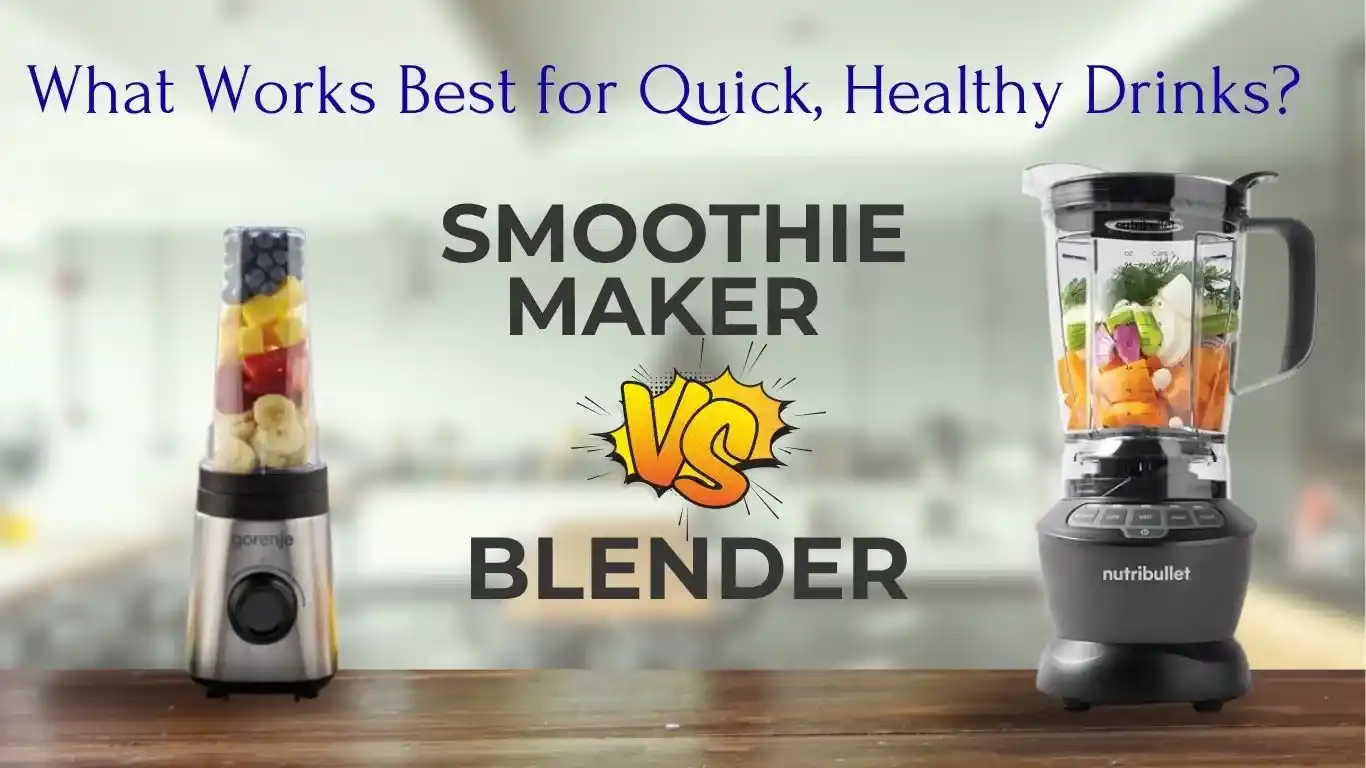
The two machines may look similar at first glance, but their intended jobs are very different.
What Is a Blender?
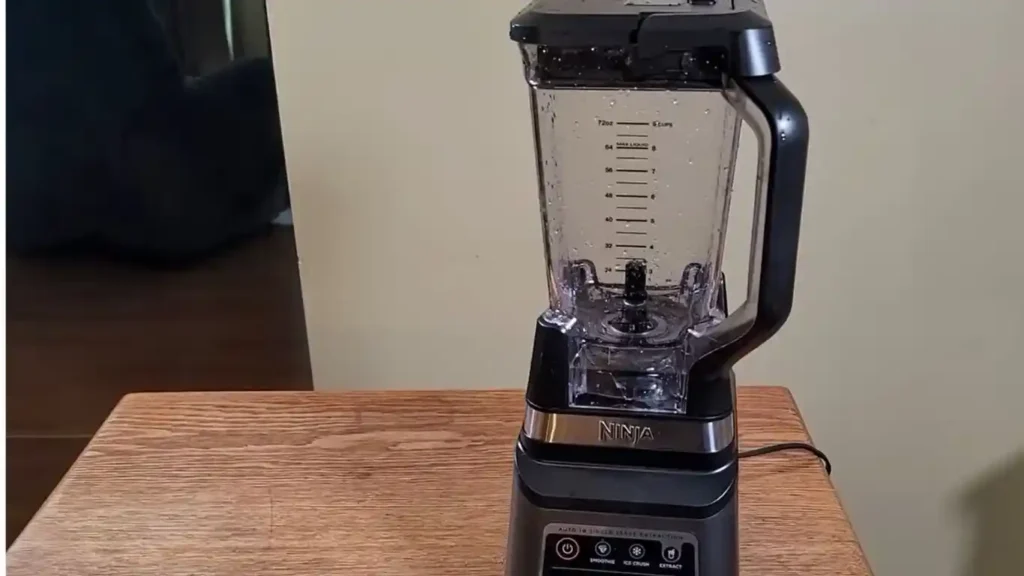
A blender is a countertop appliance with a motor base, a tall jar, and blades mounted at the bottom. When you switch it on, the blades spin fast enough to pull ingredients down toward the base and push them upward in a constant cycle. That core design has stayed the same for decades; what has changed is power, jar material, and program options.
Modern blenders range from budget-friendly 500-watt models to serious 1,500-watt machines that can pulverize ice, frozen fruit, and even whole nuts. There are also “personal blenders” that sit on a counter and attach to small cups. The key point is that a traditional blender is built for volume and versatility. You can also read our guide on ninja bl770 vs bn801.
What a Blender Excels At
A blender is one of the most useful appliances in a kitchen. Beyond smoothies, it handles:
- Hot soups — a high-power blender purees cooked vegetables into silky soup in under a minute.
- Nut butters — roasted peanuts turn into creamy butter with a few minutes of blending and patience.
- Sauces and dressings — salsa, pesto, vinaigrettes, and marinara come together quickly.
- Batters — pancake batter, crepe batter, and some quick breads are easy.
- Frozen drinks — margaritas, daiquiris, and slushies are a specialty.
- Baby food — steam vegetables, then blend to the right texture.
- Crushed ice — many strong blenders handle ice cubes easily, though not every model does.
In practice, a good blender replaces several small appliances. Instead of owning a food processor, an immersion blender, and a milk frother, a single blender covers most of those jobs.
Where a Blender Falls Short
The biggest weakness is portion size. A large jar is awkward for a single smoothie. You either fill it with more food than you need or spend time scraping ingredients down from the sides. You can also read our guide on best blenders for everyday kitchen use.
Blenders are also louder, heavier, and harder to clean than smoothie makers. The tall jar often does not fit comfortably in a dishwasher, and the blade assembly needs careful handling. If you have ever scrubbed dried kale from under a blade, you know the hassle.
What Is a Smoothie Maker?
A smoothie maker is essentially a personal blender. It trades range for speed, simplicity, and convenience. Most smoothie makers come with single-serve cups that you blend directly into, which means there is no separate jug to wash. You can also read our guide on best mini blender for smoothies.
With a smoothie maker, the blended drink is ready in the same cup you take with you.
Why People Choose a Smoothie Maker
The appeal is straightforward. You add fruit, yogurt, milk, or protein powder to the cup, screw on the blade lid, press the button, and in about 30 seconds you have a drink. Unscrew the blade, pop on a travel lid, and walk out the door.
There are no complicated settings. Most models have a single button or a simple pulse function. You do not need to learn speed control or scraping techniques. If your morning routine matters more than your cooking ambitions, that simplicity is valuable.
Smoothie makers can also handle more than smoothies. Protein shakes, milkshakes, iced coffee blends, and small-batch salad dressings work well. Some people use them for pancake batter. But the portions are small, and the motor is not built for heavy-duty tasks.
What a Smoothie Maker Can’t Do
Smoothie makers have clear limits. They struggle with:
- Ice — most models do not have enough power to crush cubes cleanly.
- Frozen fruit in large quantities — a few berries are fine; a cup of frozen banana and mango may stall the motor.
- Hot liquids — the plastic cups are not designed for heat.
- Thick blends — nut butters, hummus, and stiff doughs are out of the question.
- Large batches — making drinks for four people means blending four separate cups.
If your plans go beyond fruit-and-yogurt drinks, you will quickly hit the machine’s limits.
Key Differences at a Glance
| Feature | Blender | Smoothie Maker |
|---|---|---|
| Typical wattage | 500–1,500 watts | 200–600 watts |
| Jar or cup size | 1.5–3 liters | 0.5–1 liter |
| Ice crushing | Yes, on strong models | Rarely |
| Frozen fruit | Yes | In small amounts |
| Hot liquids | Yes, with heat-safe jar | No |
| Preset programs | Often | Rarely |
| Noise level | Louder | Quieter |
| Cleaning | More parts to wash | Blend, drink, rinse |
Power and Motor Strength: Why Wattage Isn’t Everything
Wattage determines how much electrical power the motor draws, but it does not tell the whole story. Torque, blade design, and jar shape all affect how well a machine blends. A well-designed 800-watt blender can outperform a sloppy 1,200-watt model with a dull blade.
That said, power still matters for dense ingredients. A 1,000-watt blender spins through frozen fruit and ice without slowing down. A 300-watt smoothie maker will stall or overheat if you push it too hard.
In practice, 750 watts is a useful floor for a blender that crushes ice regularly. For smoothie makers, most machines sit between 200 and 600 watts, which is enough for soft fruit and liquid but not much else.
Heat and Food Safety
Fast blades create friction, and friction creates heat. A high-speed blender can turn a green smoothie lukewarm, while a slower smoothie maker keeps it cooler. If you are blending raw produce, dairy, or protein shakes, remember that perishable ingredients should not sit out for long. The FDA’s food safety guidance recommends keeping cold foods cold and refrigerating leftovers promptly.
Blade Design and Jar Shape
Blenders use short, blunt blades mounted low in a wide base. That design creates a powerful vortex that pulls ingredients down toward the blades. The tall, narrow jar helps the mixture circulate, which is why blenders handle thick and fibrous foods well.
Smoothie makers use smaller blades that screw into the cup lid. The cup is narrow, so the blade stays close to the ingredients. That works for small portions, but it cannot create the same strong circulation. The result is a machine that blends soft foods quickly and struggles with anything dense.
The same thinking applies to kitchen tools generally: geometry and edge quality matter more than looks. A well-made knife still beats a shiny one, and the same principle applies to quality knife design.
Capacity and Portions: One Serving or a Whole Family?
Think about how many people you are usually blending for. This single question often decides the purchase.
Blenders come with large jars, usually between 1.5 and 3 liters. That is enough for a family-sized batch of soup, a pitcher of margaritas for a party, or smoothies for four people at once. If you like to meal-prep or freeze leftovers, the extra capacity is worth the counter space.
Smoothie makers hold 0.5 to 1 liter. That is one generous smoothie or two smaller ones. The upside is that you can blend and drink from the same cup, which means less washing and a grab-and-go option that blenders cannot match.
Ease of Use and Cleaning
Blenders give you control: multiple speeds, pulse functions, and sometimes preset programs for smoothies, soups, or ice. That control is great when you know what you are doing, but it can feel overwhelming during a rushed morning.
Smoothie makers strip away the options. You get one button, sometimes two. There is no debate about which setting to use at 7 a.m. You press, wait, and drink.
The Cleaning Factor
This is where smoothie makers genuinely shine. Most models clean themselves: add warm water and a drop of dish soap, blend for 30 seconds, and rinse. Because there is no large jar and no separate lid, cleaning takes about a minute.
Blenders are more work. The jar is big, the blade assembly needs careful handling, and many parts require hand-washing. A common mistake is leaving a blender jar on the counter after making a smoothie. Dried residue is much harder to remove later. The same is true for grease and grime elsewhere in the kitchen; it is easier to handle it early than to scrape it off after it hardens. That kind of regular upkeep on greasy kitchen surfaces saves time in the long run.
Kitchen Space and Countertop Reality
Blenders are tall. They often sit permanently on the counter because they are awkward to pull out of a cabinet. If your kitchen is small or your counter space is limited, that footprint matters.
Smoothie makers are compact. The base is small, and the cups store easily in a drawer or cabinet. You can tuck one away and pull it out only when you need it. For apartment kitchens, dorm rooms, or RVs, that is a significant advantage.
A smoothie maker can take up about as much room as a portable electric kettle, which makes it a practical choice for tight spaces.
Cost, Longevity, and Real Value
Price differences reflect both capability and build quality.
Blenders range from about $30 for a basic model to $500 or more for commercial-grade machines. The expensive ones justify their price with stronger motors, sturdier jars, longer warranties, and better support. A solid mid-range blender in the $100–$200 range will handle most home needs for years.
Smoothie makers cost $20 to $150. They are cheaper upfront, which makes them an attractive first appliance. But they are also simpler machines. If the motor burns out from heavy use, replacement can cost nearly as much as the original purchase.
In practice, a well-built blender lasts a decade or more. A smoothie maker might last a few years with daily use. Factor in cost per year, and the blender often ends up being the more economical choice, especially if you use it regularly.
What About “Personal Blenders”?
The category has blurred. Many manufacturers label a high-powered personal blender as a smoothie maker, and some smoothie makers now offer blades strong enough to handle frozen fruit. At the same time, several full-size blenders include a single-serve cup attachment.
If you are shopping in 2026, ignore the name on the box and look for three things:
- Motor power — can it handle the ingredients you plan to use?
- Jar material — is it dishwasher-safe and heat-safe?
- Capacity — does it match how much you actually drink?
A full-size blender with a single-serve cup attachment gives you the best of both worlds, but it costs more and takes more space.
How to Choose: A Simple Decision Framework
You do not need to overthink this. Answer three questions:
What do you mostly make?
- Smoothies, shakes, and iced coffee daily → smoothie maker
- Soups, sauces, batters, dips, and smoothies → blender
- Both, in large quantities → blender with a single-serve cup attachment
How many servings at once?
- Always one serving → smoothie maker
- Family batches or entertaining → blender
How much space and money do you have?
- Small kitchen, tight budget → smoothie maker
- Room on the counter, willing to invest → blender
There is no universal “best” answer. If you want a fast, no-fuss morning drink and already have other appliances, a smoothie maker may be all you need. If you like cooking and want one appliance that does many jobs, choose a blender. For more hands-on guidance across everyday kitchen tools, browse our kitchen archives for practical buying advice.
Frequently Asked Questions
Can a blender make smoothies as well as a smoothie maker?
Yes. Most blenders make excellent smoothies, whether thick or thin. The trade-off is portion size and convenience. Blenders handle larger batches, while smoothie makers are better for single servings.
Which one is better for crushing ice?
A blender. With a motor of at least 750 watts, a blender crushes ice for frozen drinks. Most smoothie makers lack the power and will struggle or stall.
Are smoothie makers easier to clean than blenders?
Generally, yes. Smoothie makers blend directly into their drinking cup, so there are fewer parts to wash. Many also self-clean with a drop of soap and warm water.
Do blenders cost more than smoothie makers?
Blenders have a wider price range. You can find basic blenders for under $50, but high-power models cost several hundred. Smoothie makers typically sell for $20 to $150.
Can you make hot soup in a smoothie maker?
No. The plastic cups in smoothie makers cannot handle hot liquids. Stick to a blender with a heat-safe glass or Tritan jar for soup.
Which machine lasts longer?
A well-built blender usually lasts longer because it is engineered for heavier use. Smoothie makers are simpler and less durable, especially if you push them beyond their intended tasks.
Conclusion: Choose the Machine That Fits Your Routine
Do not buy a machine for the smoothie you want to make someday. Buy for the routine you already have.
If you are short on time, want a quick breakfast, and do not need anything beyond blended drinks, the smoothie maker is the honest, sensible pick. It is faster, easier to clean, smaller, and cheaper.
If you cook meals at home, like experimenting with recipes, or want one appliance that handles smoothies, soups, sauces, and desserts, a blender is the better long-term value. It costs more and takes up more space, but it replaces several other appliances and lasts for years.
Look at your counter, think about your mornings, and choose the machine you will actually use. That is the one worth bringing home.