Cooking in an air fryer can be super easy, but when you live high up, things get a bit tricky. You might notice your food cooks faster or dries out more than it should. This is because air fryer altitude cooking adjustments for high elevations are different from cooking at sea level.
It’s not your fault if you’re finding it a puzzle! We’ll show you simple ways to fix this so your meals turn out just right every time. Get ready to make your air fryer work perfectly for you, no matter how high you are.
Key Takeaways
- Understand why altitude affects air fryer cooking times and results.
- Learn how to adjust temperature settings for high elevations.
- Discover how to modify cooking durations to prevent overcooking or undercooking.
- Find tips for keeping foods moist and flavorful at high altitudes.
- Get practical advice for various types of food when air frying at elevation.
- Feel confident making delicious meals with your air fryer wherever you are.
Why Altitude Changes Air Fryer Cooking
How Air Fryer Altitude Cooking Adjustments For High Elevations Work
Living at a higher elevation means the air pressure is lower. This affects how heat works, especially in appliances like air fryers that rely on circulating hot air. At lower pressure, water boils at a lower temperature.
This can cause foods to dry out more quickly because the moisture escapes faster. Also, foods might cook unevenly. Some parts could be done while others are still raw.
Understanding these basics helps you make smart changes to your cooking. It’s all about adapting the heat and time to your specific environment.
The Science Behind Lower Air Pressure
Air pressure is the weight of the air around us. At sea level, this pressure is higher, pushing down more on everything. As you go up in elevation, there’s less air above you, so the pressure drops.
Think of it like being on top of a mountain versus at the beach. This lower pressure means that water and other liquids can turn into steam and evaporate more easily. For cooking, this is a big deal.
Foods lose moisture faster because the surrounding air can’t hold as much moisture and the lower boiling point of water speeds up evaporation. This is a primary reason for needing Air fryer altitude cooking adjustments for high elevations.
This effect is most noticeable when cooking foods that have a lot of water content, like vegetables or meats. Without proper adjustments, your air fryer meals might end up dry and tough. It’s not about the air fryer being faulty, but about physics at play.
Even a few thousand feet can make a difference. So, if you’ve ever wondered why your fries get crispy too fast or chicken breast turns dry, altitude is likely the culprit.
Impact on Food Moisture
When you air fry at high altitudes, the reduced air pressure significantly impacts the moisture content of your food. Water within the food turns to steam and escapes more readily. This is because the boiling point of water decreases with altitude.
At higher elevations, water boils at temperatures below 212°F (100°C). This means the cooking process that relies on boiling water can happen at lower temperatures, but it also means that moisture evaporates faster. Your food essentially dries out quicker.
This rapid moisture loss can lead to disappointing results. Foods might become dry, tough, and less flavorful. For instance, baking cakes or cookies at high altitudes often requires adjustments to prevent them from becoming crumbly or too brown on the outside before the inside is cooked.
Similarly, air frying meats can result in a dry exterior with an undercooked interior if not managed carefully. The goal is to maintain a balance between cooking the food thoroughly and preserving its natural moisture.
How Heat Transfer Changes
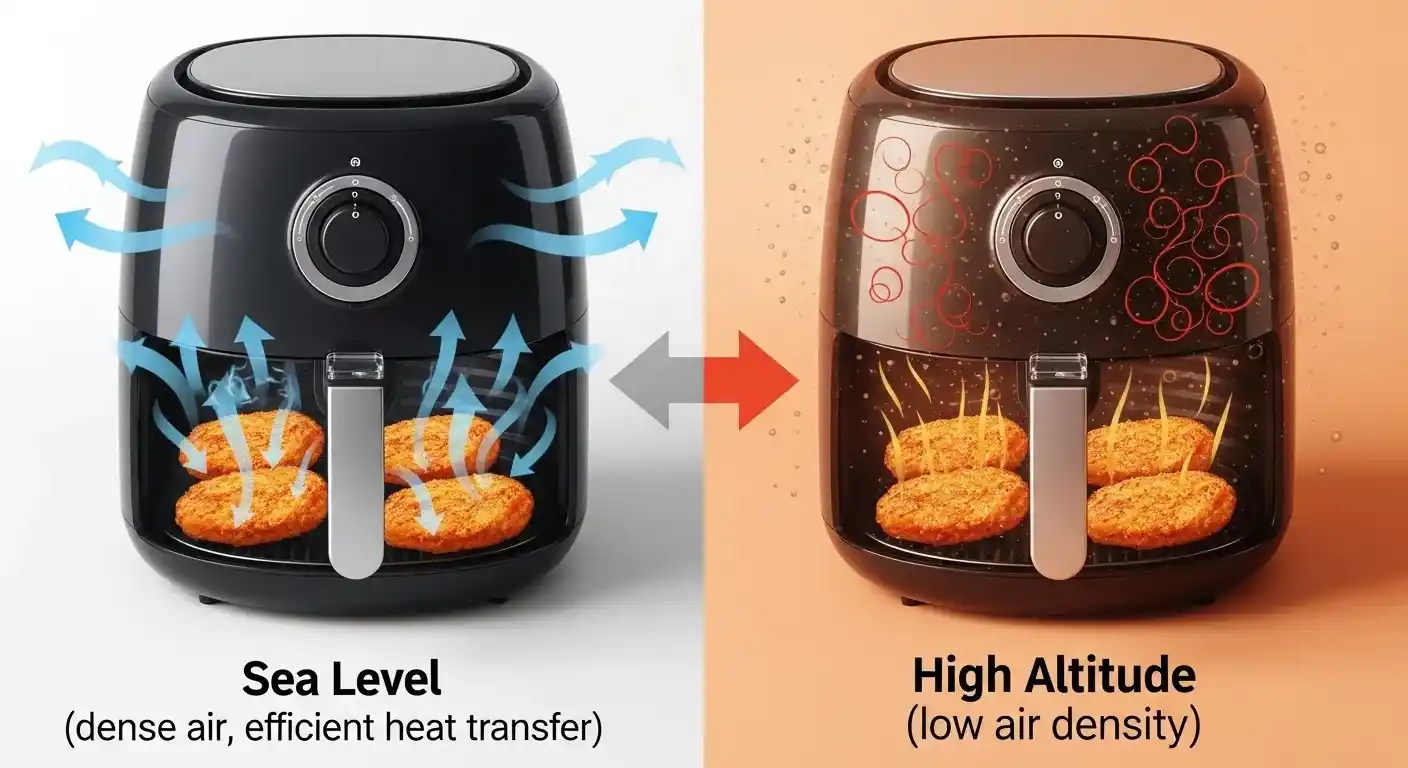
In an air fryer, heat transfer primarily occurs through convection. Hot air circulates rapidly around the food, cooking it evenly. At higher altitudes, the lower air density affects how efficiently this hot air transfers heat.
Denser air at lower altitudes carries heat more effectively. When the air is less dense, the hot air molecules are farther apart, and they don’t transfer heat as quickly or as intensely to the food.
This means that the cooking temperature indicated on your air fryer might not translate to the same cooking power as it would at sea level. You might need to increase the temperature or cooking time to achieve the desired doneness. Conversely, the faster evaporation of moisture can sometimes lead to food cooking faster on the outside, creating a crispy crust before the inside is cooked through.
It’s a delicate balance that requires thoughtful adjustments to ensure your food is cooked perfectly.
Adjusting Temperature Settings For High Elevation
Increasing The Temperature
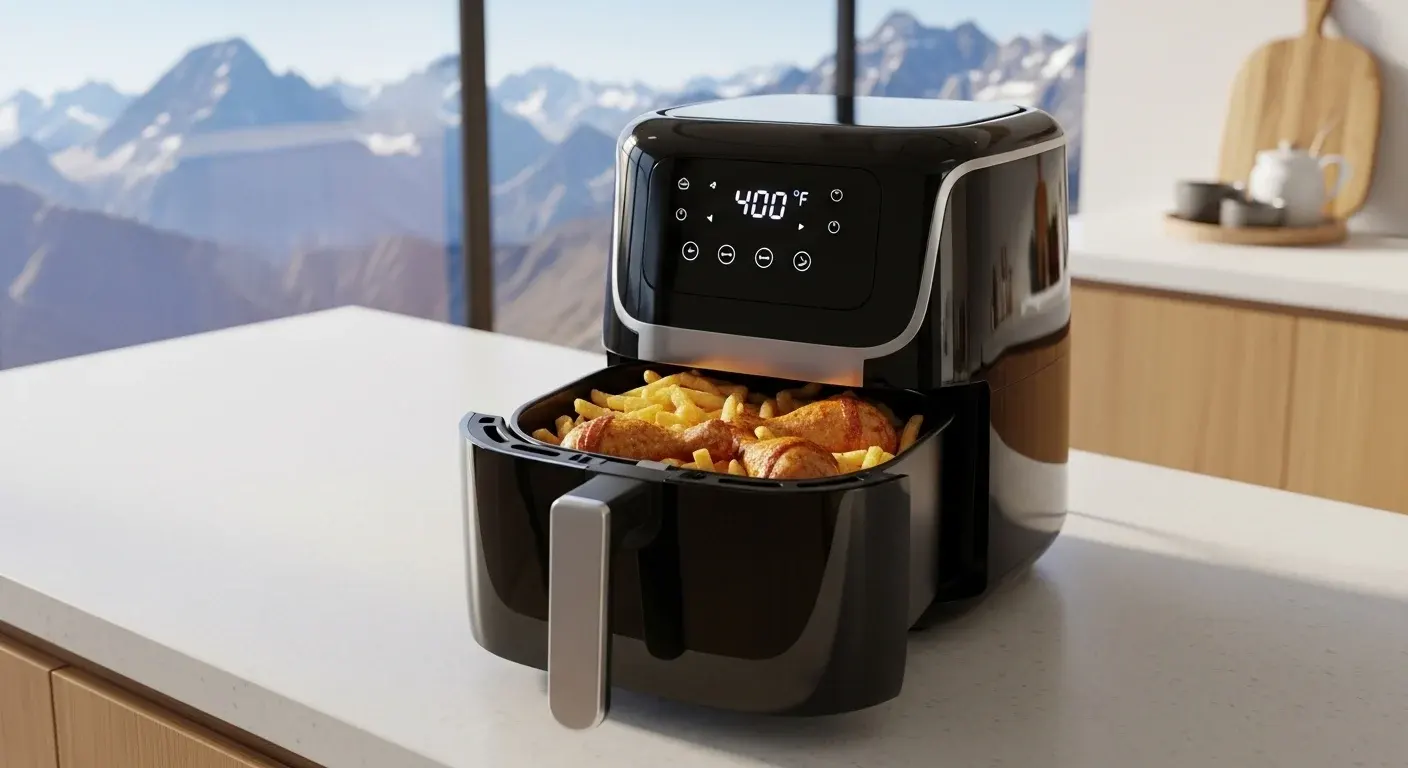
One of the most common adjustments for air fryer altitude cooking adjustments for high elevations is to increase the cooking temperature. Since the air is less dense and heat transfer might be less efficient, you’ll need to boost the heat to get your food cooked properly. A general rule of thumb is to increase the temperature by about 25°F (15°C) for every 3,000 feet of elevation above sea level.
For example, if a recipe calls for 375°F (190°C) at sea level, you might need to set your air fryer to 400°F (205°C) if you are around 3,000 feet high.
However, this isn’t a one-size-fits-all solution. Some foods, like delicate pastries or certain vegetables, can burn easily if the temperature is too high. For these, you might need to focus more on increasing the cooking time rather than the temperature.
It’s always best to start with a small increase and monitor your food closely. You can always add more time, but you can’t un-burn your food. Experimentation is key, and keeping notes on what works for different foods can save you a lot of guesswork.
When To Keep The Temperature The Same
There are situations where keeping the temperature the same as the recipe suggests might be appropriate. This often applies to recipes where the temperature is already quite high, or when you are only slightly above sea level. For instance, if a recipe requires air frying at 400°F (205°C), and you are only at 1,000 feet elevation, you might not need any temperature adjustments at all.
The difference in air pressure and density might be too minimal to significantly impact the cooking process.
Another factor to consider is the type of food. If you are cooking something that doesn’t have a lot of moisture to begin with, like frozen fries or pre-made breaded items, the impact of altitude on moisture loss will be less pronounced. In these cases, adjusting the cooking time might be more beneficial than altering the temperature.
It’s also worth noting that some modern air fryers have advanced features that might compensate for altitude changes to some extent, though this is rare. Always use recipes as a guide and be prepared to make minor adjustments based on your observations.
Monitoring For Doneness
Regardless of whether you adjust the temperature, closely monitoring your food is crucial when air frying at high altitudes. Use a reliable food thermometer to check internal temperatures, especially for meats and poultry. This is the most accurate way to ensure your food is cooked safely and thoroughly.
Look for visual cues too. Foods should appear golden brown and cooked through, without being overly dry or burnt on the edges.
It’s helpful to check your food a few minutes before the recipe suggests it will be done. This way, you can add more time in small increments if needed. Pay attention to how quickly the food is browning.
If it’s browning too fast, the temperature might be too high, or you might need to shield it. If it’s not browning at all, you might need a little more time or a slightly higher temperature. This hands-on approach is far more effective than relying solely on programmed settings when dealing with Air fryer altitude cooking adjustments for high elevations.
Modifying Cooking Times For Altitude
Reducing Cooking Time
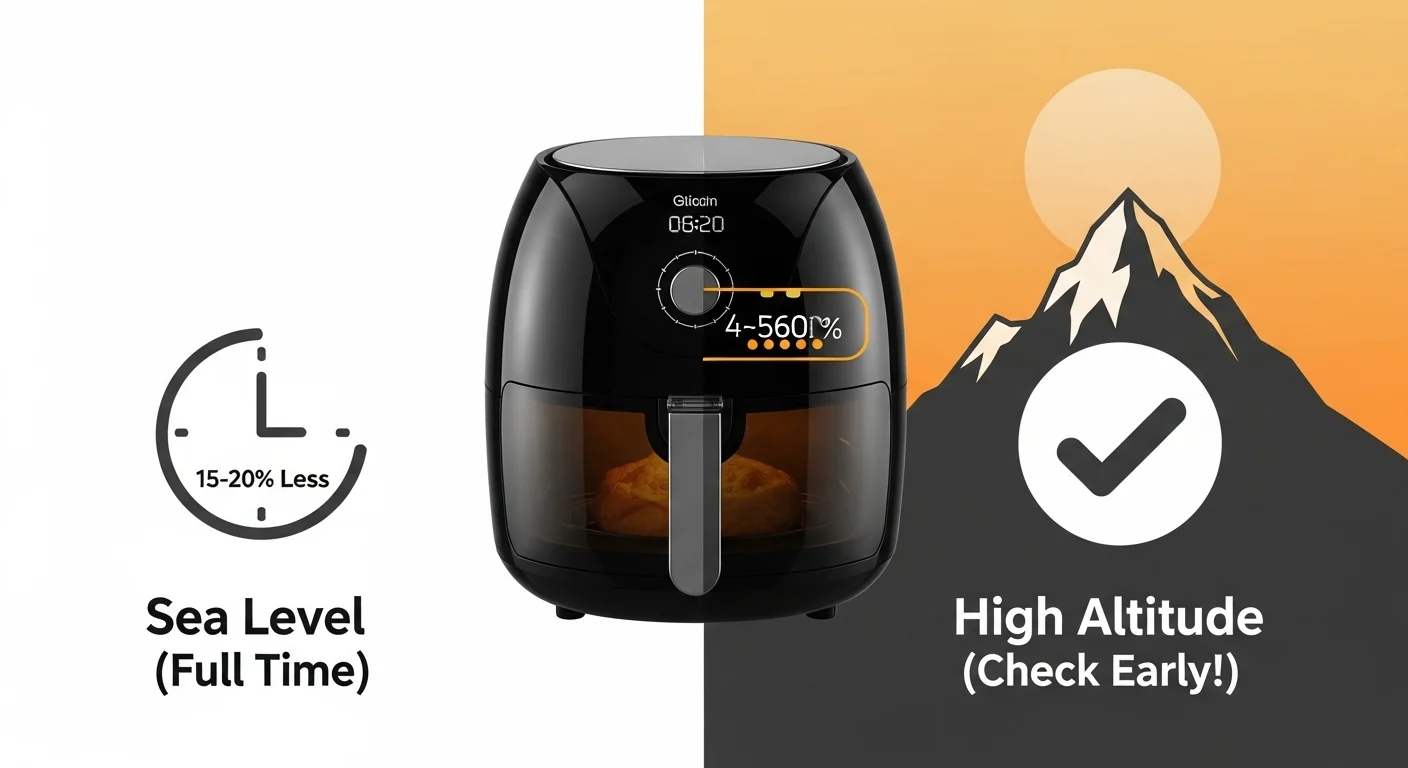
Since food can cook faster at higher altitudes due to lower air pressure and faster moisture evaporation, you will often need to reduce the cooking time suggested in recipes. The general guideline is to start checking your food about 15-20% earlier than the recipe states. For example, if a recipe says to cook chicken wings for 20 minutes, you might want to check them at the 15-minute mark.
This helps prevent them from becoming overcooked, dry, and tough.
This reduction in time is especially important for foods that are sensitive to overcooking. Delicate items like fish or small vegetables might only need a few minutes less. For heartier items like roasted potatoes or whole chickens, the time savings might be more significant.
The key is to be observant. When you start checking early, you can determine if your food is nearing doneness and adjust accordingly, adding a few more minutes if necessary. This proactive approach minimizes the risk of ruining your meal.
When To Increase Cooking Time
While it might seem counterintuitive, sometimes you may need to increase cooking time at higher altitudes, especially if you’ve reduced the temperature. If you’ve opted to keep the recipe temperature the same but notice your food isn’t cooking through, you’ll need to extend the time. This is less common than needing to reduce time, but it can happen, particularly with dense foods or if you’re at a very high elevation and haven’t made significant temperature adjustments.
For example, if you’re baking a dense cake or cooking a large roast, and you’ve found that reducing the temperature to compensate for faster outer cooking isn’t working well, you might need to cook it longer at a slightly adjusted temperature. The goal is to achieve an even internal temperature without burning the exterior. Think of it as a slow and steady approach.
If the initial cooking seems too slow, you can gradually increase the time in 5-minute increments. Always use a thermometer to confirm doneness for meats and baked goods.
Batch Size Considerations
The size of the batch you are cooking in your air fryer also plays a role, especially at high altitudes. Overcrowding the air fryer basket is a common mistake that leads to uneven cooking. When you cram too much food in, the hot air cannot circulate properly around each piece.
This results in some items being cooked more than others, and the overall cooking time can be extended, or the food might not get crispy.
At high altitudes, this problem is amplified. With less efficient heat transfer, you need even better air circulation. Therefore, it’s even more critical to cook in single layers and leave space between food items.
If you need to cook a larger quantity, it’s better to do it in multiple batches. While this might take a bit longer overall, it ensures that each batch cooks evenly and reaches the desired crispiness and doneness. This is a key aspect of successful Air fryer altitude cooking adjustments for high elevations.
Keeping Foods Moist And Flavorful
Brining and Marinating
To combat the drying effects of high-altitude cooking, brining and marinating are excellent techniques. Brining, especially for poultry, involves soaking the meat in a saltwater solution. This process helps the meat retain more moisture during cooking.
The salt breaks down muscle proteins, allowing them to absorb and hold more water. A basic brine can be as simple as 1/4 cup of salt per quart of water, with optional additions like sugar, herbs, or spices.
Marinating, on the other hand, infuses food with flavor and can also help keep it moist. Marinades typically contain an acidic component (like vinegar or citrus juice), oil, and seasonings. The acid helps to tenderize the meat, while the oil helps to keep it from drying out.
Even a short marinade can make a noticeable difference in the final texture and taste of your air-fried dishes. Always marinate in the refrigerator and discard the used marinade before cooking.
Using Moisture-Rich Ingredients
Incorporating ingredients that naturally hold moisture can be a smart strategy. When cooking vegetables, consider adding a splash of water, broth, or even a tablespoon of olive oil to the basket before cooking. This creates a bit of steam that helps keep them tender.
For meats, you can add a few slices of lemon or orange, or sprigs of fresh herbs to the basket. These can add subtle flavor and a bit of extra steam as they cook.
Another trick is to lightly coat your food with oil before air frying. This creates a barrier that helps to seal in moisture. For items like vegetables or potatoes, a light misting of cooking spray or a toss with a teaspoon of oil can make a big difference in preventing them from becoming too dry.
For meats, ensure any marinades or coatings are evenly applied. This simple step significantly enhances the succulence of your air-fried creations.
Don’t Overcook
This is perhaps the most important advice for high-altitude air frying: avoid overcooking at all costs. As we’ve discussed, food dries out faster at elevation. Overcooking exacerbates this problem exponentially.
It’s far better to slightly undercook something and then pop it back into the air fryer for a few more minutes than it is to overcook it. Overcooked food at high altitudes is often dry, tough, and disappointing.
Develop a habit of checking your food early and often. Use visual cues like browning and texture, but most importantly, use a meat thermometer. For chicken, aim for an internal temperature of 165°F (74°C).
For pork, it’s 145°F (63°C) followed by a rest period. For vegetables, aim for tender-crisp rather than mushy. By being vigilant and stopping the cooking process at the right moment, you can ensure your food remains moist and flavorful, even when air frying at high elevations.
Tips For Common Foods
Vegetables
When air frying vegetables at high altitudes, like broccoli, carrots, or bell peppers, they tend to cook faster and can dry out easily. To prevent this, toss them with a tablespoon of olive oil and a pinch of salt and pepper. This helps create a barrier that retains moisture.
You might also want to add a splash of water or broth to the air fryer basket during the last few minutes of cooking to create steam. Check for doneness a few minutes earlier than a sea-level recipe suggests.
For root vegetables like potatoes or sweet potatoes, cut them into uniform sizes for even cooking. They might require a slightly higher temperature or a bit more time than at sea level, but watch closely to avoid drying them out. If they seem to be browning too quickly on the outside, you can reduce the temperature by 25°F (15°C) and extend the cooking time slightly.
Remember that lower air pressure means less dense air, so even these denser vegetables can lose moisture faster.
Meats And Poultry
Air frying meats and poultry at high altitudes requires careful attention to moisture retention. For chicken breasts or thighs, consider brining them beforehand or marinating them for at least 30 minutes. When cooking, you may need to reduce the cooking time by 10-15% compared to sea-level recipes.
Always use a meat thermometer to ensure the internal temperature reaches 165°F (74°C) for poultry and 145°F (63°C) for pork or beef steaks.
For burgers or meatballs, they can dry out quickly. Mixing in a tablespoon or two of breadcrumbs soaked in milk or water can help add moisture. Also, avoid over-pressing them during cooking.
If you are air frying a whole chicken or a larger cut of meat, you may need to adjust both temperature and time. Sometimes, reducing the temperature by 25°F (15°C) and increasing the cooking time can lead to more even cooking and better moisture retention. The goal is to achieve a juicy interior and a nicely browned exterior.
Frozen Foods
Frozen foods, like fries, nuggets, or pizza, are often designed to cook well at standard conditions. However, Air fryer altitude cooking adjustments for high elevations can still apply. Because frozen foods contain a lot of ice, the cooking process can be slightly different.
You might find that they brown faster on the outside because the moisture on the surface evaporates quickly. This can sometimes lead to a slightly less crispy interior.
A good strategy for frozen foods is to check them a few minutes earlier than the package suggests. If they are browning too quickly, you can lower the temperature by 25°F (15°C) and continue cooking until done. If they are not getting crispy enough, you might need to increase the temperature slightly, but be very mindful of the browning.
Often, a small adjustment in time is all that’s needed. It’s also crucial to avoid overcrowding the basket with frozen items, as this severely hinders air circulation and crisping.
Baked Goods
Baking in an air fryer at high altitudes presents unique challenges, especially for delicate items like cakes, cookies, and muffins. Lower air pressure can cause cakes to rise too quickly and then collapse, or become dry and crumbly. For cookies, they might spread too much or bake unevenly.
The general advice is often to reduce sugar and liquid content slightly, and potentially increase baking powder or flour.
When air frying baked goods, it’s advisable to reduce the temperature by 15-25°F (8-15°C) compared to sea-level recipes. You might also need to shorten the cooking time. Keep a close eye on them.
For cookies, look for edges that are set and lightly golden. For cakes, a toothpick inserted into the center should come out clean. It’s a delicate balance, and often requires a few trial runs to get perfect results.
Don’t be discouraged if your first attempts aren’t ideal; experimentation is key to mastering high-altitude baking in your air fryer.
| Elevation (Feet) | Temperature Adjustment (°F) | Time Adjustment |
|---|---|---|
| 0-1000 | No change or slight reduction (e.g., -10°F) | No change |
| 1000-3000 | Increase by 15-25°F | Reduce by 10-15% |
| 3000-5000 | Increase by 25-35°F | Reduce by 15-20% |
| 5000+ | Increase by 35-50°F | Reduce by 20-25% or more |
These are general guidelines. Always monitor your food closely and make adjustments as needed based on the specific recipe and your observations. The table provides a quick reference for common adjustments when dealing with Air fryer altitude cooking adjustments for high elevations.
Frequently Asked Questions
Question: Do I need to adjust my air fryer settings if I live at a moderate altitude?
Answer: Yes, even at moderate altitudes (around 1,000 to 3,000 feet), you might notice a difference. It’s a good idea to start by checking your food a few minutes earlier than the recipe suggests and be prepared to make small adjustments to time or temperature.
Question: What is the best way to check if my food is cooked through at high altitude?
Answer: The most reliable method is to use an instant-read food thermometer. This is crucial for meats and poultry to ensure they are cooked to a safe internal temperature without overcooking. Visual cues are helpful but less precise.
Question: Will my air fryer cook faster at high altitude?
Answer: Generally, yes, food can cook faster because moisture evaporates more quickly due to lower air pressure. However, heat transfer can also be less efficient, so it’s a balancing act that often requires shorter cooking times overall, but sometimes with adjusted temperatures.
Question: Why do my baked goods turn out dry when air frying at high elevation?
Answer: At high altitudes, the lower air pressure causes moisture to escape from baked goods more rapidly during the cooking process, leading to dryness. Reducing the temperature and cooking time, and ensuring even air circulation can help mitigate this.
Question: Can I use the same recipes for my air fryer at high altitude as I do at sea level?
Answer: You can use them as a starting point, but expect to make adjustments. It’s essential to be flexible and observant. Paying attention to how your food cooks will help you learn the necessary tweaks for successful high-altitude air frying.
Wrap Up
Making Air fryer altitude cooking adjustments for high elevations is straightforward. Remember to watch your food closely, adjust times, and sometimes temperatures. Keep your food moist with simple techniques.
Your air fryer will work great at any height. Enjoy delicious, perfectly cooked meals.

Hi, I’m Raju Dey — a food lover with a degree in Culinary Arts from El Centro College. I’ve spent 4+ years testing air fryers, blenders, and other kitchen tools in real home kitchens. At KitchenWink.com, I share honest tips and reviews to help you cook smarter. My goal is to give you advice you can trust — based on hands-on experience, not hype.