Skip to content
Figuring out the best liquids for slow cooker recipes can seem tricky at first. Many recipes just say “liquid” and it leaves you wondering what works best. You want your food to be tender and full of flavor, but too much or the wrong kind of liquid can mess that up.
Don’t worry! We’ll walk through it step-by-step, making it super easy to pick the perfect liquid for your next meal.
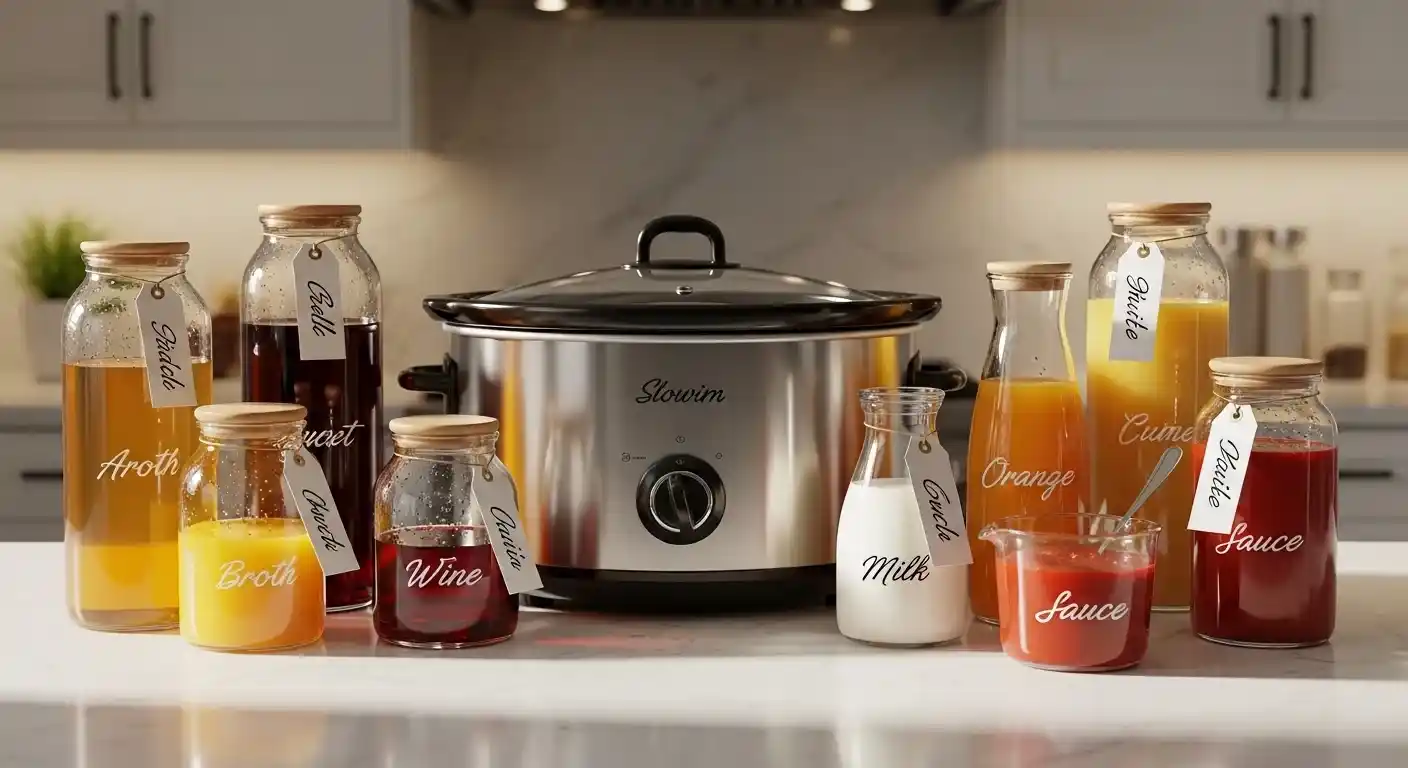
Choosing The Right Liquid For Your Slow Cooker
Your slow cooker is a wonderful tool for making meals with very little fuss. It cooks food low and slow, which is great for tenderizing tougher cuts of meat and blending flavors. But one of the most important parts of any slow cooker recipe is the liquid.
The liquid helps create steam, which cooks the food, and it also carries flavors throughout the dish. Picking the right liquid makes a big difference in the final taste and texture of your meal.
Why Liquid Matters In Slow Cooking
Think of your slow cooker like a mini-steamer combined with a braiser. The heat from the bottom and sides gently cooks your ingredients. The liquid in the pot is key to this process.
It starts to heat up and then turns into steam. This steam surrounds the food, cooking it evenly and keeping it moist. Without enough liquid, your food can dry out, especially leaner meats like chicken breast.
Too much liquid, and your dish might end up watery and bland.
The liquid also acts as a flavor carrier. As it heats, it picks up all the wonderful tastes from your meats, vegetables, herbs, and spices. This infused liquid then coats everything in the pot, making your entire dish taste delicious.
This is why choosing a flavorful liquid is often better than plain water.
Water A Simple Choice
Water is the most basic liquid you can use. It’s always available and has no added flavor or calories. For some recipes, especially those where other ingredients will provide a lot of flavor (like a pot roast with plenty of vegetables and seasoning), water can be perfectly fine.
It provides the necessary moisture for the slow cooker to work its magic.
However, water alone doesn’t add any flavor. If you’re making a dish where you want a richer taste, plain water might not be the best choice. It’s often used as a base that you then build flavor upon with broths, sauces, or other liquids.
Broth and Stock Flavor Foundations
Broth and stock are fantastic liquids for slow cooker recipes because they already have a lot of flavor built-in. They are made by simmering bones, meat, or vegetables. This process extracts flavor and nutrients.
- Chicken Broth/Stock
- Beef Broth/Stock
- Vegetable Broth/Stock
- Fish or Seafood Stock
Chicken broth is great for chicken dishes, pork, and many vegetable soups. Beef broth is ideal for red meat recipes like stews and roasts. Vegetable broth works well in vegetarian meals or as a lighter option for chicken or pork.
Fish or seafood stock is best for recipes featuring fish or shellfish.
Using broth or stock instead of water can dramatically improve the depth of flavor in your slow cooker meals. It’s a simple swap that makes a big impact.
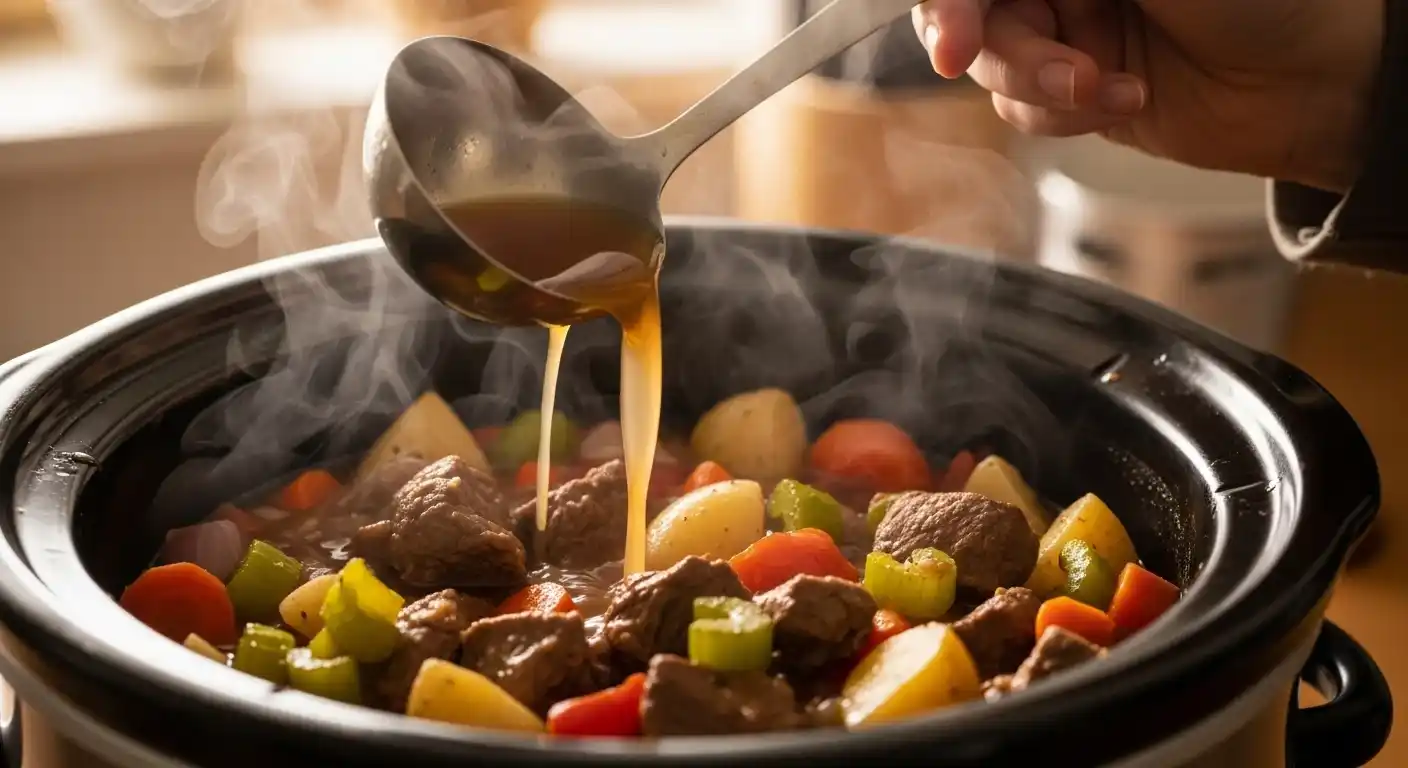
Stocks Versus Broths A Subtle Difference
While often used interchangeably, there’s a slight difference between stock and broth. Stock is typically made by simmering bones, which release collagen, giving it a richer, thicker texture and more body. Broth is usually made from simmering meat and sometimes vegetables, and it tends to be lighter.
For most slow cooker recipes, either will work wonderfully. If you want a richer sauce or gravy at the end, stock might be a slightly better choice. If you prefer a lighter liquid base, broth is perfect.
Juices Adding Sweetness And Tang
Fruit and vegetable juices can add unique flavors to your slow cooker meals. They can bring a touch of sweetness or tang, depending on the type of juice.
- Apple Juice
- Cranberry Juice
- Orange Juice
- Tomato Juice
- Clam Juice
Apple juice pairs well with pork and chicken. Cranberry juice can be a good addition to turkey or pork recipes. Orange juice can add a bright, citrusy note to chicken or pork.
Tomato juice is a natural fit for chili, stews, and sloppy joes. Clam juice is excellent for seafood stews or chowders.
Be mindful of the sugar content in juices, especially fruit juices. They can make your dish sweeter, which may or may not be what you’re looking for. You might need to adjust other seasonings accordingly.
Wine And Beer Enhancing Savory Flavors
Wine and beer are excellent choices for adding complex, savory flavors to slow cooker dishes. The alcohol content cooks off during the long simmering process, leaving behind a rich, deep taste.
- Red Wine (e.g., Cabernet Sauvignon, Merlot)
- White Wine (e.g., Chardonnay, Sauvignon Blanc)
- Beer (e.g., Stout, Ale, Lager)
Red wine is often used in beef stews, pot roasts, and dishes with lamb or venison. White wine works well with chicken, pork, and fish. Different types of beer can also lend distinct flavors.
A stout can add richness to beef dishes, while a lighter lager might be good for chicken.
When using wine or beer, consider the flavor profile you want. A dry wine is usually preferred over a sweet one for savory cooking.
Dairy Based Liquids Creamy Goodness
Dairy products can make your slow cooker meals incredibly creamy and rich. They are often added towards the end of the cooking time to prevent curdling.
- Milk
- Cream
- Coconut Milk
- Buttermilk
- Yogurt
Milk and cream can add a luxurious texture to soups, stews, and pasta dishes. Coconut milk is a fantastic dairy-free option that works well in curries and tropical-inspired dishes. Buttermilk can add a lovely tang and tenderness to chicken or pork.
Yogurt, especially full-fat Greek yogurt, can be stirred in at the end for creaminess and a slight tang.
To avoid curdling, it’s best to temper dairy liquids. This means warming them up gradually before adding them to the hot liquid in the slow cooker. You can also stir them in during the last 30-60 minutes of cooking.
Coffee And Tea Unexpected Flavor Boosters
Don’t overlook coffee and tea! These can add surprising depth and complexity to certain dishes.
- Coffee
- Tea (e.g., Black Tea, Herbal Tea)
Brewed coffee can add a rich, slightly bitter note that pairs wonderfully with beef. It’s a secret ingredient in many barbecue sauces and pot roast recipes. Black tea can be used in place of some liquid in stews or braised dishes to add a subtle tannic quality.
Herbal teas might be used in lighter dishes for a hint of floral or fruity flavor.
Sauces And Marinades Concentrated Flavor
Sauces and marinades are already packed with flavor, making them excellent additions to slow cooker recipes. They can act as both liquid and seasoning.
- Soy Sauce or Tamari
- Worcestershire Sauce
- Barbecue Sauce
- Teriyaki Sauce
- Tomato Sauce or Paste
- Salsa
Soy sauce or tamari adds umami and saltiness. Worcestershire sauce brings a complex savory and tangy flavor. Barbecue sauce and teriyaki sauce are great for creating sweet and savory glazes.
Tomato sauce or paste forms the base of many chilis and stews. Salsa adds spice and flavor to taco or chili recipes.
When using concentrated sauces, remember they are often salty, so you might need to reduce the amount of added salt in your recipe.
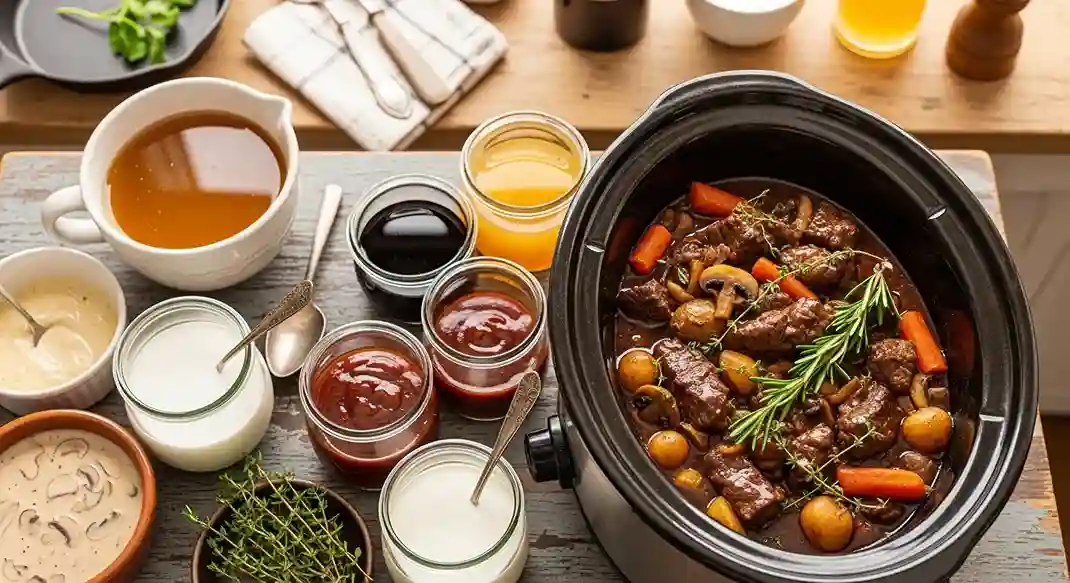
Combining Liquids For Best Results
You don’t have to stick to just one liquid! Combining different liquids can create a more complex and delicious flavor profile. For example, you might use beef broth as a base and add a splash of red wine for richness, or use chicken broth with a bit of apple juice for a sweet and savory pork dish.
A common combination is using broth and a sauce. For instance, chicken broth with a bit of soy sauce and honey creates a flavorful glaze for chicken. Or, beef broth with a dollop of tomato paste for a hearty stew.
How Much Liquid To Use
A good rule of thumb for most slow cooker recipes is to use enough liquid to cover about half to two-thirds of your ingredients, especially meat. This allows for steam to build up and cook the food without making the dish soupy.
For recipes like soups or stews, you’ll need more liquid to achieve the desired consistency. Always check the specific recipe you are following, as they are designed to have the right balance of ingredients and liquid. If a recipe calls for a specific amount of liquid, try to stick to it.
If you are creating your own recipe, start with less liquid and add more if needed during cooking.
What Happens If You Use Too Little Liquid
If you don’t use enough liquid, your slow cooker food can become dry. Meats might be tough, and vegetables can become overcooked or burnt on the edges. The ingredients won’t cook evenly because there isn’t enough steam to circulate the heat properly.
If you notice your dish is too dry, you can carefully add more liquid partway through cooking. Add a small amount at a time, stirring to combine, and let it cook for another 30 minutes before checking again.
What Happens If You Use Too Much Liquid
Using too much liquid can result in a watery dish. The flavors will be diluted, making the food taste bland. Sauces and gravies won’t thicken properly.
If your dish ends up too watery, you have a few options. You can remove the lid during the last hour of cooking to allow some of the liquid to evaporate. You can also thicken the liquid by making a slurry of cornstarch or flour mixed with a little cold water, then stirring it into the slow cooker.
Some recipes might also allow for draining off excess liquid and then reducing it on the stovetop to concentrate the flavors.
Frequently Asked Questions
Question: Can I just use water for all slow cooker recipes?
Answer: While water is a safe option and will allow your food to cook, it doesn’t add any flavor. For most recipes, using broth, stock, juice, wine, or a combination will result in a much more flavorful dish.
Question: Should I add extra liquid if I’m doubling a recipe?
Answer: Yes, if you are doubling a recipe, you will generally need to increase the liquid amount as well. However, you might not need to double it exactly. Start with slightly less than double and add more if the consistency seems off during cooking.
Question: Can I use low-sodium broth or stock?
Answer: Absolutely. Using low-sodium broth or stock is a great idea, especially if you are adding other salty ingredients like soy sauce or bacon. This allows you to control the salt level better and add salt to taste at the end.
Question: What is the best liquid for making pulled pork in a slow cooker?
Answer: For pulled pork, popular liquids include apple cider, beer (like a lager or stout), chicken broth, or a combination of these. Many recipes also incorporate barbecue sauce or a splash of cola for sweetness and flavor.
Question: Is it okay to use a mix of liquids, like broth and wine?
Answer: Yes, mixing liquids is highly recommended! Combining a flavorful base like broth with something like wine, beer, or juice can create wonderful depth and complexity in your slow cooker meals.
Final Thoughts
Selecting the best liquids for slow cooker recipes boils down to flavor and moisture. Water works but lacks taste. Broths and stocks offer a savory base.
Juices add sweetness or tang. Wine and beer contribute deep, complex notes. Dairy creates richness, while coffee and tea offer surprising depth.
Sauces concentrate flavor. Combining liquids often yields the most delicious results. Aim for enough liquid to mostly cover ingredients for even cooking.
Adjust as needed for perfect texture and taste in every dish you make.