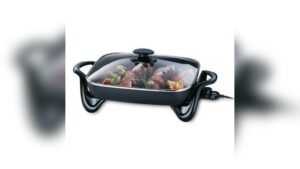
Cooking bacon on a griddle seems simple, but the temperature makes all the difference. Many people rush the process, turning up the heat to cook bacon quickly. But this can lead to uneven cooking, burnt edges, or undercooked fat. Getting the best temperature for cooking bacon on a griddle is key for crispy, flavorful results. Whether you’re using a stovetop griddle or an electric one, mastering the right heat will transform your breakfast. Let’s explore the details that matter, from exact temperature settings to practical methods and common mistakes.
Why Temperature Matters For Bacon
Bacon is a food that reacts strongly to heat. If you cook it too hot, the fat burns and the meat dries out. Too low, and you get chewy, greasy slices. Temperature control gives you:
- Even cooking across all slices
- Crispy texture without burnt spots
- Rendered fat for flavor and less grease
Many beginners think bacon is all about time or thickness. But the real secret is the right temperature. On a griddle, heat is spread evenly, so every slice gets the same treatment. This is different from frying in a pan, where hot spots can occur.
Best Temperature For Cooking Bacon On A Griddle
Most experts agree: the ideal griddle temperature for bacon is between 325°F and 375°F (163°C to 191°C). This range lets the fat render slowly and gives the bacon time to crisp without burning.
Why 325°f To 375°f Works
- At 325°F, bacon cooks slowly, which is perfect for thick-cut slices. It helps the fat melt and crisp up the meat.
- 375°F is better for regular or thin bacon. The higher heat speeds up cooking, but still prevents burning.
Here’s a comparison of bacon thickness and recommended temperatures:
| Bacon Type | Recommended Griddle Temp (°F) | Cooking Time (mins) |
|---|---|---|
| Thin-cut | 375 | 4-6 |
| Regular-cut | 350 | 6-8 |
| Thick-cut | 325 | 8-12 |
Most electric griddles have clear temperature dials. For stovetop griddles, medium heat usually gets you close to 350°F. Always preheat your griddle for 2-3 minutes before adding bacon.
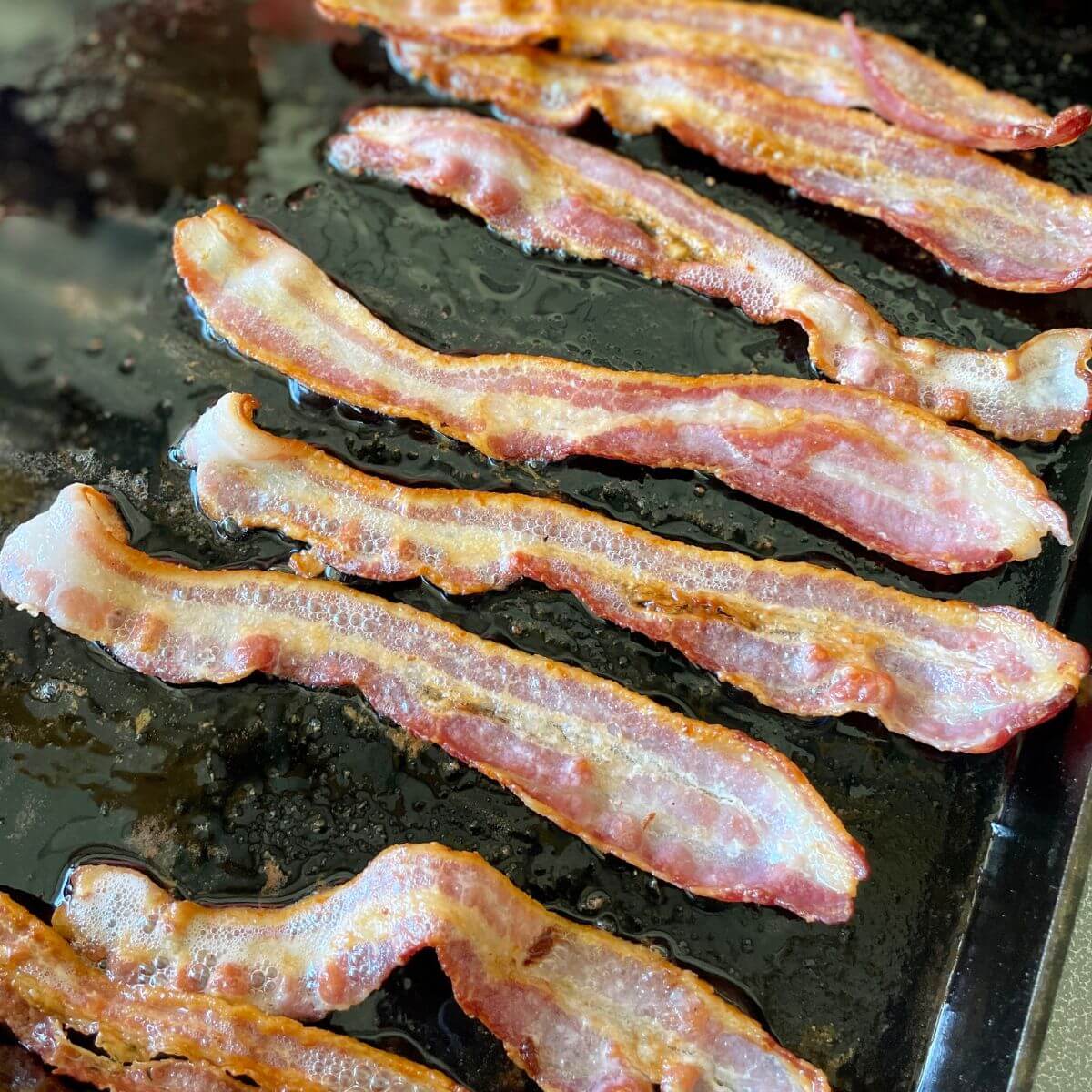
Credit: theflattopking.com
Step-by-step Guide: Cooking Bacon On A Griddle
Getting bacon right is more than just setting the correct temperature. Here’s a step-by-step process that works every time:
- Preheat the griddle to the desired temperature (see above table).
- Lay bacon strips flat, without overlapping. Overlapping causes uneven cooking.
- Let bacon cook undisturbed for 2-3 minutes. This helps the fat start rendering.
- Flip each slice using tongs. Most bacon needs 1-2 flips for even crisping.
- Watch for color changes. Bacon turns golden brown when it’s nearly done. Don’t rely only on time.
- Remove bacon when crisp. Place on paper towels to drain extra fat.
- Turn off griddle and let it cool before cleaning.
Pro Tips For Perfect Bacon
- For extra crispiness, press bacon gently with a spatula during cooking.
- Save rendered bacon fat. It’s great for frying eggs or vegetables.
- Avoid crowding the griddle. Leave space between slices.
- For thick bacon, lower the temperature to 325°F and cook longer.
Common Mistakes When Cooking Bacon On A Griddle
Even experienced cooks make mistakes with bacon. Here are some errors to avoid:
- Starting with a cold griddle: This causes bacon to absorb too much fat and get greasy.
- Cooking at too high heat: Burnt edges and raw centers are common. Never go above 400°F.
- Overlapping slices: Bacon sticks together and cooks unevenly.
- Flipping too often: Each flip cools the bacon and slows crisping.
- Using metal utensils on non-stick griddles: This damages the coating and affects heat distribution.
Many beginners rush bacon by turning up the heat. Instead, let the griddle do its job and give bacon time to cook at the right temperature.
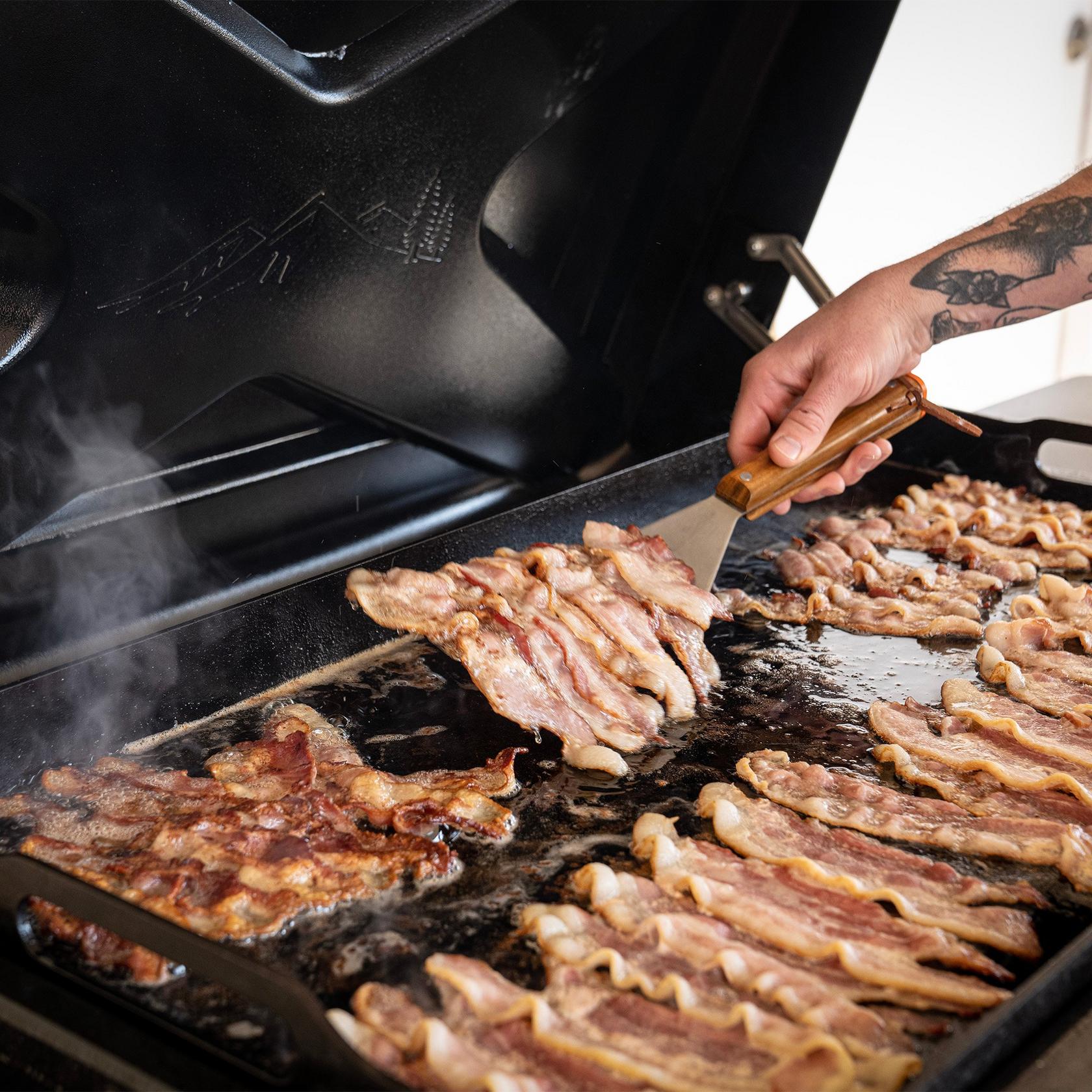
Credit: www.traeger.com
Electric Vs. Stovetop Griddle: Which Is Better For Bacon?
Both electric and stovetop griddles can cook bacon well, but there are differences:
| Griddle Type | Temperature Control | Ease of Use | Cleaning |
|---|---|---|---|
| Electric Griddle | Precise dial | Very easy | Simple, often removable plate |
| Stovetop Griddle | Depends on burner | Medium | Usually hand wash |
Electric griddles are ideal for beginners. You set the exact temperature, and the surface stays even. Stovetop griddles need more attention. Use a thermometer to check surface temperature, especially if your stove runs hot or cold.
How Temperature Affects Bacon Texture
The taste and texture of bacon change with cooking heat. At lower temperatures, bacon is chewy and fatty. Higher temperatures bring out a crispy texture.
Comparison Of Texture At Different Temperatures
| Temperature (°F) | Texture | Flavor |
|---|---|---|
| 300 | Soft, chewy | Mild, less smoky |
| 350 | Crispy, balanced | Rich, smoky |
| 400 | Burnt edges, dry | Bitter, strong |
You want to avoid extremes. 350°F is the sweet spot for most people, giving a mix of crisp and tender.
How To Check Griddle Temperature Without A Thermometer
Many home cooks don’t own a surface thermometer. Here’s how you can estimate griddle heat:
- Water drop test: Sprinkle a few drops of water on the surface. If they sizzle and dance, the griddle is around 350°F.
- Hand hover test: Hold your hand about 2 inches above the surface. If you can only keep it there for 2-3 seconds, the griddle is hot enough.
- Butter melt test: Place a small pat of butter. If it melts quickly but doesn’t brown immediately, you’re in the right range.
These methods aren’t precise, but they work in a pinch.
Choosing The Best Bacon For Griddle Cooking
Not all bacon is equal. For griddle cooking, pay attention to:
- Thickness: Thick bacon needs lower heat and longer cooking. Thin bacon cooks faster but can burn.
- Fat ratio: More fat means more crispiness. Lean bacon stays chewy.
- Cure type: Smoked bacon gives deeper flavor at lower temperatures.
Look for bacon slices that are evenly cut and have visible fat. Avoid very thin or uneven pieces; they cook unevenly and get dry.
Cleaning The Griddle After Cooking Bacon
Fat and grease can make cleanup hard. Here’s how to clean your griddle after bacon:
- Let griddle cool for 10-15 minutes.
- Wipe off excess fat with paper towels.
- Scrape residue with a soft spatula or scraper.
- Wash with warm, soapy water. Avoid harsh scrubbing on non-stick surfaces.
- Rinse and dry thoroughly to prevent rust.
If your griddle is electric, remove the cooking plate and wash separately. For stovetop griddles, don’t soak in water for too long.
Advanced Tips: Getting Creative With Bacon On A Griddle
Once you master the basics, try these extra techniques:
- Add cracked black pepper or brown sugar to bacon before cooking for a flavor boost.
- Cook other foods with bacon. Use leftover fat for eggs, pancakes, or hash browns.
- Make bacon-wrapped items: Place bacon around asparagus or sausages and cook on the griddle at 325°F.
Another insight: Cooking bacon at slightly lower temperatures for longer gives a more “European style” texture—less crispy, more tender. Many cafes in Europe use lower heat and longer cook times for breakfast bacon.
Bacon Cooking Statistics
According to the National Pork Board, Americans eat over 18 pounds of bacon per person per year. Most bacon is cooked at home, and surveys show 70% of people prefer crispy bacon. Electric griddles are now the top choice for home cooks, thanks to easy temperature control.
If you want more details about bacon and cooking methods, see this resource: Wikipedia.
Frequently Asked Questions
What’s The Best Temperature For Crispy Bacon On A Griddle?
The best temperature is 350°F to 375°F. This range gives bacon a crisp texture without burning. Adjust slightly lower for thick-cut bacon.
Can I Cook Bacon On A Griddle Without Oil?
Yes, you don’t need extra oil. Bacon releases enough fat as it cooks, so the griddle stays lubricated. Adding oil can make bacon greasy.
How Do I Keep Bacon From Curling On The Griddle?
Press bacon gently with a spatula while cooking. Don’t crowd the griddle, and cook at a steady temperature. Curling happens when bacon cooks too fast.
Is It Safe To Cook Bacon At High Temperatures?
No, cooking at temperatures above 400°F can burn the fat and create bitter flavors. Stick to 325°F to 375°F for safety and taste.
How Do I Know When Bacon Is Done?
Bacon is done when it turns golden brown and the fat is mostly rendered. It should feel crisp when you pick it up with tongs. Don’t rely only on time; watch the color and texture.
Cooking bacon on a griddle is simple once you master temperature. With the right heat, you’ll get bacon that’s crispy, flavorful, and perfectly cooked every time. Remember to start with a preheated griddle, don’t rush the process, and choose quality bacon.
Enjoy your next breakfast with confidence—your bacon will always taste great.
:max_bytes(150000):strip_icc()/__opt__aboutcom__coeus__resources__content_migration__serious_eats__seriouseats.com__2019__03__20190306-best-way-to-cook-bacon-vicky-wasik-cast-iron3-1-1e6a16e24c0947ffbbd9c4c1446b2f65.jpg)
Credit: www.seriouseats.com