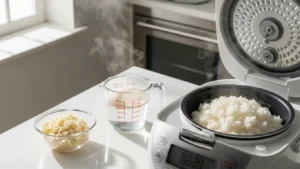
Lots of people wonder if they can just toss their rice cooker pot right into the dishwasher. It seems like the easiest way to clean up after a good meal, right? Especially when you’re new to using a rice cooker, figuring out the best way to clean it can be a bit confusing.
But don’t worry, it’s actually super simple! We’ll walk you through exactly how to check and clean your rice cooker pot safely.
Key Takeaways
- Most rice cooker inner pots are dishwasher safe, but always check the manual.
- Non-stick coatings can be damaged by harsh dishwasher detergents and high heat.
- Hand washing is generally the safest method to extend the life of your rice cooker pot.
- Inspect your rice cooker pot for specific markings or material information.
- Even if dishwasher safe, top rack placement is usually recommended.
- Always allow the pot to cool completely before washing.
Is Your Rice Cooker Pot Dishwasher Safe
It’s a question many home cooks ask: can rice cooker pot go in dishwasher? You’ve just made a delicious pot of rice, and the last thing you want to do is spend a lot of time scrubbing. Throwing it in the dishwasher seems like the quickest and easiest solution.
But before you do, it’s important to know if your specific rice cooker pot can handle the intense cleaning cycles of a dishwasher.
The answer isn’t a simple yes or no for every rice cooker. It really depends on what your rice cooker is made of and what kind of coating it has. Some pots are designed to be tossed in, while others need a gentler hand wash to keep them in good shape.
We’ll help you figure out exactly what’s best for yours.
Understanding Rice Cooker Pot Materials
Rice cooker inner pots come in a few different materials, and each has its own cleaning needs. The most common types are stainless steel, aluminum, and ceramic. Some have a non-stick coating, which is often made of Teflon or a similar material.
Stainless steel pots are usually quite durable. They can often withstand the dishwasher’s heat and detergent. Aluminum pots are also common.
However, aluminum can sometimes react with certain detergents, leading to discoloration or a dull finish.
The biggest factor that determines if a rice cooker pot can go in the dishwasher is its coating. Non-stick coatings are designed for easy food release and quick cleaning. But these coatings can be sensitive.
Harsh dishwasher detergents and the high temperatures used in washing and drying cycles can break down the non-stick layer over time. This can reduce its effectiveness and even cause the coating to peel.
Checking Your Rice Cooker Manual
The absolute best way to know if your rice cooker pot is dishwasher safe is to check the manufacturer’s manual. Every rice cooker comes with instructions that detail proper care and cleaning methods. This manual is your go-to guide.
Look for a section on cleaning or maintenance. It will clearly state whether the inner pot is safe for dishwashing. Sometimes, it might specify that only the top rack is suitable.
Other times, it might recommend hand washing only. If you’ve lost your manual, you can usually find a digital copy on the manufacturer’s website by searching for your rice cooker model number.
Identifying Dishwasher Safe Symbols
Manufacturers often use symbols to indicate if a product is dishwasher safe. You might find these symbols directly on the bottom of your rice cooker pot or on its packaging. A common symbol looks like a square with several circles inside, representing water jets.
If you see this symbol, it’s a good indication that the pot is designed for dishwashing.
However, always cross-reference this with the manual. Sometimes, a symbol might be a general indicator, and the manual provides specific caveats. For example, the symbol might be present, but the manual advises against using certain types of detergents or the high-heat drying cycle.
The Role of Non-Stick Coatings
Many modern rice cooker pots feature a non-stick coating to prevent rice from sticking and burning. This coating is a major convenience for everyday use. When it comes to dishwashing, the non-stick coating is often the most vulnerable part.
Dishwasher detergents contain strong chemicals, including enzymes and bleaching agents, that are designed to break down tough food residues. While effective, these chemicals can also wear away at the delicate non-stick surface. The high heat and water pressure in a dishwasher can further accelerate this degradation.
If your rice cooker pot has a high-quality, durable non-stick coating, it might be able to withstand occasional dishwasher cycles. However, frequent washing in a dishwasher will likely shorten its lifespan. For the best results and to keep that non-stick surface working like new, hand washing is often the preferred method.
Why Hand Washing Is Often Recommended
Even if your rice cooker pot is technically dishwasher safe, there are good reasons why hand washing is often recommended. Hand washing allows you to be more gentle with the pot, especially if it has a non-stick coating.
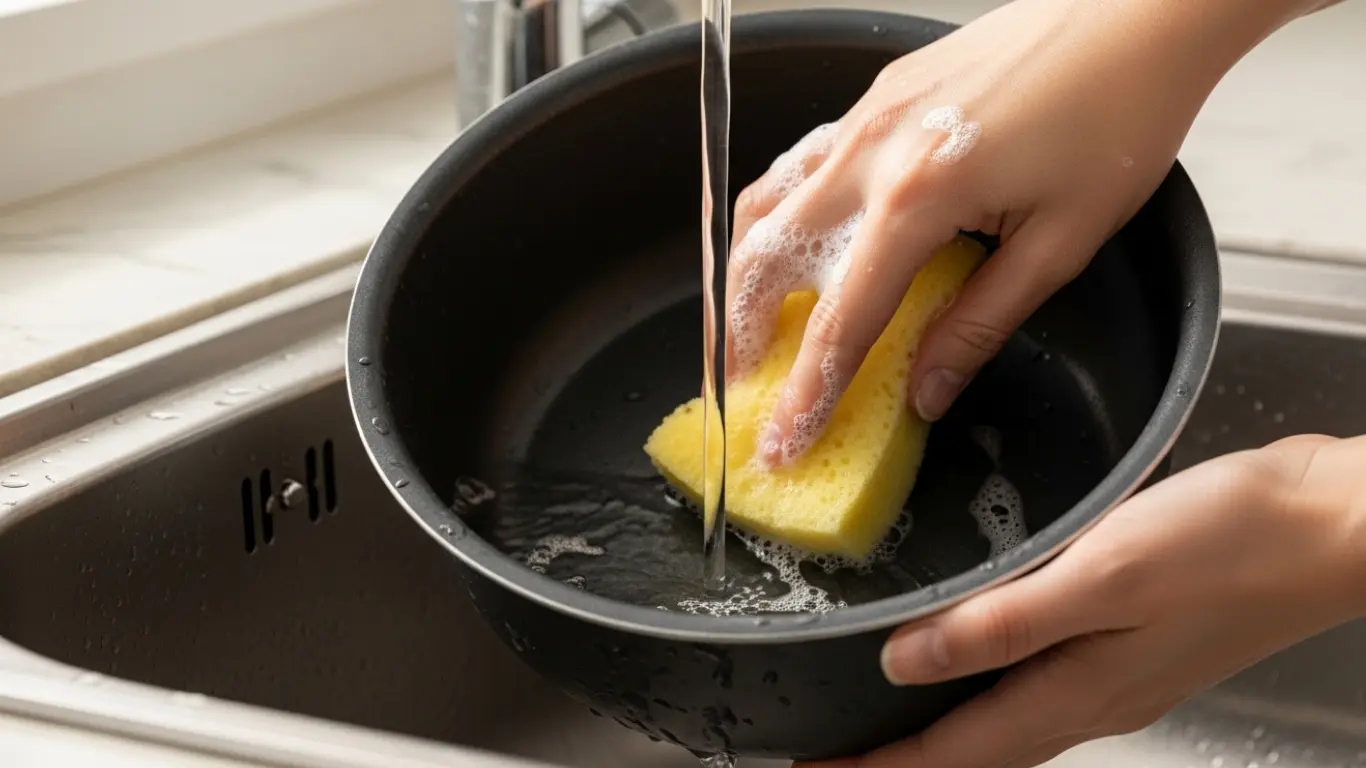
When hand washing, you can control the water temperature and the type of soap you use. You can also avoid using abrasive scrubbers that could scratch the surface. A soft sponge or cloth and mild dish soap are usually enough to get the pot clean after soaking for a bit.
Hand washing also helps you to inspect the pot for any remaining food particles and ensure it’s completely clean before storing it. This method is gentle and helps preserve the pot’s integrity and functionality for a longer time. It’s a small effort that can make a big difference in the longevity of your rice cooker’s inner pot.
How to Properly Clean Your Rice Cooker Pot
Knowing whether your rice cooker pot can go in the dishwasher is just the first step. If it is dishwasher safe, there are still best practices to follow. And if it’s not, or if you prefer to hand wash, we’ll cover that too.
Dishwasher Cleaning Steps
If your manual confirms that your rice cooker pot is dishwasher safe, follow these steps for the best results:
- Cool Down: Always let the inner pot cool down completely after cooking. Placing a hot pot into a cooler dishwasher can cause thermal shock, potentially warping or damaging the pot.
- Scrape Off Excess Food: Remove any large pieces of rice or food stuck to the pot. A rubber spatula or wooden spoon works well for this without scratching.
- Rinse: Give the pot a quick rinse under warm water to remove loose debris. This makes the dishwasher’s job easier.
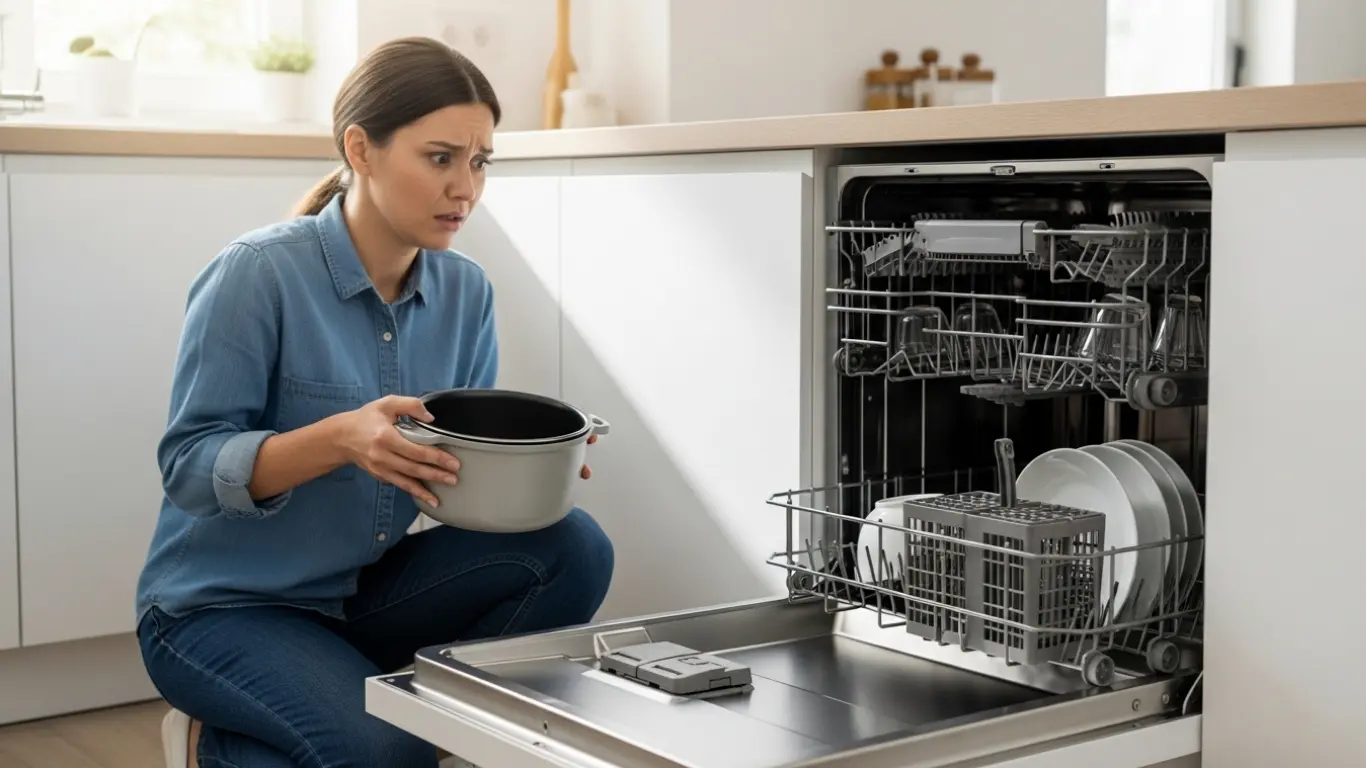
- Placement: Place the pot on the top rack of your dishwasher. The top rack typically has gentler water pressure and heat compared to the bottom rack, which is better for preserving coatings.
- Detergent Choice: Use a mild dishwasher detergent. Avoid detergents with harsh chemicals, bleach, or abrasive additives, especially if your pot has a non-stick coating.
- Avoid High-Heat Drying: If your dishwasher has a high-heat drying setting, consider turning it off or using an air-dry option. The intense heat can degrade non-stick surfaces.
Hand Washing Instructions
For those who prefer hand washing, or if your pot isn’t dishwasher safe, this method is straightforward:
- Cool Down: Just like with dishwashing, let the pot cool completely.
- Soak (if needed): If there’s stubborn, dried-on rice, fill the pot with warm water and let it soak for 10-15 minutes. You can add a drop of mild dish soap to the water.
- Gentle Scrubbing: Use a soft sponge, a soft cloth, or a non-abrasive nylon scrubber. Gently scrub the inside and outside of the pot.
- Mild Soap: Use a mild dish soap. Avoid harsh cleaners or abrasive pads like steel wool, as they will scratch and damage the surface.
- Rinse Thoroughly: Rinse the pot thoroughly with warm water until all soap residue is gone.
- Dry Completely: Dry the pot completely with a soft, clean towel. Ensuring it’s dry before storing helps prevent moisture buildup and potential odors.
What to Avoid
Regardless of whether you’re using a dishwasher or washing by hand, there are things you should always avoid:
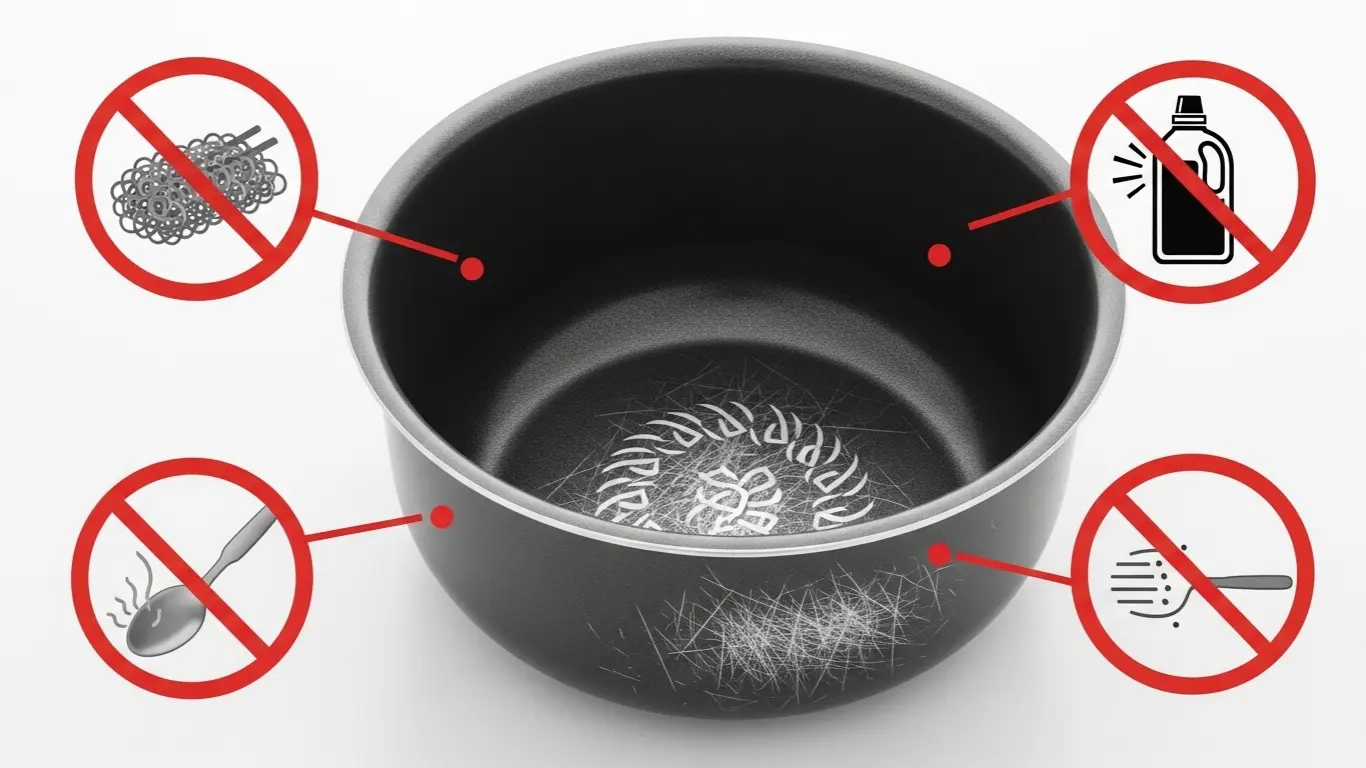
- Abrasive Cleaners: Never use abrasive powders, steel wool, or scouring pads. These will scratch and damage the pot’s surface, especially non-stick coatings.
- Harsh Chemicals: Avoid strong degreasers or bleach-based cleaners. They can strip away protective coatings and discolor the pot.
- Metal Utensils: Don’t use metal spoons, spatulas, or knives inside the pot, even for scraping. These can easily scratch non-stick surfaces. Use silicone, wood, or plastic utensils instead.
- Putting a Hot Pot in Cold Water: Rapid temperature changes can cause metal to warp or crack. Always let the pot cool down first.
Common Rice Cooker Pot Materials and Their Care
Understanding the material of your rice cooker pot is key to knowing how to clean it. Different materials respond differently to cleaning methods.
Stainless Steel Pots
Stainless steel is a very popular material for kitchenware because it’s durable and relatively easy to care for. If your rice cooker inner pot is made of stainless steel:
- Dishwasher Safe: Yes, most stainless steel rice cooker pots are dishwasher safe. They can handle the high temperatures and strong detergents.
- What to Avoid: While durable, prolonged exposure to very harsh detergents or abrasive scrubbing can eventually dull the finish. Always rinse well.
- Hand Washing Benefits: Hand washing with mild soap and a soft sponge will keep the finish looking its best for longer.
Aluminum Pots
Aluminum is lightweight and conducts heat well, making it a common choice for cookware. For aluminum rice cooker pots:
- Dishwasher Safe: Many aluminum pots are dishwasher safe, but this can vary. Check your manual.
- What to Avoid: Aluminum can react with alkaline dishwasher detergents, which can cause it to discolor or develop dark spots. This is called oxidation and doesn’t affect the pot’s function but can be unsightly.
- Hand Washing Benefits: Hand washing with mild soap is often safer for aluminum to maintain its appearance. If you do put it in the dishwasher, place it on the top rack and use a milder detergent.
Non-Stick Coated Pots
These are perhaps the most common type, prized for preventing rice from sticking. For non-stick coated rice cooker pots:
- Dishwasher Safe: This is where it gets tricky. Some high-quality non-stick coatings are designed to be dishwasher safe. However, many are not, or they can be significantly damaged by dishwashing. ALWAYS check your manual.
- What to Avoid: Harsh detergents, high heat, abrasive scrubbers, and metal utensils will degrade the non-stick coating quickly.
- Hand Washing Benefits: Hand washing is strongly recommended for all non-stick coated pots to preserve the coating. Use a soft sponge and mild dish soap.
Ceramic Coated Pots
Ceramic coatings are often seen as a healthier alternative to some non-stick surfaces. For ceramic coated rice cooker pots:
- Dishwasher Safe: Many ceramic coated pots are dishwasher safe, but like non-stick, it depends on the specific coating and manufacturer. Check the manual.
- What to Avoid: While generally more durable than traditional non-stick, abrasive cleaners and extreme temperature changes can still damage the ceramic finish.
- Hand Washing Benefits: Hand washing with mild soap and a soft sponge is the safest bet to ensure the ceramic coating lasts.
Frequently Asked Questions
Can I wash my rice cooker pot in the dishwasher if it has a non-stick coating?
Answer: It depends on the specific non-stick coating. Some are designed to be dishwasher safe, but many are not, or dishwashing can significantly shorten their lifespan. Always check your rice cooker’s manual for manufacturer recommendations.
What is the best way to clean stubborn rice stuck to the bottom of the pot?
Answer: For stubborn rice, fill the pot with warm water and a little mild dish soap and let it soak for 10-15 minutes. Then, use a soft sponge or cloth to gently scrub it clean. Avoid abrasive scrubbers.
Will putting my rice cooker pot in the dishwasher void the warranty?
Answer: It might. If the manufacturer states that the pot is not dishwasher safe and you wash it in the dishwasher, it could potentially void your warranty if it causes damage.
How often can I put my rice cooker pot in the dishwasher if it is safe to do so?
Answer: Even if your pot is dishwasher safe, frequent washing on high heat cycles can still degrade non-stick coatings over time. For best results and longevity, hand washing is often preferred for everyday cleaning, even if occasional dishwasher use is permitted.
Are the exterior parts of a rice cooker safe to wash in the dishwasher?
Answer: No, generally the exterior of a rice cooker, including the main unit and lid (unless it’s a removable, dishwasher-safe inner lid), should never be submerged in water or put in the dishwasher. Clean the exterior with a damp cloth only.
Final Thoughts
Figuring out can rice cooker pot go in dishwasher is all about checking your manual. Most pots are either safe or best hand washed. If yours is dishwasher safe, use the top rack and mild detergent.
For the longest life of your pot, especially if it has a non-stick coating, hand washing is the best approach. Gentle cleaning keeps your rice cooker working great for tasty meals every time.

Hi, I’m Raju Dey — a food lover with a degree in Culinary Arts from El Centro College. I’ve spent 4+ years testing air fryers, blenders, and other kitchen tools in real home kitchens. At KitchenWink.com, I share honest tips and reviews to help you cook smarter. My goal is to give you advice you can trust — based on hands-on experience, not hype.