Many folks wonder, can you cook pasta in a rice cooker? It seems a bit unusual, right? When you’re new to cooking or just trying to make dinner faster, you might look for simple ways to get food on the table.
Using a rice cooker for pasta might cross your mind as a quick fix. It can feel a bit tricky to figure out if it’s really possible. Don’t worry!
This guide will show you exactly how to do it, step by step. We’ll make cooking pasta in your rice cooker super easy.
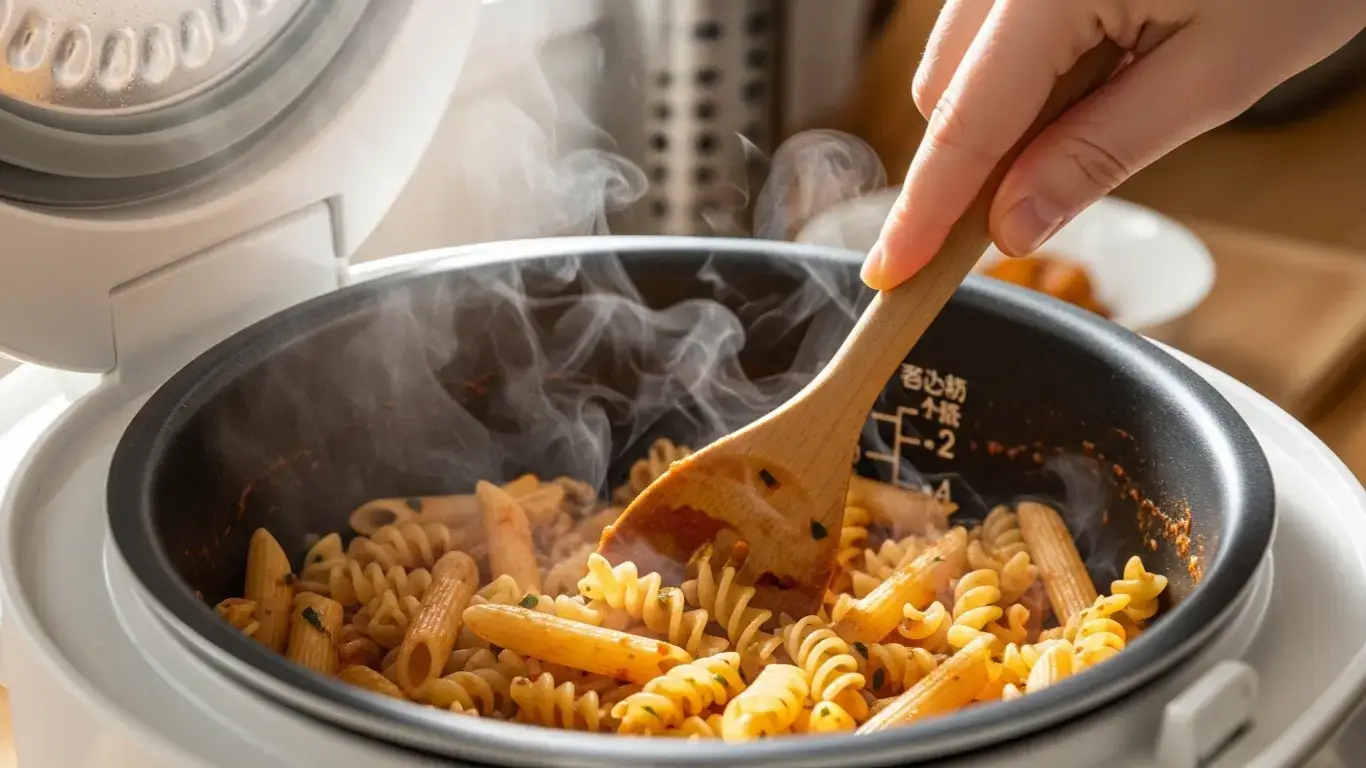
Key Takeaways
- You can cook pasta in a rice cooker with a few simple adjustments.
- Rice cookers work well for boiling pasta, similar to a stovetop pot.
- Specific settings might be needed depending on your rice cooker model.
- You will need to use the correct water-to-pasta ratio.
- Pasta cooked in a rice cooker can be just as good as stovetop pasta.
- It’s a convenient option for small kitchens or when stovetop space is limited.
Can You Cook Pasta in a Rice Cooker
The question many home cooks have is simple: can you cook pasta in a rice cooker? The answer is a resounding yes! While rice cookers are designed for rice, their heating element and ability to boil water make them surprisingly versatile.
For beginners, the idea of deviating from traditional stovetop methods can seem intimidating. However, using a rice cooker for pasta can actually be a straightforward and convenient alternative, especially when you’re short on kitchen space or want to multitask.
Think of your rice cooker as a fancy pot that knows when to turn off. It heats water to a boil and maintains that temperature, which is exactly what you need to cook pasta. The main challenge for beginners often lies in understanding the right water levels and cooking times, as rice cookers don’t always have explicit “pasta” settings.
But with a little guidance, you’ll be enjoying perfectly cooked pasta made right in your rice cooker.
Why Try Cooking Pasta in a Rice Cooker
There are several good reasons why you might consider cooking pasta in your rice cooker. First off, it’s a fantastic space-saver. If your kitchen is small, or if all your burners are in use, the rice cooker offers a dedicated cooking vessel.
It’s also a great way to keep pasta warm after it’s cooked, as many rice cookers have a “keep warm” function.
Another benefit is convenience. You can set it and forget it, to some extent. Unlike a stovetop pot where you need to keep a close eye on it to prevent boiling over, a rice cooker often manages the heat more consistently.
This frees you up to prepare other parts of your meal or simply relax.
How to Cook Pasta in a Rice Cooker Step-by-Step
The process is quite simple, and you’ll find it’s very similar to cooking pasta on the stove. The key is to use enough water and to let it come to a rolling boil before adding your pasta.
1. Gather Your Ingredients and Equipment
You will need:
- Your rice cooker
- Water
- Pasta
- Salt (optional, for flavor)
- Measuring cups
- A stirring utensil (like a wooden spoon or tongs)
2. Add Water to the Rice Cooker
This is a crucial step. You need enough water to fully submerge the pasta and allow it to move freely as it cooks. A general rule of thumb is to use about 4 cups of water for every 1 pound (or about 450 grams) of pasta.
If your rice cooker has markings for different grain amounts, you can use those as a guide, but always err on the side of more water. This helps prevent the pasta from sticking together and ensures it cooks evenly.
3. Add Salt (Optional)
Just like with stovetop cooking, adding a pinch of salt to the water before it heats up can enhance the flavor of your pasta. It’s not strictly necessary, but many people find it makes a difference.
4. Turn On the Rice Cooker
Close the lid and set your rice cooker to its “Cook” or “White Rice” setting. If your rice cooker has a “Steam” function, that can also work. Allow the water to come to a full, rolling boil.
This usually takes about 10-15 minutes, depending on the size of your rice cooker and the amount of water.
5. Add the Pasta
Once the water is at a rolling boil, carefully open the lid. Add your pasta to the boiling water. If you are cooking long pasta like spaghetti, you might need to gently push it down as it softens to ensure it all gets submerged.
Be careful of the steam!
6. Stir the Pasta
As soon as you add the pasta, give it a good stir. This is very important to prevent the pasta from clumping together and sticking to the bottom of the rice cooker pot. You will need to stir periodically throughout the cooking process, especially in the first few minutes.
7. Cook and Stir
Close the lid and let the pasta cook. You will need to check the pasta’s doneness regularly by lifting the lid and tasting a piece. The cooking time will vary depending on the type and shape of pasta you are using, but it generally ranges from 8 to 15 minutes.
Continue to stir the pasta every few minutes to prevent sticking.
If your rice cooker automatically switches to “Keep Warm” after the cooking cycle finishes, you might need to press “Cook” again if the pasta isn’t done. Some rice cookers will stay on the “Cook” setting until you manually switch it off or it reaches a certain temperature.
8. Drain the Pasta
Once the pasta is cooked to your liking (al dente is usually best), carefully open the lid. You will need to drain the water. Most rice cooker pots are not designed to be tipped and drained like a colander.
The easiest way to drain is to use a slotted spoon or a spider strainer to lift the pasta out of the water and place it into a colander in your sink. Alternatively, some people carefully pour the contents into a colander set in the sink, but this can be a bit tricky and requires caution with hot water.
9. Serve and Enjoy
Your pasta is now ready! You can add your favorite sauce and serve it immediately. If you’re not serving it right away, many rice cookers have a “Keep Warm” function that can hold the pasta at a good serving temperature.
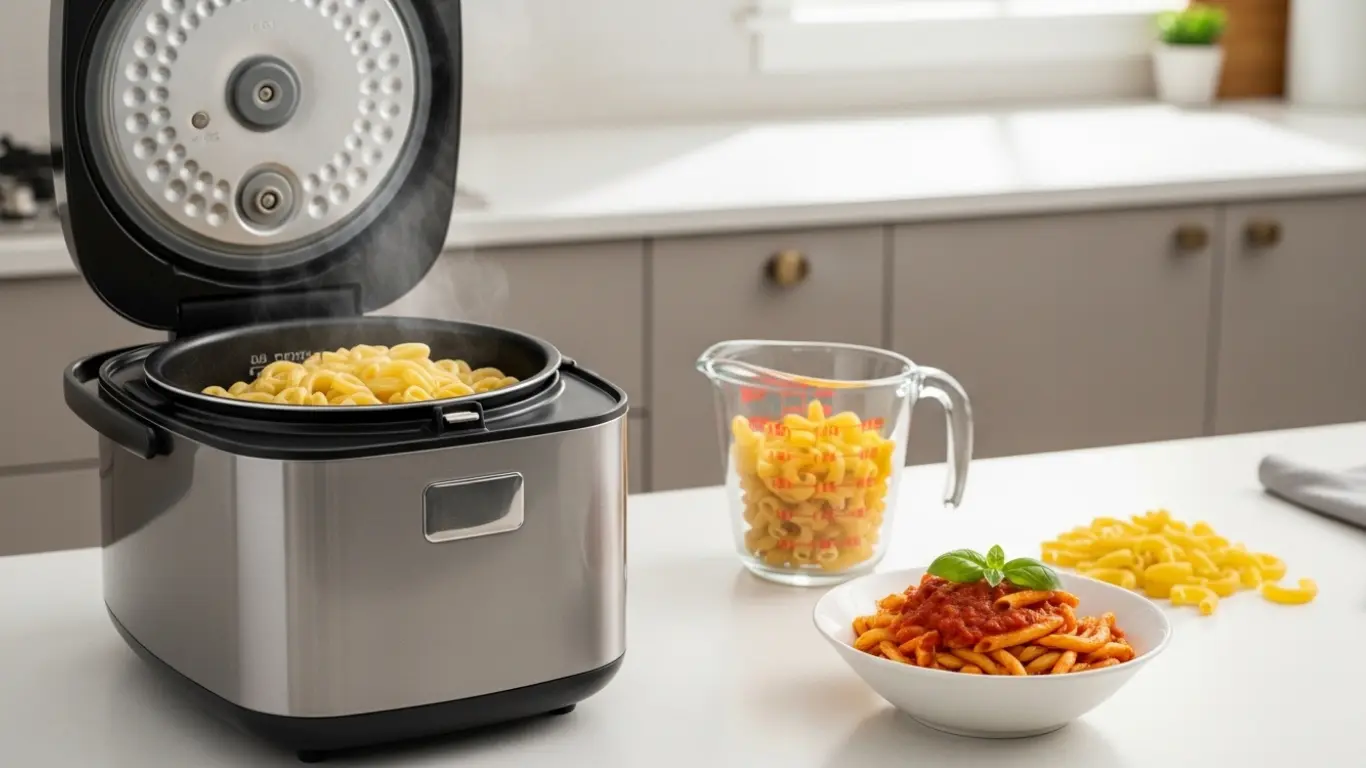
Tips for Perfect Rice Cooker Pasta
Achieving perfect pasta in your rice cooker is all about a few key details. Paying attention to these can make a big difference in your results.
Water-to-Pasta Ratio
As mentioned, using enough water is crucial. Too little water will result in gummy, stuck-together pasta. Aim for about 4 quarts (1 gallon or roughly 3.8 liters) of water for every pound of pasta.
This might seem like a lot, but pasta absorbs water as it cooks, and excess water is necessary for proper boiling and preventing sticking. If you’re unsure, check the pasta package for recommended water amounts and scale up slightly for the rice cooker.
Stirring is Key
Don’t skip the stirring! The initial stir after adding the pasta is the most important. Then, stir every 2-3 minutes.
This prevents the pasta from settling at the bottom of the pot and forming a solid block, which is a common pitfall when cooking pasta in unconventional ways.
Pasta Shapes
Some pasta shapes are better suited for rice cookers than others. Smaller shapes like penne, fusilli, or macaroni tend to work very well. Long strands like spaghetti or linguine can be a bit more challenging because they may not fit entirely in the pot when dry, requiring you to push them down as they soften.
If you’re a beginner, start with shorter pasta shapes.
Cooking Time Adjustment
Rice cooker heating elements can vary. It’s always best to start checking your pasta a few minutes before the package’s recommended cooking time. Taste it to gauge doneness.
If your rice cooker has a “Cook” and “Keep Warm” setting, and it switches to “Keep Warm” before the pasta is done, you may need to manually press “Cook” again.
Preventing Boil-Overs
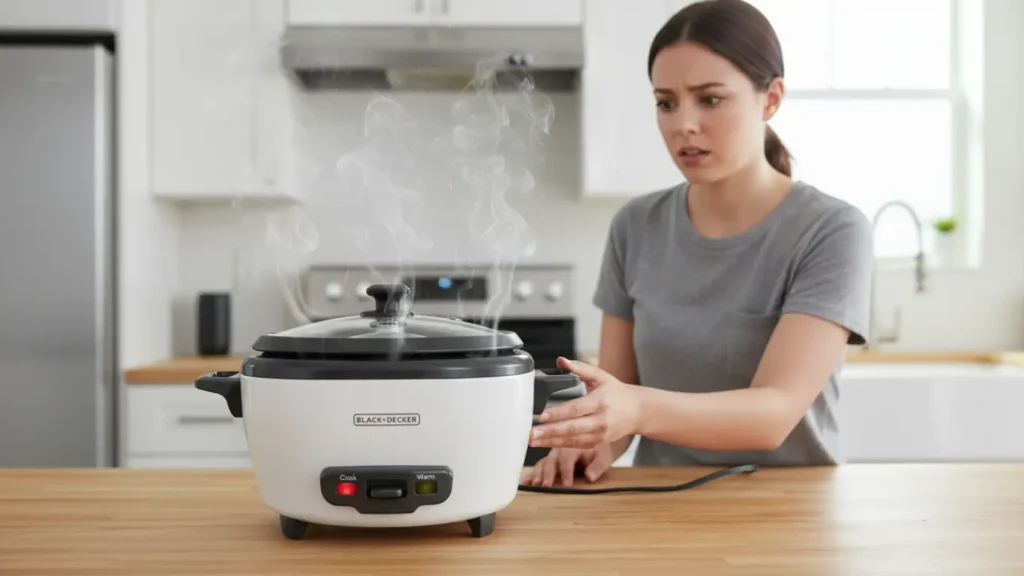
Pasta water can sometimes foam up and boil over, especially with certain types of pasta or when the water level is too high. To help prevent this, you can add a teaspoon of oil to the water before it boils, or place a wooden spoon across the top of the pot. Some people also find that using a larger rice cooker than necessary for the amount of pasta can give the water more room to boil without spilling.
Comparing Rice Cooker Pasta to Stovetop Pasta
The fundamental difference between cooking pasta in a rice cooker and on a stovetop is the heat source and control. A stovetop allows for very direct heat adjustment – you can instantly lower or raise the flame. A rice cooker, especially simpler models, operates on a set cycle or a temperature sensor.
| Feature | Rice Cooker Pasta | Stovetop Pasta |
|---|---|---|
| Convenience | Hands-off once set, but draining can be tricky. | Requires constant monitoring, but draining is easy. |
| Space | Excellent for small kitchens or when stovetop is occupied. | Requires a pot on the stove. |
| Temperature Control | More consistent heat, but less immediate adjustment. | Direct control, easy to manage boil. |
| Boil-Over Risk | Can be higher if not careful with water level and stirring. | Manageable with attention. |
| Outcome | Can achieve excellent results with proper technique. | Reliable, traditional method. |
In terms of the final texture and taste, if done correctly, the difference between pasta cooked in a rice cooker and pasta cooked on the stovetop is often negligible. The key factors for good pasta are sufficient boiling water, proper cooking time to reach al dente, and preventing it from sticking. These are all achievable in a rice cooker.
Can You Cook Pasta in a Rice Cooker Without Sticking
Preventing pasta from sticking is probably the most common concern when cooking it in a rice cooker. Sticking happens when pasta pieces touch each other before they’ve developed a slightly slippery surface from cooking, or when they settle on a hot surface without moving.
Here’s how to ensure your pasta doesn’t stick:
- Use Plenty of Water: This cannot be stressed enough. The water acts as a lubricant.
- Achieve a Rolling Boil: Make sure the water is actively boiling before adding pasta.
- Stir Immediately: The moment the pasta hits the water, stir it.
- Stir Frequently: Continue stirring every couple of minutes during the cooking process.
- Don’t Overcrowd: If your rice cooker is on the smaller side, don’t try to cook too much pasta at once.
By following these steps, you significantly reduce the risk of your pasta sticking together into a solid mass.
Different Rice Cooker Models
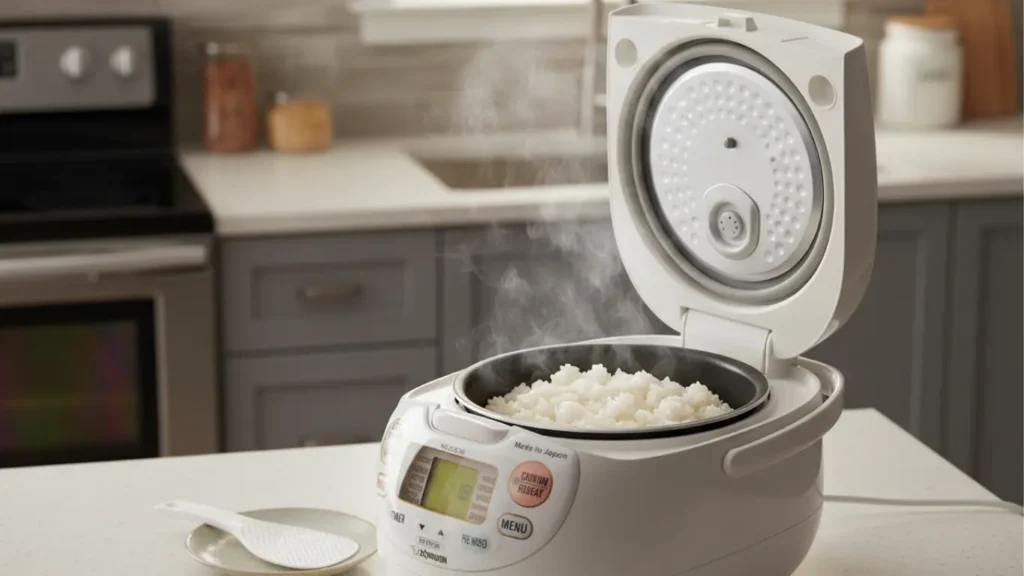
Not all rice cookers are created equal. Some are very basic, with just a “Cook” and “Warm” setting. Others are more advanced, featuring fuzzy logic, multiple presets (like brown rice, congee, soup), and even pressure-cooking capabilities.
For cooking pasta, even the most basic rice cooker will work. You’ll rely on the “Cook” setting to bring water to a boil and cook the pasta. For more advanced models, the “White Rice” setting is usually the best starting point.
If your cooker has a “Steam” function, this can also be effective as it typically maintains a high temperature and produces steam.
The key is to understand how your specific rice cooker operates. If it automatically switches to “Warm” too soon, you’ll need to manually restart the “Cook” cycle. Always refer to your rice cooker’s manual for specific instructions on how its settings function.
Frequently Asked Questions
Question: Can I use any type of pasta in a rice cooker?
Answer: Yes, you can use most types of pasta in a rice cooker, including spaghetti, penne, macaroni, and fusilli. Shorter shapes are generally easier to manage.
Question: How much water should I use for pasta in a rice cooker?
Answer: A good rule of thumb is about 4 cups of water for every pound (450g) of pasta. Always ensure the pasta is fully submerged and has room to move.
Question: Will my rice cooker boil over when cooking pasta?
Answer: It’s possible, especially if you use too little water or overcrowd the cooker. Stirring frequently and not overfilling can help prevent boil-overs.
Question: How long does pasta take to cook in a rice cooker?
Answer: Cooking times vary depending on the pasta shape and your rice cooker, but it typically takes between 8 to 15 minutes. It’s best to check for doneness by tasting.
Question: Is pasta cooked in a rice cooker as good as stovetop pasta?
Answer: When done correctly, pasta cooked in a rice cooker can be just as delicious and perfectly cooked as stovetop pasta.
Final Thoughts
So, can you cook pasta in a rice cooker? Absolutely! It’s a simple and effective method for making pasta that requires minimal effort.
By following these easy steps, you can prepare a satisfying pasta dish using the appliance you already have. Just remember to use enough water, stir well, and check for doneness. You’ll be enjoying your rice cooker pasta in no time.