Many home cooks wonder, can you grind spices in a blender? It seems like a simple question, but figuring it out can feel tricky when you’re starting. You might worry about damaging your blender or getting dusty spice everywhere.
Don’t worry! We’ll show you exactly how to do it easily. Let’s get your kitchen smelling amazing with fresh spices.
Key Takeaways
- A regular kitchen blender can be used to grind spices.
- Dry, whole spices work best for blending.
- Small batches are recommended to avoid overheating.
- Clean your blender thoroughly after grinding spices.
- Using a spice grinder is often more efficient.
- The flavor of freshly ground spices is superior.
Grinding Spices In Your Blender
So, can you grind spices in a blender? The answer is a resounding yes! It’s a practical alternative when you don’t have a dedicated spice grinder.
You can easily turn whole spices like peppercorns, cumin seeds, or coriander seeds into flavorful powders right in your kitchen. This method is fantastic for getting the freshest taste possible. When spices are ground just before you use them, their aroma and taste are much stronger and more vibrant.
The main idea is to use your blender to break down the hard exteriors of whole spices. This releases their essential oils, which carry all the amazing flavors and smells. It’s a straightforward process, but there are a few tips to make sure you get the best results and keep your blender in good shape.
Why Freshly Ground Spices Matter
You might be wondering why the fuss about grinding your own spices. Well, pre-ground spices lose their flavor and scent over time. Think of them like cut flowers; they look nice for a while, but they don’t last.
Whole spices, on the other hand, are like a sealed bouquet. Their flavor is locked inside until you’re ready to use it. When you grind them yourself, you’re unlocking that fresh, intense flavor that makes a big difference in your cooking.
The oils that give spices their unique tastes start to escape as soon as they are broken apart. This is why store-bought ground spices can often taste a bit flat compared to what you can make at home. By grinding them on demand, you ensure that every dish you make gets the full impact of that spice’s natural flavor.
Choosing The Right Spices
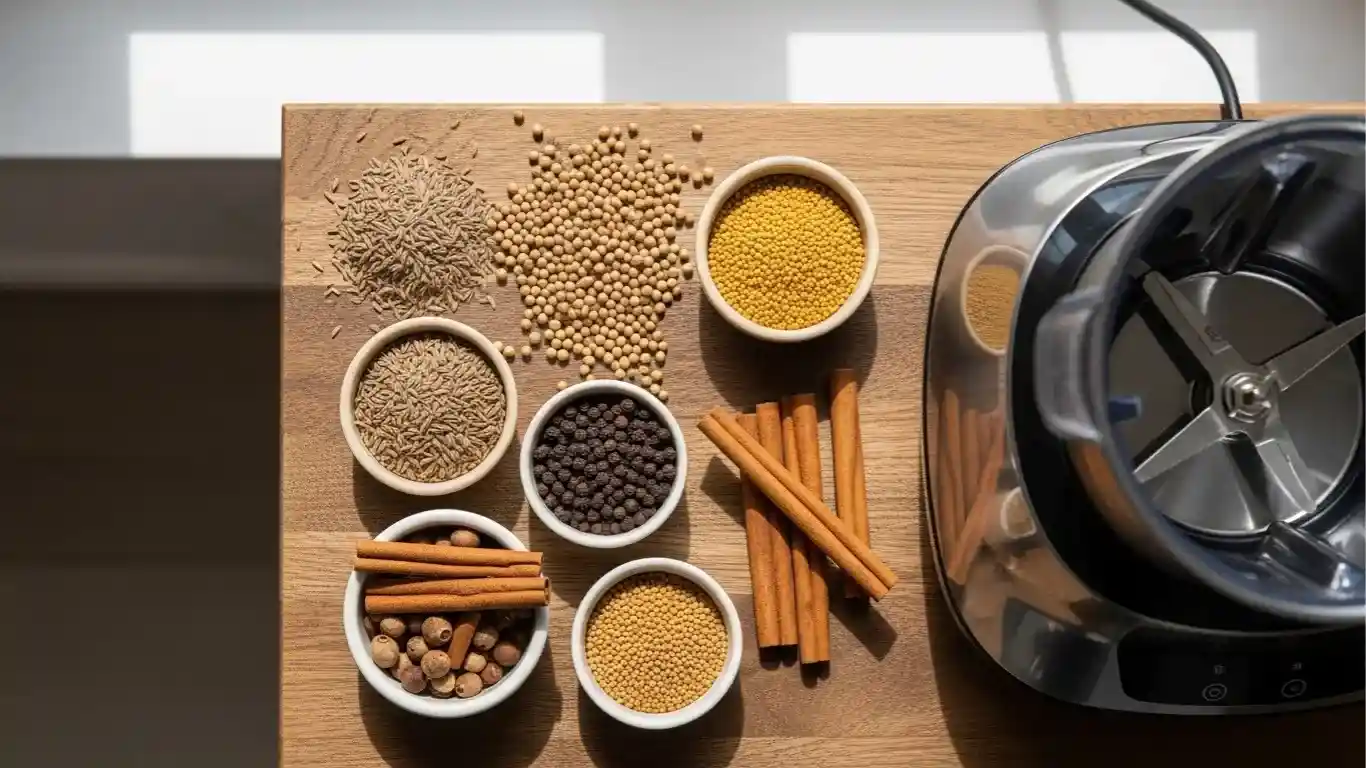
When you’re starting to grind spices in your blender, it’s best to stick with dry, whole spices. Things like:
- Peppercorns (black, white, green, pink)
- Cumin seeds
- Coriander seeds
- Fennel seeds
- Mustard seeds
- Cloves
- Cardamom pods (remove the outer shell for faster grinding)
- Cinnamon sticks (break into smaller pieces)
Avoid grinding oily or sticky spices like fresh ginger or turmeric root in your blender. They can gum up the blades and motor. Also, very fine powders like chili powder or paprika are usually best bought pre-ground because they can create a lot of dust that’s hard to clean.
How To Grind Spices In A Blender Step-By-Step
Here’s how to do it:
1. Select Your Spices
Choose the dry, whole spices you want to grind. Make sure they are completely dry. Moisture can cause them to clump and make grinding difficult.
2. Measure Your Spices
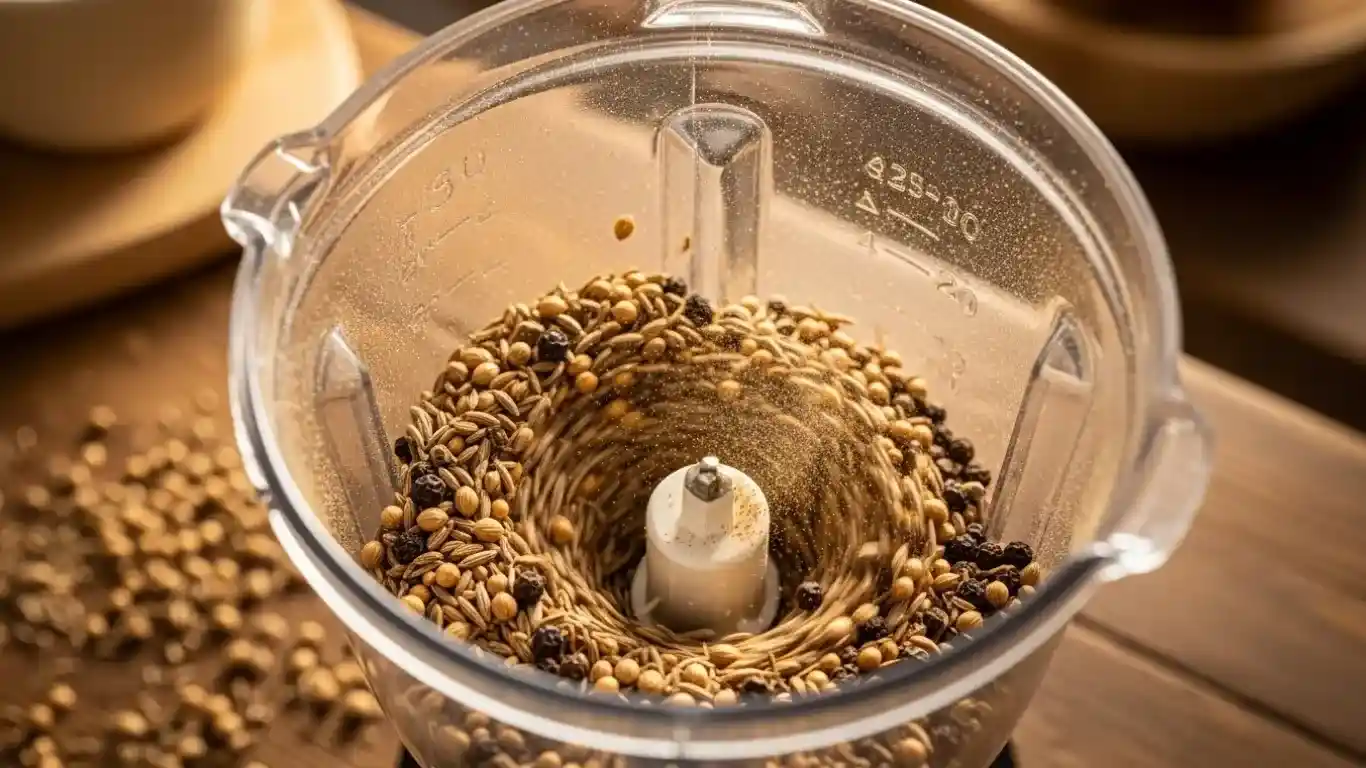
Put the whole spices into the blender jar. It’s best to work in small batches. Overfilling the blender can lead to uneven grinding and can strain the motor.
3. Secure The Lid
Make sure the blender lid is on tight. This is important to prevent spice dust from escaping and making a mess. You might want to cover the lid with a towel for extra protection.
4. Pulse First
Start by using the “pulse” function on your blender. Pulse a few times to break up the larger pieces. This helps the blender start the process effectively.
5. Blend Until Fine
Once the spices are broken down, switch to a regular blending speed. Blend until you reach the desired consistency. This might take anywhere from 30 seconds to a couple of minutes, depending on your blender and the spice.
Keep an eye on the blender. If it starts to feel hot, stop and let it cool down. Overheating can damage the motor and also affect the flavor of the spices.
6. Check Consistency
Stop the blender and check the texture. If you want a finer powder, blend for a little longer. If you prefer a coarser grind, stop sooner.
7. Transfer And Store
Carefully pour the ground spices into an airtight container. Glass jars are ideal. Make sure the lid is sealed tightly to keep the flavor fresh.
Tips For Success
Here are some extra pointers to help you get the best out of your blender spice-grinding:
- Cleanliness is Key: Always clean your blender immediately after grinding spices. Some spices can leave a strong aroma or color that can transfer to other foods. A quick wash with warm, soapy water should do the trick. For stubborn smells, you can blend a mixture of water and a little white vinegar, then rinse well.
- Small Batches: As mentioned, grinding in small batches is crucial. This prevents the motor from overheating and ensures more even grinding.
- Dry Spices Only: Stick to dry, hard spices. Soft or oily ingredients are not suitable for this method.
- Blade Type Matters: While most blenders can handle it, high-powered blenders with strong blades will perform better and grind more evenly.
- Be Patient: Some hard spices might take a little longer to grind. Don’t rush the process.
- Don’t Expect Perfection Every Time: While a blender works, it might not produce a powder as fine as a commercial spice grinder. For very fine flours, a dedicated grinder is best.
When To Consider A Spice Grinder
While your blender is a capable tool, a dedicated spice grinder has its advantages. Spice grinders are designed specifically for the task. They often have sharper blades and a motor built to handle the abrasive nature of spices.
This means they can produce a finer, more consistent grind. They also keep the flavors of your spices separate from your smoothie-making endeavors. If you find yourself grinding spices frequently, investing in a spice grinder might be a good idea.
However, for occasional use or when you’re just starting out, a blender is a perfectly good solution. It’s a way to experiment with fresh flavors without buying new equipment. You can still achieve wonderful results with a bit of care and attention.
Frequently Asked Questions
Question: Can I grind seeds like flax or chia in a blender
Answer: Yes, you can grind seeds like flax or chia in a blender. However, it’s best to use small batches and pulse them until they reach your desired consistency. For very fine powders, a dedicated seed grinder or food processor might give better results.
Question: How do I clean my blender after grinding spices
Answer: Clean your blender immediately after use. Rinse it with warm water and a little dish soap. For lingering smells or colors, blend a cup of water with a tablespoon of white vinegar, then rinse thoroughly.
Question: Will grinding spices make my blender smell
Answer: Some spices, like cumin or cloves, can leave a strong aroma in your blender. Thorough cleaning after each use will help minimize this. You can also try blending water with a bit of lemon juice or baking soda to help neutralize odors.
Question: Can I grind fresh herbs in a blender
Answer: It’s generally not recommended to grind fresh herbs in a standard blender. They are moist and can turn into a paste rather than a ground spice. A food processor or a sharp knife is better for chopping herbs.
Question: What if my blender isn’t powerful enough to grind spices
Answer: If your blender struggles, try breaking down the spices into smaller pieces before blending. Also, work in very small batches. If the motor still seems strained, it might be best to use a mortar and pestle or a dedicated spice grinder.
Final Thoughts
You’ve learned that yes, you absolutely can grind spices in a blender. It’s a simple and effective way to boost the flavor in your cooking. By following a few easy steps and keeping your blender clean, you can enjoy the wonderful taste of freshly ground spices in your meals.
Give it a try and see the difference it makes.

I’m Joshua Miller, a U.S.-based food enthusiast and Co-Founder of KitchenWink.com. With a Bachelor’s degree in Food Science and over five years of hands-on experience testing blenders, coffee makers, and other kitchen tools, I focus on real-world results—not lab theories.
As a home cook, I personally test every product in real kitchens to give you honest, practical advice that makes everyday cooking easier.