Skip to content
You're half-awake, the coffee maker is filled with water, and you reach for the drawer — empty. No filters. It's a moment every coffee drinker knows. But here's the truth: you can absolutely brew a drinkable pot of coffee without a paper filter. It doesn't have to taste like a muddy disaster, and you don't need to run to the store.
More people are skipping standard paper filters in 2026 — some to cut waste, others to save money as filter prices creep up. Whatever your reason, this guide covers every practical substitute, the step-by-step brewing process, the taste and health trade-offs you should know about, and how to keep your machine running clean afterward.
Why Coffee Filters Matter (and When You Can Skip Them)
A coffee filter does three jobs:
- Catches the grounds — keeps silt and sediment out of your cup.
- Absorbs coffee oils — which changes the mouthfeel and flavour profile significantly.
- Regulates water flow — allows even extraction through the ground beans.
When you brew without a filter, you're not just losing these benefits — you're changing the chemistry of the brew itself. Unfiltered coffee contains higher levels of diterpenes, compounds called cafestol and kahweol, that research has linked to elevated LDL cholesterol when consumed regularly over time. One emergency pot won't hurt you, but making this a daily habit is worth thinking twice about.
The good news: every substitute below handles the first job — keeping grounds out of your cup — and most come close enough on the other two.
The Best Filter Substitutes That Actually Work
Not all substitutes are created equal. Here's what works, ranked from most reliable to emergency-only.
Paper Towels
The classic fix, and the one most people reach for first — but only if you do it right.
- Fold properly: Take a single sheet and fold it into quarters, giving you at least 3–4 layers of paper.
- Cover everything: The folded paper should cover the entire basket bottom, with some overhang up the sides.
- Pre-wet the paper: Run hot water through it once before adding grounds. This removes loose paper fibres and prevents a "papery" taste in your brew.
- Skip scented or printed towels: Dyes and fragrances will end up in your coffee. Unbleached, unscented towels are the safest choice.
The main risk is tearing mid-brew, which sends grounds straight into the carafe. If the paper rips, stop the brew, rinse the carafe, and start over — a gritty pot isn't worth saving.
Cloth or Tea Towels
A clean, lint-free cloth is genuinely one of the best substitutes — arguably better than paper towels.
- Material matters: 100% cotton or muslin works best. Microfiber and synthetic blends shed fibres into your coffee.
- Boil it first: If you're repurposing a kitchen towel, boil it for a few minutes to sanitise it and wash out detergent residue.
- Fold to fit: Make sure there are no gaps around the edges of the basket where grounds can slip past.
- Clean up immediately: Cloth filters collect coffee oils. Left unwashed, they turn rancid and ruin your next brew.
With proper care — rinse, wash, dry — a cloth filter can last 6–12 months. That makes it the most sustainable substitute on this list.
Cheesecloth
Fine-weave cheesecloth can get you through a morning, but it's the weakest of the three.
- Fold it 4–6 times: A single layer won't catch fine grounds.
- Secure the edges: Tuck them into the basket, or tie with kitchen twine, so the cloth doesn't shift mid-brew.
- Expect some silt: Cheesecloth catches the coarse stuff, but fine coffee dust will still get through — especially with a fine grind.
If cheesecloth is all you have, it'll do. Just don't expect a sparkling-clean cup.
| Substitute | Difficulty | Grounds Retention | Taste Impact | Reusable? |
|---|---|---|---|---|
| Paper towel | Easy | Good, if folded well | Slight papery taste risk | No |
| Cloth napkin / towel | Easy | Very good | Neutral, clean flavour | Yes, 6–12 months |
| Cheesecloth | Medium | Fair to good | Minimal impact | Yes, short-lived |
| Metal reusable filter | Easy | Excellent | More oils, fuller body | Yes, permanent |
What About a Reusable Metal Filter?
If you already own a permanent metal mesh filter designed for your brewer, you're set. These ship with many machines and produce a full-bodied cup with more extracted oils than paper. The trade-off is a little more sediment at the bottom of your cup. They clean easily — just rinse under running water and give them a gentle scrub every few brews.
How to Brew Without a Filter — Step by Step
Here's the exact process that produces the cleanest cup:
- Prep your substitute. Fold your paper towel, cloth, or cheesecloth as described above. It should sit flat in the basket, with edges rising above the basket rim.
- Pre-rinse it. Pour hot water through the substitute to wet it and flush out loose fibres. This also warms the basket, which helps extraction.
- Add your usual coffee. Measure the same amount you always use — no more, no less.
- Brew slowly. If your machine has a pause-and-serve feature, use it to slow the water flow. A gentler drip reduces the chance of the substitute tearing or overflowing.
- Stop the pot early. Pull the carafe out a few seconds before brewing finishes. The last drips carry the most sediment.
- Let it rest. After brewing, let the coffee sit for 30–60 seconds. Any stray grounds sink to the bottom.
The single most important tip: pour gently. Agitation stirs up sediment, even when you're using a substitute filter. A slow, steady pour from low height keeps your cup clean.
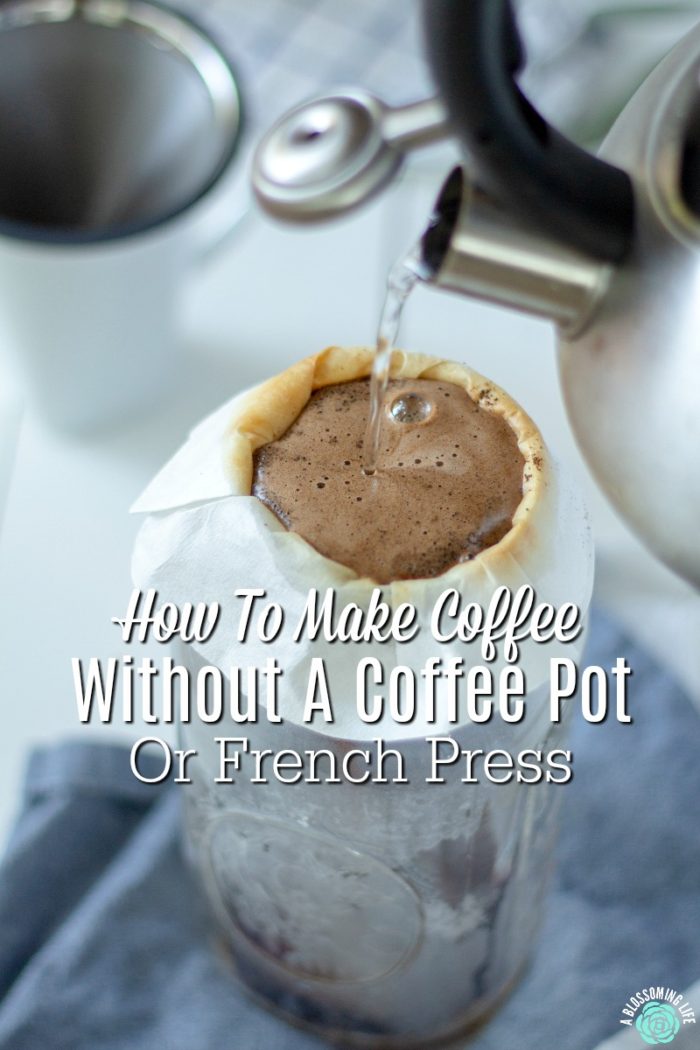
Credit: ablossominglife.com
Grounds and water mix directly in the carafe when no filter is available — straining at the pour is essential.
Brewing Directly in the Carafe: The Cowboy Method
If you have no paper, no cloth, and no cheesecloth, there's one more route: skip the filter entirely and brew in the carafe itself.
The process: Add coffee grounds directly to the empty carafe, pour in hot water, stir, wait, and pour carefully.
In practice, this works best with a coarse grind — think the texture of sea salt. Fine coffee turns into an undrinkable slush; coarse grounds sink faster and settle more cleanly.
Where it goes wrong: most people add grounds, brew, and pour — then eat a mouthful of grit. The fix is patience. Let the carafe sit for at least 4–5 minutes after brewing, then pour with a spoon held at the lip of the carafe to catch the last bits. A fine-mesh strainer held over your mug catches most of the rest.
It's not elegant, but it works — and it has a long tradition in camping and cowboy culture, where filters were never part of the kit.
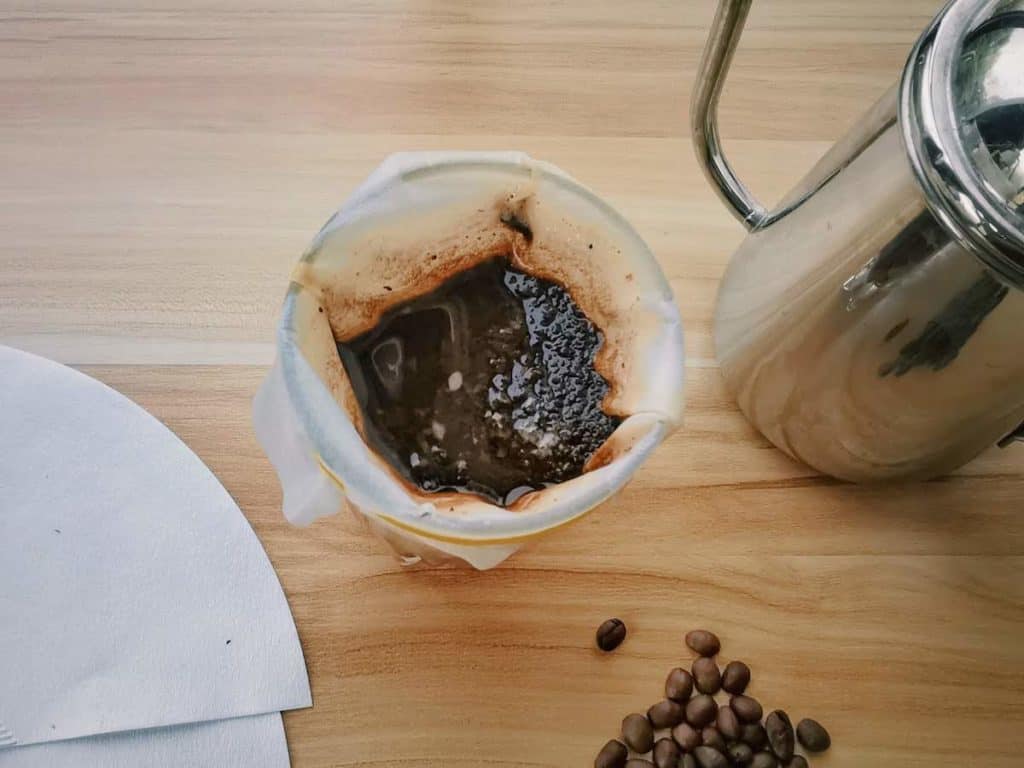
Credit: europeancoffeetrip.com
Letting the grounds settle before pouring is the key difference between a decent cup and a gritty one.
Pros and Cons of No-Filter Brewing: A Quick Reference
| ✅ Pros | ❌ Cons | |
|---|---|---|
| Flavour | More body and oils; some prefer the heavier texture | Can taste bitter, muddy, or overly strong |
| Texture | N/A | Gritty sediment in the cup if you rush it |
| Health | N/A | Higher diterpene intake (cafestol, kahweol) linked to LDL cholesterol |
| Cost | No ongoing filter expense | Substitutes can tear, clog, or shift mid-brew |
| Cleanup | Fewer items thrown away | Carafe and basket need a thorough rinse to remove residues |
Taste, Texture, and Health: What You Should Know
Taste. Expect your coffee to taste noticeably different. Paper filters absorb many of the oily compounds that carry flavour and mouthfeel. Without them, you get a heavier cup — closer to what a French press produces. That's not automatically worse, but it is a change, and regular filtered-coffee drinkers may find it jarring at first.
Texture. Even with a cloth substitute, expect fine particles at the bottom of your cup. If you dislike "mud" in your last sip, use a coarse grind and pour slowly. A proper metal filter eliminates most of this issue.
Health. This is the point most people don't realise. Drinking large amounts of unfiltered coffee over time can raise LDL cholesterol more than filtered coffee because the diterpenes mentioned earlier aren't trapped by paper. The FDA's food-safety resources are the right place to look if you have concerns about consuming coffee grounds (https://www.fda.gov). Coffee grounds aren't toxic, but eating them daily isn't a habit worth embracing.
Practically speaking: an occasional filter-free pot is completely fine. A daily filter-free routine is worth reconsidering, especially if your cholesterol levels are a concern. For balanced flavour and dose guidance, the Specialty Coffee Association's brewing standards (https://sca.coffee) are a helpful reference point.
How to Keep Your Coffee Maker Clean After Filter-Free Brewing
A filter-free brew leaves residue that a paper filter would normally catch. Here's the after-brew routine that prevents problems:
- Rinse the carafe immediately. Coffee oils oxidise quickly; left for hours, they turn sticky and hard to remove.
- Pull and rinse the basket. Run it under warm water to clear the grounds.
- Wipe the interior. A damp cloth catches fines that cling to surfaces.
- Descale monthly. Without a filter, mineral buildup and coffee oils combine faster. Slower brew times are the first sign you need it.
- Wash cloth substitutes right away. Coffee oils go rancid quickly.
Brewing clean should feel like part of your regular kitchen routine — much like the way you'd keep your range hood filters clean or stick to your standard kitchen maintenance schedule. The principle is the same everywhere: oily residue builds up quietly and causes problems later.
When to Just Buy a Reusable Filter
If you're regularly scraping by without filters, there's a smarter fix than paper towels: a permanent metal mesh filter sized for your brewer. None of the substitutes above match it for consistency.
A decent reusable filter costs less than a few boxes of paper filters and lasts for years. It also eliminates the slightly-papery taste that even careful paper towel hacks produce. Cleaning takes thirty seconds under the tap.
If you find yourself brewing without filters often, consider whether your coffee setup is working for you at all. For some people, a pour-over cone with a built-in metal filter — or even a proper espresso machine — makes more sense than a drip brewer that depends on paper. And if you travel a lot, a compact electric kettle pairs well with a manual brewer that needs no filters at all.
Frequently Asked Questions
Can I Use a Coffee Maker Without a Coffee Filter?
Yes. Use a folded paper towel, a clean cloth, or cheesecloth as a one-time substitute. You can also brew directly in the carafe with a coarse grind, but you'll need to pour carefully and accept some sediment.
What Do I Do If I Don't Have a Coffee Filter?
Three options: brew with a folded paper towel or cloth in the basket; brew directly in the carafe with a coarse grind and strain as you pour; or buy a permanent metal filter to eliminate the problem for good.
What Happens If I Don't Use a Coffee Filter?
Your coffee will be stronger, oilier, and contain visible sediment. The main downsides are grittier texture, a bitter edge, and higher diterpene levels. None of these are dangerous as an occasional thing, but it's not ideal as a daily habit.
Can I Use a Paper Towel in Place of a Coffee Filter?
Yes, if you fold it into at least 3–4 layers, cover the basket completely, and pre-wet it before adding coffee. Avoid printed, scented, or bleached towels — the dyes and fragrances will ruin your cup.
Can I Make Coffee Without a Paper Filter in a Coffee Maker?
Yes. A clean cloth or a metal reusable filter gives the cleanest results. Paper towels work as an emergency fix, but they can tear or affect flavour.
Conclusion
Running out of coffee filters doesn't have to ruin your morning. Use a folded paper towel, a clean cotton cloth, or cheesecloth as an emergency substitute — or, if you're willing to accept a grittier cup, brew directly in the carafe with a coarse grind and pour carefully.
The taste will be different, with more body and oil, and you'll want to clean your machine thoroughly afterward. If this happens to you more than once a month, spend the small amount on a permanent metal filter and be done with it.
If you found this helpful, our blog has more practical kitchen problem-solving guides — from improvised baking alternatives to choosing the right appliances — all designed to help you get more from what you already own.