Skip to content
Making coffee feels like a daily ritual for millions. But what if you don’t own a coffee maker? Maybe you live in a dorm, travel often, or your coffee machine just broke. You stare at your electric kettle and ask: can you make coffee with this simple appliance? The answer is yes—but with a few caveats.
Let’s explore how, why, and what you need to know to get your caffeine fix using only an electric kettle.
How Electric Kettles Work
Electric kettles are designed to boil water quickly and efficiently. Most have a heating coil or plate at the base, which heats up when you plug in the kettle. Some models let you set the temperature, while others just bring water to a rolling boil. They’re safe, portable, and easy to use.
But electric kettles were not made for brewing coffee. They simply heat water. This means making coffee in a kettle is different from using a drip machine, French press, or espresso maker. You must adapt your method and expectations.
Ways To Make Coffee Using An Electric Kettle
You can’t brew coffee inside the kettle like you would with a traditional coffee maker. However, you can use the boiling water from the kettle to prepare coffee in a few creative ways.
1. Instant Coffee
The simplest way: instant coffee. Just heat water in the kettle, pour it over instant coffee powder in a cup, and stir. It’s fast and mess-free. While the taste might not match fresh brew, it’s convenient for busy mornings or travel.
2. Pour-over Coffee
This method gives you more control and better flavor.
- Place a pour-over cone or dripper on your mug.
- Add a coffee filter and ground coffee (medium grind works best).
- Boil water in the kettle, let it cool for 30 seconds (ideal temp: 195–205°F).
- Pour water slowly over the grounds in circles.
You get aromatic, fresh coffee. Most kitchens have a mug and kettle; you only need the dripper and filters.
3. French Press
If you own a French press, the electric kettle is your best friend.
- Add coarsely ground coffee to the press (usually 2 tablespoons per 6 oz water).
- Boil water, let it cool slightly, pour over the grounds.
- Stir and steep for 4 minutes, then press and serve.
This method is easy, and the French press is portable.
4. Coffee Bags
Coffee bags are like tea bags but filled with ground coffee.
- Place the bag in your cup.
- Boil water, pour it over the bag, and let it steep for 3–5 minutes.
- Remove the bag and enjoy.
This is tidy, quick, and good for travel or office use.
5. “cowboy” Or Turkish-style Coffee
If you have no other tools, you can brew coffee directly in a pot or even in the kettle itself (with some risks—see below).
- Add water and finely ground coffee to a small saucepan or heatproof jug.
- Pour boiling water from the kettle over the coffee.
- Stir and let it settle for a few minutes.
- Pour gently to leave grounds behind.
Some even add sugar or spices as in Turkish coffee. But avoid putting grounds directly in your electric kettle, as it can damage the device.
Can You Brew Coffee Directly In An Electric Kettle?
While it’s technically possible to add ground coffee to the water inside your kettle, it’s not recommended.
- Most kettles are not designed for anything except water.
- Grounds can clog the spout or stick to the heating element.
- Cleaning out sticky, oily residue is difficult.
- Some kettles have exposed coils that are hard to scrub.
If you try this, use only a basic, cheap kettle, and clean it thoroughly after. Be aware that it may void your warranty or shorten the kettle’s life.
Pros And Cons Of Making Coffee With An Electric Kettle
Here’s a quick look at the advantages and disadvantages:
| Pros | Cons |
|---|---|
| Fast and convenient | Limited brewing methods |
| No special equipment needed | Can’t brew inside the kettle safely |
| Easy to clean (if you don’t add grounds to kettle) | Flavor can be weaker than with coffee makers |
| Great for travel and small spaces | More steps than using a drip machine |
How The Taste Compares
Coffee made with kettle-boiled water can taste very good, especially with pour-over or French press. Instant coffee is convenient but less flavorful. “Cowboy” style is strong and gritty, but traditional in some cultures.
Factors Affecting Flavor
- Water temperature: Too hot or cold water extracts different flavors. The ideal is 195–205°F (90–96°C).
- Grind size: Use coarser grounds for French press, medium for pour-over, and fine for “cowboy” style.
- Brew time: Shorter times yield weaker coffee; longer can make it bitter.
Step-by-step: Making Pour-over Coffee With An Electric Kettle
If you want a fresh, full cup, this method is a favorite. Here’s how:
- Place a pour-over dripper with filter on your mug.
- Add 15–18g (about 3 tablespoons) medium-ground coffee.
- Boil water in your kettle. Let it cool for 30 seconds (should be just below boiling).
- Pour enough water (about 30–50ml) to wet the grounds. Wait 30 seconds—this is the “bloom.”
- Slowly pour the rest of the water (total 250ml for one cup) in circles over 2–3 minutes.
- Let it drain, then enjoy.
Tip: Weighing your coffee and water ensures consistent flavor.
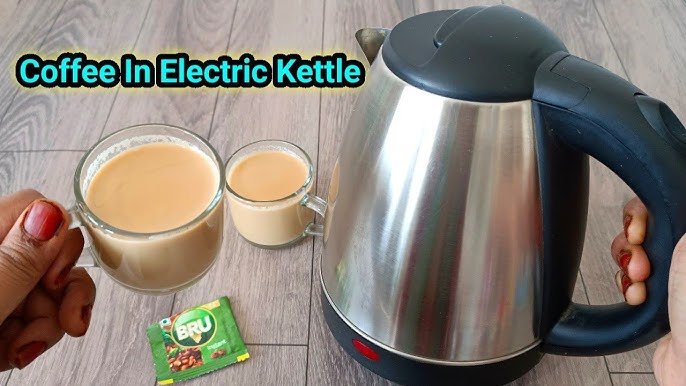
Credit: www.youtube.com
Cleaning Your Kettle After Making Coffee
If you only boil water, cleaning is simple—just rinse out the kettle regularly. If you accidentally put coffee grounds or milk inside, clean it as soon as possible:
- Fill with water and a splash of vinegar, boil, pour out, and rinse.
- Use a soft sponge; avoid harsh scrubbing on the heating element.
- Never immerse an electric kettle in water.
Letting coffee or milk residue sit can cause odors or even damage the kettle.
Safety Tips When Using An Electric Kettle For Coffee
- Never overfill the kettle. Boiling water can spill and cause burns.
- Don’t use the kettle to heat milk or add any powders directly.
- Always unplug before cleaning.
- Use caution when pouring boiling water—go slow to avoid splashing.
Comparing Electric Kettle Coffee To Other Brewing Methods
How does coffee made with kettle-boiled water stack up against other popular methods?
| Method | Flavor Quality | Ease of Use | Equipment Needed |
|---|---|---|---|
| Electric Kettle + Pour-Over | High | Medium | Kettle, dripper, filter |
| Electric Kettle + French Press | Rich, full-bodied | Easy | Kettle, French press |
| Instant Coffee | Low to medium | Very easy | Kettle, cup, spoon |
| Drip Coffee Maker | Consistent, good | Very easy | Drip machine, filter |
| Espresso Machine | Strong, complex | Difficult | Espresso maker, grinder |
Common Mistakes When Making Coffee With An Electric Kettle
1. Pouring Boiling Water Directly On Coffee
Boiling water (212°F/100°C) can burn coffee grounds. Let water cool for 30 seconds after boiling.
2. Using The Wrong Grind Size
Fine grounds clog pour-over filters; coarse grounds taste weak in “cowboy” coffee.
3. Brewing Inside The Kettle
This damages most kettles and is hard to clean.
4. Overfilling The Kettle
Leads to spills and potential burns.
5. Neglecting Water Quality
Filtered or fresh water makes better coffee.
Practical Tips For Better Kettle-made Coffee
- Invest in a gooseneck kettle if you enjoy pour-over. It gives you more control.
- Preheat your mug with hot water for a warmer drink.
- Try different coffee-to-water ratios to find your perfect strength.
- If you travel, pack a few coffee bags—they’re light and easy.
You might find this helpful: Best Electric Kettle for Pour Over Coffee
Who Should Use An Electric Kettle For Coffee?
- Students in dorms with no kitchen
- Travelers staying in hotels or hostels
- Office workers without access to a coffee machine
- Minimalists who want fewer gadgets
If you love strong espresso, a kettle won’t replace your machine. But for most people, it’s a budget-friendly, flexible solution.
Environmental Impact
Electric kettles are energy efficient. They heat only the amount of water you need, reducing waste. If you use reusable filters or a French press, you produce less trash compared to single-use pods or capsules.
When Not To Use An Electric Kettle For Coffee
- If your kettle has a plastic interior—plastic may absorb coffee odors.
- If your kettle is hard to clean or has a narrow opening.
- If you need large quantities—making one cup at a time is slow for a crowd.
:max_bytes(150000):strip_icc()/sea-tier-3-primary-best-gooseneck-kettles-ahuang-085-1-678eb2599a2c48e1ad86109cde87f570.jpeg)
Credit: www.seriouseats.com
Real-world Examples And Insights
Many travelers use electric kettles for coffee in hotel rooms. A simple dripper or coffee bags take almost no space in a suitcase. Students often use the kettle for both coffee and instant noodles, but it’s smart to keep them separate for taste and hygiene.
One insight beginners miss: water temperature is critical. Even a 10-degree difference changes flavor. If you want to get fancy, use a thermometer or a kettle with temperature control. Another tip: always rinse your filter with hot water before brewing. This removes paper taste and preheats the dripper.
Frequently Asked Questions
Can I Put Ground Coffee Directly Into My Electric Kettle?
It’s not recommended. Grounds can stick to the heating element, are hard to clean, and may damage your kettle or void the warranty. Always brew coffee outside the kettle and use it just for boiling water.
Is Coffee Made With An Electric Kettle As Good As With A Coffee Machine?
With methods like pour-over or French press, yes—the taste can be excellent if you use good coffee and the right technique. Instant coffee is less flavorful. The main difference is convenience and volume.
What Type Of Electric Kettle Is Best For Making Coffee?
A kettle with temperature control is ideal, as coffee brews best below boiling. Gooseneck kettles offer better pouring control, important for pour-over. Stainless steel interiors are easier to clean than plastic.
Can I Use An Electric Kettle To Make Espresso?
No. Espresso requires high pressure and finely ground coffee, which a kettle cannot provide. For espresso, you need a dedicated espresso machine or stovetop moka pot.
What’s The Best Way To Make Coffee In A Hotel Room With Just A Kettle?
Bring coffee bags or a small pour-over dripper and filters. Boil water in the kettle, pour over the bag or grounds in your cup, steep, and enjoy. Avoid brewing directly in the kettle—it’s messy and can annoy hotel staff.
For more about electric kettle safety and brewing, see Consumer Reports.
If you’re missing your usual machine, don’t worry—your electric kettle can deliver a satisfying cup. With the right method and a bit of practice, you’ll enjoy fresh coffee anywhere, anytime.

Credit: www.kimbocoffee.com