If you love baking cookies, you might have wondered if that ice cream scoop sitting in your kitchen drawer could help. Many home bakers and professionals use scoops for cookies, but is it the best tool? Let’s look at how an ice cream scoop works for cookies, compare it to other tools, and see what the experts say. You’ll learn about scoop sizes, cookie results, pros and cons, and practical tips. By the end, you’ll know whether scoops are right for your next batch—and exactly how to use them.
How Ice Cream Scoops Work
An ice cream scoop is designed to dig into frozen ice cream and release a rounded ball. Most scoops have a spring-loaded lever or a simple bowl shape. The lever helps push the ice cream out, while the bowl forms the shape. These scoops come in several sizes, measured by “numbers” (like #20, #40, etc.), which refer to how many scoops fit into a quart.
For cookies, the scoop’s job is different. Instead of frozen ice cream, you’re grabbing cookie dough—which is often sticky, soft, or firm. The scoop helps portion dough evenly, which affects baking results.
Why Use An Ice Cream Scoop For Cookies?
There are clear reasons why many bakers choose ice cream scoops for cookies:
- Even sizing: All cookies come out the same size, so they bake evenly.
- Quick portioning: Scooping dough is faster than rolling balls by hand.
- Cleaner hands: Less dough sticks to your fingers.
- Professional look: Cookies have a uniform, round shape.
These benefits matter more than you might think. Uneven cookies can bake differently—some may burn while others stay raw. Using a scoop solves this problem.
Comparing Ice Cream Scoops With Other Cookie Tools
To understand if scoops are best, let’s compare them with common alternatives. Here’s a quick overview:
| Tool | Portioning Speed | Cookie Size Consistency | Ease of Use |
|---|---|---|---|
| Ice Cream Scoop | Fast | Very Consistent | Easy, lever helps |
| Spoon & Hand | Medium | Inconsistent | Messy, more effort |
| Cookie Scoop | Fast | Very Consistent | Easy, designed for dough |
| Measuring Spoon | Slow | Consistent | Can be tricky to release |
Ice cream scoops and cookie scoops (which look almost identical) lead in speed and size consistency. However, cookie scoops are designed specifically for dough—they often have a stronger spring and a sharper edge for sticky dough.
Choosing The Right Scoop Size For Cookies
Not every ice cream scoop works for cookies. Size is key. Scoops are numbered by how many fit in a quart—so a #40 scoop gives you 40 scoops per quart. For cookies, most recipes call for a scoop between #20 and #60.
| Scoop Number | Approx. Dough Volume | Cookie Diameter | Typical Use |
|---|---|---|---|
| #20 | 3 Tbsp | 3.5–4 in | Large bakery cookies |
| #40 | 1.5 Tbsp | 2.5–3 in | Standard cookies |
| #60 | 1 Tbsp | 2–2.5 in | Mini cookies |
For most home bakers, a #40 scoop is ideal—it creates cookies similar to what you see in stores. If you want smaller cookies for parties, go for a #60. For jumbo, bakery-style cookies, try a #20.
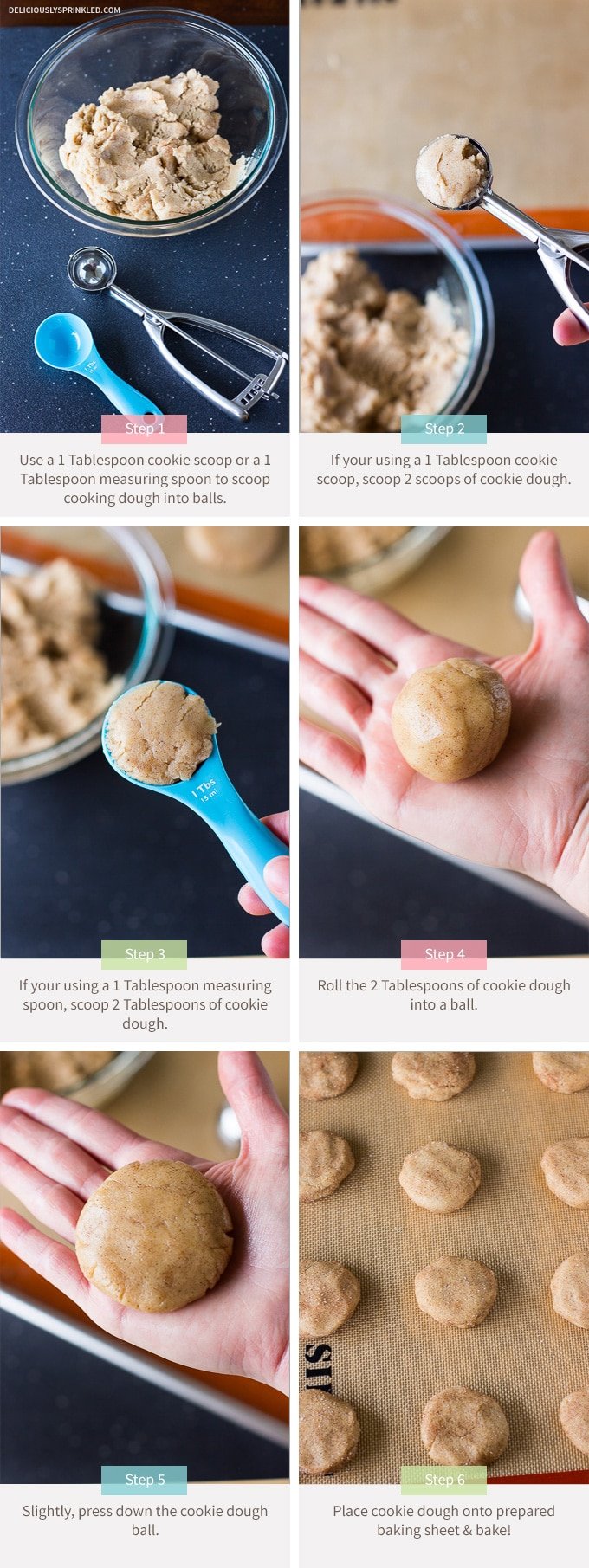
Credit: deliciouslysprinkled.com
Cookie Texture And Shape: Does The Scoop Matter?
Using an ice cream scoop affects both the texture and shape of your cookies. When you portion dough with a scoop, you get round balls with a smooth surface. This means:
- Cookies spread evenly during baking.
- The center stays thick, which can make cookies soft and chewy.
- Edges are uniform, so you avoid thin or burnt sides.
If you use a spoon and hand-roll, cookies may look rustic—sometimes flatter, sometimes uneven. For some recipes, this is fine. But if you want that classic, round look, scooping is better.
Non-obvious Insight: The Scoop’s Lever And Sticky Dough
Many beginners don’t realize that a spring-loaded lever is crucial for sticky doughs like chocolate chip or oatmeal. If your scoop doesn’t have a lever, dough can get stuck and never release cleanly. This can lead to frustration, wasted dough, and messy results. Always choose a scoop with a lever for sticky cookie dough.
Practical Tips For Using An Ice Cream Scoop With Cookies
Here are practical steps and tips for best results:
- Chill your dough if it’s soft. Cold dough scoops easier and holds its shape.
- Dip the scoop in water or flour before scooping sticky dough. This prevents sticking.
- Don’t overfill the scoop. Level off for even cookies.
- Space cookies evenly on the baking sheet—most scooped cookies spread less, but give at least 2 inches between each.
- Clean the scoop often. If dough starts sticking, rinse and dry the scoop.
- Use the right scoop size for your recipe.
Mistake To Avoid: Using The Wrong Scoop Size
A common mistake is grabbing any scoop without checking its size. If your scoop is too large, cookies can merge together and bake unevenly. If it’s too small, cookies may burn or overbake. Always check the recipe or measure the dough before scooping.
What The Experts Say
Professional bakers often use scoops for cookies. In fact, many commercial bakeries rely on numbered scoops to ensure every cookie is uniform. The National Restaurant Association recommends scoops for portion control, which helps with baking consistency and product quality.
An interesting statistic: According to a survey by America’s Test Kitchen, 67% of professional bakers use scoops for cookies, citing speed and even baking as their main reasons.
Ice Cream Scoop Vs Cookie Scoop: Are They Different?
While ice cream scoops and cookie scoops look similar, there are small differences. Cookie scoops are usually stronger and designed for sticky doughs. Ice cream scoops may bend or break if used for heavy dough. However, most modern ice cream scoops with a sturdy lever work well for cookies.
Here’s a quick comparison:
| Feature | Ice Cream Scoop | Cookie Scoop |
|---|---|---|
| Spring Mechanism | Yes, but often weaker | Yes, stronger |
| Edge Sharpness | Rounded | Sharper for dough |
| Durability | Good for soft dough | Excellent for sticky dough |
| Size Options | Wide range | Wide range |
If you bake cookies often, investing in a cookie scoop might be worth it. If you bake occasionally, a sturdy ice cream scoop works just fine.
Cleaning And Maintaining Your Scoop
To keep your scoop working well, you need to clean it properly:
- Wash with warm, soapy water after each use.
- Dry the spring mechanism completely to prevent rust.
- For sticky dough, soak in water for a few minutes to loosen residue.
- Don’t put cheap scoops in the dishwasher; high heat can damage the spring.
A well-maintained scoop lasts for years and works for both ice cream and cookies.
When Not To Use An Ice Cream Scoop
There are times when a scoop isn’t the best choice:
- Very stiff dough: Some shortbread or sugar cookie doughs are too firm and can bend the scoop.
- Cut-out cookies: If you need a flat shape for decorating, scoops don’t work.
- Delicate doughs: Some doughs break apart with scooping.
In these cases, rolling or patting by hand is better.

Credit: lilmisscakes.com
Non-obvious Insight: The Scoop’s Role In Cookie Yield
Most recipes list a “yield”—how many cookies you’ll get. Using a scoop helps you hit that number exactly. If you use spoons or hand-rolling, you may get fewer or more cookies, which can change baking time and affect quality. This matters if you’re baking for events or selling cookies.
Real-life Example
Imagine you’re baking for a school fundraiser. You need 100 cookies, all the same size, and you want them to look professional. Using an ice cream scoop, you portion each cookie quickly and evenly. You finish faster, every cookie is the same, and you don’t waste dough. The result: happy customers and stress-free baking.
Where To Find Good Scoops
Most kitchen stores sell ice cream scoops and cookie scoops. Look for stainless steel with a sturdy spring. Avoid cheap plastic scoops—they break easily. If you want more information about scoop sizes and numbers, check out Wikipedia’s ice cream scoop page.
Frequently Asked Questions
Can I Use Any Ice Cream Scoop For Cookie Dough?
You can use most ice cream scoops for cookie dough, but the best ones have a strong spring and a sturdy handle. Avoid scoops that are weak or made of thin metal—they may bend or break.
What Size Scoop Is Best For Cookies?
A #40 scoop (about 1.5 tablespoons) is best for standard cookies. For larger cookies, use a #20. For mini cookies, a #60 is good.
How Do I Prevent Dough From Sticking To The Scoop?
Dip your scoop in water or flour before each scoop. Also, keep your dough chilled. This helps the dough release easily and keeps your cookies uniform.
Is A Cookie Scoop Better Than An Ice Cream Scoop?
A cookie scoop is designed for sticky dough and is usually stronger. But a good-quality ice cream scoop with a lever works almost as well. If you bake often, investing in a cookie scoop is smart.
Can I Use A Scoop For Other Baking Tasks?
Yes! Scoops are great for portioning muffin batter, cupcake batter, meatballs, and even mashed potatoes. They help keep sizes consistent for even cooking and baking.
Final Thoughts
Using an ice cream scoop for cookies is a smart, practical choice for most bakers. It speeds up the process, keeps your hands clean, and makes cookies look professional. The key is picking the right size and making sure your scoop is strong enough for dough. If you bake often, a dedicated cookie scoop is worth it. If not, your ice cream scoop will do the job. With these tips and comparisons, you’re ready to bake cookies that look—and taste—amazing.