If you own a Japanese knife, you know it’s more than just a tool. Many chefs and home cooks treat it like a prized possession. Its sharpness, balance, and beauty make every slice feel special. But when it comes time to maintain that razor edge, questions arise. One of the most common: Can you use a honing rod on a Japanese knife? There’s plenty of confusion and even fear—some worry honing will ruin the blade, others aren’t sure what type of rod is safe.
This article will clear up those doubts, explain the science behind honing, and help you care for your knife with confidence.
Understanding Japanese Knife Steel And Edge
Japanese knives stand out because of their hard steel and fine edge geometry. Most Japanese blades use steels like VG-10, Blue Steel, or White Steel, which are harder (60–65 HRC) than typical Western knife steels (55–58 HRC). This allows them to hold a sharper edge but also makes them more brittle.
The edge angle is usually 12–15 degrees per side, compared to the 20 degrees found on Western knives. This gives a sharper cut but also means the edge is more delicate. If you use the wrong tool or technique, you can damage this fine edge.
What Does A Honing Rod Do?
Many people think a honing rod sharpens knives, but it actually realigns the edge. After use, the microscopic teeth of the blade bend. Honing straightens these teeth, restoring sharpness without removing metal. True sharpening, on the other hand, involves grinding away material to create a new edge.
There are three main types of honing rods:
- Steel honing rods: Classic, often used for Western knives.
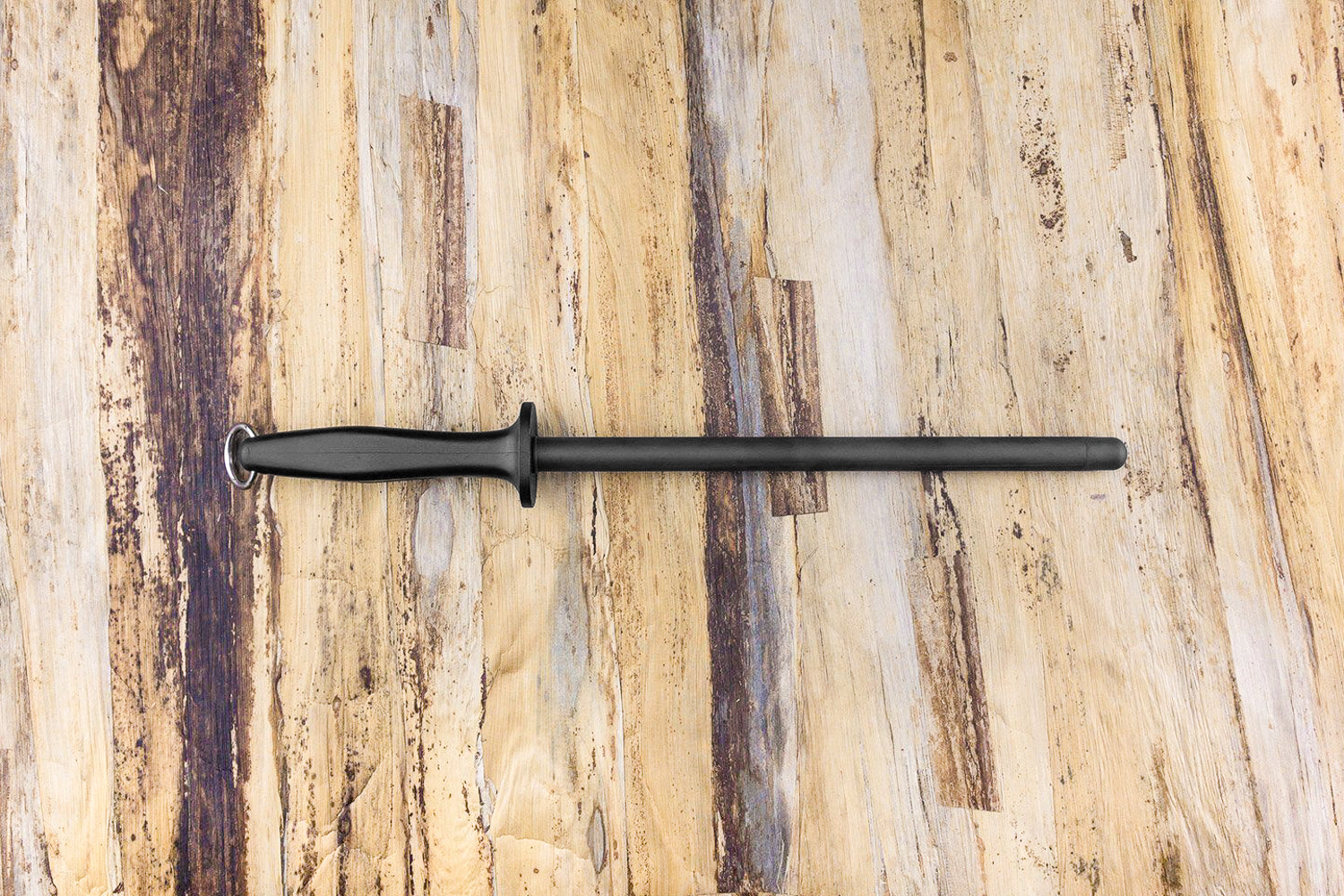
- Ceramic honing rods: Hard, fine, and gentle on delicate steel.
- Diamond honing rods: Aggressive, can remove metal and sharpen.
Each type interacts differently with knife steel. The wrong rod can harm your Japanese blade, so knowing the difference matters.
Credit: knifewear.com
Can You Use A Honing Rod On Japanese Knives?
The short answer: Yes, but with caution.
The long answer: Not all honing rods are safe for Japanese knives. Let’s look at why.
Steel Honing Rods
Traditional steel rods are common in Western kitchens. They work well with softer, tough steel. But Japanese knives are made with harder, brittle steel. Using a steel rod can cause the edge to chip or break, especially if you apply too much force.
Ceramic Honing Rods
Ceramic rods are harder than steel but much smoother. They are ideal for Japanese knives because they gently realign the edge without damaging it. Ceramic rods can also remove a tiny amount of material, so they refresh the edge while keeping it sharp.
Diamond Honing Rods
Diamond rods are the most aggressive. They remove metal quickly and are better suited for sharpening dull blades. For Japanese knives, diamond rods can be too harsh, risking chips and excessive wear. Use them only if you’re experienced or your knife is very dull.
Summary Table: Honing Rod Types For Japanese Knives
Here’s a quick comparison for clarity.
| Rod Type | Suitable for Japanese Knives? | Risk Level | Edge Impact |
|---|---|---|---|
| Steel | No | High | Chipping/Bending |
| Ceramic | Yes | Low | Gentle Realignment |
| Diamond | Rarely | Medium | Possible Over-sharpening |
How To Hone A Japanese Knife Safely
If you decide to use a honing rod, follow these steps to protect your knife.
- Choose a ceramic rod: Avoid steel unless your knife is made from softer steel (rare for Japanese brands).
- Hold the rod vertically: Place the rod tip on a stable surface.
- Hold the knife at 12–15 degree angle: Match the factory edge.
- Light pressure only: Let the weight of the knife do the work.
- Draw the blade gently: Start at the heel, pull toward the tip.
- Alternate sides: Repeat 3–5 times per side.
- Wipe blade after honing: Remove any residue.
Practical Example
Imagine you own a Shun Classic chef’s knife (VG-10 steel). You notice it’s not slicing tomatoes as cleanly. Instead of sharpening, you use a ceramic rod, holding the blade at a 14-degree angle. After a few gentle strokes, the knife glides through tomatoes again. You avoided chipping and preserved the sharp edge.
You might find this helpful: Best Honing Rod for Japanese Knives
Japanese Knife Brands And Honing Recommendations
Different brands offer specific advice. Let’s review three popular names:
| Brand | Recommended Honing Tool | Notes |
|---|---|---|
| Shun | Ceramic rod | Avoid steel rods, hone every few uses |
| Global | Ceramic rod | Use ceramic or water stones |
| Tojiro | Ceramic rod | Hone lightly, sharpen only when needed |
Common Mistakes When Honing Japanese Knives
Even experienced cooks make errors. Here are some mistakes to avoid:
- Using a steel rod: This is the most frequent error. Steel rods can cause micro-chipping.
- Applying too much force: Japanese knives require gentle handling. Heavy pressure can crack the edge.
- Wrong angle: Honing at the wrong angle blunts the edge instead of realigning it.
- Using a dirty rod: Dirt or metal particles scratch the blade.
- Honing too often: Japanese knives don’t need frequent honing. Over-honing wears the edge.
Many beginners miss that honing is not sharpening. If your knife is dull, it needs sharpening—not honing. A rod cannot fix a dull blade.
:max_bytes(150000):strip_icc()/sea-honing-steels-test-primary-ashlee-redger-16-ab14942666c942af8965fe4b980afcdf.jpeg)
Credit: www.seriouseats.com
How Often Should You Hone A Japanese Knife?
It depends on use. For home cooks, every 1–2 weeks is enough if you cook daily. For professionals, once every few days may be needed. If the knife still cuts well, skip honing. Only hone when you feel a loss of sharpness.
Over-honing can wear down the delicate edge. Always check your knife’s performance before reaching for the rod.
Alternatives To Honing Rods
If you don’t want to use a honing rod, there are other ways to maintain your knife.
- Water stones: These are the gold standard for sharpening Japanese knives. They remove metal and create a new edge.
- Leather strops: Used for polishing and finishing the edge.
- Professional sharpening services: If unsure, trust a specialist.
Water stones require some skill. Many Japanese knife owners use a 1000/6000 grit stone for regular maintenance. Strops are good for a final polish after sharpening.

Credit: www.kitchenknifeguru.com
How To Tell If Your Japanese Knife Needs Honing Or Sharpening
It’s easy to confuse honing and sharpening. Here are signs for each:
- Needs honing: Feels less sharp, but still cuts. Edge is not visibly damaged.
- Needs sharpening: Won’t slice paper or tomatoes. Edge feels rough or has chips.
A simple test: Try slicing a sheet of paper. If the blade catches or tears, it’s time for sharpening. If it’s just a bit less smooth, try honing first.
Key Insights Beginners Often Miss
Many new knife owners overlook two important points:
- Honing does not fix a dull knife. If your Japanese knife won’t cut, only sharpening will restore it.
- Not all rods are equal. Ceramic is best for Japanese knives; steel rods are mostly for Western blades.
Another overlooked detail: Japanese knives are single or double bevel. Single-bevel knives (like yanagiba) require special honing techniques. Double-bevel knives (like most chef’s knives) can use standard ceramic rods.
Expert Tips For Maintaining Japanese Knives
To keep your knife sharp and safe:
- Always use a wooden or plastic cutting board. Hard surfaces dull the edge quickly.
- Wash and dry your knife immediately after use. Water and acids cause rust.
- Store your knife in a knife block, sheath, or magnetic strip. Avoid loose drawers.
If you’re unsure about honing, consult your knife’s manual or website. Many brands provide detailed care instructions.
Japanese Knife Edge Retention: Data And Statistics
Japanese knives can stay sharp longer than Western knives, but only with proper care. Studies show that VG-10 steel maintains sharpness for up to 30% longer than standard German steel. However, improper honing or sharpening can reduce lifespan by 20–40%.
Here’s a quick comparison of edge retention:
| Knife Type | Steel Hardness (HRC) | Average Edge Retention | Maintenance Required |
|---|---|---|---|
| Japanese (VG-10) | 60–62 | 4–6 months | Hone every 2 weeks |
| German (X50CrMoV15) | 55–58 | 2–3 months | Hone weekly |
Frequently Asked Questions
Can I Use A Steel Honing Rod With My Japanese Knife?
No, it’s not recommended. Steel rods are too rough for most Japanese knife steels. They can cause chipping or bend the edge. Ceramic rods are safer.
How Often Should I Hone My Japanese Knife?
If you use your knife daily, hone every 1–2 weeks. For less frequent use, hone only when you notice a drop in performance.
What’s The Best Angle For Honing A Japanese Knife?
The ideal angle is 12–15 degrees per side. This matches the factory edge and keeps the blade sharp.
Is Honing The Same As Sharpening?
No. Honing realigns the edge without removing metal. Sharpening removes material and creates a new edge. If your knife is dull, sharpening is needed.
Where Can I Learn More About Japanese Knife Care?
You can find detailed guides from expert sources like Japanese Chef’s Knife.
Japanese knives deserve careful maintenance. By choosing the right honing rod and technique, you protect your investment and enjoy sharp, safe cuts every time. Remember—ceramic rods are your best friend, and gentle handling goes a long way. With these tips, your knife will stay sharp for years.