Many coffee lovers wonder, “can you use tap water in keurig coffee maker” when they first get their machine. It might seem like a simple question, but for new Keurig owners, it can be a bit confusing. You want the best taste from your coffee, but you also want to take care of your brewer.
Don’t worry, we’re here to make it easy for you. We’ll walk through exactly what you need to know about using tap water and how to keep your Keurig happy and brewing great coffee for a long time. Let’s find out the best way to fill your coffee maker’s water reservoir.
Key Takeaways
- Using tap water in your Keurig coffee maker is possible but has potential downsides.
- Tap water can contain minerals that build up inside your Keurig.
- This mineral buildup can affect coffee taste and machine performance.
- Regular descaling is important if you use tap water.
- Filtered water is often a better choice for Keurig machines.
- Understanding water quality helps you make the best choice for your brewer.
Can You Use Tap Water In Keurig Coffee Maker
So, the big question is, can you use tap water in keurig coffee maker? The short answer is yes, you can. Your Keurig is designed to work with regular tap water.
Many people use tap water every day without any major problems. It’s convenient, and it’s readily available. However, there’s a bit more to know to make sure your Keurig lasts and your coffee tastes its best.
What’s In Tap Water
Tap water comes from different sources, like rivers, lakes, or underground wells. While it’s treated to be safe for drinking, it can still contain minerals. These minerals, like calcium and magnesium, are naturally found in water.
They aren’t harmful to drink, but they can cause issues inside your coffee maker over time.
The amount of minerals in tap water varies a lot depending on where you live. Some areas have “hard” water, which means it has a lot of dissolved minerals. Other areas have “soft” water with fewer minerals.
The Impact of Minerals on Your Keurig
When you heat water in your Keurig, especially hard tap water, these minerals can leave behind a chalky residue. This is called limescale. Limescale can build up in the heating element, the water lines, and the brew head of your machine.
This buildup is like a clog.
As limescale builds up, it can:
- Make your Keurig take longer to brew coffee.
- Cause your coffee to not be as hot as it should be.
- Affect the taste of your coffee, making it taste a bit bland or off.
- Eventually, lead to your Keurig machine malfunctioning or breaking down.
Taste Differences
Beyond the mechanical effects, the minerals in tap water can also change the flavor of your coffee. Some minerals can actually enhance the taste of coffee, bringing out certain notes. However, too many minerals, or the wrong kind, can mute the coffee’s flavor or add an unwanted metallic or bitter taste.
If you’ve noticed your coffee doesn’t taste as good as it used to, your tap water might be the culprit. Even if your tap water tastes fine to drink, it might not be ideal for making delicate coffee flavors.
Is Filtered Water Better for Your Keurig
Because of the potential issues with tap water, many Keurig users opt for filtered water. Filtering water removes many of the minerals and impurities that can cause problems. This means less limescale buildup and a cleaner-tasting cup of coffee.
Types of Water Filters
There are several common ways to filter your water:
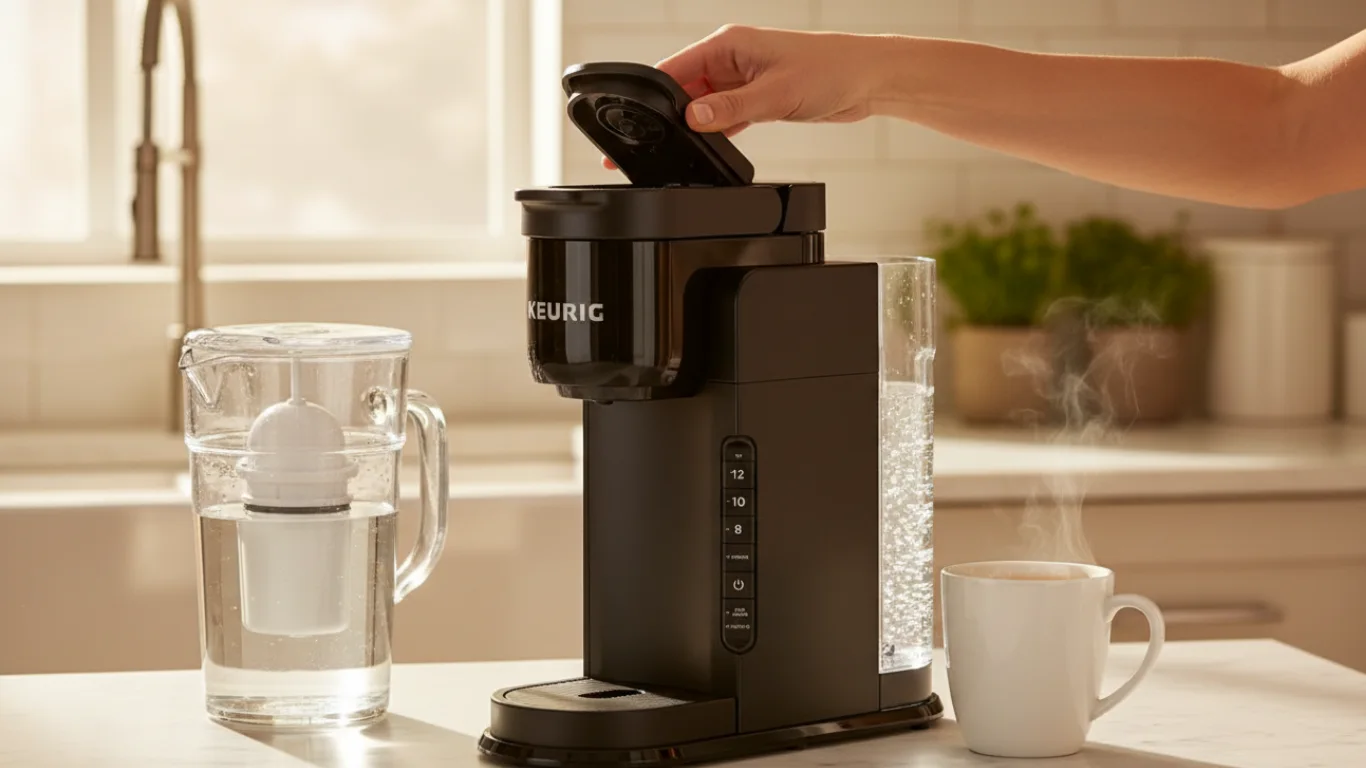
- Pitcher Filters These are very common and easy to use. You fill the pitcher with tap water, and it drips through a filter cartridge.
- Faucet Filters These attach directly to your kitchen faucet, providing filtered water on demand.
- Under-Sink Filters These systems are installed under your sink and provide filtered water through a separate faucet.
- Refrigerator Filters Many refrigerators have built-in water filters for both water and ice dispensers.
- Keurig’s Own Water Filter Some Keurig models come with a water filter that fits directly into the reservoir. These are designed specifically for your machine and are a convenient option.
Using any of these filtered water options can significantly help reduce mineral buildup in your Keurig.
Benefits of Using Filtered Water
Using filtered water offers several advantages for your Keurig and your coffee:
- Reduced Limescale Buildup This is the biggest benefit. Less limescale means your machine stays cleaner for longer and works more efficiently.
- Improved Coffee Taste Without excess minerals, the true flavors of your coffee beans can shine through.
- Extended Machine Lifespan By preventing buildup and strain on the heating element, filtered water can help your Keurig last longer.
- Less Frequent Descaling While you should still descale your Keurig regularly, using filtered water means you might not need to do it as often.
The Importance of Descaling
No matter what kind of water you use, descaling your Keurig is an essential part of maintenance. Descaling is the process of removing mineral deposits and other buildup from the inside of your coffee maker.
Even if you use filtered water, some minor buildup can still occur over time. If you use tap water, descaling becomes even more critical. Your Keurig manual will have specific instructions on how to descale your model.
Typically, it involves running a descaling solution (or a vinegar and water mixture, though some manufacturers advise against vinegar) through the brew cycle multiple times.
How Often Should You Descale
The frequency of descaling depends on several factors:
- Water hardness If you have very hard tap water, you’ll need to descale more often.
- Water usage If you brew coffee multiple times a day, you’ll need to descale more often than someone who brews once a week.
- Type of water used Using filtered water will likely mean you can descale less frequently than using untreated tap water.
As a general rule, Keurig recommends descaling your machine every 3-6 months. However, if you notice brewing speed slowing down, coffee not being hot enough, or an unusual taste, it might be time to descale sooner.
Distilled Water and Keurig Machines
What about distilled water? Distilled water has had almost all minerals and impurities removed. This makes it very pure.
While distilled water is great for preventing mineral buildup, it’s generally not recommended for Keurig machines. Coffee makers, including Keurigs, are designed to work with water that has some mineral content. These minerals help with the brewing process and can even contribute to the flavor profile of the coffee.
Using 100% distilled water might not create the best-tasting coffee. Some people report that coffee brewed with distilled water can taste flat or weak. If you’re concerned about minerals, filtered water is usually a better compromise than distilled water.
Can You Use Tap Water In Keurig Coffee Maker Pros And Cons
Let’s break down the advantages and disadvantages of using tap water:
| Pros | Cons |
|---|---|
| Convenience: Always available. | Mineral Buildup (Limescale): Can clog machine. |
| Cost-Effective: No need to buy filters or bottled water. | Affects Coffee Taste: Can lead to bland or bitter coffee. |
| Simplicity: No extra steps needed to prepare water. | Reduced Machine Lifespan: Increased wear and tear. |
As you can see, while tap water is easy, it comes with risks for your machine and your coffee.
Making the Best Choice for Your Keurig
When deciding whether to use tap water or filtered water in your Keurig, consider these points:
- Your Local Water Quality If you have very soft tap water and your coffee tastes great, you might be okay with tap water, as long as you descale regularly. If you have hard water, you’ll likely notice problems sooner.
- Your Coffee Preferences If you’re a coffee enthusiast who seeks the best possible flavor, filtered water is likely the way to go.
- Your Maintenance Habits If you’re diligent about descaling your machine every few months, using tap water might be manageable. If you tend to forget maintenance, filtered water will protect your machine better.
For most people, a balanced approach is best. Using filtered water provides a good combination of convenience, taste, and machine protection. It helps ensure that every cup of coffee you brew is delicious and that your Keurig keeps brewing for years to come.
Frequently Asked Questions
Question: Can I use any tap water in my Keurig coffee maker
Answer: Yes, you can technically use any tap water in your Keurig coffee maker. However, the quality and mineral content of tap water vary greatly by location, which can affect your coffee’s taste and the machine’s longevity.
Question: Will using tap water damage my Keurig
Answer: While it won’t immediately damage your Keurig, using tap water, especially hard water, can lead to mineral buildup (limescale). This buildup can eventually cause your machine to work less efficiently, brew at lower temperatures, and potentially shorten its lifespan if not maintained.
Question: How often should I descale if I use tap water
Answer: If you use tap water, especially hard water, it’s recommended to descale your Keurig more frequently, typically every 1-3 months, or whenever you notice a decline in brewing performance or coffee temperature.
Question: Is filtered water truly necessary for my Keurig
Answer: Filtered water is not strictly necessary, but it is highly recommended. It significantly reduces mineral buildup, helps maintain optimal brewing temperature, improves coffee flavor, and can extend the life of your Keurig machine.
Question: What is the best type of filtered water for a Keurig
Answer: Filtered water from pitcher filters, faucet filters, or refrigerator filters is generally excellent. Keurig’s own water filters are also a convenient and effective option. The goal is to remove most minerals and impurities.
Final Thoughts
You can use tap water in your Keurig coffee maker, but it’s not always the best choice. The minerals in tap water can cause scale buildup, affecting your coffee’s taste and your machine’s performance. Using filtered water is a great way to prevent these issues and enjoy consistently delicious coffee.
Remember to descale your machine regularly, no matter what water you use, to keep it running smoothly. Making small changes to your water source can lead to a better brewing experience.

I’m Joshua Miller, a U.S.-based food enthusiast and Co-Founder of KitchenWink.com. With a Bachelor’s degree in Food Science and over five years of hands-on experience testing blenders, coffee makers, and other kitchen tools, I focus on real-world results—not lab theories.
As a home cook, I personally test every product in real kitchens to give you honest, practical advice that makes everyday cooking easier.