Many people use blenders every day to make smoothies, soups, or sauces. But in recent years, a new question has caught the attention of health-conscious users: Do plastic blenders release microplastics? This concern is not just about taste or convenience—it’s about what we might be drinking along with our healthy foods. As science uncovers more about microplastics and their effects, it’s time to look at what really happens inside your blender, how big the risk is, and what you can do about it.
What Are Microplastics?
Microplastics are tiny pieces of plastic, usually less than 5 millimeters in size. They come from many sources, such as breaking down larger plastic objects or being manufactured directly for products like cosmetics or cleaning agents. In the kitchen, microplastics are a concern because they can end up in the food and drinks we consume.
Recent studies have found microplastics in everything from drinking water to seafood. Researchers are still studying the long-term effects on health, but there is growing evidence that microplastics can travel through our digestive system and may cause inflammation or other health issues.
How Do Blenders Work And Where Is Plastic Used?
Blenders use sharp blades that spin at high speeds to cut and mix food. The part that comes in contact with food is called the blender jar (or pitcher), and it can be made from plastic, glass, or sometimes metal. Most budget-friendly blenders use polycarbonate or Tritan plastic for their jars because these materials are lightweight and hard to break. The lid and sometimes the blade housing are also made from plastic.
Not all plastics are the same. Tritan, for example, is often advertised as “BPA-free,” but it is still a type of plastic. The blades themselves are usually stainless steel, but they can scrape or knock against the inside of a plastic jar, especially if hard foods like ice or nuts are blended.
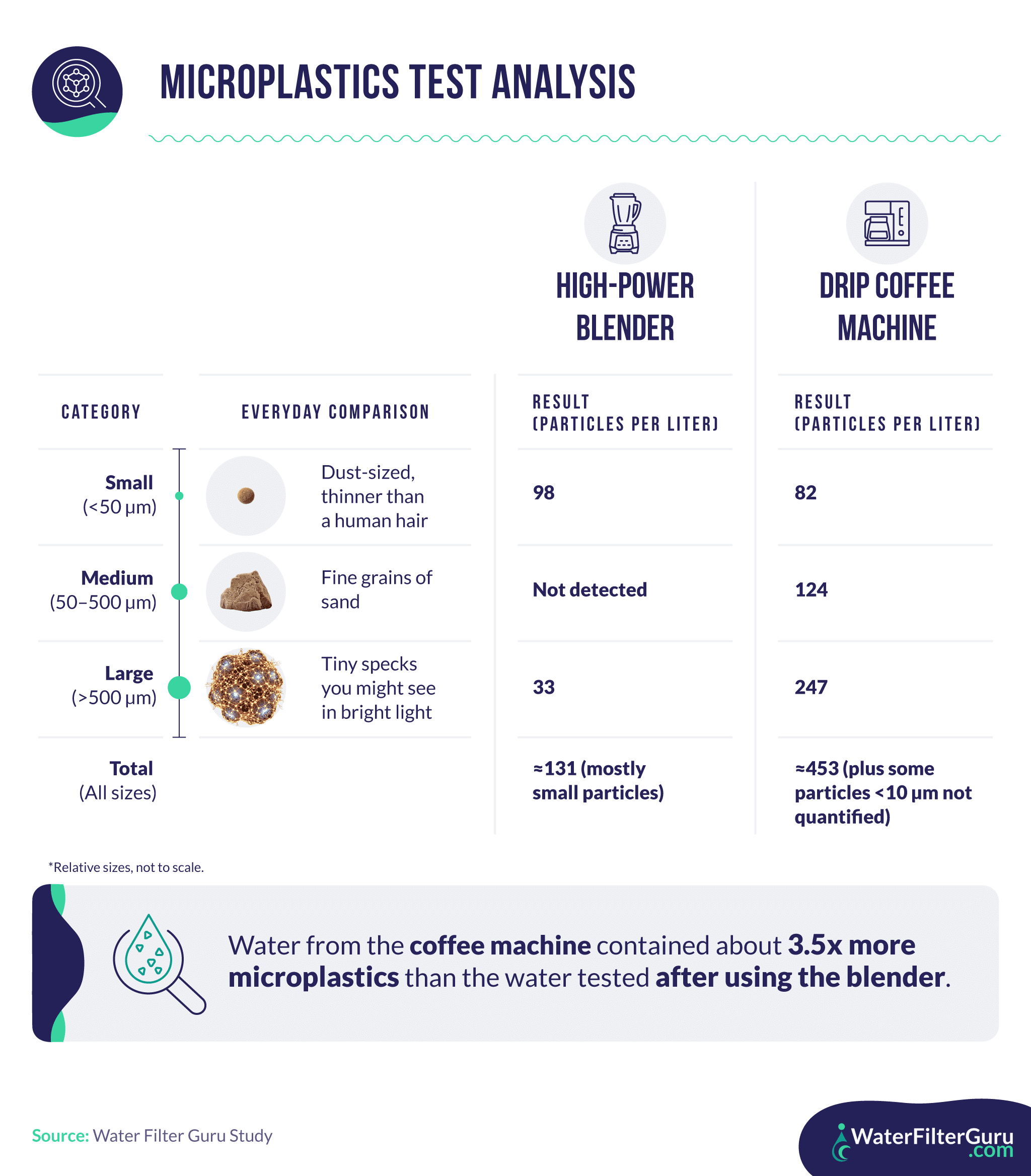
Credit: waterfilterguru.com
Do Plastic Blenders Really Release Microplastics?
Research suggests that plastic blenders can release microplastics under certain conditions. When the blades spin at high speeds, they can create friction and sometimes hit the sides or bottom of the plastic jar. This is more likely if you frequently blend hard or gritty ingredients.
A study in 2021 found that using a plastic blender jar for just five minutes could release thousands of tiny plastic particles into the blended food. The amount increases with time and with the blending of harder foods. The age and quality of the plastic also matter: older, scratched, or lower-quality jars tend to shed more particles.
Key Factors That Affect Microplastic Release
Several things can increase or decrease the amount of microplastics released by a blender:
- Material of the jar: Glass jars do not release microplastics, while plastic jars can.
- Blending time: Longer blending sessions create more friction, which increases microplastic release.
- Type of food: Hard or abrasive foods (like ice, frozen fruits, or nuts) can scratch the jar’s surface and release more particles.
- Temperature: Blending hot ingredients can soften plastic and increase microplastic release.
- Age of blender jar: Old or scratched jars are more likely to shed microplastics.
Here’s a simple comparison of how different materials can impact microplastic release:
| Jar Material | Microplastic Release Risk | Durability |
|---|---|---|
| Plastic | High | Medium |
| Glass | None | High (but can break) |
| Stainless Steel | None | High |

Credit: www.sciencedirect.com
How Much Microplastic Is Released?
The amount of microplastic released depends on the factors above, but some studies have tried to measure it. One test found that a new plastic blender jar released up to 11.6 million microplastic particles per liter after three minutes of blending water with ice. The number can be lower in normal use, but it is still significant.
Most of these particles are not visible to the naked eye, and you will not taste or feel them. However, they are present in the final blended drink or food. Over time, using the same blender daily can add up to a large amount of microplastic consumption.
Health Risks Of Consuming Microplastics
Scientists are still learning about the effects of ingesting microplastics. So far, studies show that most microplastics pass through the body, but some very small particles can enter the bloodstream or organs.
Potential risks include:
- Inflammation: Microplastics can irritate the gut lining.
- Chemical exposure: Plastics can carry harmful chemicals like BPA or phthalates.
- Bioaccumulation: Over time, plastics and chemicals may build up in the body.
While more research is needed, experts agree that reducing microplastic exposure is a good idea, especially for children and pregnant women.
Tips To Reduce Microplastic Exposure From Blenders
If you want to keep using your blender without worrying too much about microplastics, here are some practical steps:
- Choose glass or stainless steel jars: These do not release microplastics.
- Avoid blending hard foods in plastic jars: If you must use plastic, try to blend softer foods.
- Replace old or scratched jars: Signs of wear mean more particles can be released.
- Do not blend hot foods in plastic jars: Heat can cause plastic to soften and shed more particles.
- Clean with care: Do not use abrasive sponges, as they scratch the plastic.
- Blend for shorter periods: The less time the blades run, the less friction is created.
Here’s a quick overview of how these tips compare:
| Tip | Impact on Microplastic Risk | Effort Level |
|---|---|---|
| Switch to glass/steel | Very High | Medium |
| Blend only soft foods | High | Low |
| Replace old jars | Medium | Medium |
| Avoid hot foods | High | Low |
Are All Plastics The Same?
No, not all plastics are equal. Some, like Tritan, are marketed as being more durable and resistant to scratching. However, even these can release microplastics when exposed to repeated use, especially with hard or hot foods. Polycarbonate was once popular but is less common today due to concerns about BPA.
Some manufacturers coat the inside of the jar with a thin protective layer to reduce scratching, but this layer can also wear away over time. It’s important to know that “BPA-free” does not mean “microplastic-free. ” The physical breakdown of plastic can happen to any type.
Is Stainless Steel Or Glass Better Than Plastic?
Both stainless steel and glass have clear advantages over plastic when it comes to microplastic release. They do not shed particles, even after years of use. Glass is preferred for those who want to see the blending process, while stainless steel is lighter and more durable for travel or commercial use.
However, glass can break if dropped, and stainless steel jars are usually more expensive and heavier. Some people prefer the lighter weight of plastic, but with growing health concerns, many are willing to switch to avoid extra microplastic intake.
Real-world Examples And Case Studies
Let’s look at two practical scenarios:
- A family uses a plastic blender to make smoothies with frozen berries and ice every morning. After a year, the jar shows scratches. Tests on their blended drinks show millions of microplastic particles per liter, mainly from the worn jar.
- A smoothie bar switches from plastic to glass blender jars. After the change, regular testing finds almost zero microplastic particles, even after blending hard foods like ice or seeds.
These examples show that the choice of jar material has a real impact on daily exposure.
What About Dishwasher Use?
Many people put blender jars in the dishwasher for easy cleaning. This can be a problem for plastic jars. The high heat and powerful water jets can cause more microplastic release by making the surface rougher. Over time, this can lead to more particles ending up in your food.
If you use a plastic jar, try washing it by hand with a soft sponge and mild soap. Avoid strong chemicals or abrasive pads.
Common Myths About Microplastics And Blenders
Let’s clear up some misunderstandings:
- Myth: Only old blenders release microplastics. In fact, even new plastic jars can shed particles, especially with heavy use.
- Myth: Microplastics are too big to be swallowed. Most are too small to see and easily mix into drinks.
- Myth: “BPA-free” means safe from microplastics. BPA is a chemical, but microplastic particles can come from any plastic.
How To Spot Microplastic Problems In Your Blender
You cannot see most microplastics, but you can look for signs your blender might be shedding more than usual:
- Noticeable scratches inside the jar
- Cloudy or rough jar surface
- Black spots or plastic smell after blending
If you see these signs, it’s time to consider replacing your jar or switching to a safer material.
Alternatives To Plastic Blenders
If you are worried about microplastics, there are several alternatives:
- Glass blenders: Heavier but do not shed microplastics
- Stainless steel blenders: Durable, great for travel, but you can’t see inside during blending
- Personal blenders with glass jars: Good for single servings
Some high-end blenders offer hybrid jars (plastic outside, glass inside), but these are rare and expensive.

Credit: www.youtube.com
How Manufacturers Are Responding
As awareness grows, manufacturers are starting to offer more options. Some now advertise microplastic-safe or glass/stainless steel jars. Others use harder plastics or coatings, but these are not foolproof.
Look for brands that have tested their products for microplastic release and are transparent about their materials.
For more on this topic, a comprehensive overview is available at Wikipedia.
The Bigger Picture: Microplastics Everywhere
It’s important to know that blenders are just one source of microplastics. We also get them from bottled water, food packaging, and even the air. While switching to a glass blender helps, it’s just one step in reducing your overall exposure.
Still, every little change counts. For people who blend often, switching away from plastic jars can significantly reduce microplastic intake over time.
Frequently Asked Questions
What Are Microplastics And Why Are They A Concern?
Microplastics are tiny pieces of plastic less than 5 mm across. They are a concern because they can enter the food chain and may cause health problems in humans and animals.
Do All Plastic Blenders Release Microplastics?
Yes, all plastic blenders can release microplastics, especially when blending hard or hot foods, or if the jar is scratched or old.
Is It Safe To Use A Plastic Blender For Smoothies?
It is generally safe, but you may consume microplastics over time. To reduce risk, use glass or stainless steel jars, blend only soft foods, and replace old plastic jars.
Can Microplastics From Blenders Harm My Health?
The long-term effects are still being studied. Some evidence suggests microplastics can cause inflammation and carry harmful chemicals, so reducing exposure is wise.
Are There Any Blenders That Do Not Release Microplastics?
Blenders with glass or stainless steel jars do not release microplastics, making them a safer choice for health-conscious users.
Switching to safer materials, using proper cleaning methods, and being aware of blender wear can help you make healthier choices in your kitchen. While microplastics are everywhere, you have the power to limit how much ends up in your food and drinks.