Many homeowners love the clean look of undermount sinks in their kitchens and bathrooms. These sinks, which sit below the countertop, make cleaning easy and add a modern touch to any room. But one big question often comes up: Do undermount sinks need support? If you’re planning a remodel or building a new space, understanding sink support is important for safety, long-term durability, and even your warranty. Let’s look at what really matters when it comes to undermount sink support, and how you can make the right choice for your home.
What Makes Undermount Sinks Different?
Unlike drop-in sinks that rest on top of the counter, undermount sinks are installed from underneath. This means the edge of the sink is hidden, and you can wipe crumbs or water straight from the counter into the sink. While this looks great, it also means the sink relies on glue, clips, and sometimes brackets—not just gravity—to stay in place.
The average undermount kitchen sink can weigh between 15 to 40 pounds. Add a pile of dirty dishes and water, and the weight can quickly reach 100 pounds or more. Without proper support, all this weight pulls against the glue and the bottom of your countertop.
Why Support Is Critical For Undermount Sinks
Weight And Stress Factors
Support matters because countertops are often made of materials like granite, quartz, or marble. These stones are strong, but they’re not flexible. The cutout for the sink creates a weak spot. If the sink isn’t properly supported, stress can cause the countertop to crack, especially around the front and back edges. For heavy sinks (like deep farmhouse styles) or sinks made from stone or cast iron, the risk is higher.
Types Of Loads
There are two main forces at work:
- Static load: The weight of the sink itself plus the faucet and plumbing.
- Dynamic load: Extra weight when you fill the sink with water, stack dishes, or lean on the counter.
A small bathroom sink may not need much extra support, but a large double-bowl kitchen sink almost always does.
Manufacturer Requirements
Most sink manufacturers have strict instructions about support. If you skip recommended brackets or rails, you might void your warranty. Some installers try to use only adhesive, but this shortcut can lead to failure in a few years—sometimes much sooner.
Common Support Methods For Undermount Sinks
There are several ways to provide support for undermount sinks. Not all methods are equal, and the right choice depends on your countertop material and sink weight.
| Support Method | Best For | Pros | Cons |
|---|---|---|---|
| Mounting Clips | Light to medium sinks, solid counters | Easy to install, low cost | Not enough for heavy sinks alone |
| Support Brackets | Heavy sinks, stone or quartz counters | Very strong, distributes weight | Extra labor, may need professional |
| Wooden Support Frames | Custom cabinets, heavy sinks | Extremely strong, long-lasting | Takes up cabinet space, more expensive |
| Epoxy & Adhesive Only | Very light sinks only | No hardware, fast | Risk of failure, not for heavy loads |
1. Mounting Clips
Most sinks come with metal clips that attach to the underside of the counter. These are fine for small or medium sinks with a sturdy countertop, but they don’t handle heavy loads well.
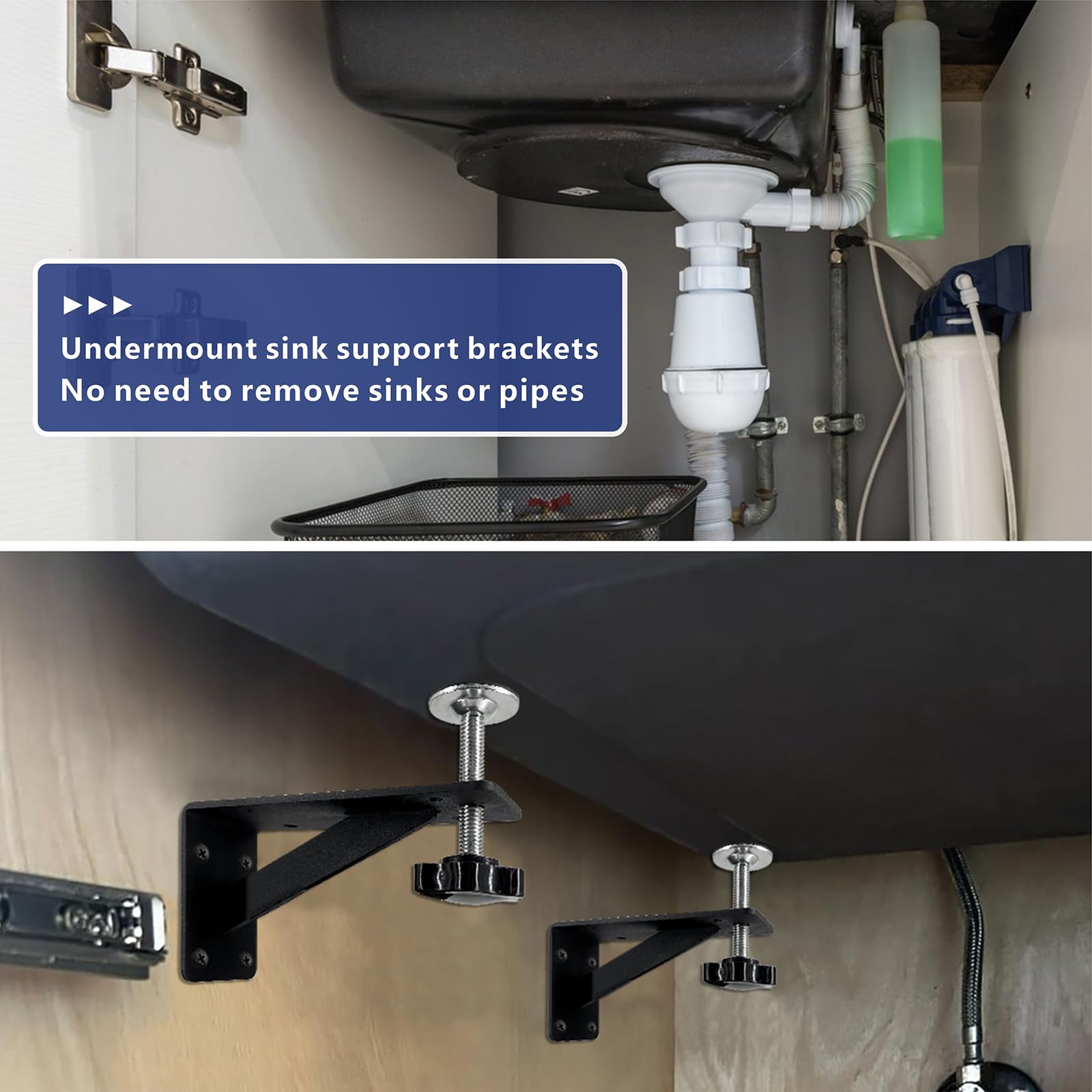
2. Support Brackets
Metal brackets are screwed into the cabinet walls. The sink rests on these brackets, so the weight is carried by the cabinet and not just the stone. This is a common method for granite or quartz counters.
3. Wooden Frames Or Rails
Some installers build a custom wooden frame or rails inside the cabinet. This supports the sink from below and can handle almost any weight. It’s especially good for cast iron or double-basin sinks.
4. Adhesive Only
Some use epoxy or silicone adhesive only. While this might work for small, light sinks, it’s risky for anything larger. Over time, the adhesive can weaken, leading to leaks or even a fallen sink.
Sink Material And Its Impact On Support
Not all sinks weigh the same. Here’s how weight and material affect support needs:
| Sink Material | Average Weight (Empty) | Support Needed? |
|---|---|---|
| Stainless Steel | 15–20 lbs | Clips or brackets for large sinks |
| Porcelain | 25–35 lbs | Brackets or frame recommended |
| Composite Granite | 30–50 lbs | Brackets/frame required |
| Cast Iron | 60–120 lbs | Frame or heavy-duty brackets |
Non-obvious insight: Even “lightweight” sinks get much heavier when filled with water (1 gallon weighs about 8.3 lbs). For a big kitchen sink holding 10 gallons, add over 80 lbs to your support calculations.
Credit: www.amazon.com
Countertop Material: Does It Change Support Needs?
Stone (granite, Quartz, Marble)
Stone countertops are heavy, but the area around the sink cutout is fragile. These materials can crack under pressure, so most installers use brackets or frames for any undermount sink.
Laminate
Laminate countertops are less common with undermount sinks because water can damage the edges. If you do use this setup, extra support is a must, as the material is weaker than stone.
Solid Surface (e.g., Corian)
Solid surface counters are lighter and sometimes more flexible. Many can handle smaller sinks with clips, but larger sinks still need brackets or rails.
Real-world Failures: What Happens Without Proper Support?
Many homeowners have faced the pain of a fallen undermount sink. Some signs of failing support include:
- Cracks in the countertop near the sink
- Gaps forming between the sink and counter
- Water leaks under the cabinet
- The sink dropping slightly or completely detaching
A sink that falls can damage plumbing, lead to expensive water damage, and ruin your countertop. In some cases, insurance may not cover the repair if support was skipped.
Non-obvious insight: Sometimes, you won’t see a problem until years later. Adhesive can hold for a while, but changes in temperature and humidity slowly weaken the bond.

Credit: diy.stackexchange.com
How To Ensure Proper Support
1. Follow Manufacturer Guidelines
Always check the instructions that come with your sink and countertop. If it says to use brackets, don’t skip them.
2. Use The Right Hardware
Buy quality sink support kits designed for your sink’s size and weight. Don’t try to save money with cheap hardware—failure costs more in the long run.
3. Hire Skilled Installers
Even if you’re handy, undermount sinks are a tricky job. A professional knows how to anchor supports without damaging the countertop.
4. Double-check After Installation
Inspect the support before using the sink. Try gently pushing down inside the sink—there should be no movement at all.
5. Maintenance
Check the support system every year. Look for loose brackets, wood swelling, or adhesive breaking down. Early repairs can prevent a big disaster.
Comparing Undermount And Drop-in Sinks
Some people wonder if the extra work for undermount sink support is worth it. Here’s a quick comparison:
| Feature | Undermount Sink | Drop-In Sink |
|---|---|---|
| Support Needed | Clips, brackets, or frame usually required | Countertop carries most weight |
| Cleaning Ease | Very easy (no rim) | Rim can catch dirt |
| Installation Cost | Higher (support materials & labor) | Lower |
| Risk of Failure | Higher if not supported | Low |
Common Mistakes When Supporting Undermount Sinks
Many problems come from avoidable errors:
- Using only adhesive: Even strong glue can fail under heavy weight or with vibration.
- Skipping brackets to save money: The cost of support is small compared to fixing a broken countertop.
- Not checking the cabinet construction: Weak or thin cabinets may need reinforcement before adding a heavy sink.
- Ignoring water exposure: Wood supports can rot if not sealed, especially in kitchens.
- Mismatched hardware: Using the wrong size brackets or screws can cause loosening over time.
Cost Of Proper Support
The cost to add brackets or a support frame usually ranges from $40 to $150 for materials, plus labor if you hire a pro. For heavy sinks, the total install cost can be $250–$600, but this protects your much more expensive countertop and cabinets. Skipping support can lead to repairs costing thousands.
When Can You Skip Extra Support?
There are rare cases where a small, lightweight undermount sink in a solid surface countertop might be safe with just clips and adhesive. This is most common for powder room sinks or small bathroom vanities. Even then, regular checks are wise.
Final Thoughts: Never Skip Sink Support
Undermount sinks bring style and function, but only if installed safely. Proper support is not just about following the rules—it’s about protecting your investment and avoiding major headaches later. Always use the right support system for your sink’s size, weight, and countertop material. If you’re unsure, ask a professional or check trusted resources like the Home Depot guide.
Credit: concretecountertopinstitute.com
Frequently Asked Questions
What Happens If My Undermount Sink Isn’t Supported Properly?
If your undermount sink lacks proper support, it may detach from the countertop, cause water leaks, or crack the surrounding stone. This can lead to expensive repairs and even damage your cabinets or plumbing.
Can I Install An Undermount Sink Without Professional Help?
It’s possible for skilled DIYers, but proper support is critical. Mistakes can be costly, so if you’re not experienced with stone or heavy sinks, hiring a professional is strongly recommended.
How Often Should I Check My Undermount Sink’s Support?
Inspect your sink support at least once a year. Look for any movement, loose brackets, or signs of water damage. Early attention prevents bigger problems later.
Are There Sinks That Don’t Need Extra Support?
Very small, lightweight undermount sinks in solid surface countertops may be safe with just clips and adhesive. However, for most kitchen sinks, extra support like brackets or a frame is needed.
Does Insurance Cover Damage From A Fallen Undermount Sink?
Most homeowner’s insurance does not cover damage if the sink was not installed according to manufacturer’s requirements. Always follow proper support guidelines to avoid denied claims.
The bottom line: undermount sinks need support for safety and durability. With the right materials and installation, your sink will look beautiful and last for years.