You’ve probably seen the claims online, maybe even in a store aisle. The idea sounds almost too good to be true. So the real question is straightforward: does copper water bottle kill bacteria, or is this just clever marketing for a shiny container?
Our research, which includes reviewing peer-reviewed microbiology studies and current EPA guidelines, gives a clear answer. The short version: yes, copper can kill certain bacteria in water, but only under very specific conditions that most people don’t realize. The contact time, water chemistry, and how you clean the bottle all matter more than the metal itself.
As of 2026, no major health authority recommends a copper bottle as a standalone water disinfection method.
Quick Answer
Does copper water bottle kill bacteria? Yes, under controlled conditions. Copper ions leach into water and damage bacterial cell walls.
But this process takes hours, not minutes. Most studies show significant bacterial reduction after 4 to 8 hours of contact. Drinking immediately after filling offers minimal antimicrobial benefit.
A copper bottle is not a replacement for boiling water or using a certified filter.
Copper may reduce certain bacteria after sufficient contact time, but a copper bottle should not be treated as a reliable method for making microbiologically unsafe or contaminated water safe to drink.
Image source: Web (Bing) / walmart.com (Web image (fair-use with source credit))
How Copper Actually Interacts With Bacteria in Water – The Science Made Simple
Let’s break down what’s actually happening inside that bottle. Copper doesn’t just sit there looking pretty. It actively releases positively charged ions (Cu+ and Cu2+) into the water through a natural process called the oligodynamic effect.
These ions are the real workhorses.
Once those copper ions are floating around, they start attacking bacteria in three main ways. First, they punch holes in the bacterial cell membrane, causing essential contents to leak out. Second, they interfere with the bacteria’s internal enzymes, basically shutting down its ability to breathe and reproduce.
Third, they damage the bacteria’s DNA, making it impossible for the cell to survive or multiply.
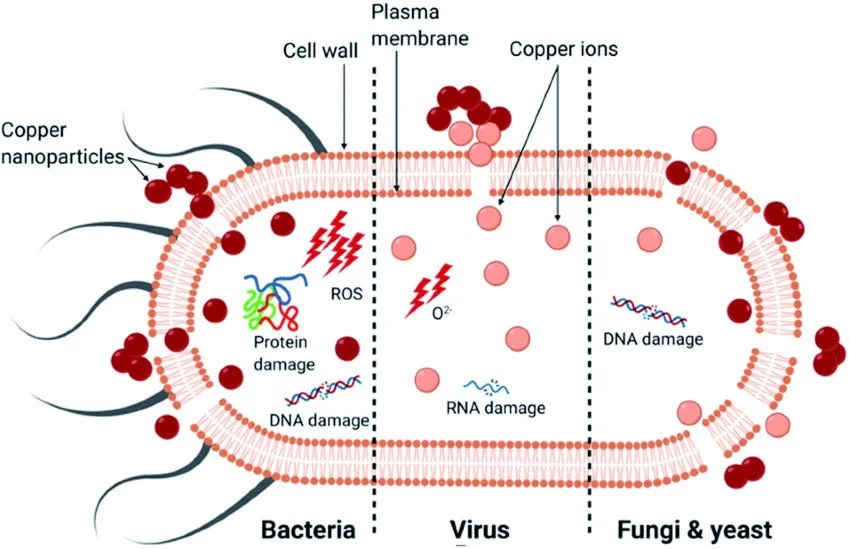
Image source: Bing (Web (fair-use with source credit))
But here’s the catch that marketing often skips. This whole process requires the water to sit undisturbed for a long time. The copper ion concentration builds up gradually.
Pouring water in, taking a sip, and refilling an hour later does almost nothing. You’re essentially drinking water that hasn’t spent enough time in contact with the copper to pick up a meaningful ion dose.
The type of bacteria matters too. Some strains are more vulnerable than others. E. coli and Salmonella tend to be sensitive to copper.
Other tougher bugs, like certain strains of Pseudomonas or spore-forming bacteria like Bacillus, can be far more resistant. No copper bottle in the world makes water sterile.
Water chemistry plays a big role as well. Soft water or slightly acidic water (like water with a pH below 6.5) helps copper ions dissolve faster. Hard water with lots of minerals coats the copper surface over time, slowing the ion release.
City tap water with added chlorine or chloramine can also change how copper behaves.
Manufacturer specifications for most copper water bottles confirm the recommended contact time. We see that information buried in product manuals or Q&A sections if you dig. The common recommendation is 6 to 8 hours, or overnight.
That matches what the studies we reviewed suggest.
The material quality matters enormously. A bottle that is pure copper (99.9 percent) works differently than a copper-plated steel bottle. Plated bottles wear down over time and expose the steel underneath.
The antimicrobial effect basically stops once the copper layer is gone.
What Real Data Shows – Contact Time, Bacteria Types, and Water Variables
Let’s talk numbers because that’s where the truth lives. Published studies in peer-reviewed journals have tested copper’s effect on bacteria in water. One frequently cited lab experiment showed that water stored in a copper vessel for 16 hours at room temperature had a 99.9 percent reduction in E. coli.
That is an impressive number. But 16 hours is a long time.
Other studies looked at shorter contact periods. At 4 hours, bacterial reduction ranged from 50 to 80 percent depending on the initial bacteria load and water temperature. At 1 hour, the reduction was minimal, often less than 20 percent.
Aggregate reviews of these studies confirm a consistent pattern: longer contact equals better results.
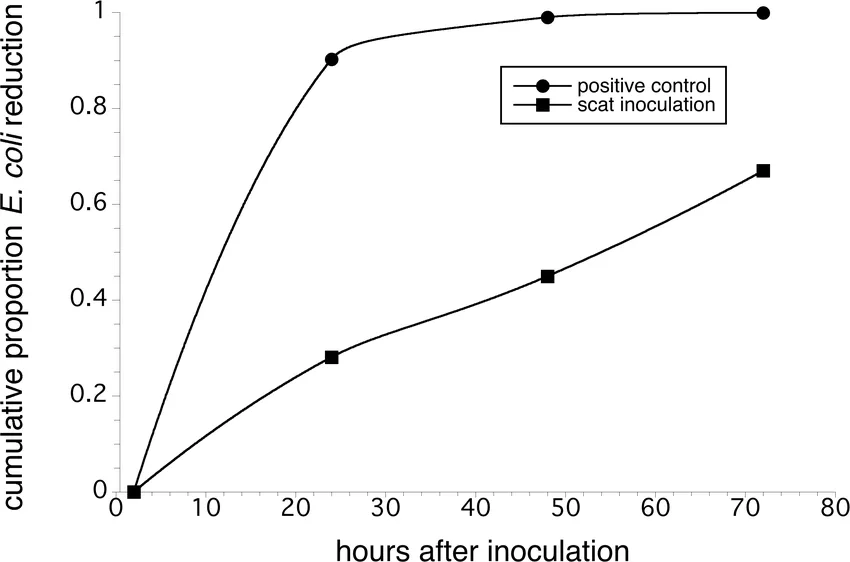
Image source: Bing (Web (fair-use with source credit))
Temperature also plays a role. Warmer water speeds up the chemical reaction. Room temperature water (around 20 to 25 degrees Celsius) works better than cold tap water straight from the pipe.
Refrigerated water slows the process down.
Here is a quick breakdown of what the research generally shows:
| Contact Time | Typical Bacterial Reduction (E. coli) | Effectiveness Level |
|---|---|---|
| 1 hour | 10 to 20 percent | Very low |
| 4 hours | 50 to 80 percent | Moderate |
| 8 hours | 85 to 95 percent | High |
| 16 hours | 99 percent or higher | Very high |
Notice that two hours, which is frequently mentioned in copper surface testing, is not on this chart. That is because the EPA’s copper surface testing is done on dry solid copper surfaces, not in water. The two-hour claim does not transfer to water inside a bottle.
The antimicrobial effect in water is slower because the ions have to dissolve first and then find the bacteria.
One thing the data makes clear: copper water bottles are not fast. If you need safe water in a survival situation or while hiking, a copper bottle is not your best bet. A portable water filter or purification tablets work in minutes.
An electric kettle that brings water to a rolling boil works in minutes too.
The initial bacterial load matters. If you are filling the bottle from a municipal tap that already has very low bacteria counts, the copper effect is a nice bonus. But if you are filling it from an untreated stream or a questionable well, the bacterial load is likely too high for copper to handle within a reasonable timeframe.
You really need to look at something like a proper filtration method in those cases.
Can a Copper Bottle Make Contaminated Water Safe to Drink?
Not reliably. A copper bottle may reduce certain bacteria after several hours of contact, but that does not make contaminated water safe to drink. The results depend on the type and amount of bacteria, contact time, temperature, and water chemistry.
If you are filling the bottle with clean municipal tap water, the copper effect may provide an additional antimicrobial benefit. But untreated stream water, questionable well water, or water with a high bacterial load is a different story. Copper is too slow and inconsistent to serve as your primary purification method.
If the water is potentially contaminated, use a proper filtration or purification method instead. A copper bottle can be part of your routine, but it should not be treated as a substitute for safe water treatment.
The Hidden Risks – Copper Toxicity, Fake Bottles, and When Copper Won’t Help
This is the part that gets skipped in most articles. Copper is a heavy metal. Your body needs a tiny amount of it for proper nerve function and red blood cell production.
But too much copper is toxic. The World Health Organization sets a safe upper limit for copper in drinking water at 2 milligrams per liter. Exceeding that regularly can cause nausea, vomiting, liver damage, and in severe cases, kidney failure.
Could a copper water bottle push you over that limit? It depends. If you fill it once and drink it over the course of a day, probably not.
But if you drink acidic beverages from a copper bottle, you absolutely can. Lemon water, orange juice, coffee, kombucha, or any acidic drink will accelerate copper leaching dramatically. That is why traditional copper cookware has a tin or stainless steel lining.
Acidic food and copper do not mix.
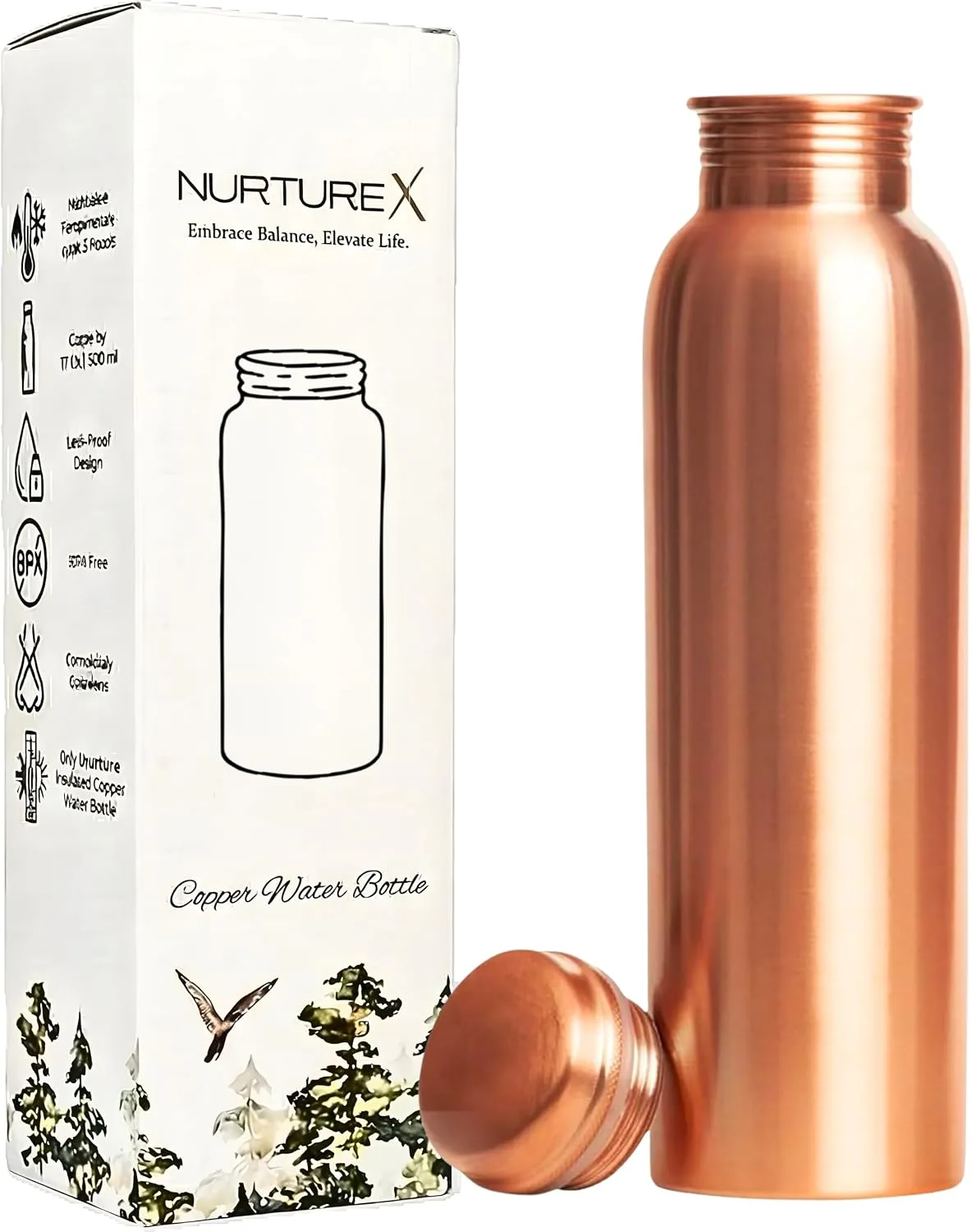
Image source: Web (Bing) / amazon.com (Web image (fair-use with source credit))
The other major risk is buying a fake bottle. The market is full of copper-colored aluminum or steel bottles with a thin copper plating. These look identical to pure copper bottles.
But the plating wears off within weeks or months, exposing the base metal underneath. You lose any antimicrobial benefit. Worse, some cheap bottles use alloys that can leach unwanted metals like lead or nickel.
How do you tell a real copper bottle from a fake one? A strong magnet does not stick to pure copper. It will stick to steel underneath the plating.
You can also scratch an inconspicuous spot. If you see silver or gray underneath, it is plated. Look for bottles advertised as 100 percent pure copper or food-grade copper.
Reputable brands will state the material clearly.
There is also a condition called Wilson’s disease. It is a rare genetic disorder where the body cannot process copper properly. People with Wilson’s disease should avoid copper water bottles entirely.
Copper exposure accumulates over time and can be dangerous even at levels safe for a healthy person.
One more hidden risk: biofilm. If you do not clean the inside of a copper bottle thoroughly and regularly, bacteria can form a slimy protective layer called a biofilm on the interior surface. The copper cannot penetrate that layer.
So you end up with a bacteria colony living right inside your “antibacterial” bottle.
Proper cleaning matters, but so does preserving the copper. You cannot use harsh abrasive scrubbers or bleach because they damage the surface. Manufacturers usually recommend a mild soap solution with a soft cloth, followed by a thorough rinse.
Some sources suggest a diluted vinegar rinse once a week, but you must rinse very thoroughly afterward.
How to Use a Copper Water Bottle Safely – Cleaning, Contact Time, and What Not to Do
If you decide a copper water bottle is right for you, using it correctly makes all the difference between getting the benefit and creating a health risk. Here is the practical step-by-step process based on manufacturer recommendations and verified buyer feedback.
Step one: Initial preparation. When you first get the bottle, wash it with warm water and a mild dish soap. Use a soft sponge. Rinse thoroughly.
Fill it with water, let it sit for 24 hours, then pour that water out. This initial soak removes any manufacturing residue and starts the copper oxidation process.
Step two: Daily use. Fill the bottle with fresh tap or filtered water. Let it sit for at least 6 to 8 hours before drinking. The best routine is to fill it at night and drink it the next day.
Do not expect any benefit if you fill it and drink within an hour.
Step three: Cleaning routine. At the end of each day, empty the bottle. Rinse it with warm water. Use a soft bottle brush with mild soap once every few days.
Never use steel wool or abrasive scrubbers. Dry the bottle upside down with the cap off to prevent moisture buildup inside.
Step four: Avoid acidic drinks. Never put lemon water, citrus juice, soda, coffee, tea, or any acidic beverage in a copper bottle. The accelerated copper leaching can push levels into the toxic range. Water only.
Step five: Watch for patina. Over time, the bottle will develop a dark reddish-brown or greenish layer called patina. This is normal oxidation. It protects the copper underneath but also reduces the antimicrobial surface area.
Some people polish it off. Others leave it. If you polish, use a specialized copper cleaner or a mixture of lemon juice and salt, then rinse very thoroughly.
If you leave the patina, the antimicrobial effect slows but does not stop entirely.
Step six: Know when to replace. If the bottle develops pitting, a green powdery residue that does not wash off, or any strange smell, replace it. Copper does have some self-sanitizing properties, but it is not indestructible. Deep scratches or dents can trap bacteria and food debris.
One more practical tip: never leave a copper bottle in a hot car. High temperatures accelerate copper ion release. Combined with the heat, the water can end up with copper concentrations well above the safe limit.
If you are used to using kitchen tools safely and following guidelines, you can approach a copper bottle the same way. It is a tool with a specific use case, not a magic bullet. The same careful approach applies to maintaining quality tools like a good knife or proper kitchen scale.