Most homes today have at least one microwave oven. It’s fast, easy to use, and cooks food in minutes. But many people wonder: does a microwave use a lot of electricity? If you’re watching your energy bills, or want to lower your carbon footprint, this question matters. Let’s break down how much power microwaves use, how they compare to other kitchen appliances, and what you can do to use them more efficiently.
How Microwaves Work And Use Power
Microwaves heat food using electromagnetic waves. These waves cause water molecules in food to vibrate, creating heat. The process is quick, but it needs a burst of electricity when the microwave is running.
Most household microwaves are rated between 600 and 1200 watts. This rating is the maximum power they use when cooking. For example, if you use a 1000-watt microwave for 5 minutes, you use about 0.083 kilowatt-hours (kWh) of electricity. That’s less than what most people expect.
What Does “wattage” Mean?
A microwave’s wattage shows its cooking strength and speed. Higher wattage means faster cooking. But it also means more energy used per minute. Still, because cooking times are short, the total energy use is often lower than other appliances.
Comparing Microwaves To Other Appliances
To see if microwaves use a lot of electricity, it helps to compare them with other common kitchen devices. Here’s a look at average power ratings:
| Appliance | Average Wattage | Typical Usage (per day) | Estimated Daily kWh |
|---|---|---|---|
| Microwave | 1000 W | 15 min | 0.25 kWh |
| Electric Oven | 2400 W | 1 hr | 2.4 kWh |
| Toaster | 1200 W | 10 min | 0.2 kWh |
| Electric Kettle | 1500 W | 5 min | 0.125 kWh |
| Refrigerator | 150 W | 24 hr | 3.6 kWh |
As you can see, microwaves use much less energy than ovens or refrigerators, especially because they run for short periods.
How Much Does Microwave Use Cost?
Energy cost depends on how often and how long you use your microwave, and local electricity prices. In the US, the average price is about $0.15 per kWh. Let’s break down a typical month:
- If you use your 1000W microwave for 15 minutes a day:
- 1000 watts × 0.25 hours = 0.25 kWh per day
- 0.25 kWh × 30 days = 7.5 kWh per month
- 7.5 kWh × $0.15 = $1.13 per month
That’s a low cost compared to other appliances. Even heavy microwave users rarely see a big jump in their energy bills.
Real-world Examples: Microwave Energy Use
Let’s look at how microwaves perform in different households. Here are three cases:
- Single Person: Uses microwave for reheating leftovers, about 10 minutes per day. Monthly cost: under $1.
- Family of Four: Cooks meals, heats snacks, uses microwave for 25 minutes daily. Monthly cost: about $1.87.
- Office Breakroom: Several people use microwave through the day, totaling 1 hour daily. Monthly cost: about $4.50.
Even in busy settings, the cost stays modest. The main reason is short run time.

Credit: www.ankersolix.com
Standby Power: Does It Matter?
Many appliances use electricity even when not running. This is called standby power or “phantom load.” Some microwaves have clocks, lights, or touchpads that use a small amount of power all day.
Typical standby power for microwaves is 2–5 watts. Over a year, this adds up:
- 5 watts × 24 hours × 365 days = 43.8 kWh/year
- 43.8 kWh × $0.15 = $6.57/year
This standby cost is small, but still higher than the actual cooking cost for many users. If you want to save more, unplug the microwave when not needed, or choose models without digital clocks.
Efficiency: Microwave Vs Oven
Microwaves are more efficient than ovens for small tasks. Ovens heat up a large space and take longer, while microwaves focus energy directly on food.
| Cooking Method | Task | Total Energy Used | Efficiency |
|---|---|---|---|
| Microwave | Heat 1 cup soup | 0.03 kWh | High |
| Oven | Heat 1 cup soup | 0.15 kWh | Low |
| Microwave | Cook potato | 0.06 kWh | High |
| Oven | Cook potato | 0.25 kWh | Low |
For small meals, a microwave saves both time and energy. For large dishes, ovens may be better, but they cost more to run.
Factors That Affect Microwave Electricity Use
Several things can change how much power your microwave uses:
- Wattage: Higher wattage means more power used, but faster cooking.
- Cooking Time: Longer use equals more energy.
- Food Amount: Heating more food takes more energy.
- Features: Digital displays, sensors, and “eco” modes can affect standby power.
- Age and Model: Newer microwaves are often more efficient.
Non-obvious Insights
- Microwave placement: If your microwave is in a hot area (near stove or sunny window), it may use more power to cool electronics inside.
- Container choice: Using glass or ceramic dishes instead of plastic can speed up heating, reducing energy use.
How To Use A Microwave Efficiently
If you want to lower your energy use, follow these tips:
- Use the microwave for small portions and reheating. It’s more efficient than an oven or stove.
- Cover food to hold moisture and speed cooking.
- Avoid running the microwave empty—this wastes energy and can damage the unit.
- Use the right power setting. High isn’t always best; sometimes lower settings heat more evenly and save energy.
- Unplug the microwave if you rarely use it, especially to cut standby power.
- Choose energy-efficient models if buying new. Look for Energy Star rated microwaves.
Common Mistakes
- Running microwaves for too long: Often, food is ready before the timer ends.
- Using metal or foil: This blocks microwaves and wastes energy.
- Placing cold containers in the microwave: Pre-warming dishes can help save energy.
- Ignoring standby power: Many people forget that clocks and lights use energy all year.
Environmental Impact Of Microwave Use
Microwaves have a smaller carbon footprint compared to ovens, especially for small meals. Because they use less energy, they also lower greenhouse gas emissions from electricity production.
A study by the European Commission found that using a microwave for cooking produces less CO2 than using an electric oven for the same task. Over a year, switching to microwave cooking for small meals can save up to 40% energy.
Should You Worry About Microwave Electricity Use?
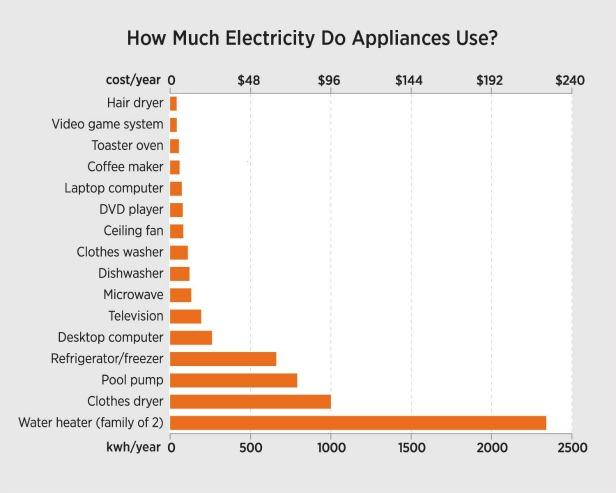
For most people, microwaves do NOT use a lot of electricity. If you check your energy bill, the microwave’s share is small—often less than 2% of the total for the kitchen. Bigger appliances like refrigerators, ovens, and dishwashers use much more.
Still, if you’re serious about saving energy, focus on smart use. Avoid running microwaves for long periods, and unplug if you want to cut standby costs. Remember, the biggest savings often come from using microwaves in place of ovens or stoves for small tasks.
Credit: obamawhitehouse.archives.gov
How To Calculate Your Microwave’s Electricity Use
If you want to know exactly how much your microwave uses, you can do a simple calculation:
- Find the wattage (printed on a label inside or behind the microwave).
- Multiply by the hours you use it per day.
- Divide by 1000 to get kWh.
- Multiply by your local electricity rate.
Example:
- 1000 watts × 0.25 hours (15 min) = 250 watt-hours
- 250 ÷ 1000 = 0.25 kWh
- 0.25 kWh × $0.15 = $0.0375 per day
For more exact numbers, use a plug-in power meter to measure real usage.
Microwave Myths And Misunderstandings
Many people think microwaves are power-hungry or unsafe. In truth:
- Microwaves use less energy than ovens for most tasks.
- They don’t leak electricity; the waves are safely contained inside.
- Modern microwaves have safety features to prevent overheating.
For more information, visit the Wikipedia Microwave Oven page.
)
Credit: www.energysage.com
Frequently Asked Questions
Do Microwaves Use More Electricity Than Ovens?
No. For most tasks, microwaves use much less electricity than ovens. Ovens heat a larger space and take longer, which increases energy use.
How Much Does It Cost To Run A Microwave For 10 Minutes?
A 1000-watt microwave uses about 0.167 kWh in 10 minutes. At $0.15 per kWh, this costs about 2.5 cents.
Does The Microwave Use Electricity When Not Running?
Yes, most microwaves use standby power for clocks or lights. This is usually 2–5 watts, costing a few dollars per year.
Can Using The Microwave Help Lower My Energy Bill?
Yes. Using a microwave instead of an oven or stove for small meals or reheating can reduce your electricity use and bills.
Is It Safe To Unplug The Microwave When Not In Use?
Yes, it’s safe. Unplugging saves standby power. Just remember, the clock and presets will reset.
Microwaves are efficient tools for cooking and reheating. They use less electricity than many people think, especially for short tasks. With smart use, you can enjoy the speed and convenience of microwaves without worrying about high energy bills or environmental impact.