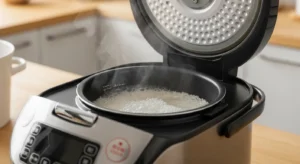
Many people wonder if their rice cooker is a big energy hog. It’s a common question, especially when you’re trying to save on your power bill. Figuring out how much electricity appliances use can feel a bit confusing at first.
But don’t worry, we’re going to make it super simple. We’ll break down exactly how much power a rice cooker uses and give you easy tips to manage it. Get ready to find out the real story behind your rice cooker’s energy use.
Key Takeaways
- Rice cookers generally use less electricity than other common kitchen appliances.
- The wattage of a rice cooker varies based on its size and features.
- Cooking time and keeping the cooker on ‘warm’ significantly impact energy consumption.
- Comparing rice cookers to other cooking methods shows they can be efficient.
- Simple habits can help minimize the electricity a rice cooker uses.
- Understanding rice cooker wattage helps in estimating its energy usage.
Understanding Rice Cooker Electricity Use
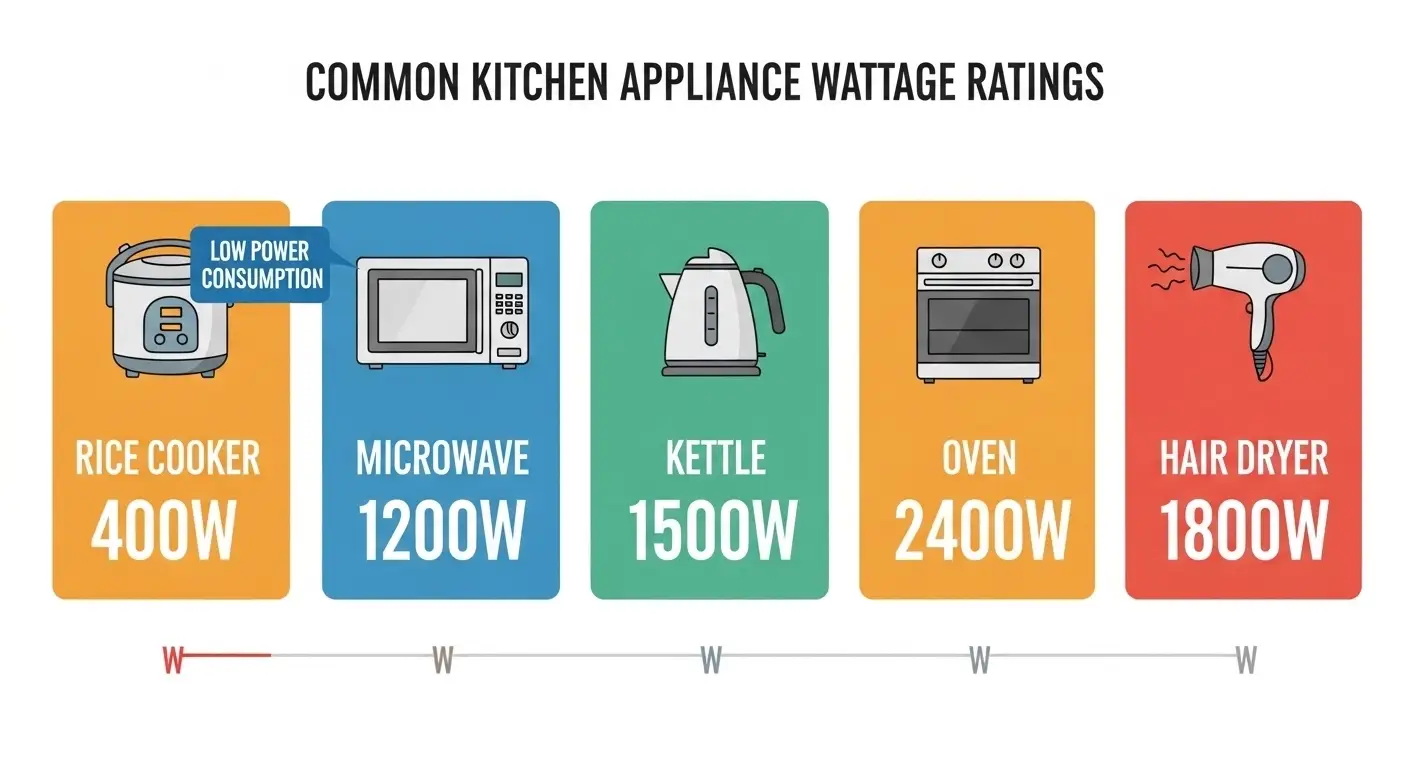
Many home cooks love their rice cookers because they make perfect rice every time. But a question that pops up often is, does rice cooker use a lot of electricity? It’s a smart question to ask, as we all want to keep our energy bills low. When you think about appliances that use a lot of power, things like ovens, electric kettles, and hair dryers might come to mind. Rice cookers are usually much smaller and designed for a specific task, which often means they are not as power-hungry as you might think. Let’s explore what determines their electricity usage and how they stack up against other kitchen gadgets.
What Is Wattage and Why Does It Matter
Every electrical appliance has a wattage rating. This number tells you how much power it uses when it’s running. A higher wattage means the appliance uses more electricity per hour. For a rice cooker, the wattage can range quite a bit. Smaller, basic models might be around 300-500 watts. Bigger, fancier models with more settings, like those that can steam vegetables or make cakes, might go up to 700-1000 watts or even more.
You can usually find the wattage on a sticker on the bottom or back of your rice cooker. It might be listed as watts (W) or sometimes as volts (V) and amps (A). If you see volts and amps, you can calculate watts by multiplying them together (Watts = Volts x Amps). Knowing this number is the first step to understanding how much electricity your rice cooker uses.
How Rice Cookers Use Power
A rice cooker works by heating water to boil the rice and then keeping it at a temperature that steams the rice until it’s cooked. Most rice cookers have a heating element at the bottom. When you turn it on, this element heats up quickly.
There are generally two main modes for a rice cooker: cooking and warming. The ‘cooking’ mode uses the most electricity because the heating element is working hard to boil the water and cook the rice. Once the rice is cooked, many rice cookers switch to a ‘warm’ setting. This mode uses much less power, just enough to keep the rice at a safe and warm serving temperature. However, if you leave the rice cooker on ‘warm’ for a very long time, this constant low power use can add up.
Comparing Rice Cooker Energy Use To Other Appliances
Let’s put rice cooker energy use into perspective. A typical electric kettle can have a wattage of 1500-3000 watts and boils water very quickly, but it’s only on for a few minutes. A standard oven might use 2000-5000 watts when baking or roasting. Even a microwave, often perceived as energy efficient, can use 800-1500 watts.
A common 6-cup rice cooker might use around 500-700 watts while it’s actively cooking. If it takes 20-30 minutes to cook rice, the total energy used for one batch isn’t enormous. The ‘warm’ setting, which might only use 30-50 watts, is very energy efficient compared to keeping food warm in a conventional oven. So, when asking does rice cooker use a lot of electricity, the answer is generally no, especially compared to many other kitchen appliances.
Factors Affecting Electricity Consumption
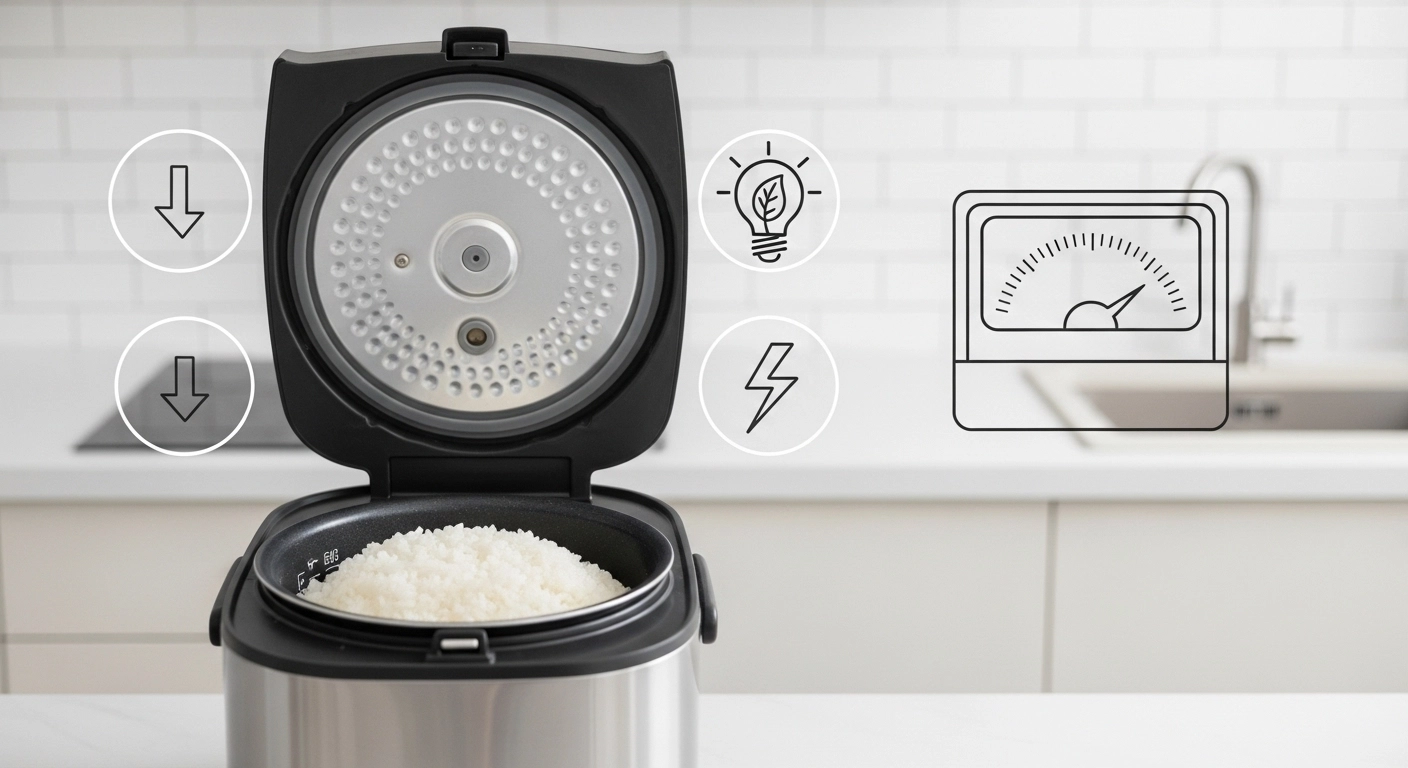
Several things influence how much electricity your rice cooker uses:
Size of the Rice Cooker
Larger rice cookers, especially those designed to cook 10 cups or more, typically have higher wattage and will use more electricity than smaller ones. If you only need to cook rice for one or two people, a smaller cooker will be more energy efficient.
Cooking Time
The longer the rice cooker is on the ‘cook’ setting, the more electricity it will use. This can depend on the type of rice you are cooking and how much water you use. Some grains, like brown rice, take longer to cook than white rice, meaning more energy is consumed.
Using the ‘Warm’ Setting
As mentioned, the ‘warm’ setting uses very little power. However, leaving it on for many hours can increase your energy bill more than you might expect. It’s best to serve the rice soon after it’s cooked or turn the cooker off if you don’t need it to stay warm for an extended period.
Features and Technology
Advanced rice cookers with fuzzy logic, induction heating, or multiple cooking presets might have different energy profiles. Induction heating, for example, can be more efficient in how it transfers heat directly to the inner pot, potentially saving energy. However, these models often have higher initial wattages.
Estimating Your Rice Cooker’s Energy Cost
To get a clearer picture of the cost, you need to know your electricity rate. You can usually find this on your utility bill. It’s typically measured in cents per kilowatt-hour (kWh). A kilowatt is 1000 watts.
Here’s a simple way to estimate:
1. Find your rice cooker’s wattage (e.g., 600 watts).
2. Estimate how long you use it for cooking and warming. Let’s say 30 minutes cooking and 1 hour on warm.
3. Convert watts to kilowatts by dividing by 1000 (e.g., 600 watts / 1000 = 0.6 kW).
4. Calculate the energy used in kWh for cooking: Power (kW) x Time (hours). So, 0.6 kW x 0.5 hours = 0.3 kWh.
5. Calculate the energy used in kWh for warming: Power (kW) x Time (hours). For warm, let’s say 40 watts (0.04 kW) for 1 hour: 0.04 kW x 1 hour = 0.04 kWh.
6. Total kWh used = 0.3 kWh + 0.04 kWh = 0.34 kWh.
7. Multiply total kWh by your electricity rate. If your rate is 15 cents per kWh, then 0.34 kWh x $0.15 = $0.051, or about 5 cents for that cooking cycle.
This example shows that for a single meal, the cost is very small. If you cook rice every day, the cost will add up, but it’s still generally quite low compared to many other kitchen activities.
Tips for Energy-Efficient Rice Cooking
To make sure your rice cooker is as energy efficient as possible, try these tips:
Cook Larger Batches
If you have the space and need for it, cooking a larger batch of rice at once is more efficient than cooking small batches multiple times. You’ll use the cooker’s full capacity, getting more ‘rice per watt’.
Measure Accurately
Using the right amount of water for the amount of rice is important not just for texture but also for efficiency. Too much water means longer cooking times and more energy use.
Use the Lid
Always keep the lid on the rice cooker while it’s cooking. This traps the heat and steam, allowing the rice to cook faster and more evenly, using less energy.
Turn Off When Done
Once the cooking cycle is finished, if you don’t plan to eat the rice right away, consider turning off the ‘warm’ setting. Some modern rice cookers have auto-shutoff features, but older models may stay on indefinitely.
Regular Cleaning
Keep the inside and outside of your rice cooker clean, especially the heating element area. Food debris can affect its performance and potentially make it work harder, using more energy.
Consider Rice Type
Some rice types, like brown rice or wild rice, naturally take longer to cook. If you’re frequently cooking these, they will use more energy. For daily white rice, the energy use is minimal.
Frequently Asked Questions
Question: Is a rice cooker more energy efficient than cooking rice on the stovetop?
Answer: Generally, yes. Rice cookers are designed to heat water to boiling and then maintain a specific temperature to steam the rice efficiently. Stovetop cooking often involves more heat loss from the pot and burner, and requires more active monitoring, which can lead to less consistent energy use.
Question: How much electricity does a rice cooker use per year?
Answer: This varies greatly depending on the size of the cooker, how often you use it, and for how long. For a typical household using a standard rice cooker for one meal a day, the annual electricity cost is usually quite low, often in the range of $5 to $20.
Question: Do fancy rice cookers use more electricity?
Answer: Some high-end rice cookers, especially those with induction heating or advanced digital controls, might have a higher wattage. However, they often cook rice more efficiently and faster, which can sometimes offset the higher wattage, leading to similar or even lower energy consumption per cooking cycle.
Question: Can I use my rice cooker for other things besides rice?
Answer: Many rice cookers are multi-functional and can be used for steaming vegetables, cooking oatmeal, making cakes, or even cooking soups. Using these other features might affect electricity consumption differently than just cooking rice, depending on the duration and heat settings required.
Question: What is the most energy-efficient way to cook rice?
Answer: Using a correctly sized rice cooker and following energy-saving tips like cooking larger batches and serving promptly is very energy efficient. For the absolute lowest energy use, cooking a small amount of rice in a covered pot on a low stovetop setting can also be efficient, but rice cookers offer convenience and consistent results.
Final Thoughts
So, to answer the question, does rice cooker use a lot of electricity? The simple answer is usually no. Rice cookers are designed to be efficient for their specific task.
Their wattage is often lower than many other kitchen appliances, and when used wisely, they consume a modest amount of power. By understanding your cooker’s wattage and employing a few simple energy-saving habits, you can enjoy perfectly cooked rice without worrying about a huge impact on your electricity bill. Cook on!

Hi, I’m Raju Dey — a food lover with a degree in Culinary Arts from El Centro College. I’ve spent 4+ years testing air fryers, blenders, and other kitchen tools in real home kitchens. At KitchenWink.com, I share honest tips and reviews to help you cook smarter. My goal is to give you advice you can trust — based on hands-on experience, not hype.