Electric griddles are a kitchen favorite for good reason. They let you cook everything from pancakes to burgers, all on one surface. But if you want perfect results, you need to know the right cooking times and temperatures. Many people make mistakes here—foods burn, stick, or turn out undercooked.
This guide will help you cook with confidence, using your electric griddle for breakfast, lunch, and dinner. You’ll find clear temperatures, cooking times, and tips for everything from eggs to steak.
Why Electric Griddle Cooking Is Different
Electric griddles heat up quickly and have a flat surface. They give even heat across the whole cooking area, unlike most frying pans. This means food cooks at the same rate, so you don’t have to move things around as much. The temperature control dial is a big advantage. You choose the heat level, which helps you cook different foods back-to-back without waiting for the right temperature.
Some beginners miss that griddles often need a few minutes to reach the set temperature. Also, the surface can cool down if you put a lot of cold food on at once. Let your griddle preheat, and don’t overcrowd the surface.
Basic Temperature Guide For Common Foods
The right temperature makes a huge difference. Here’s a quick look at the best electric griddle temperatures for popular foods:
| Food | Recommended Temperature (°F) | Usual Cooking Time |
|---|---|---|
| Pancakes | 350 | 2-3 min per side |
| Eggs | 325 | 2-3 min |
| Bacon | 375 | 4-7 min |
| Burgers | 375 | 4-5 min per side |
| Chicken Breast | 350 | 8-10 min per side |
| Steak | 400 | 4-6 min per side |
| Vegetables | 325 | 5-10 min |
| Grilled Cheese | 325 | 2-4 min per side |
| French Toast | 350 | 2-4 min per side |
This table gives you a starting point. Some foods need a bit more or less time, depending on thickness and your griddle’s power.
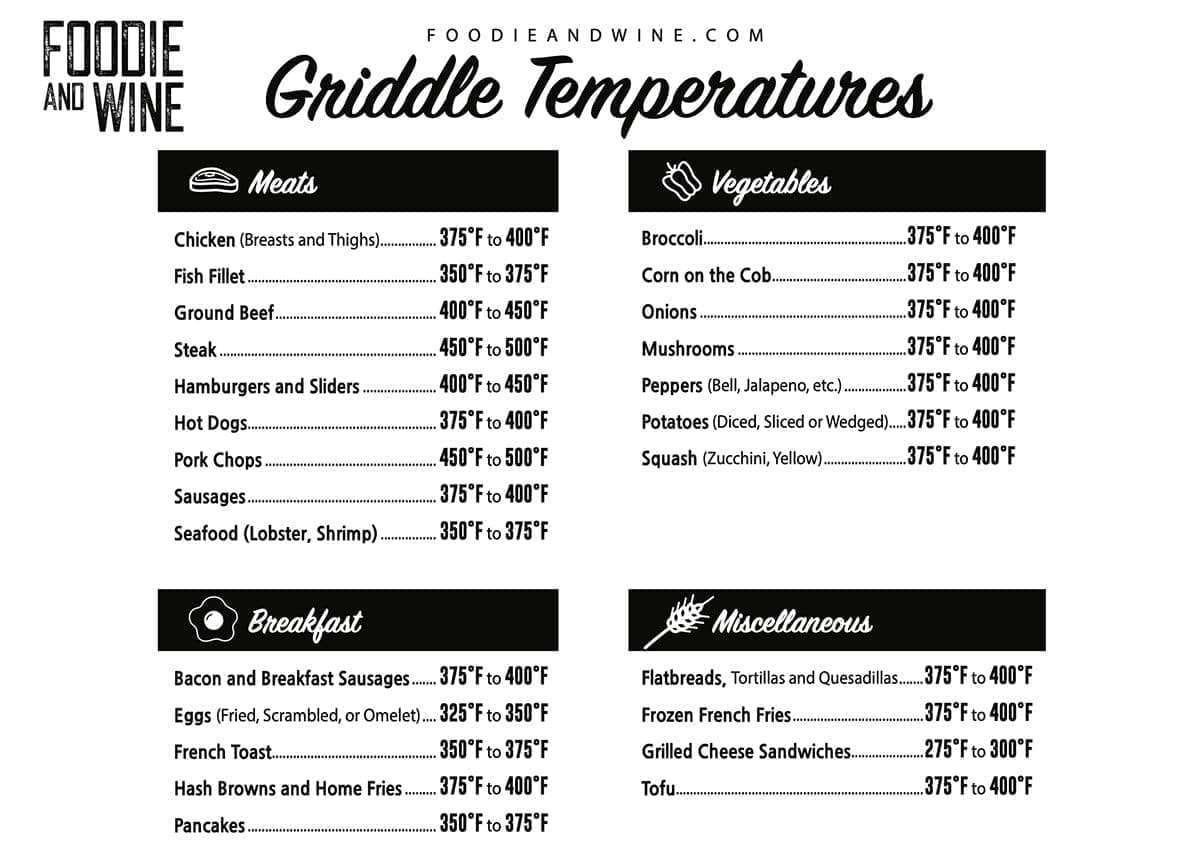
Credit: foodieandwine.com
Breakfast On The Griddle
Most people use their electric griddle for breakfast favorites. Here’s how to get them just right.
Pancakes
Set your griddle to 350°F. Pour the batter onto the hot surface. Wait until you see bubbles form on top—this takes about 2–3 minutes. Flip and cook the other side for another 2 minutes. For fluffy pancakes, don’t press them down.
Eggs
For fried or scrambled eggs, use 325°F. This lower heat keeps eggs tender and prevents browning. Crack the eggs directly onto a greased surface. They’ll be done in 2–3 minutes. For omelets, start at 325°F, then fold and finish at 300°F for a soft texture.
Bacon
Bacon cooks best at 375°F. Lay slices flat and let them cook without flipping for about 4 minutes. Flip, then cook for 2–3 more minutes. For crispy bacon, don’t overlap slices. You can drain fat off the griddle as you go.
Sausage
Both patties and links work well at 350°F. Cook for 6–8 minutes, turning every 2 minutes. Check for a golden brown color and clear juices.
French Toast
Set to 350°F. Dip bread in egg mixture, then place on the griddle. Cook each side for 2–4 minutes until golden. For extra flavor, sprinkle with cinnamon while cooking.
Lunch And Dinner Favorites
Your electric griddle is not just for breakfast. Many lunch and dinner foods cook beautifully on it.
Burgers
Heat the griddle to 375°F. Place patties down, pressing gently. Cook for 4–5 minutes per side for medium doneness. Use a thermometer—160°F inside is safe for ground beef. For cheeseburgers, add cheese in the last minute, then cover with a metal bowl to melt.
Chicken Breast
Cook boneless chicken at 350°F. Pound thick parts thinner for even cooking. Grill 8–10 minutes per side. Check for juices running clear or a thermometer reading 165°F inside.
Steak
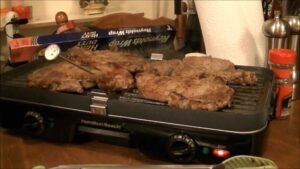
Turn your griddle up to 400°F for a good sear. Salt your steak before placing it on the surface. Cook for 4–6 minutes per side for medium-rare (internal temp around 135°F). Let steak rest a few minutes after cooking so juices stay inside.
Grilled Cheese
Set to 325°F. Butter the outside of bread, add cheese, and cook for 2–4 minutes per side. For even browning, use a spatula to press gently. Don’t rush—lower heat melts cheese better.
Quesadillas
Griddles make perfect quesadillas. Preheat to 350°F. Place a tortilla, sprinkle cheese and fillings, then top with another tortilla. Cook 2–3 minutes, flip, and cook 2 minutes more.
Vegetables
Most vegetables grill well at 325–350°F. Slice evenly, brush with oil, and place on the griddle. Stir or flip every few minutes. Cook 5–10 minutes, depending on thickness and type. Zucchini, bell peppers, and onions are popular options.
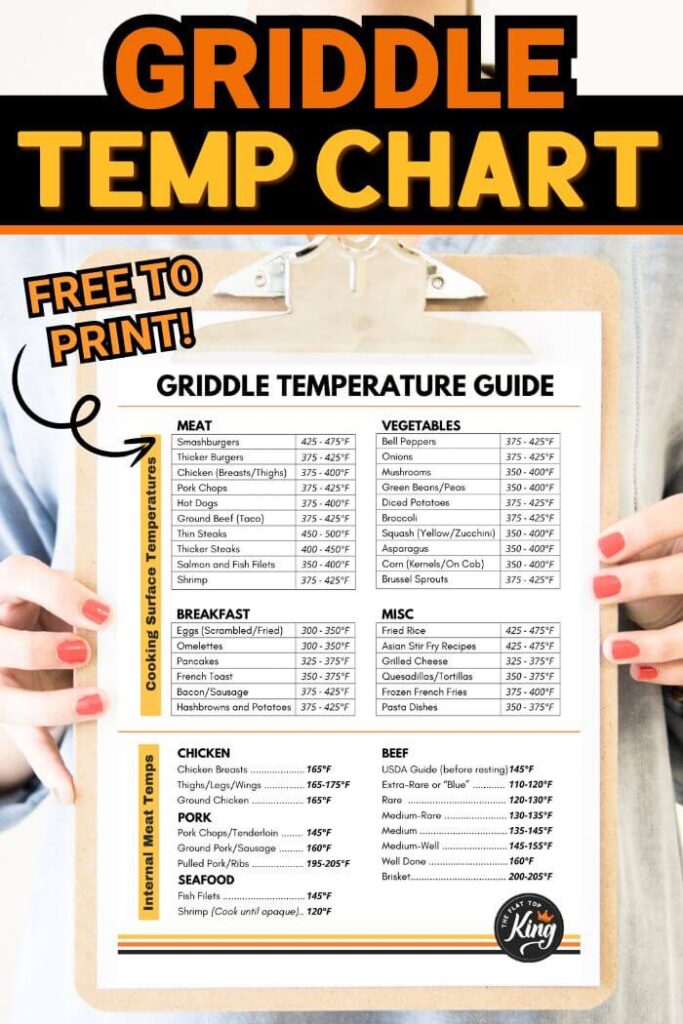
Credit: theflattopking.com
Griddle Cooking Tips For Best Results
- Preheat fully. Wait at least 5 minutes after turning on your griddle. The temperature light may turn off, but the surface needs to stabilize.
- Use a little oil or butter. This prevents sticking and helps browning. Wipe the surface with a paper towel for a thin, even layer.
- Don’t crowd the griddle. Too much food lowers the temperature. Leave space between pieces for even cooking.
- Flip food only once when possible. This keeps juices inside meats and helps pancakes rise.
- Keep a thermometer handy. This is the best way to avoid undercooked or overcooked meats.
- Clean between batches. Wipe off crumbs or grease, especially when switching from savory to sweet items.
- Let food rest after cooking. Meats are juicier and easier to cut if you wait a few minutes before serving.
Common Mistakes To Avoid
It’s easy to make errors when using an electric griddle, especially if you’re new. Here are some to watch out for:
- Using the wrong temperature. Too high, and food burns outside but is raw inside. Too low, and it dries out.
- Cooking straight from the fridge. Cold foods cool the surface fast. Let meats and eggs sit at room temperature for 10 minutes before cooking.
- Not greasing the surface. Even non-stick griddles benefit from a little oil or butter.
- Cutting food on the griddle. This damages non-stick coatings. Always move food to a plate first.
- Ignoring the drip tray. Empty grease or crumbs regularly to avoid smoke.
Advanced Griddle Cooking: Searing And Sautéing
Some griddles reach higher temperatures, letting you sear meats like steak or pork chops. At 400–425°F, you can get a great crust. Sear for 2–3 minutes per side, then reduce to a lower setting to finish cooking. For sautéing vegetables, start at 350°F, using a bit more oil and stirring often.
If you want to cook several foods at once, use the “hot zone” and “cool zone” method. Place foods that need high heat (like meat) closer to the heating element, and keep delicate items (like eggs) further away.
Cleaning And Care For Accurate Cooking
A clean griddle cooks better. Old grease and crumbs can burn, changing the taste and affecting heat. Always let your griddle cool down, then use a soft sponge and mild soap. For stuck-on bits, pour a little water on the warm surface and scrape gently with a spatula.
Some griddles have removable plates—wash these in warm soapy water. Never use metal tools, as they scratch non-stick coatings. Season your griddle with a thin layer of oil after cleaning if it’s not non-stick.
Comparison: Electric Griddle Vs. Stovetop Pan
Understanding the differences can help you decide when to use your griddle or a traditional pan.
| Feature | Electric Griddle | Stovetop Pan |
|---|---|---|
| Cooking Surface | Large, flat, even heat | Smaller, sometimes uneven |
| Temperature Control | Precise dial control | Depends on stove settings |
| Best For | Pancakes, eggs, grilled sandwiches | Stir-fries, sauces, deep frying |
| Cleaning | Usually easy, some dishwasher-safe | Can require soaking, more scrubbing |
| Portability | Can use anywhere with outlet | Needs stove |
Quick Reference: Temperature And Doneness For Meats
For safety and taste, meats need to hit certain internal temperatures. Use this as a quick reference:
| Meat | Griddle Temp (°F) | Internal Temp (°F) |
|---|---|---|
| Chicken Breast | 350 | 165 |
| Beef Steak (Medium) | 400 | 140 |
| Pork Chop | 375 | 145 |
| Ground Beef/Burgers | 375 | 160 |
Non-obvious Insights For Griddle Success
- Use the back edge for slower cooking. Most electric griddles heat a little less at the far edge, making it a good spot for keeping foods warm without overcooking.
- Test new recipes with a single piece. If you’re unsure about timing or temperature, cook just one pancake or burger first. You’ll avoid ruining a whole batch.
- Season foods after cooking for crispness. Adding salt to potatoes or fries after they come off the griddle keeps them crunchy. Salt draws out moisture if added before cooking.
Frequently Asked Questions
How Do I Know My Electric Griddle Is At The Right Temperature?
Most griddles have a light that turns off when the set temperature is reached. For best accuracy, use an infrared thermometer or drop a few drops of water on the surface—they should dance and sizzle but not evaporate instantly.
Can I Cook Frozen Foods On An Electric Griddle?
It’s best to thaw food first. Frozen items lower the griddle’s temperature fast, leading to uneven cooking. If you must cook from frozen, add a few extra minutes and cover with a lid to help heat through.
What Oil Should I Use For Griddle Cooking?
Choose high smoke point oils like canola, vegetable, or avocado oil. Butter is tasty but burns faster—combine it with oil for flavor and browning.
How Often Should I Clean My Electric Griddle?
Clean after every use. Wipe the surface and empty the drip tray. Deep clean with warm soapy water once a week or after cooking messy foods.
Where Can I Learn More About Safe Cooking Temperatures?
You can find reliable information about cooking temperatures and food safety from the USDA Food Safety and Inspection Service.
Your electric griddle can help you cook a huge range of foods, as long as you use the right times and temperatures. With these tips, you’ll get tasty, even results every time—no matter what you’re cooking.

Credit: bydash.com