Many people wonder about “how does a kitchen sink work”. It seems simple, but there are a few moving parts involved. For beginners, understanding the pipes and water flow can seem a bit tricky.
But don’t worry, it’s not as complicated as it looks. We’ll break down exactly how your kitchen sink does its job, step by step, in a way that’s easy to grasp. Get ready to learn about the magic behind your everyday sink.
Understanding Your Kitchen Sink’s Plumbing
Your kitchen sink is a pretty smart piece of equipment. It takes dirty water and sends it away without any fuss. The main parts that make this happen are the faucet, the drain, and the pipes underneath.
Let’s look at each one to see how they team up.
The Faucet What Brings The Water
The faucet is where the clean water comes from. When you turn the handle or lift the lever, you’re opening up a path for water to come out. Inside the faucet, there’s usually a valve.
This valve controls how much water flows and whether it’s hot or cold.
How Faucet Valves Work
Different types of faucets use different valves. The most common ones are:
- Compression Faucets: These are older style faucets. Turning the handle presses a rubber washer against a valve seat. This stops or starts the water flow. You often have to turn them quite a bit.
- Cartridge Faucets: These are very common today. A cartridge is a self-contained unit that controls water. When you move the handle, it moves the cartridge inside, which mixes hot and cold water and lets it flow.
- Ball Faucets: These have a single handle that moves over a ball. The ball has holes in it that line up with the hot and cold water inlets. Moving the handle changes how the holes line up to control flow and temperature.
- Ceramic Disc Faucets: These are very durable. They use two ceramic discs that slide against each other. One disc has holes, and the other is solid. Moving the handle shifts the discs to control water.
No matter the type, the goal is the same: to control the water coming into your sink from the main water supply lines in your home.
The Drain What Takes The Water Away
Once the water has done its job in the sink basin, it needs to go somewhere. That’s where the drain comes in. The drain is the hole at the bottom of your sink.
It’s usually covered by a strainer or a stopper.
How The Sink Drain Works
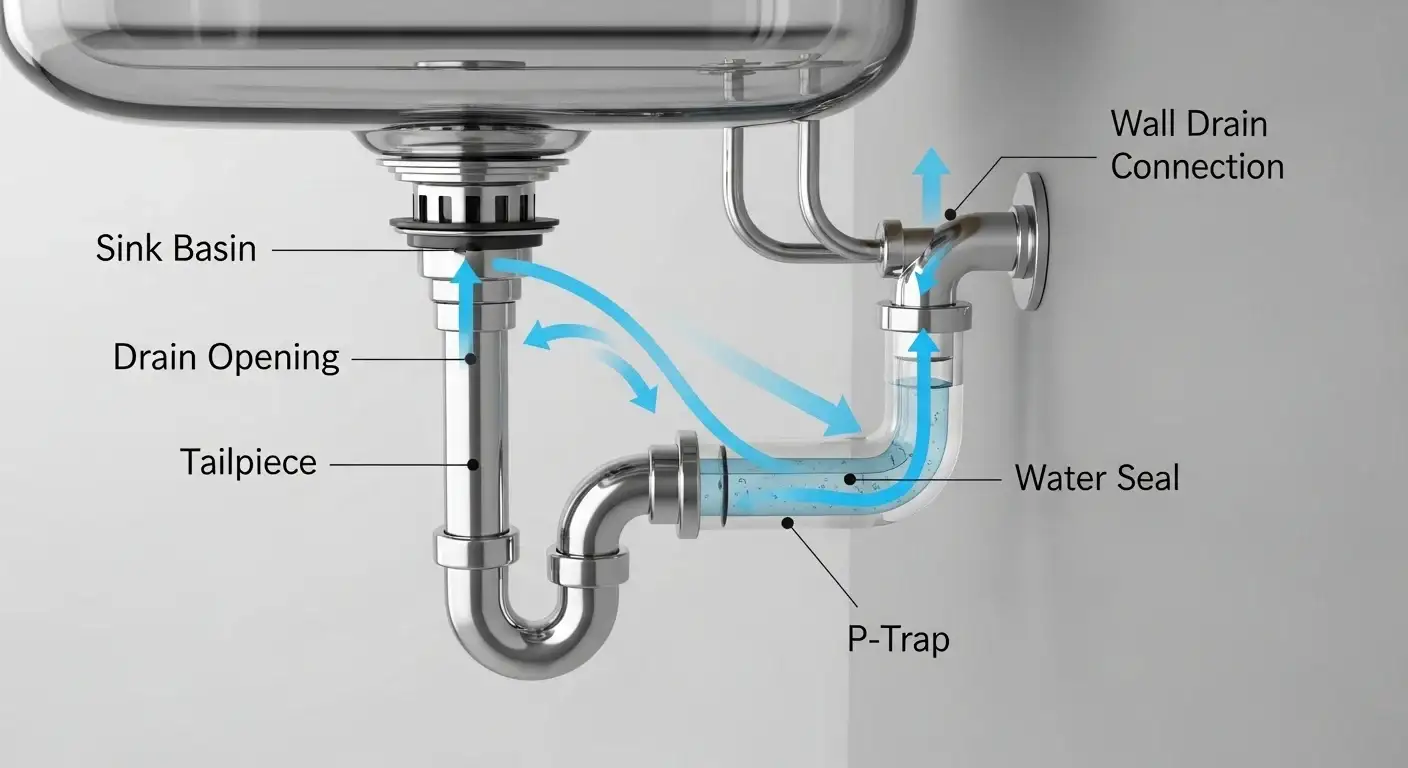
The drain opening leads to a pipe. This pipe is called the drainpipe or tailpiece. When water fills the sink and goes over the drain opening, it falls into this pipe.
If you have a stopper in place, it blocks the water from draining until you remove it.
Many sinks also have an overflow drain. This is a small hole near the top of the sink basin, often with a cover. If the main drain gets blocked or you leave the water running too high, the extra water goes into the overflow, down its own small pipe, and into the main drainpipe.
This prevents your sink from overflowing onto your floor.
The Pipes What Carry The Water
Underneath your sink, there’s a system of pipes that carry the water away. This is the most important part for understanding how does a kitchen sink work in terms of getting rid of used water.
The P-Trap
The most recognizable part of the under-sink plumbing is the P-trap. It’s that U-shaped pipe. It looks like a letter ‘P’ lying on its side.
This bend in the pipe is very important.
The P-trap is designed to always hold a small amount of water. This standing water acts as a seal. It stops sewer gases from coming up from the main sewer line and into your kitchen.
These gases can be smelly and even harmful. So, the P-trap is a clever way to keep your kitchen smelling fresh and safe.
The Tailpiece
The tailpiece is the straight pipe that connects the sink drain to the P-trap. It’s usually shorter than the P-trap itself. Water flows from the sink basin, through the strainer, down the tailpiece, and then into the P-trap.
Connecting To The Main Sewer Line
After the P-trap, the wastewater flows into larger drainpipes. These pipes are sloped so that gravity can pull the water downhill. These pipes eventually connect to your home’s main sewer line.
From there, the water travels to your local sewage treatment facility or your septic system.
It’s important that these drainpipes are properly sloped. If they aren’t, water can pool in the pipes, leading to clogs and bad smells. The consistent flow of water from your sink helps keep these pipes clear.
How Hot And Cold Water Work Together
Your kitchen sink likely has separate handles or a single lever for hot and cold water. These are connected to the water supply lines that run to your house. The cold water comes directly from the main water supply.
The hot water comes from your water heater.
When you turn the faucet handles, you are opening valves that allow water from these two sources to mix in the faucet body. The position of the handles or lever determines the ratio of hot to cold water, giving you the desired temperature. This mixed water then flows out of the spout.
What Happens When You Turn On The Faucet
Let’s put it all together. When you turn on the faucet:
- You move a handle or lever, which operates a valve inside the faucet.
- This valve opens up the path for water from the supply lines.
- Cold water comes from the main supply. Hot water comes from your water heater.
- These waters are mixed in the faucet to your chosen temperature.
- The mixed water flows out of the faucet spout into the sink basin.
What Happens When You Drain The Sink
Now, when you want to empty the sink:
- If there’s a stopper, you remove it.
- Water in the sink basin flows down through the drain opening.
- It goes down the tailpiece pipe.
- It enters the P-trap, which holds some water to block sewer gases.
- The water then flows through the rest of the drainpipes.
- Gravity carries the wastewater to the main sewer line and away from your home.
Common Sink Problems And How They Relate
Understanding how it works helps you fix common issues:
- Slow Draining: This usually means there’s a clog somewhere in the tailpiece, P-trap, or main drainpipe. The P-trap is often the first place to check for blockages.
- Foul Smells: If you smell sewage, the water seal in your P-trap might have dried out, or there’s a clog causing gas to back up. Running water for a minute can refill the P-trap seal.
- Leaky Faucet: This is a problem with the valve inside the faucet itself. It might need a new washer, cartridge, or disc, depending on the faucet type.
- Leaky Pipes Under The Sink: This means one of the connections between the pipes is loose or damaged. The P-trap connections are common spots for these leaks.
Materials Used In Kitchen Sinks
Kitchen sinks themselves are made from various materials, each affecting durability and style, but not how the plumbing functions:
- Stainless Steel: Very popular, durable, and easy to clean.
- Cast Iron: Heavy and durable, often with a porcelain enamel coating.
- Composite Granite: Made from crushed granite and resin, very hard and resistant to scratches.
- Fireclay: Similar to ceramic but fired at higher temperatures for extreme durability.
- Copper: Offers a unique look and is naturally antimicrobial, but can be expensive.
The Role Of Water Pressure
Your home’s water pressure plays a key role. Good water pressure means water flows strongly from the faucet. Low water pressure can make faucets trickle, even when fully open.
The drainage system also relies on gravity and the steady flow of water to carry waste away effectively.
Maintaining Your Kitchen Sink
Keeping your sink in good working order is simple. Regularly clean your sink basin. Be mindful of what you put down the drain; avoid grease and food scraps that can cause clogs.
Occasionally, run hot water down the drain to help clear out any residue. If you notice slow draining, address it promptly.
Frequently Asked Questions
Question: What is the main purpose of the P-trap
Answer: The P-trap’s main job is to hold water, creating a seal that prevents unpleasant and potentially harmful sewer gases from entering your kitchen.
Question: How does hot water get to my kitchen sink
Answer: Hot water is supplied by your home’s water heater. It travels through a separate pipe from the heater to the faucet, where it mixes with cold water.
Question: Why is my sink draining slowly
Answer: A slow drain usually means there’s a blockage in the pipes, most commonly in the tailpiece, P-trap, or further down the drain line.
Question: Can I fix a leaky faucet myself
Answer: Yes, many faucet leaks can be fixed by replacing small parts like washers or cartridges. The process varies depending on the faucet type.
Question: What should I avoid putting down the kitchen sink drain
Answer: You should avoid pouring grease, oil, coffee grounds, eggshells, and fibrous foods like celery stalks down the drain, as these can easily cause clogs.
Final Thoughts
Your kitchen sink is a marvel of simple engineering. It uses gravity and water pressure to bring clean water in and send waste water out. The faucet controls the flow and temperature, while the drain and P-trap ensure waste is carried away and smells are kept out.
Understanding how does a kitchen sink work empowers you to keep it running smoothly and fix minor issues. Enjoy your functional sink!

I’m Loretta Evans, and I lead the Rice Cooker and Kitchen Tools section. I test every product in real home kitchens to see how it truly performs in everyday use.
My goal is simple: to give you clear, honest advice so you can choose reliable tools that make cooking easier.