Planning a kitchen renovation or installing a new sink can bring up many questions. One common puzzle for beginners is figuring out exactly how far the kitchen sink should be from the edge of the counter. It might seem like a small detail, but getting it right makes a big difference in how your kitchen looks and works. Don’t worry, it’s not as tricky as it sounds! We’ll walk through this simple step-by-step. Let’s get your sink placed perfectly for a smooth-working kitchen.
Determining Your Sink’s Counter Edge Distance
Knowing how far should kitchen sink be from edge of counter is important for both function and appearance. This measurement impacts usability, water splash, and the overall balance of your kitchen workspace. A sink that’s too close to the edge can lead to water dripping onto your cabinet fronts or even on your feet. Conversely, a sink set too far back can make it awkward to use and may leave an unappealing gap. Let’s explore the ideal distances and the reasons behind them.
Why This Measurement Matters
The distance from the front edge of your countertop to the front lip of your kitchen sink is a key design choice. It’s not just about looks; it’s about practical use every single day. Think about washing dishes or rinsing vegetables. You want comfortable access to the sink bowl without straining or having water splash where you don’t want it. This measurement directly affects ergonomics and can prevent common kitchen annoyances. Getting it right means a happier kitchen experience.
Understanding Standard Recommendations
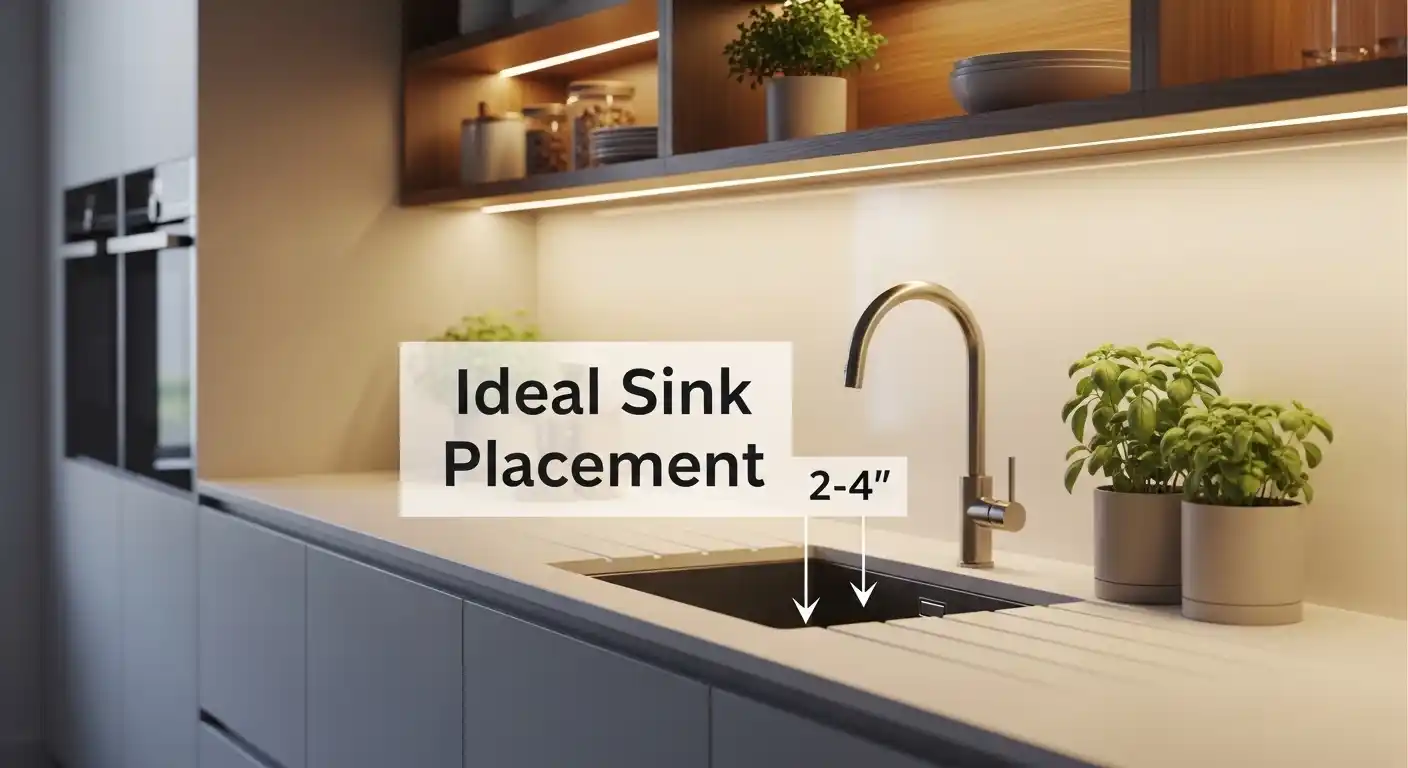
Most kitchen design experts and cabinet manufacturers suggest a specific range for how far should kitchen sink be from edge of counter. This range is generally between 2 to 4 inches. This sweet spot offers a good balance. It provides enough overhang for comfortable reach into the sink bowl, while also ensuring that the sink’s weight is properly supported by the countertop and cabinets. It also helps manage water splash, keeping your cabinet faces drier.
Factors Influencing the Ideal Distance
While 2 to 4 inches is a common guideline, several factors can slightly adjust this ideal measurement. Your personal preferences play a role. Do you prefer to stand closer or further from the sink? The type of sink you are installing also matters.
- Undermount Sinks: These sinks are installed below the countertop. They often allow for a slightly smaller overhang because there’s no visible lip to contend with at the counter’s edge. This can make the effective reach into the sink feel closer.
- Drop-In (Top-Mount) Sinks: These sinks have a rim that sits on top of the counter. The rim itself takes up some space, so the sink bowl might be positioned a little further back naturally. However, the front lip still needs to be considered for clearance.
- Farmhouse (Apron) Sinks: These sinks have a distinctive front panel that is exposed. The way they are installed and the depth of their apron can influence the overall placement and distance from the edge.
The thickness of your countertop material can also be a consideration. A very thick stone countertop might feel different than a thinner laminate one in terms of how the sink edge feels relative to the actual working surface. The overall depth of your countertop also plays a part. Standard countertops are 25.5 inches deep, but custom ones can vary.
Impact on Workflow and Ergonomics
Let’s consider how the distance from the edge affects your kitchen workflow. When you are standing at the sink, you want to be able to comfortably lean in to scrub pots or reach for items in the sink.
- Too Close: If the sink is too close to the edge (less than 2 inches), you might find yourself constantly bumping your hips or stomach against the counter’s front edge. Water can also easily splash over the front lip and onto the floor or cabinet doors. This can lead to water damage over time and a messier kitchen.
- Too Far: If the sink is set too far back (more than 4 inches), it can feel like you’re reaching too far to access the sink bowl. This can cause back strain and make everyday tasks like washing dishes less comfortable. It also creates a larger, potentially awkward space between the sink and the counter’s edge.
The “perfect” distance is one that allows you to stand naturally, reach into the sink bowl with ease, and minimizes water splash. This is why the 2 to 4-inch guideline is so popular – it works well for most people and most sink types.
Installation Considerations
When you’re ready for installation, whether it’s a DIY project or professional work, communication about this measurement is key.
- Cabinet Support: The countertop needs adequate support. The front edge of the countertop needs to extend past the cabinet face frame or the edge of the cabinet box to provide a stable mounting surface for the sink, especially for undermount sinks.
- Sink Template: Most sinks come with a template for cutting the countertop opening. Carefully follow the template’s instructions, paying close attention to any recommended setbacks from the front edge. These templates are usually designed with standard clearances in mind.
- Countertop Overhang: Remember that your countertop itself will have an overhang beyond the cabinet boxes. The sink placement is relative to this front edge of the countertop. Standard countertop overhang is usually around 1 to 1.5 inches.
It’s wise to measure and mark the placement of your sink on the countertop before making any final cuts. Dry-fitting the sink or using its template can help visualize the final result and confirm the distance from the edge.
Common Mistakes to Avoid
A common mistake is not factoring in the sink’s rim thickness or the splash zone. Some people place the sink too close without considering how much water might escape over the front. Another error is relying solely on the sink’s template without thinking about personal comfort. Always consider how you will use the sink day-to-day.
Here is a table summarizing the key distances:
| Sink Type | Recommended Distance from Counter Edge | Notes |
|---|---|---|
| Undermount Sink | 2 to 3 inches | Provides good reach into the bowl. |
| Drop-In Sink | 3 to 4 inches | Accounts for the rim, balances reach and splash. |
| Farmhouse Sink | Varies (consult manufacturer) | Apron depth and installation method are key. |
Always double-check your specific sink model’s installation guide for any unique requirements. The goal is a seamless fit that feels right for your hands and your kitchen tasks.
How to Measure for Placement
When you’re physically measuring, it’s straightforward.
- Measure from the very front edge of your countertop inwards.
- Mark the desired starting point for your sink’s front lip.
- Ensure this mark aligns with the recommended distance (2-4 inches, adjusted for sink type).
If you have an existing countertop, you can measure from the edge to the current sink’s front edge to get an idea of what you have. For a new installation, use your chosen sink’s template and a tape measure.
Personal Comfort is Key
While guidelines are helpful, your personal comfort is the ultimate deciding factor. If you’re taller, you might prefer the sink slightly further back. If you’re shorter, you might want it a bit closer. Spend some time standing at your counter where the sink will be. Imagine doing common tasks. Does the distance feel right for you?
The Role of Countertop Depth
Standard kitchen countertops are 25.5 inches deep. This means the front edge usually extends about 1 to 1.5 inches past the cabinet boxes. When you consider the sink placement, you’re working with this overall countertop depth. A sink that is 3 inches from the front edge leaves plenty of space for the sink bowl and faucet without making the countertop feel cramped.
Conclusion for Sink Placement
Placing your kitchen sink correctly is a balance of function and form. Knowing how far should kitchen sink be from edge of counter ensures ease of use and prevents common issues like excessive splashing or awkward reaching. Aim for the general 2-4 inch range, but consider your specific sink type and your personal comfort to find the perfect spot.
Frequently Asked Questions
Question: What is the standard setback for a kitchen sink from the counter edge?
Answer: The standard setback for a kitchen sink from the front edge of the countertop is typically between 2 to 4 inches. This range balances comfortable reach into the sink bowl with minimizing water splash.
Question: Can I place my sink right at the counter edge?
Answer: It is generally not recommended to place a sink directly at the counter edge. This can lead to water splashing onto your cabinet fronts and floor, and can feel uncomfortable to use.
Question: How does the sink type affect the distance from the edge?
Answer: Undermount sinks often allow for a slightly smaller setback (2-3 inches) due to their integration below the counter. Drop-in sinks may need a slightly larger setback (3-4 inches) to accommodate their rim and provide good reach.
Question: What happens if my sink is too far from the counter edge?
Answer: If your sink is too far from the counter edge, you might find yourself reaching uncomfortably, leading to potential back strain. It can make everyday tasks feel more difficult.
Question: Is it okay to have a countertop overhang of less than 1.5 inches when installing a sink?
Answer: A standard countertop overhang is 1 to 1.5 inches. While sink placement is relative to the countertop’s front edge, a very small overhang might affect overall stability and the aesthetics of the sink installation, especially for undermount types.
Final Thoughts
Getting the distance right for how far should kitchen sink be from edge of counter makes a big difference. Aim for 2 to 4 inches for a great balance. This helps with easy use and keeps water where it belongs. Measure carefully, consider your sink type, and think about what feels most comfortable for you. A well-placed sink makes your kitchen work better and feel just right.

I’m Loretta Evans, and I lead the Rice Cooker and Kitchen Tools section. I test every product in real home kitchens to see how it truly performs in everyday use.
My goal is simple: to give you clear, honest advice so you can choose reliable tools that make cooking easier.