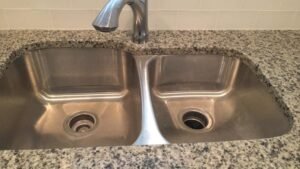
Choosing the right location for your kitchen sink is more important than many people realize. The distance between the sink and the wall affects comfort, workflow, plumbing installation, and even safety. If you get it wrong, you might face problems with cleaning, water splashing, or even damaging your cabinets.
But how far should a kitchen sink be from the wall? This question is asked by homeowners, builders, and renovators. Getting the answer right can save you money and frustration.
This guide will help you understand the recommended distances, why they matter, and what happens if you ignore them. You’ll learn about building codes, practical design tips, and real-life examples. We’ll also cover different types of sinks, like undermount and farmhouse, and how their placements may vary.
If you’re planning a kitchen remodel or building a new house, these insights will help you make smart decisions.
Why Sink Placement Matters
The kitchen sink is one of the most-used spots in any home. The location affects how you wash dishes, fill pots, and clean up spills. If the sink is too close to the wall, your elbows may bump against it, making washing uncomfortable.
If it’s too far, you might waste precious countertop space.
Workflow And Comfort
Kitchen workflow depends on easy movement. When you wash dishes, you need space to reach both sides of the sink. If there isn’t enough space behind or beside the sink, you’ll struggle to use it comfortably. Ergonomics play a big role here. Designers recommend at least 18 inches of clear countertop space on one side for drying dishes and preparing food.
Plumbing And Installation
Plumbing requires enough room behind the sink for pipes, fittings, and sometimes garbage disposals. If the sink is too close to the wall, plumbers may have trouble installing or repairing pipes. Some codes require a minimum distance to avoid leaks and damage.
Cleaning And Maintenance
A sink that sits almost against the wall can make cleaning difficult. Dirt, water, and crumbs often collect in tight spaces. If you leave too little space, mold and mildew can develop, especially in humid climates. Having a gap makes it easier to wipe down surfaces and keep your kitchen hygienic.
Recommended Distance Between Sink And Wall
Most experts agree that the ideal distance between the kitchen sink and the wall is between 2 to 4 inches. However, this is not a fixed rule. The distance depends on the sink type, cabinet size, local codes, and personal preference.
Standard Sink Placement
For typical sinks mounted on standard base cabinets (24 inches deep), the front edge of the sink is usually about 1. 5 inches from the countertop edge. The back edge (the part nearest the wall) should be about 2 to 4 inches away from the wall.
| Sink Type | Recommended Distance (Back Edge to Wall) | Notes |
|---|---|---|
| Undermount Sink | 2–4 inches | Allows space for faucet and cleaning |
| Drop-in Sink | 2–3 inches | Similar to undermount, but rim may need extra space |
| Farmhouse Sink | 3–4 inches | Usually deeper, needs more space behind |
Building Codes And Standards
Building codes don’t always specify an exact distance for sinks from the wall, but they do set requirements for plumbing, electrical outlets, and cabinet sizes. The National Kitchen & Bath Association (NKBA) recommends a minimum of 3 inches between the sink and the wall for comfort and maintenance.
Some codes also require that electrical outlets near sinks are at least 20 inches away from water sources. This means you should plan for extra space if outlets are behind or next to your sink.
Why Not Place The Sink Flush Against The Wall?
You might think pushing the sink as close as possible to the wall will save countertop space. But this can cause problems:
- Faucet installation: Most faucets require a hole behind the sink. If there’s no space, the faucet won’t fit.
- Splashing: Water will splash onto the wall, leading to stains and mold.
- Cleaning: You can’t reach the gap to clean, leading to dirt build-up.

Credit: diy.stackexchange.com
Factors That Affect Sink Distance
No two kitchens are alike. The right distance depends on several factors. Let’s look at the main ones:
Cabinet Depth
Standard base cabinets are 24 inches deep. With countertops (usually 25 inches), you have a bit of overhang. Sink placement is limited by these sizes. If your cabinets are deeper or shallower, adjust the distance accordingly.
Countertop Thickness
Countertops range from 1 to 1. 5 inches thick. Thicker countertops may push the sink closer to the wall. Thinner countertops can allow a bit more space.
Faucet Size And Style
Some faucets are large or have pull-down sprayers. These need more room behind the sink. If you choose a tall faucet, leave at least 3 inches between the sink and wall.
Sink Size
Big sinks need more room for installation and use. For example, a double-bowl sink might need extra space behind for plumbing connections.
Backsplash Design
If you plan to install a backsplash, leave enough space so it doesn’t crowd the sink. The backsplash is usually 0. 5 to 1 inch thick, so include this in your measurements.
Plumbing Access
If you want easy access to pipes, garbage disposals, or water filters, don’t crowd the sink against the wall.
Wall Material
Some materials, like tile or stone, are more prone to water damage. Leaving a gap helps protect them.
Measuring For Proper Sink Placement
Accurate measurement is key to a good installation. Here’s how to measure for the ideal sink distance:
- Measure the depth of your base cabinet (usually 24 inches).
- Add the thickness of your countertop (1–1.5 inches).
- Decide how far the front edge of the sink will be from the countertop (usually 1.5 inches).
- Subtract the sink depth from the total countertop depth.
- Leave 2–4 inches between the back edge of the sink and the wall.
Example:
If your cabinet is 24 inches, countertop is 1 inch, and sink is 22 inches deep:
- Total depth: 24 + 1 = 25 inches
- Sink placement: Front edge 1.5 inches from countertop, back edge 3.5 inches from wall
| Measurement | Value |
|---|---|
| Cabinet Depth | 24 inches |
| Countertop Thickness | 1 inch |
| Sink Depth | 22 inches |
| Front Edge Distance | 1.5 inches |
| Back Edge Distance | 3.5 inches |

Credit: kloelighting.com
Real-life Examples
Understanding actual kitchen designs can help. Here are a few examples:
Example 1: Small Apartment Kitchen
In a compact kitchen with a 20-inch deep cabinet and a 19-inch sink, the installer left 2 inches between the back of the sink and the wall. This allowed room for a small faucet and made cleaning easier.
Example 2: Luxury Home With Farmhouse Sink
A farmhouse sink measuring 24 inches deep was installed in a 25-inch cabinet. The homeowner left 3 inches between the back of the sink and the wall. This gave space for a large faucet and a thick tile backsplash.
Example 3: Renovated Kitchen With Undermount Sink
In a remodeled kitchen, an undermount sink was placed 4 inches from the wall to allow for a water filter and easy pipe access. The extra space made maintenance simpler.
Mistakes To Avoid
Many beginners make mistakes when placing their sinks. Here are some common errors:
- Ignoring faucet space: Not leaving enough room for the faucet can result in difficult installation.
- Crowding the wall: Placing the sink too close makes cleaning and maintenance hard.
- Forgetting about the backsplash: Not planning for backsplash thickness can lead to a cramped look.
- Choosing the wrong sink size: A sink that is too big or too small for the cabinet leads to awkward gaps.
- Not checking code requirements: Skipping building code checks may result in violations or costly changes.
Tips For Optimal Sink Placement
Getting the right sink distance isn’t just about following rules. Here are some practical tips:
- Use a template when cutting countertops. Most sinks come with one.
- If possible, choose a sink before finalizing cabinets and countertops.
- Allow extra space if you plan to install a garbage disposal or water filter.
- Ask your plumber for advice. They can spot problems before installation.
- Test the placement with cardboard or tape before cutting anything.
Non-obvious Insights
- Many people forget that the countertop overhang (usually 0.5 to 1 inch) can change the distance between the sink and wall. Always measure from the finished edge.
- If your kitchen wall is uneven or has pipes running through it, adjust the sink distance slightly to avoid hitting obstacles.
How Sink Type Affects Placement
Not all sinks are alike. The type you choose affects how far it should sit from the wall.
Undermount Sinks
These sinks sit below the countertop. They need more space behind for faucet installation. Usually, 3–4 inches is ideal.
Drop-in Sinks
These sinks have a rim that sits on top of the countertop. You can place them a bit closer, but still leave at least 2–3 inches for comfort.
Farmhouse Sinks
Farmhouse sinks are deeper and often have a front panel. Leave 3–4 inches behind to make space for faucets and plumbing.
Bar Sinks
Bar sinks are smaller and can be placed closer to the wall, but still need at least 2 inches of space.
Credit: kloelighting.com
Comparison: Sink Placement By Kitchen Size
Different kitchen sizes call for different approaches. Here’s a quick comparison:
| Kitchen Size | Recommended Sink Distance | Reason |
|---|---|---|
| Small Kitchen | 2–3 inches | Maximizes workspace, but maintains comfort |
| Medium Kitchen | 3 inches | Balances space and accessibility |
| Large Kitchen | 3–4 inches | Allows for bigger sinks and faucets |
Adjusting Sink Distance For Special Situations
Sometimes you need to adjust the distance based on unique needs.
Aging-in-place Kitchens
Older adults may need more room behind the sink for easy faucet operation. Consider leaving 4 inches for accessibility.
Child-friendly Kitchens
If kids will use the sink, place it slightly farther from the wall so they can reach the faucet.
Multi-sink Kitchens
In kitchens with more than one sink, leave at least 3 inches behind each sink. This prevents crowding and makes cleaning easier.
Outdoor Kitchens
Outdoor sinks should be at least 3 inches from the wall to allow for hoses and weatherproof fittings.
Impact Of Sink Distance On Kitchen Design
Sink placement affects not just function, but also looks. A well-placed sink creates a balanced, attractive kitchen.
Symmetry And Balance
Leaving the right gap between sink and wall helps keep the kitchen looking neat. It avoids the crowded look that can happen if the sink is pushed too close.
Backsplash And Lighting
With proper spacing, you can install a backsplash or under-cabinet lighting. These features protect walls and add beauty.
Space For Accessories
Extra space behind the sink allows for soap dispensers, water filters, and faucet upgrades.
Expert Advice And Recommendations
Professional kitchen designers and plumbers recommend leaving at least 3 inches between the sink and the wall. This gives enough room for faucets, cleaning, and plumbing. If you’re unsure, ask a local expert or check the NKBA guidelines.
If your kitchen has special needs, like very thick countertops or custom cabinets, adjust the distance as needed.
For more official guidance, the National Kitchen & Bath Association offers detailed recommendations.
Frequently Asked Questions
How Close Can A Kitchen Sink Be To The Wall?
Most experts recommend a minimum of 2 inches between the sink and wall. This provides enough room for faucet installation, cleaning, and plumbing access. Crowding the sink against the wall can cause problems with splashing and maintenance.
What Happens If The Sink Is Too Close To The Wall?
If the sink is too close, you may struggle to install the faucet, reach pipes for repairs, or clean behind the sink. Water may splash onto the wall, leading to stains and mold. It also makes the kitchen look cramped.
Does Sink Placement Affect Plumbing?
Yes, sink placement affects how easily plumbers can install and repair pipes. If there’s not enough room behind the sink, pipes may be harder to reach. Some codes require a minimum gap for safety and access.
Can I Place A Farmhouse Sink Closer To The Wall?
Farmhouse sinks are usually deeper and heavier. They need more space behind for faucet and plumbing. Most designers recommend leaving at least 3 to 4 inches behind a farmhouse sink.
What Is The Standard Distance For A Kitchen Sink From The Wall?
The standard distance is 2 to 4 inches from the back edge of the sink to the wall. This range works for most sinks, cabinets, and countertops. Adjust as needed for special sinks or kitchen layouts.
Getting the kitchen sink placement right is a small detail, but it makes a big difference in daily life. Proper distance from the wall ensures comfort, easy cleaning, and smooth plumbing. Take the time to measure carefully, plan for faucet and accessory space, and consult experts if needed.
With the right gap, your kitchen will work better and look great for years to come.