Skip to content
Vacuum sealing has changed the way we store food. Many people use this method to keep groceries, leftovers, and bulk purchases fresh for longer. But how long does food really last when vacuum sealed? Understanding this can help you avoid waste, save money, and enjoy better tasting meals.
Let’s explore the science, practical tips, and real numbers behind vacuum sealing food, so you can make confident decisions at home.
What Is Vacuum Sealing?
Vacuum sealing is a process that removes air from around food and seals it in a special bag or container. The main tool for this is a vacuum sealer machine. By removing oxygen, vacuum sealing slows down spoilage, prevents freezer burn, and keeps food fresher for longer.
Air contains oxygen, which helps bacteria, mold, and yeast grow. When you vacuum seal food, you cut off their supply. This is why vacuum sealing extends shelf life much more than ordinary storage.
You can vacuum seal many types of foods:
- Fresh produce
- Meat and poultry
- Fish
- Cheese
- Cooked meals
- Dry goods (nuts, grains, snacks)
But vacuum sealing is not a magic solution. It does not kill bacteria or stop spoilage forever. It only slows the process, making food last longer than usual.
Vacuum sealing works well for both home cooks and professionals. For example, people who buy food in bulk can portion and vacuum seal items, saving trips to the store. Restaurants often vacuum seal ingredients to keep them at peak freshness until needed.
Even campers and hikers use vacuum sealing for lightweight, long-lasting meals. This flexibility is why vacuum sealing has become so popular.
How Vacuum Sealing Extends Shelf Life
The main reason vacuum sealing works is because it removes air. Without air, many spoilage organisms can’t survive or grow. Here are the key ways vacuum sealing helps:
- Reduces Oxidation: Oxygen can make fats go rancid and spoil flavors. Removing air keeps food tasting good.
- Prevents Moisture Loss: Air can dry out food, especially in the freezer. Vacuum sealed food stays moist and fresh.
- Blocks Freezer Burn: Freezer burn happens when water molecules escape and ice crystals form. Vacuum sealing stops this.
- Slows Microbial Growth: Most bacteria and molds need oxygen. Without it, their growth slows down.
Even so, vacuum sealing does not make food last forever. Some bacteria (like Clostridium botulinum) can grow without oxygen. Always keep vacuum sealed food at the right temperature, and follow food safety guidelines.
Many people are surprised that vacuum sealing also helps preserve flavor and texture. For instance, herbs like basil and parsley retain their aroma longer when vacuum sealed compared to ordinary bags. Cheese stays creamy and does not dry out. Even dry goods like crackers and chips stay crunchy for months, while ordinary storage makes them stale faster.
Another benefit is protection against pests. Pantry insects like moths and beetles cannot reach vacuum sealed food. This is especially useful for grains, nuts, and seeds stored in humid climates.
Shelf Life Of Vacuum Sealed Foods: Real Numbers
How much longer does food last when vacuum sealed? Let’s see some real data. This section compares the shelf life of common foods stored in normal conditions and when vacuum sealed.
| Food Type | Normal Storage | Vacuum Sealed | Storage Location |
|---|---|---|---|
| Fresh Meat | 3-5 days | 7-14 days | Refrigerator |
| Frozen Meat | 6-12 months | 2-3 years | Freezer |
| Cheese | 1-2 weeks | 4-8 weeks | Refrigerator |
| Vegetables | 3-7 days | 1-2 weeks | Refrigerator |
| Cooked Meals | 3-5 days | 7-10 days | Refrigerator |
| Dry Goods (rice, pasta) | 6 months | 1-2 years | Pantry |
| Fish (fresh) | 1-2 days | 4-7 days | Refrigerator |
| Berries | 3-5 days | 7-10 days | Refrigerator |
As you can see, vacuum sealing can double, triple, or even quadruple the shelf life of food. But the actual duration depends on the food type, storage temperature, and how well the vacuum seal is made.
For example, vacuum sealed nuts stay fresh for a year or more, while ordinary storage makes them stale in months. Fresh fish, which spoils quickly, can last up to a week in the fridge when vacuum sealed. Even delicate foods like berries and leafy greens benefit, though it’s important to handle them gently to avoid bruising.
A non-obvious insight is that the shelf life also depends on how clean your workspace is. Any dirt or bacteria introduced during sealing can shorten storage time, so always wash hands and tools before starting.
How Long Does Meat Last When Vacuum Sealed?
Meat is one of the most popular foods for vacuum sealing. Fresh meat spoils quickly, especially in the fridge. Here’s what you can expect:
Refrigerated Meat
- Beef: Lasts 7-14 days (vs. 3-5 days without sealing)
- Pork: Lasts 7-14 days
- Poultry: Lasts 6-9 days (vs. 2-3 days)
- Fish: Lasts 4-7 days (vs. 1-2 days)
Frozen Meat
Vacuum sealed meat in the freezer can last much longer:
- Beef: 2-3 years (vs. 6-12 months)
- Pork: 2-3 years
- Poultry: 2 years
- Fish: 1-2 years
Vacuum sealing stops freezer burn, so meat keeps its color and flavor. But always check for signs of spoilage before eating.
A practical example: If you buy a large roast, you can cut it into smaller pieces, vacuum seal each, and freeze. This way, you only thaw what you need, and every piece tastes fresh.
What Beginners Often Miss
- Thawing Matters: Thaw vacuum sealed meat in the fridge, not at room temperature. This keeps it safe.
- Seal Quality Is Key: Poor seals let air in, making meat spoil faster. Always check your bags for leaks.
Another common mistake is forgetting to pat meat dry before sealing. Wet surfaces can cause the seal to fail or allow bacteria to grow. Always dry meat with a paper towel before vacuum sealing.
Shelf Life Of Vacuum Sealed Fruits And Vegetables
Fruits and vegetables can be tricky. Some last much longer when vacuum sealed, but others may spoil faster if not handled well.
Refrigerated Produce
- Berries: Last 7-10 days (vs. 3-5 days)
- Leafy Greens: Last 7-10 days
- Carrots: Last 2-3 weeks
- Broccoli/Cauliflower: Last 1-2 weeks
Frozen Produce
When vacuum sealed and frozen:
- Berries: Up to 1 year
- Vegetables: 1-2 years
Vacuum sealing is especially useful for garden produce. For example, after harvesting carrots or beans, you can blanch, vacuum seal, and freeze them. This keeps their color, flavor, and nutrients.
What Beginners Often Miss
- Blanching Before Sealing: For most vegetables, blanching (brief boiling) before vacuum sealing slows spoilage.
- Moisture Issues: Wet produce can cause poor seals. Dry your fruits and veggies before sealing.
Also, many people do not realize that overfilling bags with delicate produce can cause bruising. Use smaller bags and avoid crushing fruits and vegetables during sealing.
How Long Does Cheese Last When Vacuum Sealed?
Cheese spoils mainly due to mold and bacteria. Vacuum sealing slows this down:
- Hard cheeses (cheddar, parmesan): 4-8 weeks (vs. 1-2 weeks in fridge)
- Soft cheeses (brie, mozzarella): 2-4 weeks (vs. 5-7 days)
Vacuum sealed cheese keeps its flavor and texture much longer. For best results, wrap cheese in parchment paper before vacuum sealing. This keeps moisture balanced.
One added tip: For aged cheeses, vacuum sealing also protects them from absorbing odors from other foods in the fridge. This is useful if you store many different foods together.

Credit: foodvacbags.com
How Long Do Cooked Foods Last When Vacuum Sealed?
Cooked meals are great for meal prep. Vacuum sealing lets you store leftovers safely:
- Soups and stews: 7-10 days in fridge (vs. 3-5 days)
- Cooked pasta/rice: 7-10 days
- Cooked meats: 7-10 days
If you freeze cooked meals, vacuum sealing helps them last 3-6 months, sometimes longer. Always cool cooked food fully before sealing to avoid bacteria growth.
It’s also helpful to portion meals before sealing. This way, you can grab a ready-to-eat meal without thawing more than you need. For busy families, this saves time and reduces waste.
A beginner mistake is sealing hot food. Always let food cool to room temperature before vacuum sealing to prevent condensation and bacteria growth.
Shelf Life Of Dry Goods When Vacuum Sealed
Dry goods like grains, pasta, nuts, and snacks benefit a lot from vacuum sealing:
| Dry Good | Normal Storage | Vacuum Sealed | Storage Location |
|---|---|---|---|
| Rice | 6 months | 1-2 years | Pantry |
| Pasta | 6-12 months | 1-2 years | Pantry |
| Nuts | 6-9 months | 1-2 years | Pantry |
| Snacks | 3-6 months | 1-2 years | Pantry |
Vacuum sealing keeps dry goods crisp and prevents staleness. It also stops pantry pests, like moths and beetles, from infesting your food.
Another insight: For items like flour or oats, vacuum sealing also prevents them from absorbing moisture from the air. This keeps them from clumping or molding in humid environments.
Factors That Affect Shelf Life Of Vacuum Sealed Food
Vacuum sealing is powerful, but several factors influence how long food lasts:
- Temperature: Cold storage (fridge or freezer) is best. Room temperature can shorten shelf life.
- Seal Quality: A strong, airtight seal is essential. Broken seals let air and moisture in.
- Food Freshness: Vacuum sealing old or damaged food won’t make it fresh again.
- Type of Food: Some foods naturally last longer. Fatty and moist foods spoil faster.
- Storage Conditions: Keep vacuum sealed bags away from sunlight, heat, and humidity.
Even with vacuum sealing, always check food for signs of spoilage before eating.
A helpful tip: Use clear bags so you can quickly inspect food for color changes or leaks. Storing vacuum sealed foods in bins or boxes adds extra protection from light and accidental punctures.
Best Practices For Vacuum Sealing Food
To maximize shelf life and keep food safe, follow these best practices:
Preparation
- Wash and dry foods before sealing.
- Cut meat and produce into portions for easy use.
- For vegetables, blanch before sealing.
Sealing Process
- Use high-quality vacuum sealer bags. Cheap bags can leak.
- Avoid overfilling bags. Leave room for sealing.
- Make sure the sealing area is clean and dry.
Storage
- Label bags with date and contents.
- Store vacuum sealed foods in the fridge, freezer, or pantry as needed.
- Freeze foods you won’t use soon.
Checking For Spoilage
- Look for changes in color, smell, or texture.
- Discard any bag with a broken seal.
What Beginners Often Miss
- Layering: Place bags flat in the freezer for quicker thawing and easy stacking.
- Double Sealing: For wet foods, double seal the bag for extra protection.
Another advanced tip: For foods you use often, seal in small portions. This avoids repeated opening and resealing, which can let air in and cause spoilage.
Foods That Should Not Be Vacuum Sealed
Not all foods are safe or suitable for vacuum sealing. Some can spoil faster or even become dangerous:
- Raw garlic and onions: Can produce bacteria that grow without oxygen.
- Soft cheeses: May spoil quickly due to moisture.
- Mushrooms: Can decay and grow bacteria.
- Cooked potatoes: May become mushy and unsafe.
Always research before vacuum sealing unfamiliar foods.
Some fruits, like bananas, also do not vacuum seal well due to their soft texture and tendency to ferment. If you’re unsure, try sealing a small sample first and monitor how it holds up.
Comparing Vacuum Sealing To Other Storage Methods
How does vacuum sealing compare to freezing, canning, and ordinary storage? Let’s look at the differences:
| Storage Method | Average Shelf Life | Best For | Limitations |
|---|---|---|---|
| Vacuum Sealing | 1-3 years (frozen), weeks-months (fridge) | Meat, produce, dry goods | Needs special machine, not for all foods |
| Freezing | 6-12 months | Meat, cooked foods | Freezer burn, loss of texture |
| Canning | 1-5 years | Fruits, veggies, jams | Complex process, risk of botulism |
| Refrigeration | Days-weeks | Fresh produce, dairy | Short shelf life, spoilage |
| Ordinary Pantry Storage | Months | Dry goods | Stale food, pests |
Vacuum sealing stands out for its ability to preserve a wide range of foods, but it works best when combined with cold storage.
Another advantage is that vacuum sealing is less messy and more flexible than canning. You can seal small batches or single servings, while canning usually requires larger quantities and special jars.
Credit: www.foodsaver.ca
Practical Tips For Maximizing Vacuum Sealed Food Life
If you want your vacuum sealed food to last as long as possible, follow these tips:
- Use strong, high-quality bags: Cheap bags break easily and let air in.
- Seal foods at their freshest: Don’t wait until food is old or nearly spoiled.
- Freeze liquid foods before sealing: Soups and stews are easier to seal when frozen solid.
- Blanch vegetables: This kills enzymes and stops spoilage.
- Label everything: Dates and contents help you track freshness.
- Store in the right place: Fridge or freezer is best for most foods.
- Check seals regularly: Look for leaks or loose seals.
- Avoid vacuum sealing unsafe foods: Garlic, onions, mushrooms, and soft cheeses can grow harmful bacteria.
Also, try to use your vacuum sealed foods in a rotation. Keep the oldest items in front, and newer items in back. This helps ensure nothing stays stored too long.
How Safe Is Vacuum Sealed Food?
Vacuum sealing is safe if you follow good practices. It does not sterilize food. Some bacteria can grow without oxygen, especially at room temperature. Always refrigerate or freeze vacuum sealed foods.
Botulism risk is very low if you keep vacuum sealed foods cold. Never vacuum seal foods that are risky for botulism unless you plan to freeze them. If food smells odd or the bag is bloated, discard it.
For more safety information, visit the USDA Food Safety Basics.
Remember, vacuum sealing is not a replacement for cooking or proper hygiene. If you’re unsure about a food’s safety, it’s better to discard it.
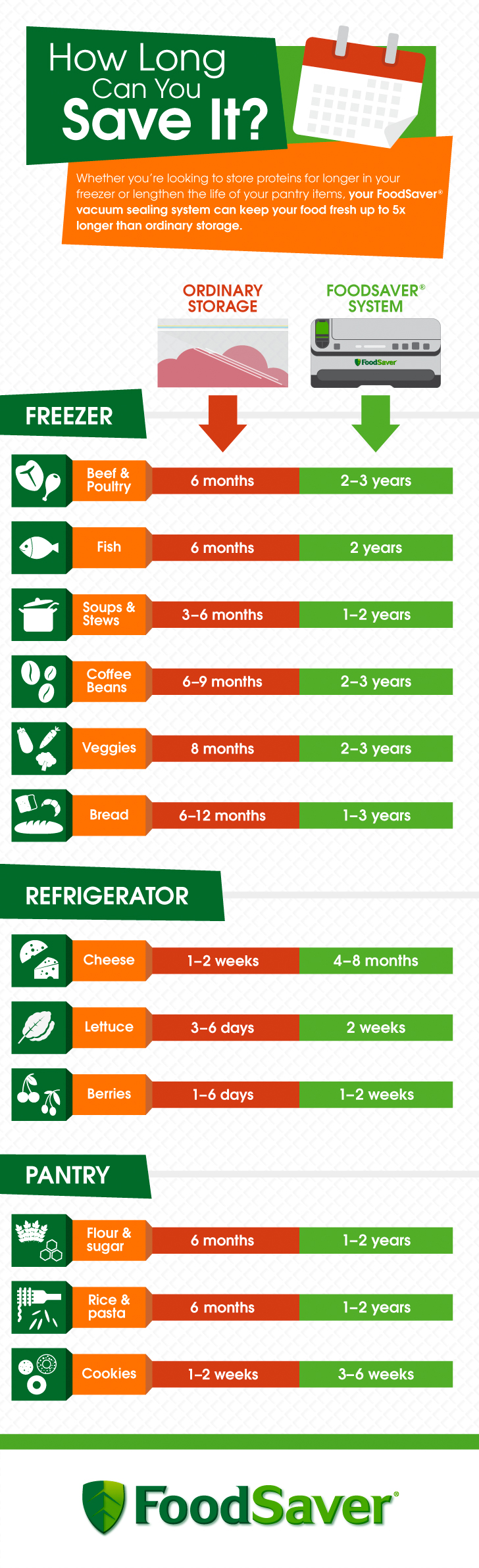
Credit: www.foodsaver.com
Real-life Examples: Vacuum Sealing Success Stories
Many home cooks and food businesses rely on vacuum sealing. Here are a few examples:
- Bulk Meat Storage: A family buys meat in bulk, vacuum seals it, and freezes. They enjoy fresh-tasting meat for up to 2 years.
- Meal Prep: Busy professionals cook meals ahead, vacuum seal, and refrigerate. Meals stay safe and tasty for a week or more.
- Garden Produce: Gardeners harvest vegetables, blanch, vacuum seal, and freeze. Produce lasts all winter.
- Snack Preservation: Nuts and dried fruit stay crunchy and pest-free for over a year.
Some small food businesses use vacuum sealing to package specialty products, like smoked salmon or gourmet cheese. This allows them to ship products far and wide without losing quality. Home bakers often vacuum seal cookies and bread to keep them fresh for weeks during gifting season.
Common Mistakes To Avoid When Vacuum Sealing Food
Even experienced users make mistakes. Avoid these to keep your food safe and fresh:
- Sealing wet foods without freezing first: Liquids can leak and ruin the seal.
- Overfilling bags: Food may block the seal, letting air in.
- Ignoring storage temperatures: Room temperature can allow bacteria to grow.
- Not labeling bags: Forgetting dates can lead to eating spoiled food.
- Vacuum sealing unsafe foods: Some foods are not safe to seal.
Another overlooked mistake is using bags that are too thin. Thin bags tear easily, especially if they rub against other packages in the freezer. Always use bags made for vacuum sealing, not regular plastic bags.
Frequently Asked Questions
How Long Does Vacuum Sealed Food Last In The Fridge?
Most vacuum sealed foods last 2-3 times longer than ordinary storage. For example, fresh meat lasts 7-14 days, cheese lasts 4-8 weeks, and cooked meals last 7-10 days. Always keep the fridge below 40°F (4°C).
Can You Vacuum Seal Food For Room Temperature Storage?
Some dry goods (rice, pasta, nuts) can be vacuum sealed and stored at room temperature for 1-2 years. But vacuum sealed moist foods must be kept cold to prevent bacteria growth.
Does Vacuum Sealing Make Food Safe From All Bacteria?
No. Vacuum sealing slows spoilage but does not kill bacteria. Some bacteria, like those causing botulism, can grow without oxygen. Always refrigerate or freeze vacuum sealed foods.
What Foods Should Never Be Vacuum Sealed?
Foods like raw garlic, onions, mushrooms, and soft cheeses should not be vacuum sealed unless frozen. These can develop harmful bacteria in low-oxygen environments.
How Do You Know If Vacuum Sealed Food Has Gone Bad?
Check the food for changes in color, smell, or texture. If the bag is bloated, the seal is broken, or the food smells off, discard it. Always follow food safety guidelines.
The Bottom Line
Vacuum sealing is one of the best ways to extend the shelf life of food. With the right techniques, you can double, triple, or even quadruple how long your groceries stay fresh. Meat, produce, cheese, cooked meals, and dry goods all benefit from this method. But remember: vacuum sealing is not a substitute for refrigeration or freezing. It slows spoilage, but does not stop it completely.
Always use high-quality bags, seal foods at their freshest, and store them properly. Avoid vacuum sealing risky foods, and check for spoilage before eating. With a few smart steps, you’ll enjoy fresher meals, save money, and reduce waste. Vacuum sealing is easy to learn, and the results speak for themselves.