Beef stew is a classic comfort food, known for its rich flavors and tender meat. Traditionally, it takes hours to make on the stove or in the oven. But with a pressure cooker, you can enjoy a deeply flavorful stew in a fraction of the time. If you’re new to pressure cooking or want to improve your beef stew, knowing the right cooking time is key. Cooking too long can make the meat mushy; too short, and it stays tough. This guide will help you get perfect results every time.
Why Use A Pressure Cooker For Beef Stew?
A pressure cooker uses steam under high pressure to cook food faster. For tough cuts of beef, like chuck roast, this method is ideal. It softens the meat quickly and helps flavors blend deeply. While slow cooking can take 2–4 hours, a pressure cooker finishes the job in 30–40 minutes. This not only saves time but also keeps more nutrients in the food.
Choosing The Best Cut Of Beef
Not all beef is the same when it comes to stew. The most recommended cuts are:
- Chuck Roast: Well-marbled, becomes tender.
- Brisket: Rich flavor, slightly more fatty.
- Round: Leaner, a bit firmer.
Avoid expensive steak cuts; they can dry out and don’t have enough connective tissue to become tender during stewing.
| Beef Cut | Texture After Cooking | Flavor |
|---|---|---|
| Chuck Roast | Very Tender | Rich, Beefy |
| Brisket | Tender, Slightly Fatty | Deep, Savory |
| Round | Firm, Less Juicy | Mild |
:max_bytes(150000):strip_icc()/5086pressure-cooker-beef-stewRenee4x3-58930b74e17343cfb3e92509d87dbb94.jpg)
Credit: www.allrecipes.com
How Long To Cook Beef Stew In Pressure Cooker
The ideal cooking time for beef stew in a pressure cooker is 30–35 minutes at high pressure. This works well for bite-sized pieces (about 1–1.5 inches). If your meat pieces are larger, you may need 5–10 minutes more.
- 30 minutes: Soft, but holds shape
- 35 minutes: Very tender, almost falling apart
For vegetables like potatoes and carrots, 8–10 minutes is enough. If you add them at the beginning, they can get too soft. It’s better to cook the beef first, then add veggies and cook for an extra 5–10 minutes.
Cooking Time Comparison
| Method | Total Time | Texture |
|---|---|---|
| Pressure Cooker | 30–40 min | Tender, Juicy |
| Stovetop | 2–3 hrs | Tender, Deeper Flavor |
| Slow Cooker | 6–8 hrs | Very Tender |
Step-by-step: Cooking Beef Stew In A Pressure Cooker
Ingredients
- 2 pounds beef chuck, cut into 1–1.5 inch cubes
- 2 tablespoons vegetable oil
- 1 large onion, chopped
- 3 cloves garlic, minced
- 3 carrots, sliced
- 3 potatoes, cut into chunks
- 2 tablespoons tomato paste
- 1 cup beef broth
- 1 cup water
- 1 teaspoon salt
- 1/2 teaspoon black pepper
- 1 teaspoon dried thyme
- 2 bay leaves
Instructions
- Brown the beef: Set your pressure cooker to sauté mode. Add oil, then the beef cubes. Brown them in batches to get a deep flavor. Remove and set aside.
- Sauté onions and garlic: In the same pot, add onions. Cook 2–3 minutes until soft. Add garlic, cook 1 minute.
- Deglaze: Add tomato paste and stir. Pour in a bit of broth to scrape brown bits from the bottom. This prevents burning.
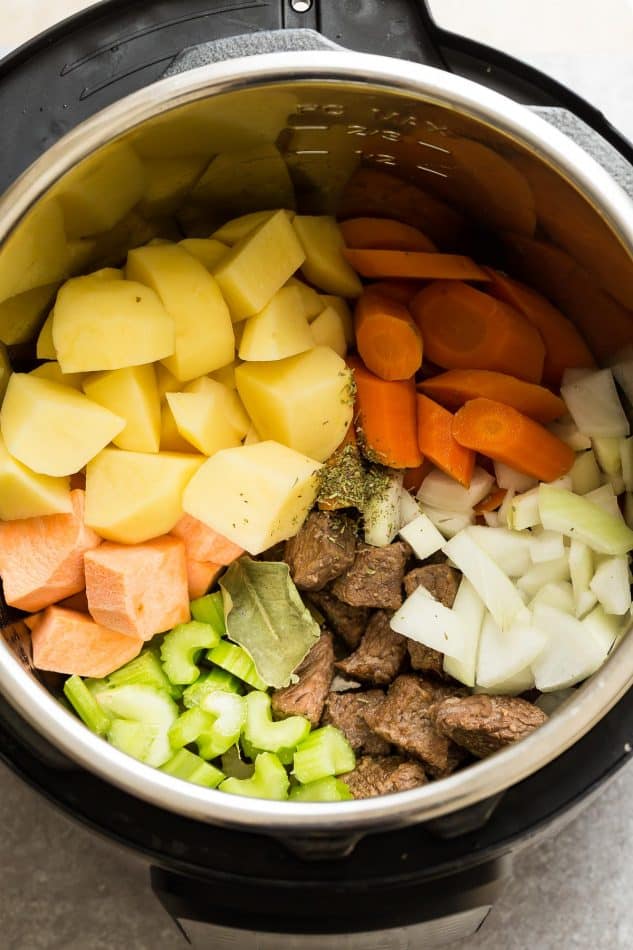
- Add remaining ingredients: Return beef to the pot. Add broth, water, salt, pepper, thyme, and bay leaves.
- Pressure cook the meat: Lock the lid. Cook at high pressure for 30 minutes.
- Quick release: Release pressure manually. Open the lid carefully.
- Add vegetables: Add carrots and potatoes. Lock the lid and cook at high pressure for 8 minutes more.
- Final release: Manually release pressure. Remove bay leaves, taste, and adjust seasoning.
Tips For The Best Results
- Cut beef evenly for uniform cooking.
- Brown the meat for extra flavor; don’t skip this.
- Layer flavors by sautéing onions and tomato paste.
- Don’t overfill the pressure cooker. Most cookers have a max fill line.
- Let stew rest for 10–15 minutes after cooking for best flavor.
Common Mistakes To Avoid
Even with a pressure cooker, some pitfalls can ruin your stew:
- Overcooking vegetables: If added at the start, they’ll turn mushy. Always add root vegetables after the meat is cooked.
- Using too much liquid: Pressure cookers need less liquid than stovetop methods since they lose almost no moisture.
- Skipping browning: Sautéing meat and onions builds flavor you can’t get later.
- Not scraping the pot: Failing to deglaze can lead to a “burn” warning on electric models.
Adjusting For Different Pressure Cookers
Every pressure cooker is a bit different. Here’s how to adjust:
- Electric (like Instant Pot): 30–35 minutes at “Manual” or “High Pressure”.
- Stovetop: Usually cooks a bit faster due to higher pressure—try 25–30 minutes.
- Older models: May need extra time if they don’t reach full pressure.
Always check your manual and do a test batch if you’re unsure.
Credit: lifemadesweeter.com
How To Thicken Beef Stew In A Pressure Cooker
Pressure cookers don’t allow evaporation, so your stew may be thinner than expected. To thicken:
- Cornstarch slurry: Mix 2 tablespoons cornstarch with 2 tablespoons cold water. Stir into hot stew and simmer (use sauté function) for 2–3 minutes.
- Mash some potatoes: After cooking, mash a few potato pieces directly in the stew for a more rustic, thicker texture.
Flavor Upgrades For Beef Stew
Want to make your stew stand out? Try these:
- Red wine: Replace half the broth with dry red wine for richer taste.
- Worcestershire sauce: Add 1 tablespoon for umami depth.
- Mushrooms: Add sliced mushrooms with the meat for earthy flavor.
- Fresh herbs: Stir in chopped parsley or thyme at the end.
Storing And Reheating Beef Stew
Beef stew tastes even better the next day. Cool leftovers quickly and store in an airtight container in the fridge for up to 4 days. To reheat, use the stove or microwave until piping hot. Add a splash of broth if it looks dry.
For longer storage, freeze in portions for up to 3 months. Thaw overnight in the fridge before reheating.
Sample Cooking Schedule For Busy Days
If you want to serve beef stew for dinner after work, here’s a simple plan:
- Morning: Chop veggies, cube beef, and measure seasonings.
- Evening: Sauté, pressure cook beef, add veggies, and finish. Total active time: 15 minutes, total cook time: about 45 minutes.
Real-world Examples
Many home cooks share their results online. For example, a busy parent in New York uses an Instant Pot to make beef stew in under an hour, reporting that her family can’t tell the difference from slow-cooked. Another home chef in Texas tried both 25 and 40 minutes; at 25, the meat was still a bit chewy, but at 40, it was “fork-tender.
”
Nutritional Benefits
Pressure cooking locks in vitamins and minerals that can be lost with longer cooking. According to a study by the Journal of Food Science, pressure-cooked beef retains more B vitamins and iron than boiled or roasted meat.
:max_bytes(150000):strip_icc()/__opt__aboutcom__coeus__resources__content_migration__serious_eats__seriouseats.com__recipes__images__2016__10__20161017-pressure-cooker-American-beef-stew-13-8388620dfb46491ba4f669813545700b.jpg)
Credit: www.seriouseats.com
Additional Resources
Want to learn more about pressure cookers and beef stew? Check out Serious Eats’ complete guide for deep-dive tips and scientific explanations.
Frequently Asked Questions
How Do I Know When The Beef Is Done?
Beef is done when it’s fork-tender. If you can easily break a cube with a fork, it’s ready. If not, cook for an extra 5–10 minutes.
Can I Cook Frozen Beef In A Pressure Cooker?
Yes, you can, but you’ll need to add 10 extra minutes to the cooking time. Sautéing won’t be possible, but the stew will still be tasty.
Why Is My Stew Watery?
Pressure cookers don’t reduce liquid like a pot on the stove. Use less broth or thicken with a cornstarch slurry after cooking if you prefer a thicker texture.
Can I Add Wine To The Recipe?
Absolutely. Replace some broth with dry red wine for extra depth. It’s a common upgrade and safe for pressure cooking.
What Is The Best Way To Store Leftovers?
Cool stew quickly, then store in sealed containers. It keeps in the fridge for 3–4 days or freezer for up to 3 months. Reheat well before serving.
A good beef stew in a pressure cooker is all about timing, the right cut of meat, and adding vegetables at the right stage. Once you’ve made it a few times, you’ll find your own favorite tweaks. With this guide, you’re ready to make a stew that’s not just quick, but also rich, hearty, and full of flavor—perfect for any night of the week.