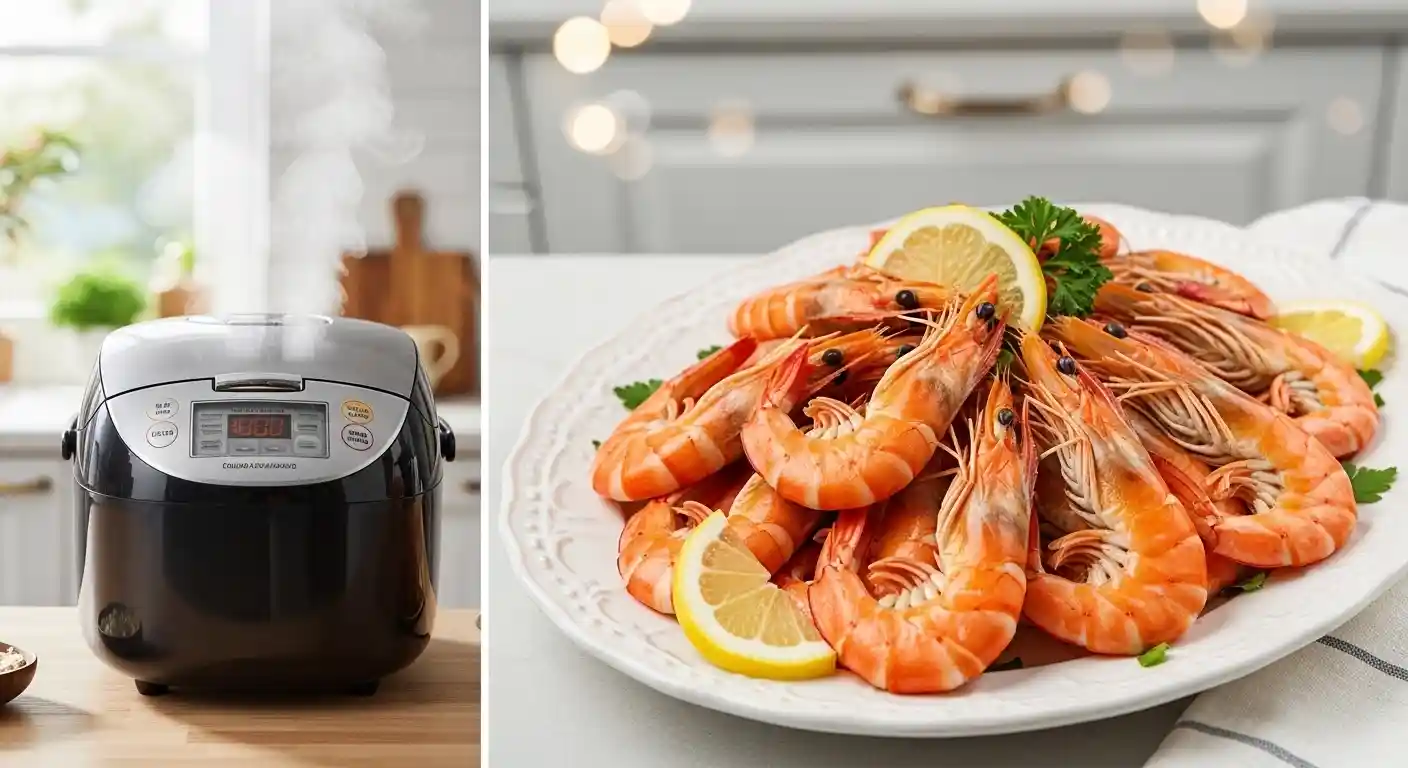
Figuring out exactly how long to steam shrimp in a rice cooker can be a bit tricky for new cooks. You want perfectly cooked shrimp, not rubbery ones! This guide will make it super simple.
We’ll walk through every step so you can get delicious, tender shrimp every time. Get ready to learn the easy way to get this done right.
Key Takeaways
- You can easily steam shrimp in your rice cooker.
- Shrimp cooks very fast.
- The steaming time depends on shrimp size.
- You will learn the simple steps to get it right.
- This method is quick and hassle-free.
Steaming Shrimp in Your Rice Cooker A Simple Guide
Many people love shrimp for its taste and how fast it cooks. Using a rice cooker to steam shrimp is a clever way to get them ready without extra pots or pans. It keeps things simple, especially if you are already using your rice cooker for rice.
But the main question many ask is: how long to steam shrimp in rice cooker? It’s a common question because shrimp can go from perfect to overcooked very quickly. This guide will clear up any confusion and show you just how easy it is.
Why Use a Rice Cooker for Steaming Shrimp
A rice cooker is more than just for rice. It’s a versatile appliance that can steam many foods. When it comes to shrimp, a rice cooker offers a controlled environment.
The steam inside the cooker cooks the shrimp gently and evenly. This prevents hot spots that can happen when pan-frying or boiling. It’s also a hands-off method.
Once you set it up, you don’t need to watch it constantly, unlike cooking on the stovetop.
The Science Behind Steaming Shrimp
Shrimp are delicate seafood. They cook through a process called denaturation. Heat causes the proteins in the shrimp to change shape and become firm.
This is what turns shrimp from translucent and gray to opaque and pink. The goal is to reach this perfect state without going too far. Overcooking makes the proteins tighten too much, squeezing out moisture and resulting in a tough, rubbery texture.
Steaming, especially in a rice cooker, uses moist heat that is gentle and efficient.
Factors Affecting Shrimp Cooking Time
The biggest factor influencing how long to steam shrimp in rice cooker is the size of the shrimp. Smaller shrimp cook much faster than larger ones. You can usually find shrimp sized by count per pound, like 31/40 (smaller) or 16/20 (larger).
Another factor is whether the shrimp are fresh or frozen. If using frozen shrimp, make sure they are fully thawed before steaming. Partially frozen shrimp will take longer to cook.
Shrimp Size Chart for Steaming
Here is a general guide to help you determine the steaming time based on shrimp size. These times are approximate and assume the rice cooker is already steaming.
| Shrimp Size (approx. count per pound) | Steaming Time (minutes) |
|---|---|
| Jumbo (16/20) | 4-6 |
| Extra Large (21/25) | 3-5 |
| Large (31/40) | 2-4 |
| Medium (41/50) | 2-3 |
Preparing Your Rice Cooker for Steaming Shrimp
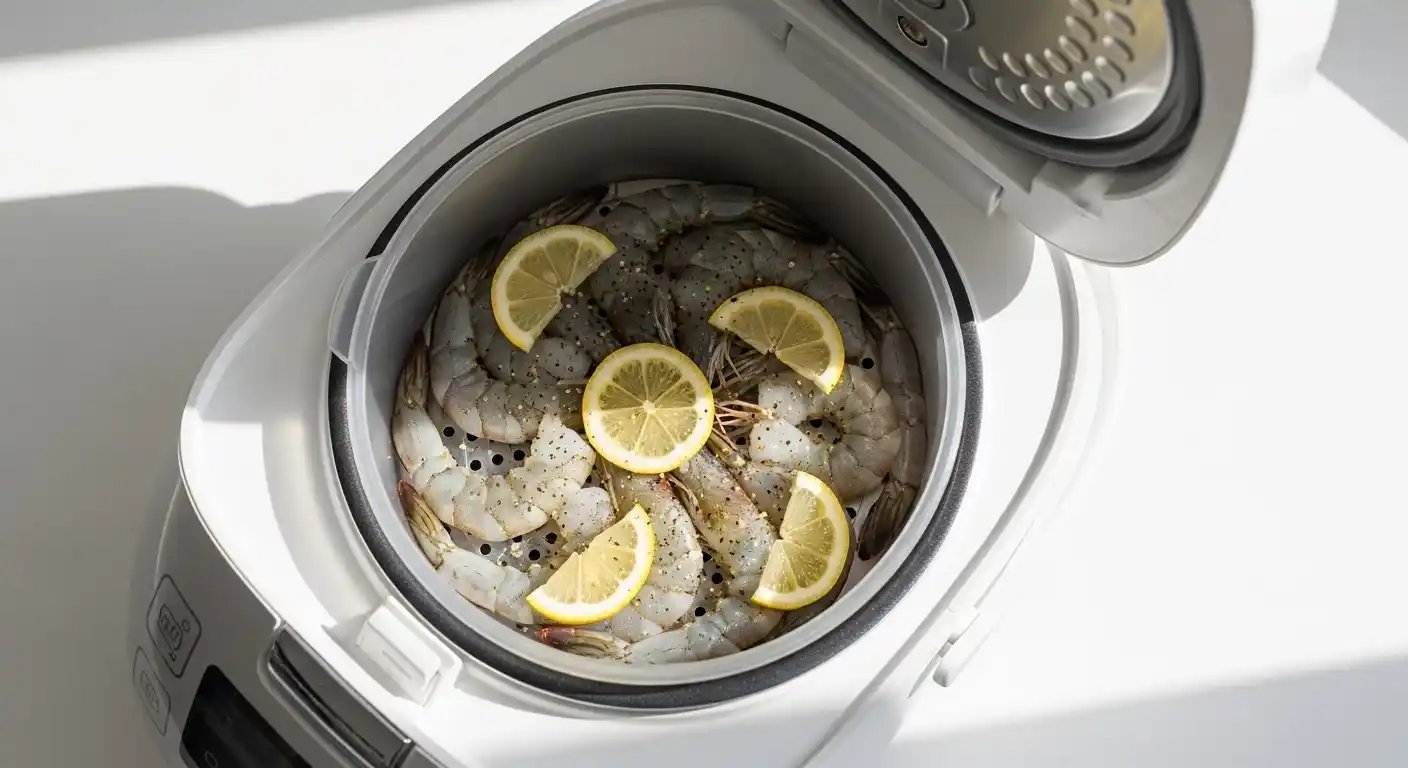
Using your rice cooker for steaming shrimp is straightforward. You’ll need a steamer basket or a heat-safe dish that fits inside your rice cooker pot. Make sure there’s enough water in the rice cooker pot to create steam but not so much that it touches the steamer basket or dish.
Step-by-Step Steaming Process
- Add water to your rice cooker pot. A good starting point is to fill it to the “steam” line or about 1-2 cups of water.
- Place your steamer basket or heat-safe dish into the rice cooker pot. Ensure the water does not touch the bottom of the basket or dish.
- Arrange your seasoned or unseasoned shrimp in a single layer on the steamer basket or in the dish. Avoid overcrowding the basket.
- Close the rice cooker lid securely.
- Select the “steam” function on your rice cooker. If your cooker doesn’t have a specific steam setting, the “white rice” or “cook” setting can also work. Let it preheat for a few minutes until steam starts to build.
- Once steam is actively coming from the vent, start timing your shrimp. Refer to the shrimp size chart for approximate times.
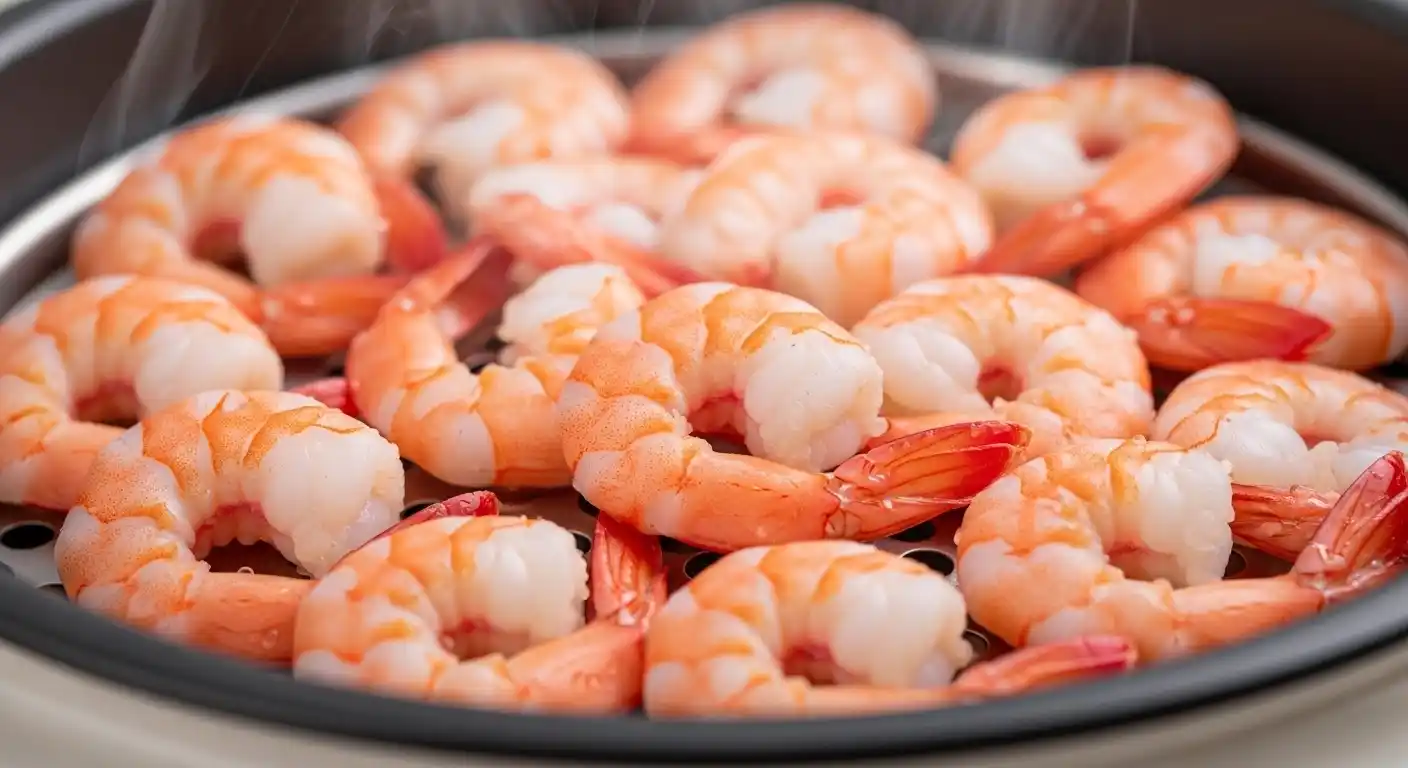
- Check the shrimp for doneness. They are ready when they turn pink and opaque, and the tail curls into a C shape. If they still have a gray or translucent appearance, steam for another minute or two.
- Carefully remove the steamer basket or dish from the rice cooker.
How Long to Steam Shrimp in Rice Cooker for Perfect Results
The core of the question is how long to steam shrimp in rice cooker. As the chart shows, it’s usually a very short time, often between 2 to 6 minutes. The key is to watch for the visual cues: the color change from gray to pink and the shape of the shrimp’s curl.
For medium to large shrimp, 3-5 minutes is a good range to start with. Jumbo shrimp might take a minute or two longer. It’s always better to check them a minute early and add more time if needed, rather than overcooking them.
Tips for Perfectly Steamed Shrimp
Seasoning your shrimp before steaming adds a lot of flavor. You can toss them with a little salt, pepper, garlic powder, or even some lemon zest. For an extra layer of flavor, add a few sprigs of fresh herbs like dill or parsley to the steamer basket with the shrimp.
Don’t forget to thaw frozen shrimp completely before steaming for even cooking. If you are steaming a large batch, it’s better to do it in two smaller batches to ensure they are not overcrowded, which can lead to uneven steaming.
Common Mistakes to Avoid
The most common mistake is overcooking. Because shrimp cook so fast, it’s easy to leave them in too long, especially if you’re unsure of the exact time. Another mistake is not thawing frozen shrimp properly, which leads to uneven cooking.
Overcrowding the steamer basket is also a problem. It prevents the steam from circulating properly, meaning some shrimp might be cooked while others are still raw.
Troubleshooting Steamed Shrimp
If your shrimp turn out rubbery, you likely overcooked them. Next time, reduce the steaming time by a minute or two. If they are still gray and not fully cooked, you know you need a bit more time.
Pay close attention to the color and curl. Some rice cookers have a “keep warm” function that might continue to cook them slightly after the cycle finishes, so be mindful of that.
Using Your Steamed Shrimp
Steamed shrimp are incredibly versatile. You can add them to salads, pasta dishes, stir-fries, or serve them as a simple appetizer with cocktail sauce. They are delicious in shrimp scampi or as a topping for tacos.
Their mild flavor makes them a great addition to almost any meal.
Frequently Asked Questions
Question: Do I need a special steamer basket for my rice cooker?
Answer: Not necessarily. Many rice cookers come with a steamer basket. If yours doesn’t, you can use a heat-safe metal or silicone steamer insert, or even a heat-safe bowl that fits inside the rice cooker pot, as long as it doesn’t touch the water.
Question: Can I steam shrimp directly in the rice cooker pot?
Answer: It is best to use a steamer basket or a heat-safe dish. This keeps the shrimp out of the water, ensuring they steam properly rather than boil. Boiling can affect the texture and flavor.
Question: What kind of water should I use in the rice cooker?
Answer: Plain tap water is perfectly fine for steaming shrimp. Some people like to add a pinch of salt or a slice of lemon to the water for a subtle flavor infusion, but it’s not required.
Question: How can I tell if my shrimp are fully cooked?
Answer: Cooked shrimp will turn pink and opaque. They will also curl into a ‘C’ shape. If they are still gray or translucent, they need more time.
If they curl into a tight ‘O’ shape, they might be overcooked.
Question: What if my rice cooker doesn’t have a “steam” setting?
Answer: If your rice cooker lacks a dedicated steam setting, you can typically use the “cook” or “white rice” setting. Just start timing the shrimp once you see steam actively escaping from the cooker lid.
Final Thoughts
You now know how long to steam shrimp in your rice cooker. It’s a quick process, usually just a few minutes. Watch for the shrimp to turn pink and curl.
This simple method guarantees delicious results every time.

Hi, I’m Raju Dey — a food lover with a degree in Culinary Arts from El Centro College. I’ve spent 4+ years testing air fryers, blenders, and other kitchen tools in real home kitchens. At KitchenWink.com, I share honest tips and reviews to help you cook smarter. My goal is to give you advice you can trust — based on hands-on experience, not hype.