Steaming vegetables in a pressure cooker is fast, easy, and keeps nutrients intact. Many home cooks want to know exactly how long to steam vegetables in a pressure cooker—but it’s not always clear. If you get the timing wrong, your veggies can turn mushy or remain undercooked. This article gives you clear answers, practical tips, and real examples so you can steam vegetables perfectly every time.
Why Pressure Cookers Are Great For Steaming
Pressure cookers use steam under high pressure to cook food quickly. Compared to boiling or regular steaming, pressure cooking saves time and preserves more vitamins. For busy people, this method is a game changer. Most vegetables can be steamed in a pressure cooker in just 1–7 minutes, depending on the type and size.
But timing is crucial. Even a minute too long can ruin the texture. Below, you’ll find detailed timings, practical advice, and the science behind steaming vegetables with pressure.
How Pressure Cooker Steaming Works
A pressure cooker traps steam, which raises the temperature above boiling point. This high heat softens vegetables much faster than traditional methods. Here’s what happens:
- Water boils inside, creating steam.
- The steam builds pressure and cooks food quickly.
- Vegetables stay above the water, so they don’t get soggy.
Steaming in a pressure cooker is ideal for people who want healthy meals without long waits. Plus, you use less water, which means less nutrient loss.
Basic Steps For Steaming Vegetables In A Pressure Cooker
If you’re new to pressure cooking, here’s a simple process:
- Add 1–2 cups of water to the cooker.
- Place a steamer basket or rack inside.
- Add vegetables to the basket.
- Seal the lid and set to high pressure.
- Start timing as soon as pressure is reached.
- Use quick release for most vegetables to avoid overcooking.
Most recipes recommend using high pressure for steaming vegetables. Always check your cooker’s manual for specific instructions.
Exact Steaming Times For Popular Vegetables
Knowing the right steaming time is the secret to perfect veggies. Different vegetables need different times. Here’s a quick guide:
| Vegetable | Pressure Cooker Steaming Time | Notes |
|---|---|---|
| Broccoli florets | 1–2 minutes | Quick release, avoid overcooking |
| Carrots (sliced) | 2–3 minutes | Thicker slices may need 4 min |
| Cauliflower | 2–3 minutes | Quick release for best texture |
| Green beans | 2–3 minutes | Cut ends off for even cooking |
| Potatoes (cubed) | 5–7 minutes | Smaller cubes cook faster |
| Spinach | 1 minute | Very fast, use quick release |
| Sweet corn (on cob) | 3–4 minutes | Rotate halfway for even cooking |
| Peas | 1–2 minutes | Fresh peas cook faster than frozen |
| Brussels sprouts | 3–4 minutes | Cut in half for best results |
| Asparagus | 1–2 minutes | Thicker stalks need extra time |
These times are for high pressure. Always use quick release (release steam immediately) unless otherwise noted. Delayed release can make vegetables too soft.
Factors That Change Steaming Time
Steaming time is not always fixed. Here are the main things that affect how long vegetables take in a pressure cooker:
- Vegetable size: Small pieces cook faster. Whole potatoes need more time than cubes.
- Freshness: Fresh vegetables usually cook faster than frozen ones.
- Amount: A crowded basket needs a bit more time.
- Altitude: High altitude may require longer cooking due to lower pressure.
- Pressure cooker model: Electric and stovetop cookers can differ by 1–2 minutes.
For best results, cut vegetables evenly. If you mix different types, start with those that need more time and add the faster-cooking ones later.
Pressure Cooker Vs. Other Steaming Methods
How does pressure cooker steaming compare to other ways? Here’s a quick look:
| Method | Avg. Time (Broccoli) | Nutrient Retention | Water Usage |
|---|---|---|---|
| Pressure cooker | 1–2 minutes | Very high | Low (1–2 cups) |
| Traditional steaming | 5–7 minutes | High | Moderate |
| Boiling | 8–10 minutes | Lower | High |
| Microwave steaming | 2–4 minutes | Varies | Very low |
Pressure cookers win in speed and vitamin retention. Boiling causes more nutrients to escape into the water.
Practical Tips For Perfect Steamed Vegetables
Steaming vegetables in a pressure cooker is easy, but a few tips help you get it right every time:
- Don’t overfill: Leave space for steam to circulate.
- Layer smartly: Put harder veggies at the bottom, softer ones on top.
- Cut evenly: Uniform pieces cook evenly.
- Use quick release: This stops cooking instantly and keeps veggies crisp.
- Flavor boost: Add salt, herbs, or spices to the water for subtle flavor.
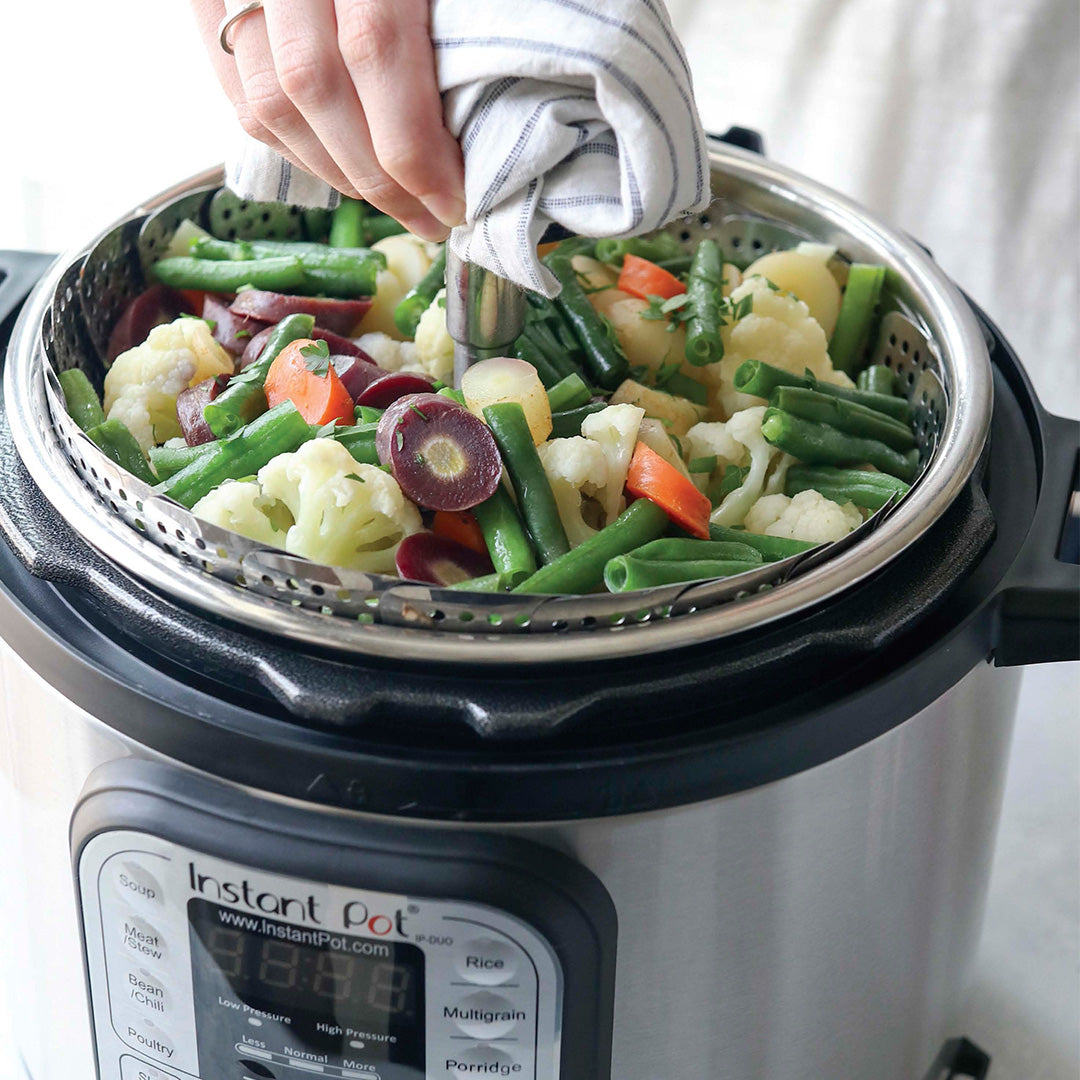
One insight many beginners miss: the steam basket should not touch the water. If your basket sits low, use a small rack to lift it. This prevents soaking and keeps vegetables dry and firm.
Credit: instantpot.com
Common Mistakes To Avoid
Even experienced cooks make errors with pressure cooker steaming. Watch out for these:
- Cooking too long: Even one extra minute can turn crisp veggies mushy.
- Slow release: Using natural release lets vegetables cook longer and can ruin texture.
- Wrong water amount: Too little water can burn the pot, too much can slow steaming.
- Mixing vegetables incorrectly: Different vegetables need different times. Don’t mix unless you can add in stages.
- Skipping the basket: Putting veggies directly in water leads to boiling, not steaming.
A surprising mistake is forgetting to check the pressure indicator. If pressure isn’t fully reached, your veggies may be undercooked.
How To Steam Mixed Vegetables Together
Steaming mixed vegetables can be tricky because they cook at different rates. Here’s a practical method:
- Start with vegetables that need longer, like potatoes or carrots.
- After 2–3 minutes, pause and add quick-cooking veggies like broccoli and peas.
- Resume pressure cooking for the remaining time.
Some electric cookers allow you to pause, open carefully, and add more vegetables. With stovetop cookers, use a steamer basket with sections to separate types.
For stir-fry mixes, aim for 2–3 minutes total. For soup mixes, cut all pieces to the same size for even cooking.
Steaming Frozen Vegetables
Frozen vegetables are convenient but need slightly different handling. Here’s what to know:
- Add 1 extra minute to steaming time.
- Don’t thaw before steaming—this can make them mushy.
- Use quick release to avoid overcooking.
Example: Frozen broccoli florets need 2–3 minutes at high pressure.
Steaming frozen vegetables keeps color and flavor better than microwaving.
Nutritional Benefits Of Steaming In Pressure Cooker
Pressure cooker steaming is one of the healthiest ways to cook vegetables. Studies show:
- Up to 90% of vitamin C and other nutrients stay in the food.
- Less water means fewer vitamins lost.
- Shorter cooking times protect antioxidants.
A study by the USDA found that pressure cooking preserved more nutrients than boiling or microwaving. This is especially true for leafy greens and cruciferous vegetables.
If you care about health, pressure cooker steaming is a smart choice.
Pressure Cooker Accessories For Steaming
You can improve your results with the right accessories:
- Steamer basket: Holds vegetables above water.
- Trivet: Raises the basket for better steam flow.
- Stackable baskets: Steam different veggies separately.
Some brands sell baskets with silicone handles, which are safer and easier to remove.
If you don’t have a basket, use a small metal colander. It works just as well.
Real-life Example: Perfect Steamed Broccoli
Let’s walk through steaming broccoli florets:
- Pour 1 cup water into the pressure cooker.
- Place the steamer basket and add broccoli florets.
- Seal the lid and set to high pressure.
- Cook for 1 minute.
- Use quick release.
- Remove broccoli, season, and serve.
Broccoli comes out bright green, crisp, and full of flavor. If you want softer broccoli, increase the time to 2 minutes.

Credit: www.graciousvegan.com
Data: Average Cooking Times For Common Pressure Cooker Brands
Pressure cookers can vary. Here’s a comparison of popular brands:
| Brand | Broccoli | Carrots | Potatoes | Notes |
|---|---|---|---|---|
| Instant Pot | 1 minute | 2 minutes | 5 minutes | Electric, easy quick release |
| Prestige | 1–2 minutes | 3 minutes | 6 minutes | Stovetop, slightly hotter |
| Crock-Pot Express | 2 minutes | 3 minutes | 7 minutes | Electric, slower pressure build |
Always check your manual for brand-specific advice. Some cookers build pressure faster, which saves time.
Safety Tips For Pressure Cooker Steaming
Safety is important. Here are key points:
- Never open the cooker before releasing pressure.
- Don’t overfill: Follow your cooker’s max fill line.
- Keep hands away from steam vent: Hot steam can burn.
- Check seals and valves: Faulty parts can cause leaks.
Regular maintenance keeps your cooker safe and reliable. Always use recommended accessories.
Frequently Asked Questions
How Much Water Should I Use For Steaming Vegetables?
Most pressure cookers need 1–2 cups of water for steaming. Enough water is necessary to generate steam, but don’t use too much or it can slow cooking.
Can I Steam Vegetables Without A Basket?
Yes, but the results are not as good. Without a basket, vegetables sit in water and boil instead of steam. If you don’t have a basket, use a small colander or trivet to lift vegetables above water.
What Is The Best Way To Prevent Overcooking?
Use quick release as soon as cooking time ends. This stops the cooking process instantly. Also, cut vegetables evenly and follow recommended times closely.
Are Steamed Vegetables Healthier In A Pressure Cooker?
Yes. Steaming in a pressure cooker keeps more nutrients, especially vitamin C and antioxidants. Less water and shorter cooking times help preserve health benefits.
Can I Add Seasoning To Vegetables Before Steaming?
You can sprinkle salt, herbs, or spices directly on vegetables or add them to the water. The steam spreads flavors gently, but avoid heavy sauces until after steaming.
Steaming vegetables in a pressure cooker is simple, fast, and healthy. With the right timing and tools, you’ll get crisp, flavorful veggies every time. For more detailed guidance, check the Food Network’s pressure cooker guide.
Pressure cookers are now common in kitchens around the world. Learning the exact steaming times and practical methods makes cooking easier and healthier. Try these tips, avoid common mistakes, and enjoy perfect vegetables in minutes.