How Much Electricity Does An Ice Maker Use
Ice makers are found everywhere today—in home kitchens, restaurants, offices, and even on boats. Many people enjoy the convenience of always having ice ready for drinks, parties, or cooling food. But as energy costs rise and more people care about the environment, one question becomes important: how much electricity does an ice maker use? Understanding this can help you control your energy bills and make better choices when buying or using an ice maker.
If you have ever noticed a higher electricity bill during summer or after buying a new kitchen appliance, your ice maker might be a small but steady contributor. While it may seem like a simple machine, the way it works, how often it runs, and the type of ice it makes all affect its power use.
In this article, you’ll find clear answers, real numbers, and practical tips about ice maker electricity usage—whether you have a built-in, portable, or commercial unit.
How Ice Makers Work And Why It Matters
To truly understand ice maker electricity usage, it helps to know how these machines operate. At their core, all ice makers have a few key parts:
- Compressor: Cools the refrigerant that freezes water into ice.
- Water pump: Moves water into the ice mold or tray.
- Heater or ejector: Loosens ice cubes from the mold.
- Fan: Cools the system and helps with freezing.
Each of these parts draws electricity. When you start an ice maker, the compressor uses the most power. After the initial freezing, keeping the machine cold and ejecting ice uses less power but still adds up over hours and days. The more ice you ask for, the more often the system runs.
Home ice makers typically cycle on and off during the day, making new ice as needed. Commercial units or under-counter models may run almost non-stop, especially in busy places like restaurants.
Typical Electricity Usage: By Ice Maker Type
Not all ice makers are equal. The amount of electricity they use depends on their size, style, and how much ice they produce. Here’s what you can expect from different types.
Built-in (refrigerator) Ice Makers
Many modern refrigerators come with a built-in ice maker. These are usually less powerful than standalone machines.
- Power rating: Around 100-250 watts during operation.
- Average daily use: Most units run for about 4-10 hours per day (not constantly, but in cycles).
- Estimated monthly consumption: 25-50 kWh (kilowatt-hours) per month, depending on usage and ice demand.
If your refrigerator is Energy Star certified, it may use less. However, older models or units with poor insulation can be much less efficient.
Portable Countertop Ice Makers
These small machines are popular for home parties, RV trips, or offices. They plug into standard outlets and are easy to move.
- Power rating: 120-180 watts when running.
- Ice production: 20-30 pounds per day (maximum).
- Estimated daily consumption: 1-2 kWh per day (if running all day).
- Monthly estimate: 30-60 kWh if used every day.
Portable models are less insulated and often run longer, so they can use more electricity per pound of ice than a built-in unit.
Undercounter And Commercial Ice Makers
Larger models designed for high ice demand—like in restaurants or hotels—use much more energy.
- Power rating: 350-1200 watts depending on size.
- Ice output: 50-500+ pounds per day.
- Estimated daily consumption: 5-20+ kWh per day.
- Monthly estimate: 150-600 kWh or more.
Some commercial ice makers are air-cooled, while others use water cooling (which can affect energy use and water bills).
Here’s a quick comparison of average electricity use by type:
| Ice Maker Type | Power (Watts) | Ice Output (lbs/day) | Monthly Electricity (kWh) |
|---|---|---|---|
| Built-in Refrigerator | 100-250 | 3-10 | 25-50 |
| Portable Countertop | 120-180 | 20-30 | 30-60 |
| Commercial Undercounter | 350-1200 | 50-500+ | 150-600+ |

Credit: gevi.com
How To Calculate Your Ice Maker’s Electricity Cost
To know how much your ice maker is costing you, you need to know two things:
- How many kilowatt-hours (kWh) it uses
- Your electricity rate (cost per kWh)
Here’s a simple way to estimate:
- Find the power rating of your ice maker (in watts). This is usually on a label or in the manual.
- Estimate daily hours of use. Remember, ice makers cycle on/off.
- Calculate daily kWh: (Watts × Hours) ÷ 1000 = kWh per day
- Monthly use: Multiply daily kWh by 30.
- Cost: Multiply total monthly kWh by your local rate (usually $0.10 to $0.30 in the US).
Example Calculation
Suppose you have a portable ice maker rated at 150 watts, and it runs for 8 hours a day.
- Daily kWh: (150 × 8) ÷ 1000 = 1.2 kWh
- Monthly: 1.2 × 30 = 36 kWh
- If your rate is $0.15/kWh: 36 × $0.15 = $5.40 per month
This may seem small, but if you use several machines or have a commercial unit, costs grow quickly.
Factors That Affect Ice Maker Electricity Use
Not all ice makers use the same amount of electricity, even among similar models. Here are key things that can increase or decrease usage:
1. Room Temperature
Hotter rooms make ice makers work harder. In a hot kitchen or restaurant, the compressor runs more often and longer.
2. Frequency Of Use
The more often you open the ice bin or use ice, the more the machine works to refill it. Machines that run all day use more energy than those used just a few hours.
3. Model Age And Efficiency
Older machines are usually less efficient. Newer models with Energy Star or similar ratings use less power to make the same amount of ice.
4. Ice Size And Shape
Making larger or denser ice cubes can use more energy, as they take longer to freeze. Some machines let you choose cube size—smaller cubes freeze faster and may use less power per batch.
5. Maintenance
A dirty or poorly maintained ice maker uses more power. Dust on coils, scale buildup, or blocked fans force the compressor to work harder.
6. Insulation Quality
Better-insulated machines hold cold air longer, reducing the need to cycle on and off. Thin or poor insulation leads to more frequent running and higher power use.
7. Ambient Humidity
High humidity can cause more frost or ice to form on coils, making the machine less efficient. It also slows down freezing.
Comparing Ice Makers To Other Appliances
It helps to see how ice makers compare with other common kitchen appliances in electricity use.
| Appliance | Average Power (Watts) | Estimated Monthly kWh |
|---|---|---|
| Refrigerator (modern) | 100-250 | 30-60 |
| Dishwasher | 1200-1500 | 15-30 |
| Microwave | 800-1200 | 10-20 |
| Ice Maker (portable) | 120-180 | 30-60 |
| Commercial Ice Maker | 350-1200 | 150-600+ |
You’ll notice that a home ice maker uses about the same electricity as a modern fridge, but much less than a dishwasher or oven. However, commercial ice makers can be among the biggest energy users in a kitchen.
Tips To Reduce Ice Maker Electricity Consumption
If you want to save energy (and money), here are practical ways to cut your ice maker’s electricity use:
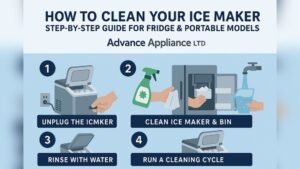
- Clean regularly: Dust and mineral buildup force the machine to run longer. Clean the coils and the inside at least every 3-6 months.
- Choose the right size: Don’t buy a bigger ice maker than you need. Oversized machines use more energy.
- Keep it in a cool place: Away from ovens, sunlight, and other heat sources.
- Use energy-saving modes: Some newer models have eco or sleep modes.
- Turn it off when not needed: For portable units, unplug if you don’t need ice for a few days.
- Maintain good ventilation: Ensure air can flow around the machine, especially for undercounter types.
- Check for leaks or broken seals: Warm air entering the ice compartment increases energy use.
- Set proper ice thickness: Thicker ice takes longer and more energy to freeze. If your needs allow, choose thinner cubes.
A less obvious tip: If you often find leftover, unused ice melting in the bin, your machine may be running more than necessary. Adjust your usage habits or production settings to match real demand.
Real-world Example: Home Vs. Commercial Use
Let’s look at two scenarios.
Home Kitchen
A typical family with a refrigerator ice maker might use about 30 kWh per month for ice. That’s about $4-6 monthly in most areas. Running a portable unit full-time might double this, so only use it when needed.
Restaurant
A small café with a commercial ice maker that produces 100 pounds daily could use 250 kWh or more per month—costing $30-50 monthly, sometimes much higher with older machines or hot kitchens.
Over a year, that adds up. For businesses, choosing an efficient ice maker can save hundreds of dollars and reduce environmental impact.
How Energy Star And Efficiency Labels Help
The Energy Star program rates appliances for energy efficiency. If you’re buying a new ice maker, look for the Energy Star label. These models can use up to 15% less energy and 10% less water than standard models, according to the U.S. Department of Energy.
Besides Energy Star, check for other regional or national efficiency programs. Some utility companies offer rebates for buying efficient appliances.
For more details, visit the official Energy Star Ice Makers page.

Credit: www.euhomy.com
Is Making Ice In Trays More Efficient?
Some people wonder if making ice with simple plastic trays in the freezer uses less electricity. The answer: usually, yes. Ice trays use the existing freezer, so no extra compressor or heater is needed. However, if you open the freezer door often to get ice, it can cause the freezer to work harder.
If you need only a little ice and have patience, trays are the most energy-efficient option. For high demand, an efficient ice maker is better than overworking your freezer.
Common Mistakes That Waste Energy
- Ignoring maintenance: Failing to clean or descale the ice maker increases power use.
- Overfilling: Trying to make more ice than the machine’s capacity wastes energy and may damage it.
- Wrong placement: Putting the machine in a hot or poorly ventilated area.
- Letting ice melt in the bin: If you make more ice than needed, the machine works harder to keep it cold.

Credit: smud.bizenergyadvisor.com
Frequently Asked Questions
How Much Does It Cost To Run An Ice Maker Every Month?
Most home ice makers use between $3 and $7 per month in electricity if used regularly. Commercial units can cost $30 or more monthly. Your exact cost depends on local electricity rates and usage.
Does Leaving The Ice Maker On All The Time Use A Lot Of Power?
It can. If you don’t need ice all day, turning off a portable unit saves energy. Built-in ice makers cycle on and off, so they use less power when the bin is full.
Are Newer Ice Makers More Energy Efficient?
Yes. Modern ice makers with Energy Star or similar ratings use less electricity per pound of ice. They also often use less water.
Is It Cheaper To Buy Ice Or Make It At Home?
If you use a small amount, making ice at home is cheaper. Buying bags of ice for daily use can be expensive over time. For high demand, an efficient ice maker is the best value.
How Can I Measure My Ice Maker’s Real Electricity Use?
You can use a plug-in power meter to track the actual kWh used. Plug your ice maker into the meter, and check the reading after a day or week to see real-world usage.
Having an ice maker is convenient, but understanding its electricity use helps you save money and energy. By choosing the right type, maintaining it well, and using it smartly, you can enjoy cold drinks without a shock on your power bill.