Cleaning a cake pan may seem simple, but if you love baking, you know there’s more to it. Cake pans often get sticky residue, burnt spots, or greasy layers after baking. If not cleaned well, old crumbs and oil can affect your next cake’s flavor and shape.
Cleaning right also helps your pans last longer and keeps them looking new. Whether you have metal, glass, or nonstick pans, learning proper cleaning methods will save time, reduce waste, and make baking more enjoyable.
This guide will cover step-by-step cleaning for different cake pans, tips for tough stains, and how to prevent common mistakes. By the end, you’ll know how to clean your cake pan quickly and safely—so every cake comes out perfect.
Understanding Your Cake Pan
Before cleaning, it’s important to know which type of cake pan you have. Each material needs a different approach.
Types Of Cake Pans
- Aluminum: Lightweight, heats evenly, but can react to acidic foods.
- Nonstick: Easy release, but coatings are delicate.
- Glass: Good for seeing browning, but needs gentle cleaning.
- Silicone: Flexible and easy to clean, but can hold odors.
Why Material Matters
For example, scrubbing aluminum with harsh pads can cause scratches. Using abrasive cleaners on nonstick pans can damage the coating, making cakes stick in the future. Glass pans can crack if exposed to sudden temperature changes, while silicone pans can absorb smells if not washed thoroughly.
Essential Tools And Supplies
You don’t need expensive tools. Most cleaning supplies are found at home:
- Mild dish soap
- Soft sponge or dishcloth
- Plastic or silicone scraper
- Baking soda
- White vinegar
- Paper towels or clean cloth
- Warm water
- Non-abrasive brush
Avoid steel wool or harsh scouring pads unless your pan is stainless steel and has serious buildup.
Step-by-step Cleaning For Common Cake Pans
Let’s break down the cleaning process for each type of pan.
Cleaning Aluminum Cake Pans
- Let the pan cool to room temperature.
- Fill with warm water and add a few drops of mild dish soap.
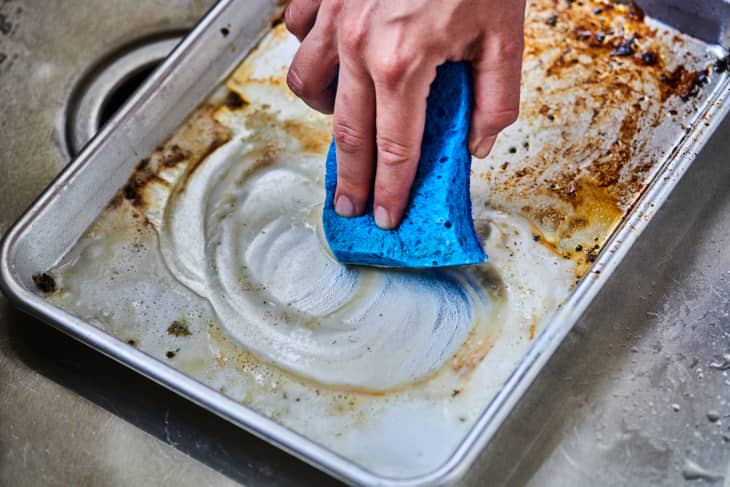
- Use a soft sponge to wipe away crumbs and oil.
- For stuck-on bits, sprinkle baking soda and gently scrub.
- Rinse thoroughly and dry with a towel.
Avoid soaking aluminum pans for hours, as it can lead to discoloration or pitting.
Cleaning Nonstick Cake Pans
- Cool the pan completely.
- Wash with warm water and mild soap.
- Use only soft sponges; never use abrasive pads.
- Remove sticky spots by soaking in soapy water for 10–15 minutes.
- Rinse and dry with a soft cloth.
Never use metal tools that can scratch the nonstick coating.
Cleaning Glass Cake Pans
- Remove leftover cake and let the pan cool.
- Wash with warm, soapy water.
- For burnt-on stains, make a paste of baking soda and water.
- Spread paste, let sit for 20 minutes, then scrub gently.
- Rinse well and dry.
Do not move glass pans from hot ovens to cold water—this can cause cracks.
Cleaning Silicone Cake Pans
- Rinse with warm water to remove crumbs.
- Wash with dish soap and a soft sponge.
- For lingering smells, soak in a mix of white vinegar and water for 30 minutes.
- Rinse and air dry completely.
Silicone pans can retain oily residue, so check for slippery spots and repeat washing if needed.
You might find this helpful: Best Cake Pan for Pound Cake
Tackling Tough Stains And Residue
Sometimes, cake pans end up with burnt sugar, oil stains, or sticky bits that regular washing can’t fix. Here’s how to handle those.
Burnt Sugar And Cake
- Sprinkle baking soda over the stain.
- Add a few drops of water to make a paste.
- Let sit for 30–60 minutes.
- Gently scrub with a plastic scraper.
Greasy Residue
- Fill the pan with hot water and a tablespoon of white vinegar.
- Let soak for 20 minutes.
- Wash with dish soap and rinse well.
Stuck-on Cake
- Soak in warm, soapy water for 1 hour.
- Use a non-abrasive brush to loosen bits.
When To Use Oven Cleaner
Use oven cleaner only for metal pans with heavy burnt-on spots, and always follow product instructions. Never use oven cleaner on nonstick, glass, or silicone pans.

Credit: www.reddit.com
Comparison: Cleaning Methods For Different Cake Pan Materials
To make it easier, here’s a quick comparison of cleaning methods for different pan types:
| Pan Material | Best Cleaning Method | Avoid |
|---|---|---|
| Aluminum | Warm water, mild soap, baking soda for stains | Harsh pads, long soaking |
| Nonstick | Soft sponge, gentle soap, short soak | Abrasive cleaners, metal tools |
| Glass | Baking soda paste, gentle scrub, gradual temperature change | Sudden temperature shifts, harsh pads |
| Silicone | Vinegar soak, soap, soft sponge | Skipping deodorizing step |
Drying And Storing Your Cake Pan
Drying is often overlooked, but it matters. If you store pans wet, they can develop rust (for metal pans) or mildew (for silicone pans). Here’s how to dry pans well:
- Use a clean towel to dry immediately after washing.
- Air dry upside down for 10–20 minutes to remove hidden moisture.
- For silicone pans, make sure all creases and corners are dry.
Store pans in a cool, dry place. Avoid stacking pans with rough surfaces directly on nonstick pans—they can scratch.
Preventing Common Cake Pan Cleaning Mistakes
Many bakers make simple errors that can ruin pans or make cleaning harder.
Mistakes To Avoid
- Using abrasive pads: Scratches nonstick or aluminum surfaces.
- Skipping the soak: Makes removing stuck-on cake much harder.
- Putting pans in the dishwasher: Some pans (especially nonstick and aluminum) can warp or lose their coating.
- Not drying properly: Leads to rust or odors.
- Using strong chemicals: Can damage coatings or leave unsafe residues.
Data: Dishwasher Vs. Hand Washing
Let’s look at how dishwasher use affects cake pans over time.
| Cleaning Method | Nonstick Coating After 6 Months | Aluminum Surface After 6 Months |
|---|---|---|
| Hand Washing | 95% intact | No corrosion |
| Dishwasher | 65% intact | Visible corrosion |
Hand washing is clearly better for pan longevity.
Quick Cleaning For Busy Bakers
Sometimes you’re in a rush. Here’s how to clean a cake pan fast:
- Scrape off crumbs with a plastic scraper.
- Rinse with hot water.
- Wash with soap and a soft sponge.
- Dry with a towel.
This 2–3 minute routine works for most pans if you don’t have burnt-on messes.
Deep Cleaning For Old Or Neglected Pans
If your pan has years of stains or sticky layers, deep cleaning is needed.
- Fill pan with hot water, add 2 tablespoons of baking soda.
- Let soak for 2–4 hours.
- Scrub gently with a non-abrasive brush.
- For stubborn spots, try a paste of baking soda and vinegar.
- Rinse and dry.
Deep cleaning should be done every few months or after heavy use.
How Often Should You Clean Your Cake Pan?
Every time you bake, wash the pan as soon as it cools. But for deep cleaning:
- Weekly if you bake often (3–4 times/week)
- Monthly for occasional baking
Neglecting cleaning can cause buildup, affect cake taste, and shorten pan life.
Eco-friendly Cake Pan Cleaning
If you want greener cleaning, use baking soda and vinegar instead of harsh chemicals. Both are cheap, safe, and effective.
- Baking soda cuts grease and removes odors.
- Vinegar breaks down stains and disinfects.
This method is safe for most pans and also good for the environment.
For more details about eco-friendly cleaning, visit the EPA Safer Choice Program.
Comparison: Baking Soda Vs. Commercial Cleaners
Here’s how natural cleaners compare to commercial ones:
| Cleaner Type | Effectiveness | Safety | Cost |
|---|---|---|---|
| Baking Soda & Vinegar | High for grease & mild stains | Safe for skin and environment | Low |
| Commercial Cleaners | Very high for tough stains | Can be harsh; use with care | Medium to high |
Natural cleaners are usually enough for regular cake pan cleaning.
Two Insights Many Beginners Miss
- Letting pans cool before washing is essential. Washing hot pans can cause warping or cracks, especially in glass or metal pans.
- The importance of drying thoroughly: Even a bit of moisture can lead to rust or odors, so don’t skip drying.
Practical Tips For Long-lasting Cake Pans
- Line pans with parchment paper or baking spray to reduce sticking and cleaning time.
- Rotate pans in storage to avoid scratches or dents.
- Inspect pans monthly for signs of wear—replace or repair if needed.
Credit: www.thekitchn.com
Frequently Asked Questions
How Do I Remove Rust From A Metal Cake Pan?
Use a paste of baking soda and water. Scrub gently with a soft brush, rinse, and dry completely. If rust is severe, consider replacing the pan.
Can I Use The Dishwasher For My Cake Pan?
Dishwashers are safe for some stainless steel pans, but not for most nonstick or aluminum pans. Always check the manufacturer’s label.
What’s The Best Way To Remove Burnt Cake?
Make a thick paste of baking soda and water, apply to the burnt area, let sit for 1 hour, then scrub gently. Repeat if necessary.
How Do I Prevent Cake From Sticking In The Future?
Use parchment paper, grease the pan, and clean thoroughly after each use. Avoid scratches in nonstick pans.
Is It Safe To Use Oven Cleaner For Cake Pans?
Oven cleaner is only safe for metal pans with serious burnt spots. Never use it on pans with coatings or on glass/silicone pans.
Cleaning a cake pan well isn’t just about keeping it shiny—it keeps your cakes tasting great and your baking enjoyable. With the right tools, gentle cleaners, and smart habits, you’ll save time and money, and your pans will last for years.
Take care of your cake pans, and every bake will be a success.