Keeping a wooden cutting board clean is essential for a healthy kitchen. Wooden boards look beautiful and last long, but they need special care. If you clean them the wrong way, they can crack, warp, or even grow bacteria. Many people think just washing with soap is enough, but that’s not true.
Wood absorbs moisture and food particles, making it easy for germs to hide. Understanding how to clean a wooden cutting board properly will help you protect your board and your food.
This guide explains everything you need to know about cleaning wooden cutting boards. You’ll learn daily cleaning steps, deep cleaning methods, how to remove stains and odors, and ways to sanitize your board safely. We’ll also cover how to dry and store your board, and share tips to keep it in great shape for years.
Whether you use your board for vegetables, bread, or raw meat, these steps will help you avoid common mistakes and keep your board safe and beautiful.
Why Wooden Cutting Boards Need Special Cleaning
Wood is different from plastic or glass. It’s porous, so it absorbs liquids and food juices. If you don’t clean it well, bacteria can grow inside the wood fibers. For example, after cutting raw chicken, germs can hide deep in the board.
Washing with water alone won’t reach them.
Wood also reacts to moisture. If you soak a wooden cutting board or leave it wet, it can warp or crack. This damage makes cleaning harder, and germs can hide in the cracks. Using harsh chemicals can ruin the surface or leave residues you don’t want near your food.
Cleaning a wooden cutting board the right way keeps it safe and helps it last longer. If you clean it well, you avoid stains, odors, and bacteria. You also protect the wood from drying out or splitting.
Daily Cleaning Steps For Wooden Cutting Boards
Every time you use your wooden cutting board, you should clean it. Daily cleaning is simple, but it’s important to do it right.
1. Rinse Right After Use
Don’t let food sit on the board. Rinse off crumbs and juices with warm water.
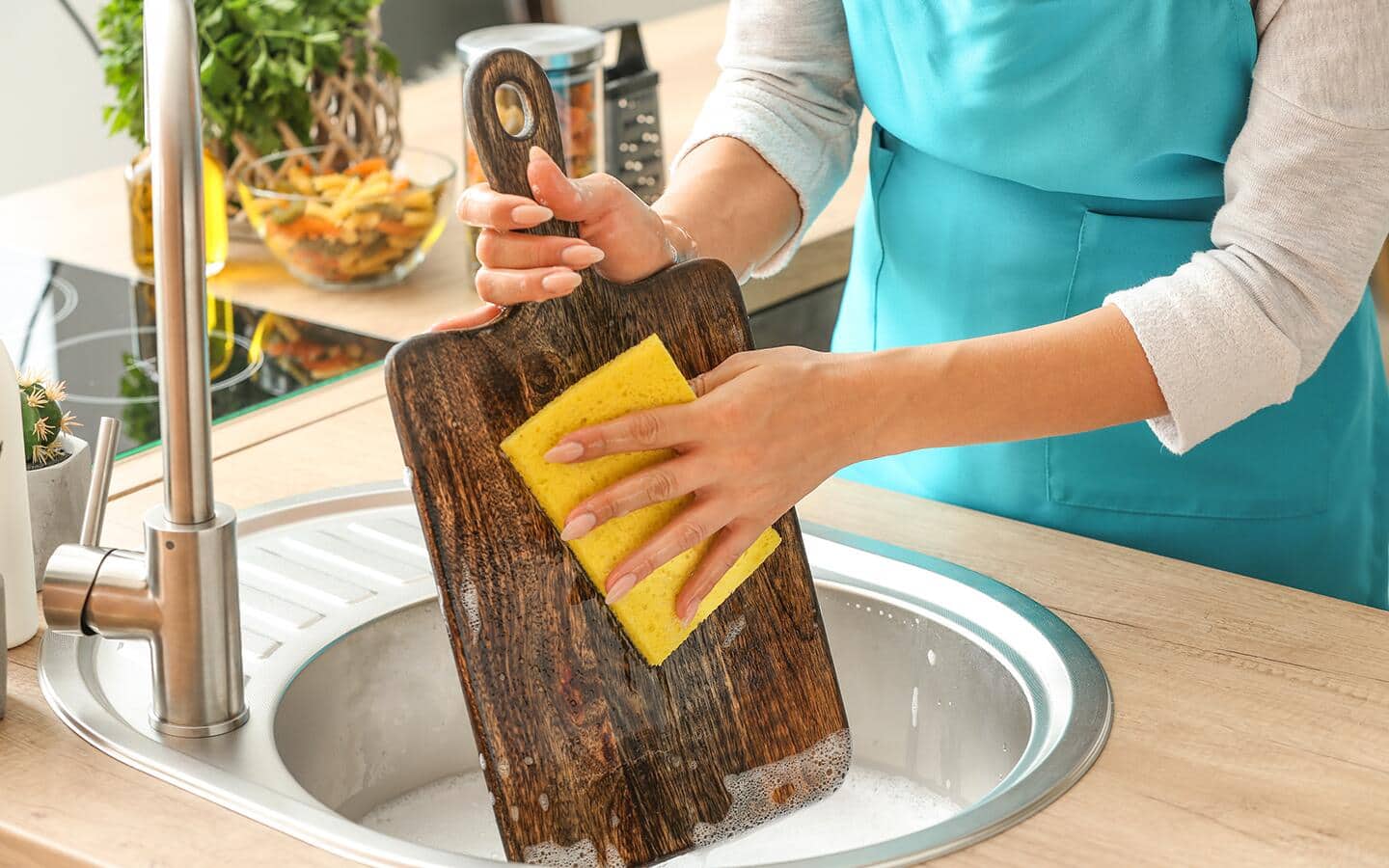
2. Scrub With Mild Soap
Use a soft sponge or brush and a small amount of dish soap. Don’t use harsh cleaners or scouring pads, as they can scratch the wood.
3. Never Soak Or Use A Dishwasher
Don’t leave your board in water, and never wash it in the dishwasher. This can cause warping and cracks.
4. Rinse Thoroughly
Make sure all soap is washed away. Soap residue can dry out the wood or affect the taste of your food.
5. Dry Immediately
Use a clean towel to dry the board. Stand it upright or on its side to air dry completely. Never leave it flat on a wet counter.
Many people skip the drying step, but it’s one of the most important. Wood left wet can develop mold or odors.
Example: Daily Cleaning Routine
After chopping vegetables:
- Rinse off bits with warm water.
- Apply a drop of mild soap, scrub gently.
- Rinse well.
- Dry with a towel and stand upright.
This routine takes less than two minutes but keeps your board fresh and safe.
Deep Cleaning Methods For Wooden Cutting Boards
Sometimes your board needs a deeper clean, especially after cutting raw meat or when it starts to smell. Deep cleaning removes stains, odors, and bacteria that daily washing misses.
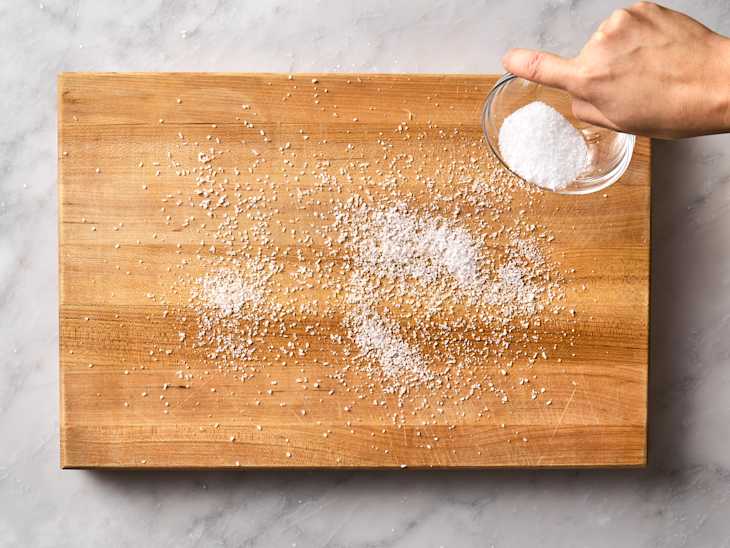
Using Salt And Lemon
A classic deep cleaning method uses coarse salt and lemon.
- Sprinkle coarse salt over the board.
- Cut a lemon in half and rub it over the salt, squeezing juice as you scrub.
- Let the mixture sit for 5 minutes.
- Rinse with warm water and dry.
Salt acts as a gentle scrub, and lemon juice is a natural disinfectant. This method also removes odors.
Baking Soda For Stubborn Stains
For tough stains, use baking soda.
- Sprinkle baking soda on the board.
- Add a few drops of water to make a paste.
- Scrub with a soft brush.
- Rinse and dry.
Baking soda is gentle on wood but powerful against stains and smells.
Vinegar For Sanitizing
White vinegar kills germs naturally.
- Dampen a cloth with vinegar.
- Wipe the board’s surface.
- Let it sit for a few minutes.
- Rinse and dry.
Don’t pour vinegar directly on the board or soak it. Just wipe and rinse.
Data Table: Deep Cleaning Methods
Here’s a quick comparison of popular deep cleaning options:
| Method | Main Ingredients | Best For | Time Needed | Effectiveness |
|---|---|---|---|---|
| Salt & Lemon | Coarse salt, lemon | Odors, light stains | 5–10 min | High |
| Baking Soda | Baking soda, water | Stubborn stains | 3–5 min | Moderate–High |
| Vinegar Wipe | White vinegar | Sanitizing | 2–5 min | Moderate |
| Hydrogen Peroxide | 3% hydrogen peroxide | Disinfecting | 2–3 min | Very High |
Most people don’t realize that hydrogen peroxide can be used for deep cleaning. Use it sparingly and rinse well afterward.
Removing Odors And Stains
Wooden boards can develop strong smells, especially from onions, garlic, or fish. They can also get stained by beets, tomatoes, or berries. If you don’t remove these, they can affect the taste of your food.
Tips For Odor Removal
- Rub with lemon juice or vinegar.
- Use baking soda paste and let it sit for 10 minutes.
- Rinse and dry well.
If smells persist, try repeating the process or combine salt and lemon.
Tips For Stain Removal
- For fresh stains: Act quickly. Use salt and lemon right away.
- For old stains: Try baking soda paste or hydrogen peroxide (use 3% solution, rinse well).
Some stains fade over time, but deep cleaning can speed up the process.
Non-obvious Insight
Many beginners don’t realize that leaving a wooden board in direct sunlight can fade stains but also dries out the wood. Always re-oil after sun exposure.
How To Sanitize A Wooden Cutting Board Safely
Sanitizing is important after cutting raw meat, poultry, or fish. Wood can hide bacteria, so you need to sanitize without damaging the board.
Safe Sanitizing Methods
- Vinegar wipe: Wipe with vinegar, let sit, rinse, and dry.
- Hydrogen peroxide: Pour a small amount (3%) on the board, spread with a cloth, let sit for 2–3 minutes, rinse, and dry.
- Salt and lemon: Good for mild sanitizing.
Avoid bleach and harsh disinfectants. They can damage the wood and leave residues.
Data Table: Sanitizing Effectiveness
Here’s a comparison of sanitizing agents:
| Sanitizing Agent | Safe for Wood? | Effectiveness | Notes |
|---|---|---|---|
| White Vinegar | Yes | Moderate | Natural, non-toxic |
| Hydrogen Peroxide | Yes | High | Use 3%, rinse well |
| Bleach | No | Very High | Damages wood, toxic |
| Alcohol | No | High | Dries wood, not recommended |
Sanitizing is especially important if you use one board for both vegetables and meat. Some experts recommend having separate boards for raw meat and other foods.
Drying And Storing Wooden Cutting Boards
Drying is often ignored, but it’s crucial. Wood absorbs water, so leaving a board wet leads to bacteria, mold, and warping.
Best Drying Practices
- Dry with a towel right after washing.
- Stand the board upright or on its side to air dry.
- Don’t leave it flat on a wet surface or near the sink.
Storage Tips
- Store in a dry place with good air flow.
- Avoid storing in closed cabinets if still damp.
- Don’t stack boards on top of each other.
If you live in a humid area, consider using a fan or dehumidifier near storage.
Common Mistake
Many people store boards flat on the counter. This traps moisture underneath and causes warping. Always store upright.
How And When To Oil Your Wooden Cutting Board
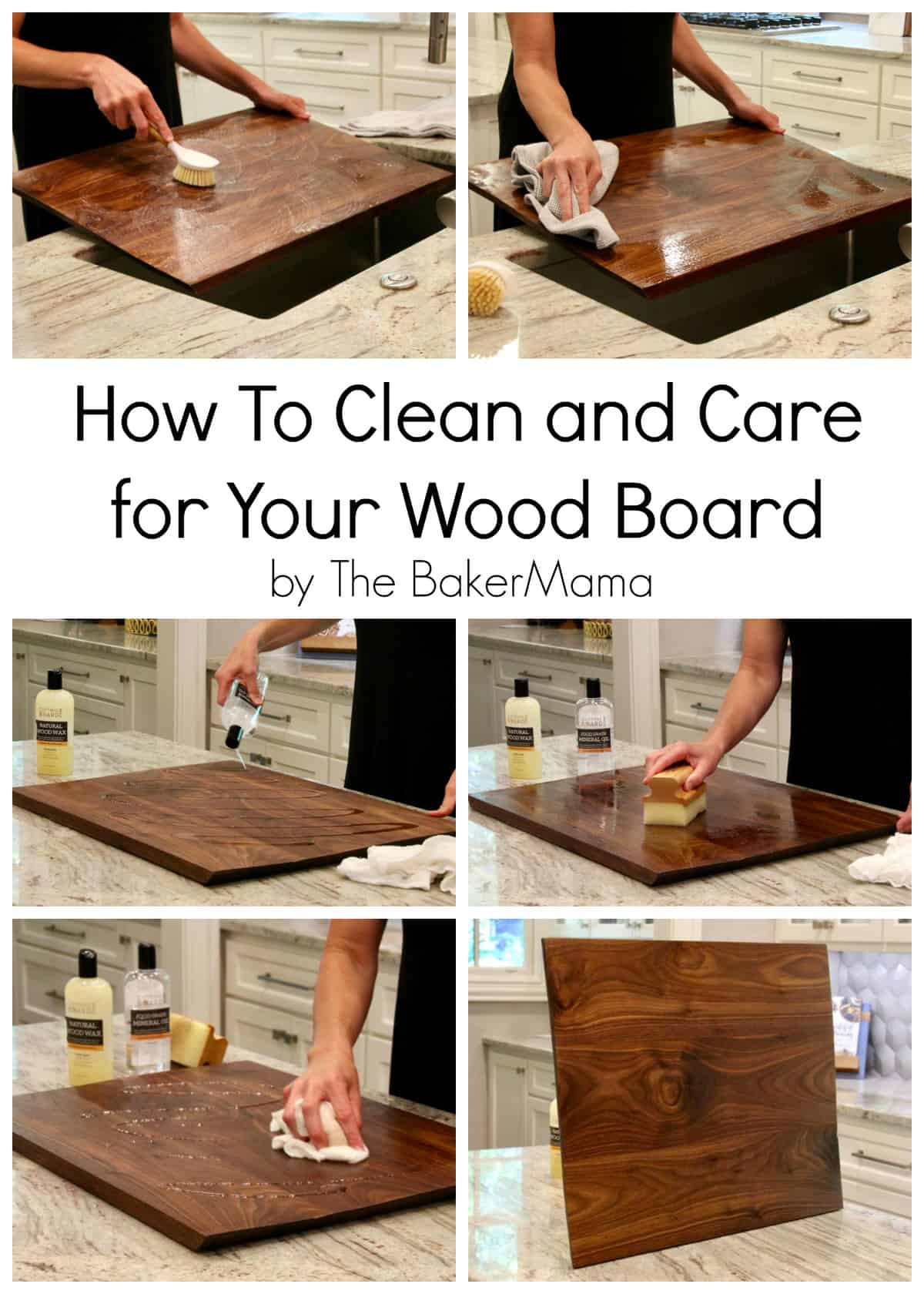
Wood needs oiling to stay healthy. Oiling prevents drying, cracking, and helps block stains and odors. It also makes cleaning easier.
When To Oil
- Oil your board once a month, or when it looks dry.
- Oil after deep cleaning or sun exposure.
How To Oil
- Choose food-safe mineral oil (not vegetable oil, which can go rancid).
- Pour a small amount onto the board.
- Spread with a clean cloth or paper towel.
- Let the oil soak in for a few hours or overnight.
- Wipe off any excess oil.
Types Of Oil
Use only food-grade oils. Mineral oil is best. Some people use beeswax or special board creams.
Data Table: Oil Types
| Oil Type | Safe for Food? | Lasting Effect | Common Issues |
|---|---|---|---|
| Mineral Oil | Yes | Long | Needs reapplication |
| Beeswax | Yes | Long | Harder to apply |
| Vegetable Oil | No | Short | Goes rancid |
| Olive Oil | No | Short | Sticky, goes rancid |
Practical Example
If your board looks dull or feels rough, it’s time to oil. After cleaning and drying, apply mineral oil as described. Your board will look refreshed and last longer.
Preventing Damage And Extending Board Life
Wooden cutting boards can last for decades with the right care. Here’s how to prevent damage:
- Avoid soaking in water.
- Never use a dishwasher for wooden boards.
- Don’t use harsh chemicals or bleach.
- Oil regularly to prevent drying and cracking.
- Cut evenly across the board to avoid deep grooves.
- Sand rough spots if needed, using fine sandpaper.
If your board develops deep cracks or grooves, bacteria can grow inside. Sanding the surface can fix minor damage.
Non-obvious Insight
Most people think only knives damage boards. But storing boards in humid places or stacking them can cause warping and splitting.
Credit: thebakermama.com
Cleaning After Cutting Raw Meat
Cutting raw meat on a wooden board is risky if not cleaned well. Bacteria like salmonella and E. coli can survive inside wood.
Steps After Cutting Meat
- Scrape off meat residue with a spatula.
- Wash with hot, soapy water.
- Sanitize with vinegar or hydrogen peroxide.
- Rinse and dry immediately.
- Oil if needed.
Some experts suggest using separate boards for meat and vegetables. If you only have one, clean and sanitize carefully.
Data: Bacteria Survival On Boards
Studies show bacteria can live up to 24 hours on wood if not cleaned. Proper cleaning removes 99% of germs.
What To Avoid When Cleaning Wooden Cutting Boards
Knowing what not to do is as important as knowing what to do.
- Don’t use the dishwasher. Heat and water ruin wood.
- Don’t soak in water. Causes swelling, cracks.
- Don’t use bleach. Damages wood, toxic residue.
- Don’t use vegetable oils. They spoil and smell bad.
- Don’t cut on a wet board. Can damage wood and knives.
Many people make these mistakes, thinking it’s safe. Stick to recommended methods for best results.
Credit: www.thekitchn.com
Common Myths About Wooden Cutting Board Cleaning
There are several myths about cleaning wooden boards.
- Myth: Wood is less sanitary than plastic.
Fact: Wood naturally kills some bacteria. With proper cleaning, it’s safer than plastic.
- Myth: Soap alone is enough.
Fact: Soap cleans the surface, but deep cleaning is sometimes needed.
- Myth: Bleach is safe for wood.
Fact: Bleach damages wood fibers and leaves toxic residue.
- Myth: Oil is optional.
Fact: Oiling is essential for board health.
Understanding these myths helps you avoid mistakes and keep your board safe.
You might find this helpful: Best Wooden Cutting Boards
Choosing The Right Wooden Cutting Board For Easy Cleaning
Some boards are easier to clean than others. The type of wood and board design matter.
Best Woods For Cutting Boards
- Maple: Hard, closes pores, easy to clean.
- Beech: Durable, smooth surface.
- Walnut: Rich color, strong, easy to maintain.
Avoid soft woods like pine. They scratch easily and absorb moisture.
Board Design Tips
- Choose a board with rounded edges for easier cleaning.
- Boards with juice grooves help keep counters clean but need extra scrubbing.
- End-grain boards are durable and resist deep cuts.
Comparison Table: Wood Types
| Wood Type | Hardness | Cleaning Ease | Durability |
|---|---|---|---|
| Maple | High | Easy | Very Durable |
| Beech | Medium | Easy | Durable |
| Walnut | High | Easy | Very Durable |
| Pine | Low | Difficult | Weak |
Choosing the right board makes cleaning easier and helps your board last longer.
Credit: www.homedepot.com
Professional Cleaning Tips
Some chefs and professionals use special tricks for wooden boards.
- Use a dedicated brush for scrubbing. Soft bristles protect the wood.
- Sanitize with hydrogen peroxide weekly if you use the board for meat.
- Oil with a mix of mineral oil and beeswax for extra protection.
- Sand lightly every six months to remove grooves and stains.
Professional kitchens often have strict rules for board cleaning. Adopting these habits at home can keep your board safer and cleaner.
Eco-friendly Cleaning Solutions
If you prefer natural cleaning, wood boards are easy to maintain.
- Lemon, salt, vinegar, and baking soda are safe, eco-friendly options.
- Avoid commercial cleaners with harsh chemicals.
- Mineral oil is safe for wood and the environment.
Eco-friendly cleaning helps protect your board and your health.
Frequently Asked Questions
How Often Should I Deep Clean My Wooden Cutting Board?
Deep clean your board once a week if you use it daily, or after cutting raw meat. If you only use it for bread or vegetables, deep cleaning every two weeks is enough.
Can I Use Bleach To Sanitize My Wooden Cutting Board?
No. Bleach damages wood and leaves harmful residues. Use vinegar or hydrogen peroxide instead.
What’s The Best Oil For Wooden Cutting Boards?
Food-grade mineral oil is best. It doesn’t go rancid and protects wood. Avoid vegetable or olive oil.
How Do I Remove Tough Stains From My Wooden Board?
Use a baking soda paste, let it sit for 10 minutes, scrub gently, then rinse and dry. For very tough stains, try hydrogen peroxide and sand lightly.
Can Wooden Cutting Boards Go In The Dishwasher?
Never put wooden boards in the dishwasher. Heat and water cause warping, cracking, and ruin the board.
Taking care of your wooden cutting board keeps your food safe and your kitchen looking great. With the right cleaning, your board will last for years and stay free from stains, odors, and bacteria. Remember to clean, dry, and oil your board regularly, and avoid common mistakes. If you want more tips on kitchen safety, visit Serious Eats for expert advice. With good habits, your wooden cutting board will be a trusted tool for every meal.