Convection ovens are becoming more common in home kitchens. They promise faster cooking, crispier results, and often more even baking. But if you’re used to a regular oven, you might wonder how to convert your favorite recipes. Many recipes are written for conventional ovens, so switching can be confusing. This guide will help you make the change with confidence—so your cakes rise, your cookies brown, and your roasts come out juicy every time.
What Makes A Convection Oven Different?
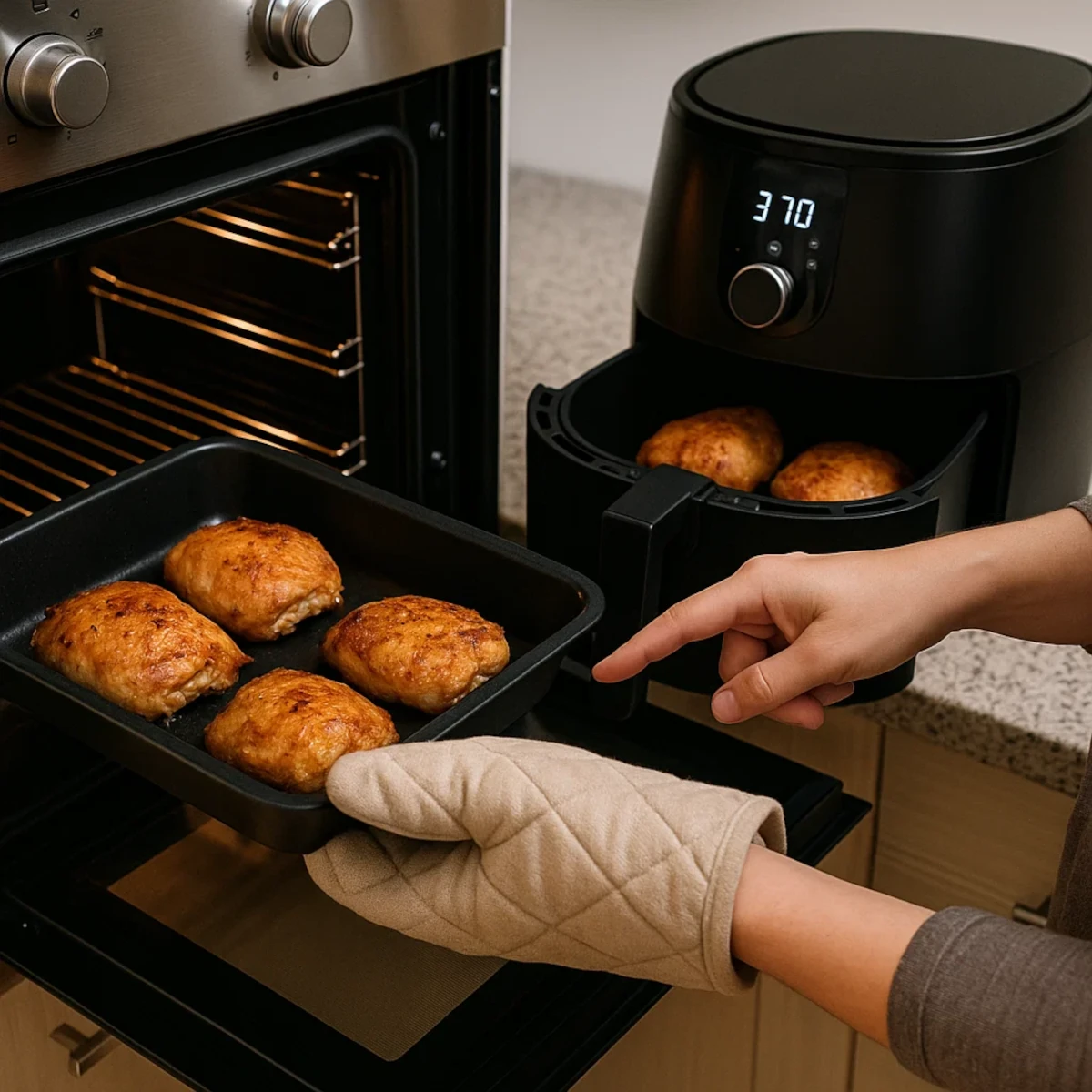
A convection oven uses a fan and exhaust system to circulate hot air. This air movement means your food cooks faster and more evenly. In a regular oven, heat rises and can leave cold or hot spots. With convection, the temperature is more consistent everywhere.
Many cooks notice that food browns better in a convection oven. Pastries get flakier, and roasted vegetables caramelize more. But, these benefits come with adjustments. If you use a convection oven without changing the recipe, you might end up with dried-out cakes or burnt cookies.
The Core Conversion Rule
When converting a recipe for a convection oven, there are two main things to change:
- Lower the temperature
- Shorten the cooking time
A good rule of thumb is:
- Reduce the recipe temperature by 25°F (about 14°C)
- Check for doneness 25% earlier than the recipe’s time
For example, if a cake recipe says 350°F for 40 minutes in a regular oven, set your convection oven to 325°F and check after 30 minutes. Sometimes, you may need to adjust further based on the results.
:max_bytes(150000):strip_icc()/convert-recipes-cooking-in-convection-oven-getty-0623-6915bd039fb94d76b899957701264f70.jpg)
Credit: www.marthastewart.com
Temperature And Time: At A Glance
Here’s a quick comparison to help you visualize these changes:
| Original Recipe | Convection Conversion |
|---|---|
| 350°F for 40 mins | 325°F for 30 mins |
| 400°F for 20 mins | 375°F for 15 mins |
| 425°F for 15 mins | 400°F for 11-12 mins |
Tip: Always start checking your food a little earlier. Some dishes, especially baked goods, can go from perfect to overdone quickly in a convection oven.
Why Lower The Temperature?
The moving air in a convection oven transfers heat more efficiently. That means the outside of your food heats up faster. If you use the same temperature as a regular oven, the outside can burn or dry out before the inside is done.
Lowering the temperature gives your food a chance to cook through without over-browning. It’s especially important for cakes, cookies, and custards.
Which Recipes Benefit Most From Convection?
Not every dish is improved by convection. Here’s a breakdown:
- Great for convection: Roasted meats, vegetables, pizza, cookies, pastries, and some casseroles.
- Better in conventional ovens: Delicate cakes, soufflés, and flans—unless you’re experienced.
Convection is ideal for foods that need browning and crisping. The air flow makes fat and moisture move away from the surface, creating that golden finish.
How To Convert Different Types Of Recipes
Let’s look at how to adapt recipes for common foods.
Baking (cakes, Cookies, And Pastries)
Baked goods respond differently in a convection oven. The air flow can dry out cakes if you’re not careful.
Conversion steps:
- Lower the oven temperature by 25°F.
- Check for doneness at 75% of the recommended time.
- Place pans in the center of the oven to avoid uneven baking.
Example: For cookies that bake at 375°F for 12 minutes, use 350°F and start checking at 9 minutes.
Non-obvious insight: For delicate cakes, consider using a light-colored pan. Dark pans absorb more heat and can increase browning.
Roasting Meats And Vegetables
Convection ovens are famous for juicy roasts and crispy veggies.
Conversion steps:
- Lower temperature by 25°F.
- Check 10-15 minutes before the original finish time, depending on size.
Example: A chicken roasted at 425°F for 60 minutes should be roasted at 400°F and checked after 45 minutes.
Practical tip: Use a meat thermometer. Convection can make the outside look “done” before the inside is safe.
Bread And Pizza
Convection helps create a crisp crust, but watch for over-browning.
Conversion steps:
- Lower oven temperature by 25°F.
- Check a few minutes early.
Pro insight: Use a baking stone or heavy pan. It holds heat and helps with even baking.
Adjusting Pan Placement And Quantity
Convection ovens allow you to cook on multiple racks at once. This is because the air movement reduces hot and cold spots.
Guidelines:
- Leave space between pans for air flow.
- Don’t crowd the oven, or air won’t circulate well.
- Rotate pans halfway through if your oven has strong hot spots.
If you’re baking several trays of cookies, you can bake three pans at once in a convection oven. In a regular oven, the bottom pan often stays raw.
Covered Vs. Uncovered Cooking
Convection works best when food is uncovered. Covers and foil block the air movement.
- For browning: Leave foods uncovered.
- For moist cooking: If you must use a cover (like for a casserole), convection offers less benefit. You might not need to adjust as much.
When Not To Use Convection
Some recipes just don’t suit convection:
- Soufflés: The moving air can collapse them.
- Cakes with delicate batters: They can bake unevenly or dry out.
- Custards and flans: They set better with gentle, still heat.
If you’re unsure, use regular (conventional) oven mode. Most convection ovens let you turn the fan off.
Table: Convection Vs. Conventional Oven Settings
This table shows how settings compare for common foods:
| Food | Conventional Oven | Convection Oven |
|---|---|---|
| Roast chicken | 425°F, 1 hr | 400°F, 45-50 mins |
| Chocolate chip cookies | 375°F, 12 mins | 350°F, 9-10 mins |
| Lasagna | 350°F, 1 hr | 325°F, 45-50 mins |
| Pizza | 450°F, 15 mins | 425°F, 10-12 mins |
Common Mistakes When Converting Recipes
Many beginners make the same errors when switching to convection:
- Forgetting to reduce temperature: This can burn baked goods or dry out roasts.
- Not checking early: Food often cooks much faster.
- Overcrowding the oven: Blocks air flow and causes uneven results.
- Using dark or thin pans: These absorb more heat, increasing browning.
- Ignoring oven differences: Not all convection ovens are equally strong—test with a small batch first.
Non-obvious tip: Some ovens have a “true convection” setting with an extra heating element near the fan. This creates even more powerful air flow. If you have this, you might need to reduce the temperature by 30°F instead of 25°F.
Testing And Tweaking For Your Oven
Every convection oven is a little different. The best way to get perfect results is to test and adjust.
- Try converting a simple recipe first (like cookies).
- Keep a notebook of what worked and what didn’t.
- Adjust temperature and timing based on results.
If you’re not sure, start with the standard -25°F and check early. Over time, you’ll get a sense of how your oven behaves.

Credit: www.solara.in
Useful Tools For Convection Cooking
Certain tools make conversion easier:
- Oven thermometer: Many ovens run hotter or colder than their setting.
- Meat thermometer: Ensures safe, juicy results for roasts.
- Kitchen timer: Essential for checking early.
- Light-colored pans: Reduce over-browning in baked goods.
- Rimmed baking sheets: Help air flow around food.
These small investments can save a lot of frustration.
Real-world Example: Converting A Brownie Recipe
Let’s walk through a real example to make things clear.
Original recipe: Bake at 350°F for 30 minutes in a conventional oven.
Convection conversion:
- Set oven to 325°F.
- Place the pan in the center of the oven.
- Start checking for doneness at 22-24 minutes.
- If using a dark metal pan, check even earlier.
Result: Brownies come out moist inside with a perfect crust—without burning the edges.
Credit: www.aosom.com
Table: Quick Reference For Common Foods
Here’s a final quick reference:
| Food | Conventional Temp | Convection Temp | Time Reduction |
|---|---|---|---|
| Cake | 350°F | 325°F | -8 to 10 mins |
| Cookies | 375°F | 350°F | -2 to 3 mins |
| Bread loaf | 400°F | 375°F | -7 to 10 mins |
| Pizza | 450°F | 425°F | -3 to 5 mins |
| Roast potatoes | 425°F | 400°F | -5 to 10 mins |
Final Thoughts
Switching to a convection oven can lift your cooking to a new level—if you know how to adjust. The main rules are simple: reduce the temperature, check food earlier, and let air flow around your pans. Start with familiar recipes, make notes, and don’t be afraid to tweak. After a few tries, you’ll find your rhythm, and soon you’ll wonder how you ever cooked without convection.
If you want to dive deeper, the US Department of Agriculture offers a helpful overview of oven types and food safety at USDA Oven Guide.
Frequently Asked Questions
How Do I Know If My Oven Is Convection?
Look for a fan symbol on the control panel or a button labeled “convection.” Some ovens let you turn the fan on or off. You can also check your oven’s manual.
Is Convection Better For Baking Cakes?
It depends. Convection can make cakes brown and bake faster, but it may also dry out delicate batters. For tall, light cakes, stick with conventional mode unless you have experience.
Can I Use Aluminum Foil In A Convection Oven?
Yes, but use it carefully. Foil can block air flow. Don’t cover racks or line the whole oven floor. Use foil to cover food only when needed.
Why Did My Cookies Burn In The Convection Oven?
You probably didn’t lower the temperature or bake them too long. Always reduce by 25°F and check early. Dark pans also brown cookies faster.
What’s The Difference Between Convection Bake And Convection Roast?
Convection bake uses the fan with low or no extra heat from the top element—good for baked goods. Convection roast often uses the fan plus extra heat from the top—better for meats and crisping.
By understanding these basics, you can convert almost any recipe and get the best from your convection oven. Happy cooking!