Skip to content
Many cooks wonder how to convert oven recipe to crockpot. It seems like a big change, but it’s simpler than you think. Beginners often find it tricky to figure out temperatures and times.
This guide will show you the easy way to do it. You’ll learn the steps to make your favorite dishes in your slow cooker.
Key Takeaways
- You can easily change oven recipes for your slow cooker.
- Liquid amounts might need adjusting for slow cooker cooking.
- Baking temperatures from oven recipes translate to lower slow cooker settings.
- Cooking times will be longer in a slow cooker than in an oven.
- Smaller pieces of meat and vegetables cook best in a slow cooker.
- Checking for doneness is important, just like with any cooking method.
Changing Oven To Slow Cooker Recipes
Switching recipes from your oven to your slow cooker is a smart move for busy days. The slow cooker does the work for you while you’re away. It keeps food warm and makes meats incredibly tender.
Knowing how to convert oven recipe to crockpot opens up a world of easy meal possibilities. You don’t need to be a pro chef to get delicious results.
Understanding Your Slow Cooker
Your slow cooker, or Crock-Pot, cooks food at a low, steady temperature over a long period. This gentle cooking method is perfect for breaking down tough cuts of meat and infusing flavors. Unlike an oven, which uses dry heat, a slow cooker uses moist heat.
This is a key difference when converting recipes. The lid traps steam, creating a humid cooking environment.
Slow cookers typically have three heat settings: low, high, and sometimes warm. The ‘low’ setting usually hovers around 200°F (93°C), while ‘high’ is around 300°F (149°C). These temperatures are much lower than most oven baking temperatures, which can range from 325°F (163°C) to 450°F (232°C).
This difference in temperature is why you need to adjust cooking times and sometimes liquid levels.
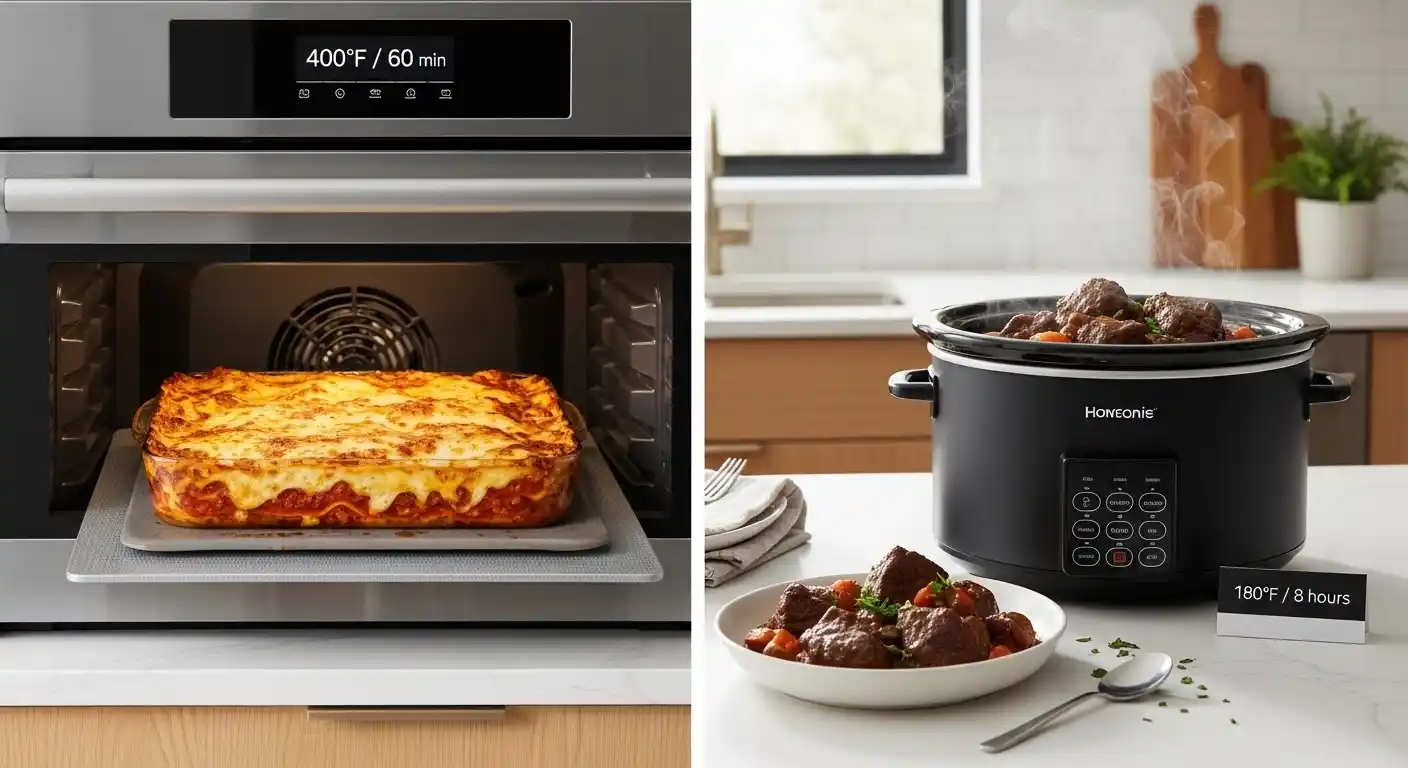
The general rule of thumb is that cooking on ‘low’ in a slow cooker takes about twice as long as baking at 350°F (175°C) in an oven. Cooking on ‘high’ takes about half the time of cooking on ‘low’. For example, a dish that bakes for 1 hour at 350°F in the oven might take 2 hours on ‘high’ or 4 hours on ‘low’ in a slow cooker.
This gives you a good starting point for adjusting your favorite oven meals.
Adjusting Liquids
When you convert oven recipe to crockpot, paying attention to liquid is very important. Oven recipes often rely on evaporation to thicken sauces or concentrate flavors. In a slow cooker, the lid seals in moisture, meaning less liquid evaporates.
If you add the same amount of liquid as in an oven recipe, you might end up with a runny or watery dish.
A good starting point is to reduce the liquid called for in your oven recipe by about one-third to one-half. For example, if a recipe calls for 2 cups of broth, try using 1 to 1.5 cups in your slow cooker. If your recipe has a sauce that needs thickening, you can always add a cornstarch slurry or a bit of flour mixed with water towards the end of the cooking time.
This allows you to control the final consistency.
Some recipes might call for ingredients that release a lot of their own liquid, like certain vegetables (e.g., onions, tomatoes, mushrooms). Be mindful of these. If a recipe already has a lot of moist ingredients, you might need to reduce the added liquid even further.
It’s always easier to add more liquid later if needed than to try and fix a dish that’s too watery.
Example Scenario: Beef Stew
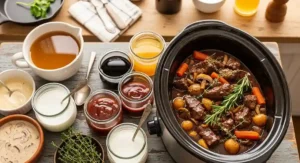
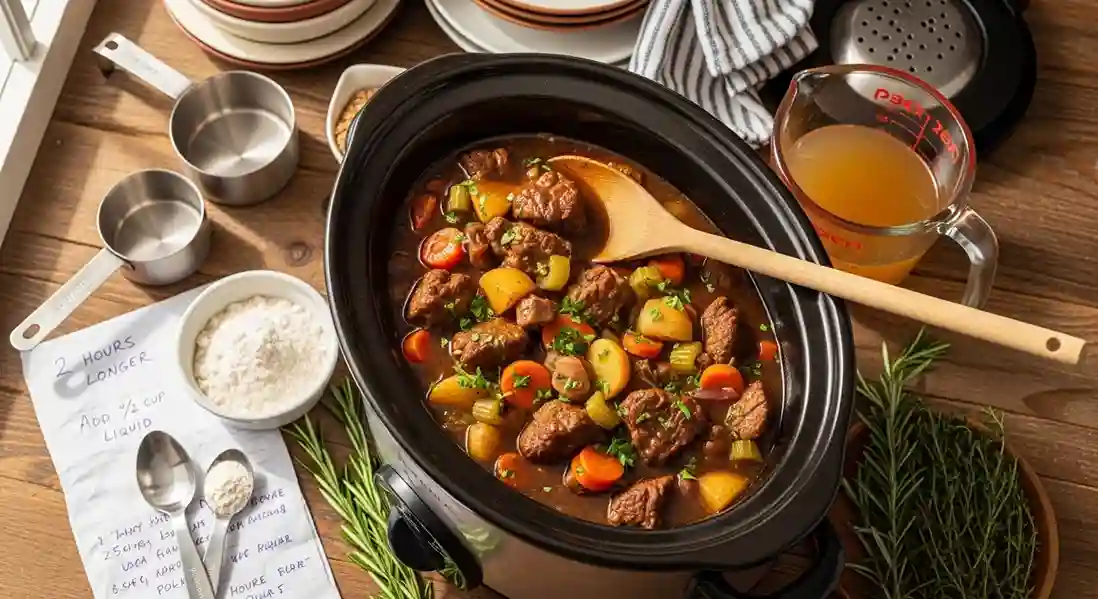
Imagine an oven recipe for beef stew that calls for searing the beef, then baking it in a pot with 3 cups of beef broth, vegetables, and herbs for 2 hours at 375°F (190°C). To convert this to a slow cooker, you would still sear the beef for better flavor. You would then place the seared beef and all other ingredients into the slow cooker.
Instead of 3 cups of broth, you might start with 1.5 cups. You would then cook it on ‘low’ for 6-8 hours or on ‘high’ for 3-4 hours until the beef is tender.
Temperature and Time Conversions
The core of how to convert oven recipe to crockpot lies in understanding temperature and time. As mentioned, slow cookers operate at lower temperatures. This means foods will take longer to cook.
A general guideline is to reduce the oven temperature by 25-50°F (15-30°C) and increase the cooking time by 2-3 times. However, it’s often simpler to think in terms of the slow cooker’s ‘low’ and ‘high’ settings.
If your oven recipe calls for baking at 350°F (175°C) for 1 hour, you can estimate that cooking the same dish on ‘high’ in the slow cooker will take about 2 hours, and on ‘low’ it will take about 4 hours. For longer baking times, like those for roasts or casseroles, the multiplier is closer to 2-3 hours in the slow cooker for every 1 hour in a 350°F oven. So, a 3-hour oven roast might take 6-9 hours on ‘low’ in a slow cooker.
It’s also important to remember that not all recipes are good candidates for slow cooking. Delicate items like flaky pastries or quick-breads don’t do well because the slow cooker’s moist environment can make them soggy. Focus on hearty stews, braises, chilis, pulled meats, and casseroles.
These dishes benefit from the slow cooker’s ability to tenderize and meld flavors over time.
Key Temperature Equivalents
| Oven Temperature | Slow Cooker ‘Low’ (approx.) | Slow Cooker ‘High’ (approx.) |
|---|---|---|
| 350°F (175°C) | 6-8 hours | 3-4 hours |
| 375°F (190°C) | 7-9 hours | 4-5 hours |
| 400°F (200°C) | 8-10 hours | 5-6 hours |
Preparing Ingredients for the Slow Cooker
When you decide how to convert oven recipe to crockpot, consider how you cut your ingredients. In an oven, ingredients are exposed to direct heat, which cooks them more quickly. In a slow cooker, heat penetrates more slowly and evenly.
This means you’ll want to cut vegetables and meats into smaller, more uniform pieces.
For root vegetables like potatoes, carrots, and onions, cut them into 1-inch pieces or smaller. This ensures they cook through without becoming mushy or staying hard. If you’re cooking a roast or large piece of meat, consider cutting it into chunks or even shredding it.
Smaller pieces will cook more evenly and become tender faster.
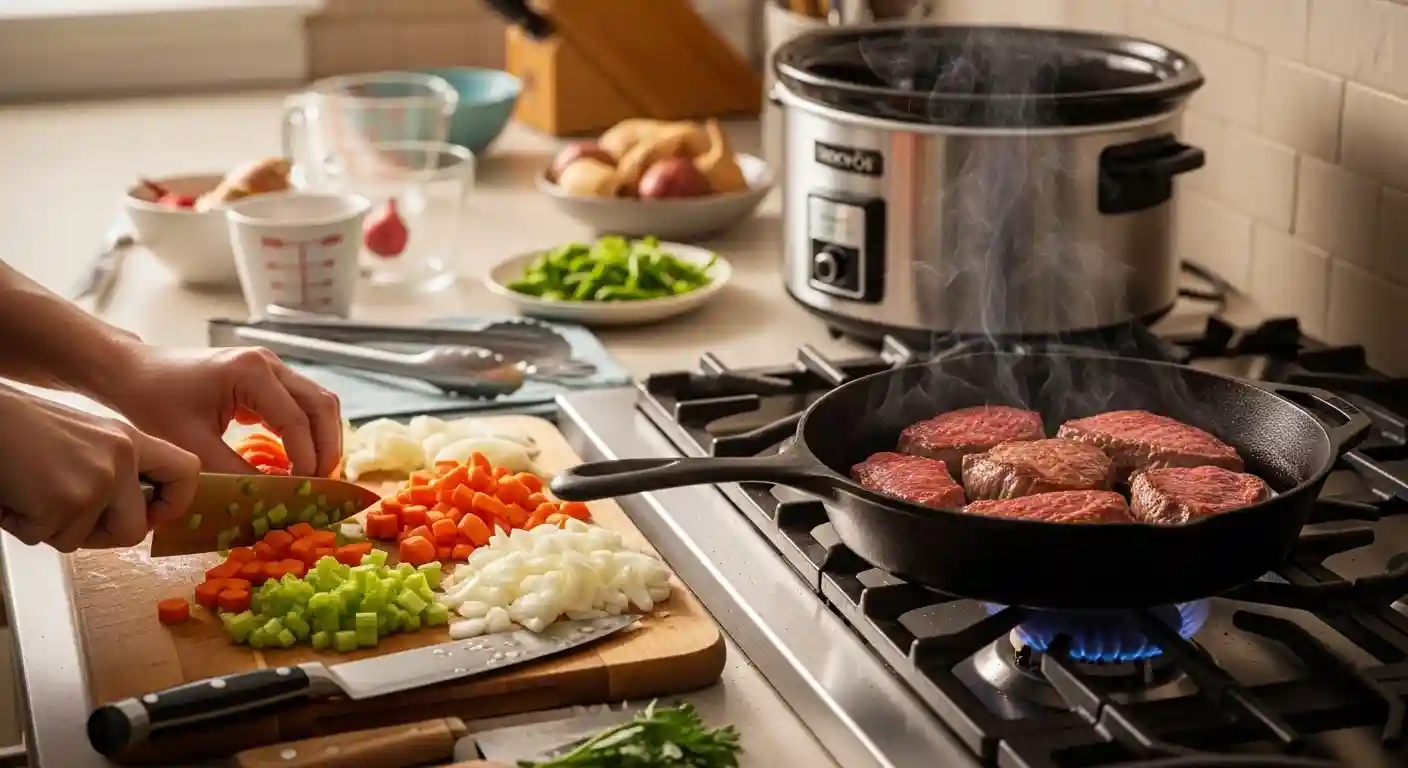
For recipes that call for browning meat, searing it on the stovetop before adding it to the slow cooker adds a significant amount of flavor. This browning process, known as the Maillard reaction, creates complex tastes that you won’t get from simply placing raw meat in the cooker. It’s an extra step that really enhances the final dish and is highly recommended when converting oven recipes that typically involve searing.
Searing Meat
Searing meat before slow cooking is a fantastic technique. You’ll need a skillet and a little oil. Heat the oil over medium-high heat.
Then, add your meat in batches, making sure not to crowd the pan. Sear each side until it’s nicely browned. This not only adds color but also deepens the flavor of the meat.
After searing, you can deglaze the pan with a bit of liquid from your recipe, scraping up any browned bits stuck to the bottom. These browned bits are packed with flavor and can be added directly to the slow cooker. This process can take an extra 10-15 minutes but is well worth the effort.
Choosing the Right Recipe for Conversion
Not every oven recipe is a perfect fit for a slow cooker. The best candidates are those that benefit from long, slow cooking. Think about hearty casseroles, stews, braised meats, chilis, soups, and pulled pork or chicken.
These types of dishes are designed to become tender and flavorful over time, which is exactly what a slow cooker excels at.
Recipes that are delicate or require crisp textures are generally not good choices for slow cookers. For example, recipes for cakes, cookies, or certain baked pasta dishes might turn out soggy or mushy. If a recipe relies heavily on evaporation to create a thick sauce or a crispy topping, it might not translate well.
You might be able to adapt them, but it requires more advanced knowledge and might not yield the desired results.
When looking at an oven recipe, ask yourself if the dish would be enjoyable even if it was cooked slowly in liquid. If the answer is yes, it’s likely a good candidate. For instance, a pot roast baked in the oven would likely be amazing in a slow cooker.
A delicate lemon cake, on the other hand, probably wouldn’t.
Recipe Examples That Convert Well
- Chili: Oven-baked chili often benefits from the slow cooker’s ability to meld flavors.
- Pot Roast: Tougher cuts of beef become incredibly tender when slow-cooked.
- Pulled Pork/Chicken: These are classic slow cooker dishes, transforming chewy cuts into succulent, shreddable meat.
- Soups and Stews: The slow cooker is ideal for developing deep, rich broths and tender vegetables.
- Casseroles: Many baked casseroles can be adapted, especially those with meat, potatoes, or pasta.
Troubleshooting Common Issues
Even with the best preparation, sometimes things don’t turn out perfectly. One common issue when you convert oven recipe to crockpot is that the food can be bland. This is often because the flavors haven’t had enough time to meld, or the liquid hasn’t concentrated enough.
If this happens, you can sometimes stir in extra seasonings like salt, pepper, herbs, or spices at the end of cooking.
Another issue can be overcooked vegetables. If you add vegetables that cook very quickly (like peas or corn) at the beginning of a long cooking time, they can turn to mush. It’s often better to add these types of vegetables during the last 30-60 minutes of cooking.
Similarly, delicate ingredients like fresh herbs or creamy additions (sour cream, yogurt) should be added at the very end.
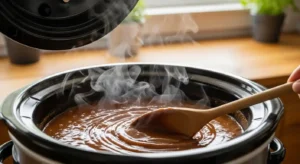
If your food is too watery, you can try removing the lid for the last 30-60 minutes of cooking on ‘high’ to allow some liquid to evaporate. Alternatively, you can thicken the sauce by mixing a tablespoon of cornstarch with 2 tablespoons of cold water to make a slurry, then stirring it into the hot liquid. Let it simmer for a few minutes until it thickens.
Example of a Troubleshooting Scenario
Let’s say you made a lentil soup that you converted from an oven recipe. You followed the liquid reduction guidelines, but after 4 hours on low, the broth tastes a bit thin and under-seasoned. To fix this, you could:
- Taste the soup and add more salt and pepper as needed.
- If the flavor is still lacking depth, consider adding a bouillon cube or a splash of soy sauce or Worcestershire sauce for umami.
- If the broth is too thin, mix 1 tablespoon of cornstarch with 2 tablespoons of cold water. Stir this mixture into the soup. Turn the slow cooker to high and let it cook uncovered for 30 minutes, or until the broth thickens.
Adding Flavor Boosts
To make your converted recipes even more delicious, consider adding flavor boosters. Ingredients that add depth and richness can really elevate a slow-cooked dish. This is especially helpful when you convert oven recipe to crockpot because the slow cooking process can sometimes mute flavors if not managed carefully.
Acidic ingredients like lemon juice, vinegar, or wine can brighten up the flavors of a dish. Add them towards the end of the cooking time, as their bright flavors can dissipate during long cooking. For example, a squeeze of lemon juice over chicken or a splash of red wine vinegar into a beef stew can make a big difference.
Umami-rich ingredients are also great flavor boosters. Think about soy sauce, Worcestershire sauce, fish sauce, dried mushrooms, or even a bit of tomato paste. A small amount of these can add incredible depth and savoriness to your meals.
Remember to use them sparingly, as their flavors can be quite potent.
Sourced Statistics on Slow Cooker Use
According to a survey by the Food Marketing Institute, approximately 76% of households owned a slow cooker in recent years. This indicates its widespread popularity for convenient meal preparation. Another study showed that consumers often use slow cookers for weeknight meals due to their “set it and forget it” nature, with over 60% of users reporting that their slow cooker helps them save time on busy evenings.
Final Cooking and Serving Tips
Once your converted recipe is cooked in the slow cooker, it’s ready to be served. Always check for doneness, especially with meats. Use a meat thermometer to ensure it has reached a safe internal temperature.
For chicken, this is typically 165°F (74°C); for beef or pork roasts, it’s 145°F (63°C) followed by a rest period.
If your recipe includes ingredients that should remain crisp, like croutons or fresh herbs, add them just before serving. This prevents them from becoming soggy or losing their vibrant color and flavor. A sprinkle of fresh parsley, cilantro, or chives can make a dish look and taste much more appealing.
Don’t be afraid to experiment! The guidelines for how to convert oven recipe to crockpot are a starting point. With practice, you’ll develop an intuition for how different recipes will behave in your slow cooker.
You’ll learn how to adjust liquids, seasonings, and cooking times to achieve perfect results every time. Enjoy the ease and deliciousness of slow cooker cooking!
Frequently Asked Questions
Question: How do I adjust cooking time when converting an oven recipe to a slow cooker
Answer: A good rule of thumb is to cook on ‘low’ in the slow cooker for 2-3 times longer than the oven baking time at 350°F. Cooking on ‘high’ usually takes about half the time of cooking on ‘low’.
Question: Should I add more liquid to my recipe when using a slow cooker
Answer: No, you should typically reduce the liquid. Slow cookers trap steam, so less evaporation occurs. Start by reducing liquid by one-third to one-half.
Question: What kind of recipes are best for slow cooker conversion
Answer: Hearty dishes like stews, chilis, braised meats, soups, and pulled meats are excellent candidates for slow cooker conversion. Delicate baked goods are usually not suitable.
Question: Do I need to brown meat before putting it in the slow cooker
Answer: Browning meat on the stovetop before slow cooking adds significant flavor through the Maillard reaction. While not always mandatory, it greatly improves the taste.
Question: How do I thicken a sauce that turns out too watery in the slow cooker
Answer: You can thicken a watery sauce by removing the lid for the last 30-60 minutes of cooking on high, or by stirring in a cornstarch slurry (1 tbsp cornstarch mixed with 2 tbsp cold water) and letting it simmer.
Summary
You now know how to convert oven recipe to crockpot with confidence. Adjusting liquids, understanding temperature equivalents, and preparing ingredients are key. Focus on hearty recipes that benefit from slow, moist cooking.
With these tips, you can easily transform your favorite oven dishes into convenient, delicious slow cooker meals.