Skip to content
Making jam at home can feel like a big task, especially if you do not have much experience in the kitchen. But what if you could use your bread maker to make fresh, delicious jam in just a few hours?
Many people do not know that bread makers can do more than bake bread—they can also cook jam, saving you time and effort. In this guide, you’ll learn how to make jam in a bread maker, from choosing the right ingredients to troubleshooting common problems.
Whether you’re a beginner or just looking for a new way to use your bread maker, you’ll find clear steps, practical tips, and answers to all your questions.
Why Make Jam In A Bread Maker?
Using a bread maker for jam is simpler than traditional stovetop methods. Bread makers have a jam setting that heats ingredients evenly, stirs automatically, and keeps the process hands-off. You don’t need to watch over the pot or worry about burning.
The bread maker’s consistent heat helps fruit and sugar turn into a smooth, thick jam.
Many people are surprised by how versatile their bread maker can be. Not only does it make bread, but it can also handle jams, chutneys, and even sauces. This feature is especially useful if you have leftover fruit or want to avoid store-bought jams with preservatives and excess sugar.
Key benefits of making jam in a bread maker:
- No constant stirring
- Even heating
- Easy cleanup
- Fresh taste
- Custom flavors
If you enjoy homemade food but don’t want complicated steps, the bread maker is your friend.
Choosing The Right Bread Maker
Not every bread maker can make jam. You need a model with a jam setting. Most modern bread makers have this option, but it’s best to check your user manual. The jam setting heats the ingredients gently, avoiding burning or sticking.
Here’s a simple comparison of popular bread makers with jam settings:
| Bread Maker Model | Jam Setting | Capacity (Jam) | Price Range (USD) |
|---|---|---|---|
| Zojirushi Virtuoso Plus | Yes | Up to 2 lbs | $300–$350 |
| Panasonic SD-R2550 | Yes | Up to 1.5 lbs | $250–$300 |
| Breville Custom Loaf | Yes | Up to 1.5 lbs | $250–$320 |
| Oster Expressbake | Yes | Up to 1 lb | $70–$90 |
| Hamilton Beach HomeBaker | Yes | Up to 1.5 lbs | $50–$80 |
If your bread maker doesn’t have a jam setting, you can try using the “bake” or “cake” setting, but results may vary. It’s best to use a bread maker designed for jam.
Ingredients And Quantities
Jam needs only a few basic ingredients: fruit, sugar, and lemon juice. You can add pectin for a firmer texture, but many fruits have enough natural pectin. The quality of your jam depends on the freshness of your fruit and the balance of sugar.
Typical ingredients for bread maker jam:
- Fruit: 500–600 grams (about 1.1–1.3 lbs)
- Sugar: 300–400 grams (about 1.3–1.7 cups)
- Lemon juice: 2–3 tablespoons
- Pectin: 1–2 tablespoons (optional, for firmer jam)
Example: For strawberry jam, you can use:
- 600 grams (1.3 lbs) strawberries
- 350 grams (1.5 cups) granulated sugar
- 2 tablespoons lemon juice
For other fruits, adjust sugar based on sweetness. Tart fruits like raspberries or blackberries may need more sugar. If you prefer less sweet jam, you can reduce sugar, but the jam may be softer.
Pro tip: Always weigh your fruit after removing stems or pits. This ensures accurate ratios.
Preparing Your Ingredients
Washing, cutting, and measuring your fruit is important for jam quality. Jam works best with ripe, unblemished fruit. Overripe fruit can make jam runny, while underripe fruit may lack flavor.
Steps to prepare fruit:
- Wash fruit thoroughly.
- Remove stems, seeds, pits, or skins (if needed).
- Cut fruit into small pieces (about 1-inch cubes).
- Weigh fruit after cutting.
- Measure sugar and lemon juice.
Non-obvious insight: Many beginners skip weighing fruit after cutting, which can throw off the sugar ratio. Weigh after preparation for best results.
For fruits with tough skins (like peaches), dip in boiling water for 30 seconds, then peel. For berries, simply remove leaves and rinse.
Credit: www.ahealthysliceoflife.com
Bread Maker Jam Recipe
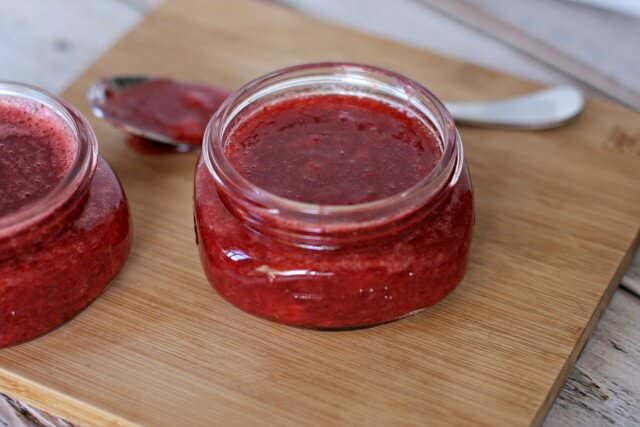
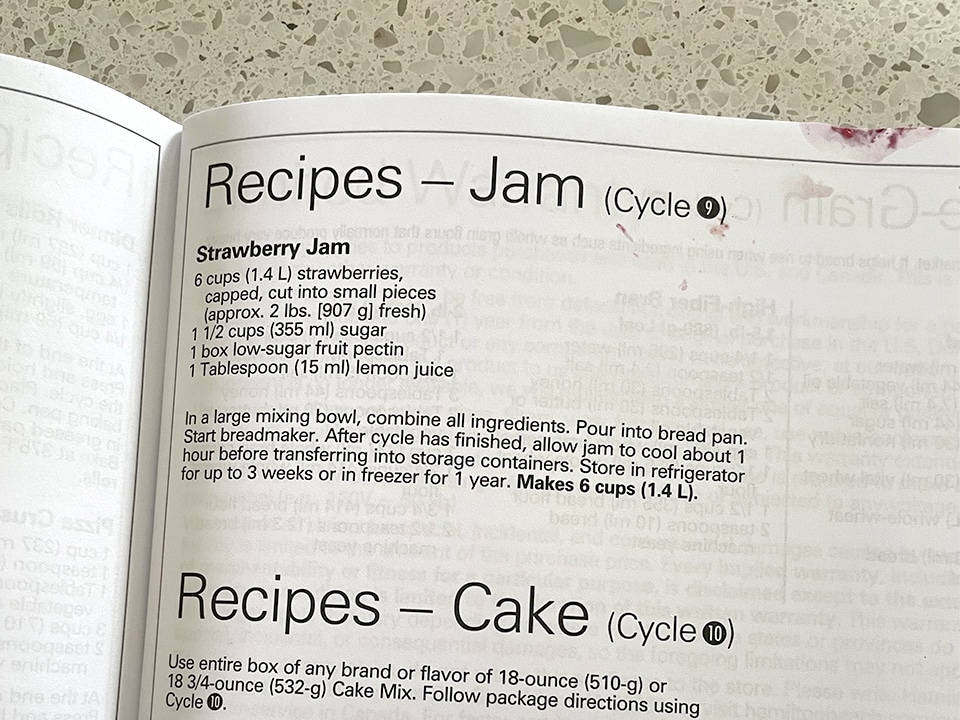
Here’s a simple recipe for strawberry jam in a bread maker. You can use this as a template for other fruits.
Ingredients:
- 600 grams (1.3 lbs) strawberries, hulled and chopped
- 350 grams (1.5 cups) granulated sugar
- 2 tablespoons fresh lemon juice
- 1 tablespoon fruit pectin (optional)
Yield: About 2–3 cups of jam
Cooking time: 1 hour (plus cooling)
Serving size: Makes enough for 10–12 servings
Steps:
- Place fruit, sugar, lemon juice, and pectin (if using) into the bread maker pan.
- Select the jam setting on your bread maker.
- Close the lid and start the cycle. The bread maker will heat and stir the mixture.
- After the cycle ends (usually 1 hour), open the lid carefully.
- Use oven mitts to remove the pan. Let jam cool for 10–15 minutes.
- Pour jam into sterilized jars while still warm.
- Seal jars and let cool to room temperature. Store in the fridge.
Pro tip: For chunkier jam, leave fruit pieces larger. For smoother jam, mash fruit before adding.
Bread Maker Jam Vs. Traditional Jam
Many people wonder how bread maker jam compares to stovetop jam. Let’s look at a few key differences.
| Aspect | Bread Maker Jam | Traditional Jam |
|---|---|---|
| Effort | Hands-off, automatic | Requires stirring, watching |
| Consistency | Usually smooth and even | Can be chunky or uneven |
| Risk of Burning | Low | High if not careful |
| Batch Size | Small (1–3 cups) | Large (up to several jars) |
| Flavor Customization | Easy | Easy |
| Time Needed | About 1 hour | About 45–90 minutes |
Bread maker jam is ideal for small batches and beginner cooks. Traditional jam is better if you want to make a lot for canning.
Credit: www.womensoutdoornews.com
Tips For Perfect Bread Maker Jam
Even with a bread maker, a few simple tricks can improve your jam.
1. Use ripe fruit. Unripe fruit will not give you strong flavor or color. Ripe fruit has more sugar and pectin.
2. Do not overfill the bread maker. Most bread makers can handle only 1–1.5 lbs of fruit. Too much can spill or cook unevenly.
3. Sterilize jars before filling. Clean jars keep jam safe and fresh.
4. Adjust sugar to taste. Some fruits are sweeter than others. Taste your fruit and adjust sugar if needed.
5. Add lemon juice for balance. Lemon juice helps jam set and adds brightness.
6. Use pectin for firmer jam. If you want thick jam, use commercial pectin. Some fruits, like apples and plums, have enough natural pectin.
7. Let jam cool before sealing. Cooling helps jam thicken and keeps jars from cracking.
8. Store jam in the fridge. Bread maker jam is not shelf-stable unless processed for canning.
Non-obvious insight: Let the jam sit overnight in the fridge after cooking—it thickens and flavors develop.
Common Mistakes And How To Avoid Them
New jam makers often run into simple problems. Here are the most frequent mistakes—and how to fix them.
1. Jam is too runny.
- Possible causes: Not enough pectin, too much fruit juice, undercooked.
- Solution: Add 1 more tablespoon pectin, cook for 10 minutes on “bake” setting if your bread maker allows.
2. Jam is too thick.
- Possible causes: Too much pectin or overcooked.
- Solution: Add a few tablespoons water and stir gently. Do not overcook next time.
3. Jam is not sweet enough.
- Possible causes: Sour fruit or not enough sugar.
- Solution: Add sugar to taste and cook for 10 more minutes.
4. Jam sticks to the pan.
- Possible causes: Overfilling or not stirring.
- Solution: Use correct batch size and jam setting. Clean pan well before next use.
5. Jam tastes bland.
- Possible causes: Under-ripe fruit or missing lemon juice.
- Solution: Use ripe fruit and add lemon juice for brightness.
Non-obvious insight: Some bread makers do not stir well at the edges. Scrape down sides once during the cycle if needed.
Flavor Variations And Creative Ideas
Jam is not just about strawberries. Try other fruits and combinations for new flavors.
1. Mixed berry jam: Combine strawberries, blueberries, and raspberries. Use equal parts, and adjust sugar.
2. Peach-ginger jam: Add 1 teaspoon grated ginger to peach jam for a spicy kick.
3. Apricot-vanilla jam: Add 1 teaspoon vanilla extract to apricot jam.
4. Plum-cinnamon jam: Add 1/2 teaspoon ground cinnamon to plum jam.
5. Apple-spice jam: Use apples, add 1 teaspoon mixed spice, and 1 tablespoon lemon juice.
6. Mango-lime jam: Use ripe mango, add zest and juice of 1 lime.
7. Cherry-chocolate jam: Add 1 tablespoon cocoa powder to cherry jam.
8. Pineapple-mint jam: Add 1 tablespoon chopped fresh mint to pineapple jam.
9. Fig-lemon jam: Use figs, add zest and juice of 1 lemon.
10. Blueberry-lavender jam: Add 1/2 teaspoon dried culinary lavender to blueberry jam.
With a bread maker, you can try endless flavor combinations. Start with the basics, then get creative.
Storage And Preservation
Bread maker jam is best for small batches and fresh use. It’s not shelf-stable unless processed in a water bath.
How to store bread maker jam:
- Pour hot jam into sterilized jars.
- Seal jars tightly.
- Let cool to room temperature.
- Store in the refrigerator for up to 3 weeks.
If you want to keep jam longer, use the water bath canning method. This makes jam shelf-stable for up to 1 year.
Safe storage tips:
- Always use clean jars and lids.
- Check for mold before eating.
- Do not eat jam if the lid bulges or smells sour.
Non-obvious insight: Jam made without pectin may separate after a few days. Stir before use.
Nutrition And Health Benefits
Homemade jam allows you to control ingredients. Store-bought jams often have preservatives, high fructose corn syrup, or artificial colors. In homemade jam, you can use less sugar and skip additives.
Basic nutrition facts (per tablespoon):
- Calories: 40–55
- Carbohydrates: 10–12 grams
- Sugar: 8–10 grams
- Vitamin C: Varies by fruit
- Fiber: 0.5–1 gram
Jam made from berries or citrus has more vitamin C and antioxidants. If you use less sugar, the jam is lower in calories.
Healthy tips:
- Use honey or maple syrup instead of sugar for a natural taste.
- Mix fruits for more vitamins.
- Use chia seeds for thickening and extra fiber.
External resource: For safe canning methods and more nutrition info, visit National Center for Home Food Preservation.
Cleaning And Maintenance
Bread makers need regular cleaning, especially after making jam. Sticky sugar can attract ants and make the pan hard to clean.
Cleaning steps:
- Unplug the bread maker and let it cool.
- Remove the pan and paddle.
- Wash pan and paddle in warm soapy water.
- Wipe the inside of the bread maker with a damp cloth.
- Dry all parts before reassembling.
Common cleaning mistakes:
- Do not use abrasive cleaners or steel wool.
- Do not immerse the bread maker body in water.
Non-obvious insight: If jam spills, clean right away. Sugar hardens and is difficult to remove.
Credit: blog.hamiltonbeach.com
Troubleshooting: Bread Maker Jam Problems
Sometimes, jam does not turn out as expected. Here’s a quick guide to fix common bread maker jam problems.
| Problem | Possible Cause | Solution |
|---|---|---|
| Jam didn’t set | Low pectin, too much water | Add pectin and cook 10 more minutes |
| Jam is too sweet | High sugar or very sweet fruit | Reduce sugar next batch, add lemon juice |
| Jam is cloudy | Unwashed fruit, poor mixing | Wash fruit well, stir during cycle |
| Jam has lumps | Large fruit pieces, uneven cooking | Mash fruit before cooking |
| Jam tastes metallic | Old bread maker pan | Replace pan or use glass jars for storage |
Frequently Asked Questions
How Long Does Bread Maker Jam Last?
Bread maker jam lasts 2–3 weeks in the fridge. If you use the water bath canning method, it can last up to 1 year.
Can I Use Frozen Fruit For Bread Maker Jam?
Yes, you can use frozen fruit. Thaw and drain extra water before using. Frozen fruit can make jam runnier, so add a bit more pectin.
Do I Need To Add Pectin?
Not always. Many fruits have natural pectin (apples, plums, citrus). If you use low-pectin fruit, add commercial pectin for firmer jam.
Can I Make Sugar-free Jam In A Bread Maker?
Yes, you can use sugar substitutes like stevia or erythritol. The jam may be softer, so add extra pectin or chia seeds for thickening.
What Is The Best Fruit For Bread Maker Jam?
Popular choices are strawberries, raspberries, peaches, and blueberries. Choose ripe, fresh fruit for best flavor.
Making jam in a bread maker is easy, fun, and lets you create flavors you cannot find in stores. With the right ingredients, careful preparation, and a few smart tips, you can enjoy homemade jam any time. The process is hands-off and beginner-friendly, turning your bread maker into a versatile kitchen tool.
Try different fruits, adjust sugar to your taste, and enjoy the satisfaction of homemade jam. You’ll find that bread maker jam is not only convenient but also healthier and tastier than store-bought options.