
Keeping your stainless steel sink looking shiny can be a bit tricky. Many people find it hard to get rid of water spots and scratches, especially when they’re just starting out with home cleaning. But don’t worry!
It’s much simpler than you might think. We’re going to show you exactly how to polish a stainless steel sink so it looks brand new. Get ready for a sparkling clean!
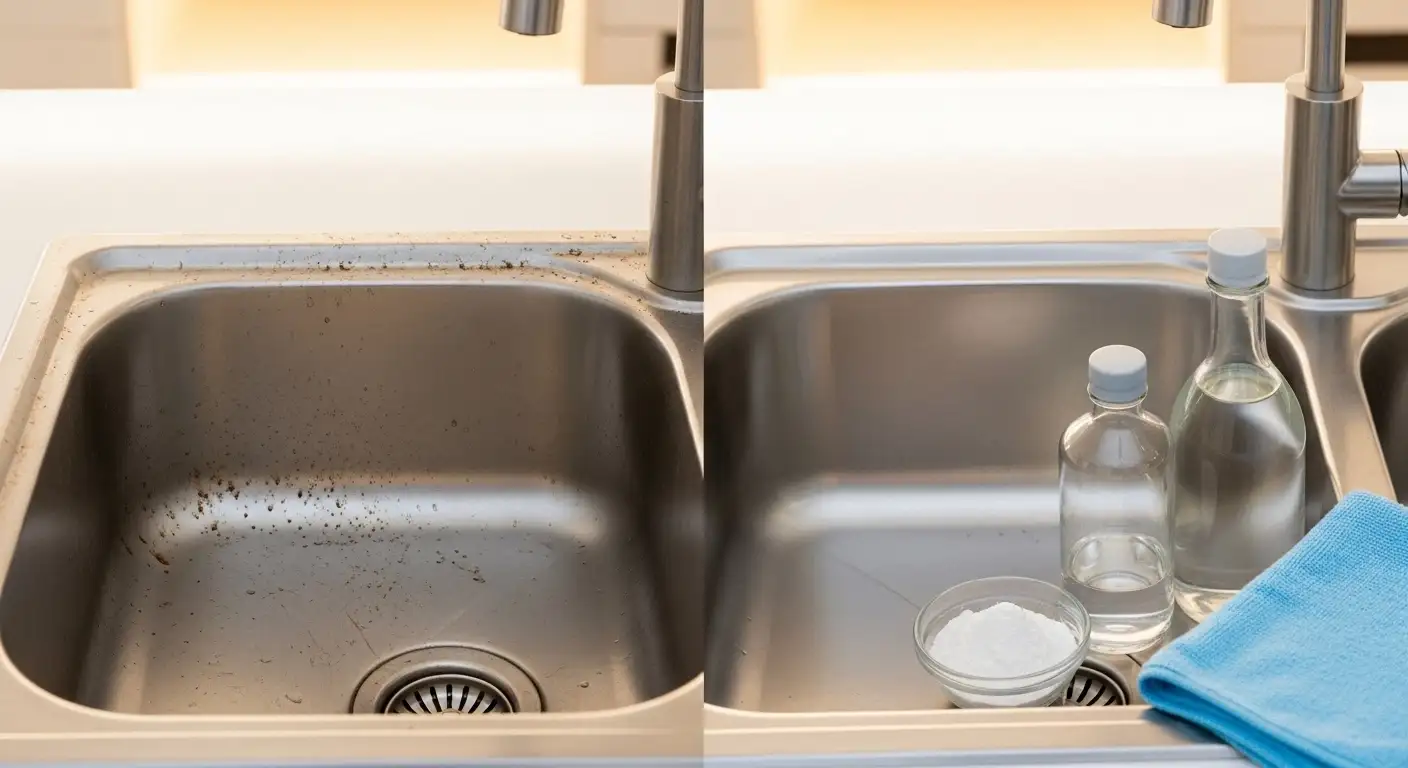
Key Takeaways
- You will learn simple methods to make your stainless steel sink gleam.
- Discover easy cleaning solutions for water spots and fingerprints.
- Find out which common household items work best for polishing.
- Understand the importance of cleaning in the direction of the grain.
- Learn how to protect your sink from future dullness.
Achieving A Shiny Stainless Steel Sink
Making Your Stainless Steel Sink Shine Like New
A dull stainless steel sink can really bring down the look of your kitchen. It’s where we do so much, from washing dishes to prepping food, so it’s bound to get some wear and tear. Water spots, streaks, and even minor scratches can make it look old and uninviting.
But getting it back to its former glory is easier than you think. This guide will walk you through everything you need to know, from the best cleaning agents to the right techniques. We’ll cover how to tackle common problems and keep your sink looking fantastic.
Understanding Stainless Steel Finishes
Stainless steel isn’t just one material; it comes in different finishes. These finishes affect how your sink looks and how it responds to cleaning. Knowing your sink’s finish helps you choose the best polishing method.
Most kitchen sinks have a brushed or satin finish. This means they have fine lines that go in one direction. Other sinks might have a mirror polish, which is very smooth and reflective.
The type of finish will guide your polishing efforts. For example, you’ll always want to clean and polish in the direction of these brushed lines. This prevents new scratches and ensures an even shine.
Ignoring the grain can leave your sink looking streaky and uneven.
- Brushed or Satin Finish: Characterized by visible, fine lines. This is the most common finish for kitchen sinks. Polishing must follow the direction of these lines.
- Mirror Polish Finish: Very smooth and highly reflective. Requires gentle polishing to avoid scuffs.
- Matte Finish: Less reflective and can hide minor imperfections better but may require different cleaning agents.
The brushed finish is very popular because it hides minor scratches and water spots better than a high-gloss finish. When you clean or polish a brushed stainless steel sink, always move your cloth or sponge in the same direction as the “grain” or the fine lines on the surface. This is the most important rule to follow for a streak-free shine.
If you rub against the grain, you can create new, tiny scratches that will make the sink look duller over time. Think of it like brushing your hair; you usually brush it in one direction.
Common Stainless Steel Sink Problems
Stainless steel sinks are prone to a few common issues that can make them look less than ideal. Water spots are perhaps the most frequent complaint. These are the white or sometimes cloudy marks left behind when water evaporates, leaving mineral deposits.
Fingerprints are another common sight, especially in busy kitchens, leaving oily smudges. Scratches, even shallow ones, can accumulate over time from daily use with pots, pans, and utensils. Rust spots, while less common on quality stainless steel, can sometimes appear, often from leaving wet metal objects in the sink.
Addressing these problems effectively means using the right approach for each one.
- Water Spots and Streaks: Caused by mineral deposits in water evaporating.
- Fingerprints and Smudges: Oily marks left by touching the surface.
- Scratches: Minor abrasions from daily use.
- Rust Spots: Can occur from prolonged contact with rust-prone items.
These issues are usually manageable with simple cleaning techniques and products. The key is to be consistent and use methods that won’t damage the finish. For instance, harsh scrubbers can cause deeper scratches that are harder to remove.
Using a soft cloth and appropriate cleaners will make a big difference. For rust spots, special attention is needed to avoid spreading the rust further. We will cover how to deal with each of these effectively in the following sections.
Essential Cleaning Supplies for Polishing
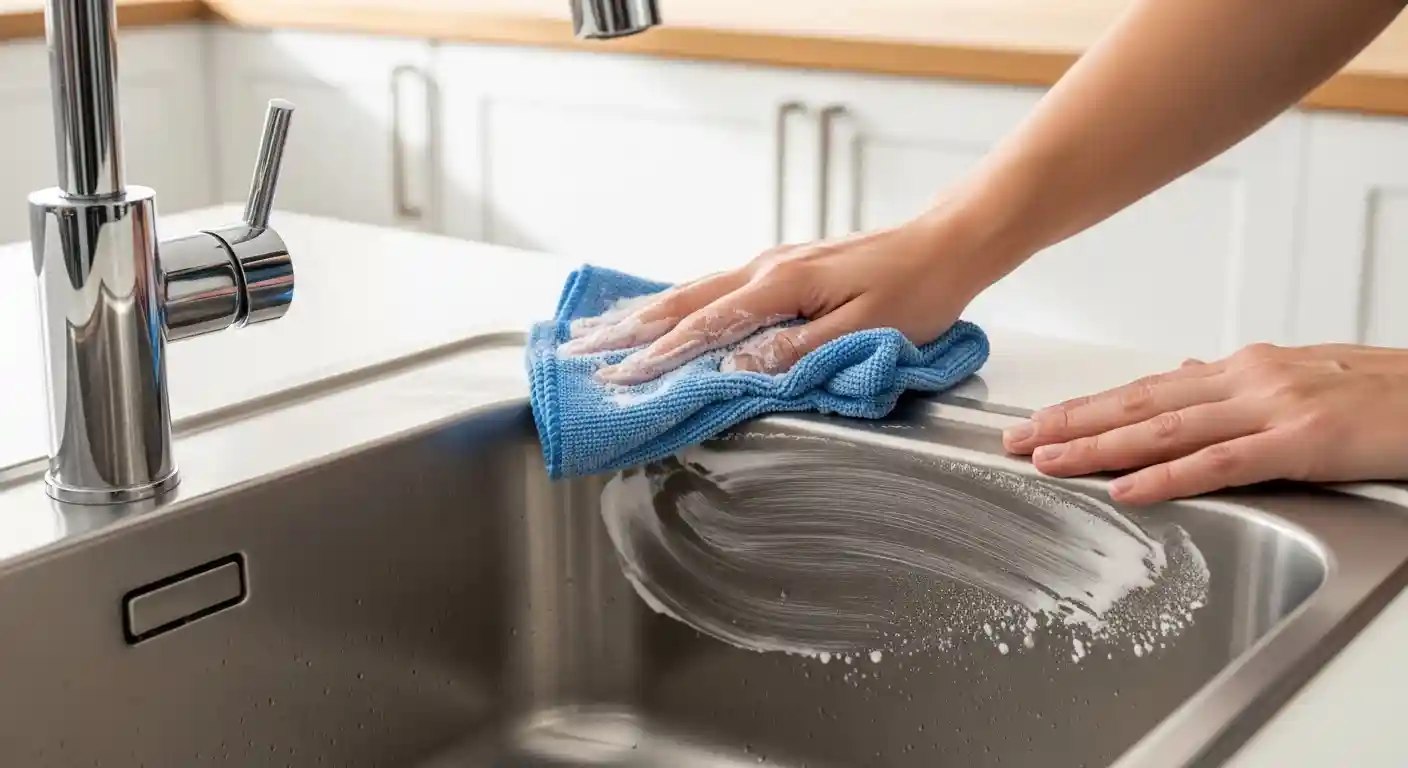
You don’t need fancy or expensive products to get your stainless steel sink looking its best. Many effective solutions are likely already in your pantry or under your sink. The key is to use gentle, non-abrasive materials that won’t harm the metal’s finish.
Think soft cloths, sponges, and common household cleaners. Having the right supplies ready makes the whole process much smoother and more enjoyable. It’s about working smart, not hard, to achieve that brilliant shine.
Non-Abrasive Cleaning Agents
When it comes to cleaning stainless steel, abrasive cleaners are your enemy. They can scratch the surface, dulling the shine and making it more susceptible to future spots and stains. Instead, opt for gentle options.
Dish soap is a fantastic everyday cleaner. It cuts through grease and grime effectively. Baking soda is another superhero ingredient.
When mixed with water, it forms a mild abrasive paste that can lift stubborn marks without scratching. White vinegar is excellent for tackling water spots and disinfecting. Its acidity helps dissolve mineral deposits.
These simple items are powerful tools for a clean, polished sink.
- Mild Dish Soap: Your go-to for daily cleaning and removing grease.
- Baking Soda: A gentle paste for scrubbing away tougher grime and water spots.
- White Vinegar: Perfect for dissolving mineral deposits and adding shine.
- Lemon Juice: Another acidic option that can help with stains and leave a fresh scent.
Using these common items is not only cost-effective but also safer for your health and the environment compared to harsh chemical cleaners. Always ensure you rinse thoroughly after using any cleaning agent to remove all residue. Leftover soap or vinegar can sometimes leave streaks of their own if not properly washed away.
A good rinse with plain water followed by a drying wipe-down is essential for the final polish.
Soft Cloths and Sponges
The tools you use for wiping and drying are just as important as the cleaning agents. Avoid steel wool, abrasive sponges, or rough paper towels. These can all cause micro-scratches that ruin the sink’s finish.
Instead, reach for soft, lint-free cloths. Microfiber cloths are ideal because they are super absorbent and gentle on surfaces. They are great for both cleaning and buffing the sink to a high shine.
Old, clean cotton t-shirts or dish towels also work well. For scrubbing tougher spots, use a soft-bristled brush or a non-scratch sponge. The goal is to clean without leaving any new marks behind.
- Microfiber Cloths: Excellent for cleaning, drying, and buffing without scratching.
- Soft Cotton Cloths: A good alternative to microfiber for general wiping and drying.
- Non-Scratch Sponges: Useful for gently scrubbing away stubborn food particles.
- Soft Bristle Brush: Can be used for tight corners or more concentrated cleaning needs.
Having a few of these cloths on hand means you can dedicate one for cleaning, one for rinsing, and one for drying and polishing. This separation prevents cross-contamination of cleaning agents and ensures the best results. When drying, a gentle buffing motion with a clean, dry microfiber cloth will bring out the best shine.
This final step is crucial for that streak-free, polished look you’re aiming for.
How To Polish A Stainless Steel Sink Step-by-Step
Now that you have your supplies ready and understand the basics, let’s get to the actual polishing. This process is straightforward and can be done regularly to keep your sink looking its best. Following these steps will ensure you achieve a brilliant, even shine without damaging the metal.
It’s all about gentle cleaning and careful buffing. You’ll be amazed at the transformation with just a little effort.
Step 1: Cleaning The Sink
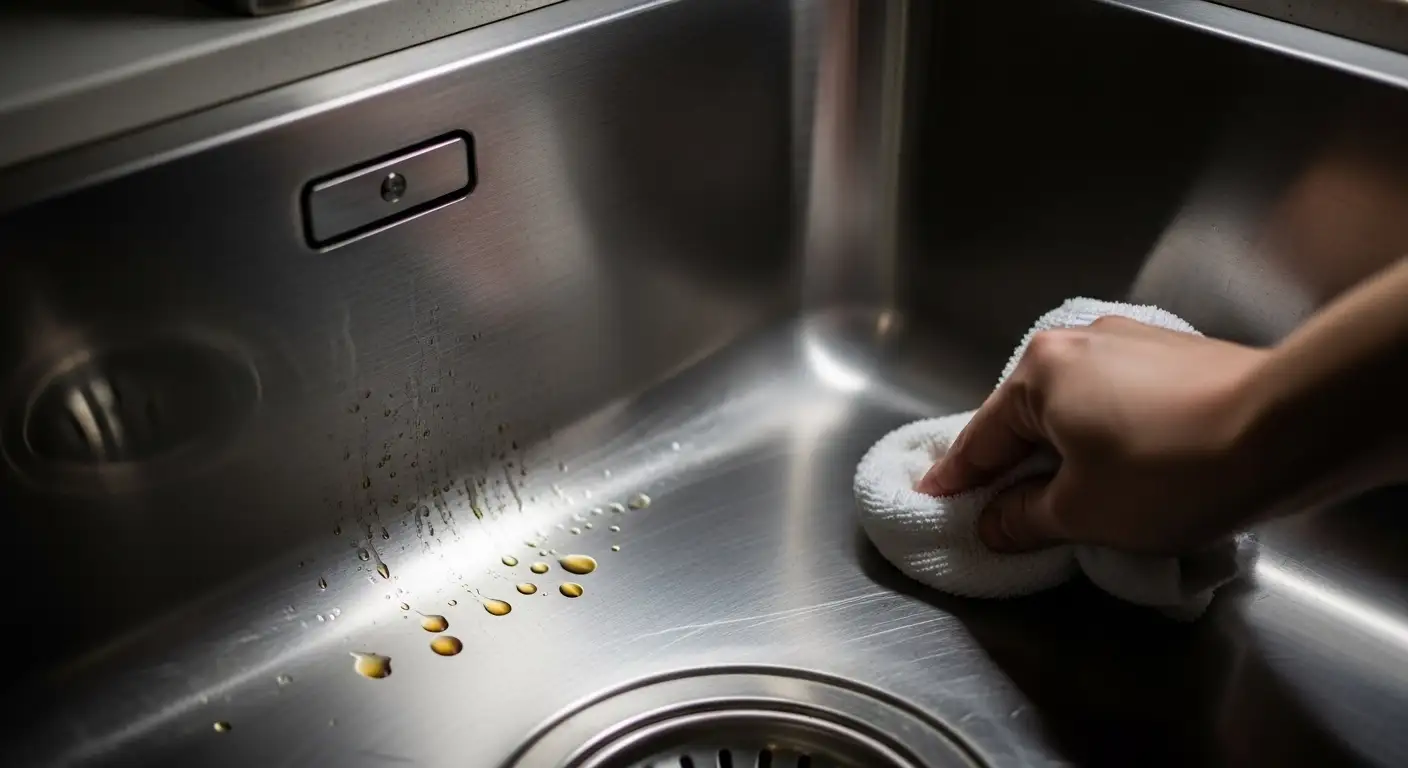
Before you can polish, the sink needs to be clean. Start by rinsing the sink thoroughly with hot water to remove any loose food particles or debris. Then, apply a small amount of mild dish soap to a damp, soft cloth or non-scratch sponge.
Gently scrub the entire sink surface, paying attention to any visible grime or food residue. Always remember to clean in the direction of the stainless steel grain. You’ll feel the faint lines if you run your hand across the surface.
For tougher spots, like dried-on food or grease, you can make a paste of baking soda and water. Apply this paste to the problem areas and let it sit for a few minutes. Then, gently scrub with your soft cloth or sponge, again, following the grain.
Rinse the sink completely with hot water to wash away all soap and baking soda residue. Make sure there are no suds left behind.
Step 2: Removing Water Spots and Stains
Water spots and stubborn stains often need a bit more attention. White vinegar is excellent for this. Pour some white vinegar directly onto a soft cloth or spray it onto the affected areas of the sink.
Let it sit for a few minutes to work on dissolving the mineral deposits. Gently wipe the sink again, following the grain, to remove the loosened spots. Rinse the sink thoroughly with water afterwards.
If water spots are particularly stubborn, you can try a paste made of baking soda and white vinegar. Apply this paste to the spots and let it fizz for a few minutes. Then, gently scrub and rinse well.
For any lingering stains, you can try a specialized stainless steel cleaner or a paste made from cream of tartar and lemon juice, applied gently and rinsed thoroughly. Always test any new cleaner in an inconspicuous area first.
Step 3: Polishing For Shine
Once the sink is clean and free of spots, it’s time for the polish. There are a few options here. You can use a commercial stainless steel polish.
Apply a small amount to a clean, dry microfiber cloth. Wipe the sink surface in the direction of the grain, ensuring you cover the entire area. Buff the sink until it shines.
Alternatively, you can use a natural polish. Olive oil or mineral oil works surprisingly well. Apply a tiny amount of oil to a clean, dry cloth and wipe down the sink.
Buff vigorously with another dry cloth to remove excess oil and bring out a beautiful sheen. This method not only polishes but also helps repel water and fingerprints for a while.
Another effective natural polish is a bit of flour. After drying the sink completely, lightly dust it with flour. Then, buff it away with a clean, dry cloth.
The fine flour particles help buff out minor imperfections and leave a smooth, shiny finish. It sounds unusual, but it works remarkably well for achieving a streak-free polish. Whichever method you choose, the key is a final buffing with a dry cloth.
Step 4: Drying And Buffing
The final step is crucial for a truly polished look. After cleaning and polishing, dry the sink thoroughly with a clean, dry microfiber cloth. This step is vital to prevent new water spots from forming and to remove any streaks left by the cleaning or polishing agents.
Buff the entire surface of the sink, moving in the direction of the grain, until it gleams. A good buffing can make all the difference, bringing out the full radiance of the stainless steel.
Ensure every corner and crevice is dry. For a professional finish, you can buff the sink in a circular motion after the initial wipe-down, but always finish with a final pass following the grain. This buffing action removes any residual polish and leaves a smooth, consistent shine that will impress.
Your sink should now look as good as new, reflecting the light beautifully.
Tips For Maintaining A Polished Sink
Keeping your stainless steel sink looking polished doesn’t require constant scrubbing. A few simple habits can help maintain its shine between deeper cleaning sessions. These tips focus on preventing common problems before they start, making your cleaning routine easier in the long run.
Consistent, gentle care is the secret to a long-lasting shine.
Daily Wiping and Rinsing
The most effective way to keep your sink looking great is to wipe it down daily. After you’ve finished using the sink, give it a quick rinse with hot water. Then, use a soft, dry microfiber cloth to wipe down the entire surface.
This simple step removes soap scum, food particles, and most importantly, water droplets before they can evaporate and leave spots. It takes less than a minute but makes a huge difference in preventing buildup and maintaining shine.
- Wipe down the sink immediately after use.
- Rinse away all soap and food debris.
- Use a dry microfiber cloth for a streak-free finish.
Making this a habit means you won’t have to deal with tough, dried-on messes later. It’s about proactive care. Think of it as giving your sink a quick spa treatment each day.
This prevents water spots from becoming permanent fixtures and keeps fingerprints from lingering. A clean, dry sink is a happy sink.
Protecting Against Scratches
Scratches are an inevitable part of using a sink, but you can minimize them. Avoid dropping heavy pots and pans directly into the sink. It’s better to place them gently.
Consider using a sink grid or mat at the bottom of your sink. These protective layers create a buffer between your dishes and the stainless steel surface. They absorb some of the impact from dropped items and can prevent cutlery from scratching the bottom when washed.
- Use a sink grid or mat for added protection.
- Avoid dropping heavy items directly into the sink.
- Rinse the sink after use to prevent abrasive particles from settling.
When washing sharp utensils, handle them carefully. Try not to drag them across the sink’s surface. If you do notice a new scratch, don’t panic.
For very shallow scratches, regular polishing and buffing can sometimes make them less visible over time. The goal is to be mindful of how you use and interact with your sink.
Dealing With Rust Spots
Rust spots on stainless steel sinks are usually caused by external sources, like cast iron pans or steel wool pads left wet in the sink. They are not typically a sign of the sink itself rusting. To remove them, use a paste made from baking soda and water, or a specialized stainless steel rust remover.
Apply the paste or cleaner to the rust spot and let it sit for a few minutes. Gently scrub with a soft cloth or sponge, always moving in the direction of the grain. Rinse thoroughly.
It’s important to address rust spots promptly. Leaving them can sometimes lead to further staining. After removing the rust, thoroughly dry the area and consider applying a protective polish.
This helps prevent future rust from forming by creating a barrier on the surface. Avoiding prolonged contact with rust-prone materials is the best prevention.
Comparison Of Polishing Methods
Choosing the right polishing method can depend on what you have available and the level of shine you desire. We’ve discussed several options, from commercial products to common household items. Each has its pros and cons.
Understanding these differences can help you pick the most suitable method for your needs and achieve the best results.
| Method | Pros | Cons | Best For |
|---|---|---|---|
| Mild Dish Soap & Water | Gentle, readily available, good for daily cleaning | May not remove stubborn spots or add high shine | Routine cleaning, light grease removal |
| Baking Soda Paste | Effective for tougher grime, mild abrasive, natural | Can be a bit messy, requires thorough rinsing | Water spots, light stains, built-up residue |
| White Vinegar | Excellent for water spots, disinfects, natural | Strong smell, needs thorough rinsing, not for all finishes | Mineral deposits, shine enhancement |
| Olive Oil/Mineral Oil | Adds shine, repels water/fingerprints, natural | Can leave a residue if too much is used, requires buffing | Final polish, enhancing gleam, protection |
| Commercial Stainless Steel Polish | Designed for purpose, often provides long-lasting shine | Can be more expensive, chemical ingredients | Deep shine, restoration, professional finish |
The best approach often involves combining methods. You might start with dish soap for general cleaning, follow with a baking soda paste for stubborn spots, and then finish with a light oil polish or commercial product for maximum shine. Always remember to rinse thoroughly between steps and dry well at the end.
The key is to be gentle and work with the grain of the stainless steel.
Frequently Asked Questions
Question: How often should I polish my stainless steel sink?
Answer: For daily cleaning, a quick wipe down with a damp cloth and then a dry one is best. For a deep polish to restore shine, you might do this once a week or whenever you notice it losing its luster, depending on your usage.
Question: Can I use steel wool to remove scratches?
Answer: Absolutely not. Steel wool is too abrasive and will create more scratches, making the problem worse and dulling the finish. Stick to soft cloths and gentle cleaning agents.
Question: What if my sink has a dark, dull film?
Answer: This could be a buildup of soap scum or hard water deposits. Try using a paste of baking soda and water, or white vinegar, and scrub gently with a soft cloth in the direction of the grain. Rinse and dry thoroughly.
Question: Will polishing remove light scratches?
Answer: While polishing won’t completely remove deeper scratches, it can often make very light surface scratches less noticeable by smoothing the area and restoring shine. Consistent care helps minimize their appearance.
Question: Can I use lemon oil to polish my sink?
Answer: Yes, lemon oil can work similarly to other natural oils like olive oil for polishing. It can add shine and a pleasant scent. Just use a small amount and buff well with a dry cloth.
Wrap Up
Keeping your stainless steel sink sparkling is simple with the right approach. Remember to always clean and polish in the direction of the grain. Use mild cleaners like dish soap, baking soda, and vinegar.
A good buff with a soft cloth after cleaning makes all the difference. Regular daily wiping prevents tough messes. With these easy steps, your sink will shine bright.

I’m Loretta Evans, and I lead the Rice Cooker and Kitchen Tools section. I test every product in real home kitchens to see how it truly performs in everyday use.
My goal is simple: to give you clear, honest advice so you can choose reliable tools that make cooking easier.