Blenders are a kitchen staple, but their loud noise can quickly turn small spaces into uncomfortable environments. If you live in an apartment or have a compact kitchen, the noise from a blender might disturb your family, neighbors, or even distract you from cooking.
Luckily, you don’t have to accept the noise as a part of your daily routine. There are practical ways to reduce blender noise and make your kitchen quieter. In this article, you’ll discover effective methods, smart product choices, and real-world examples to help you blend without disrupting your peace.
Why Are Blenders So Loud?
Understanding the source of blender noise is key to solving the problem. Blenders create sound from several places:
- Motor vibration: The powerful motor spins quickly, causing vibrations and noise.
- Blade friction: When blades hit hard ingredients or ice, they make sharp sounds.
- Container material: Plastic containers often amplify noise more than glass.
- Kitchen acoustics: Hard surfaces like tiles and countertops bounce sound around.
Every part of a blender can play a role. The base, for example, holds the motor, and if it is not stable, it can cause more rattling. Even the design of the blender jar, like sharp edges or thin walls, can change the way sound is projected.
Research shows that the average blender produces about 88–95 decibels—about as loud as city traffic or a hairdryer. In small kitchens, sound waves have less space to travel, making them feel even louder. For comparison, a normal conversation is around 60 dB, and a vacuum cleaner is about 70 dB. This means blenders are much louder than many other kitchen appliances, so it’s not just your imagination if you feel overwhelmed by the sound.
Some blenders even produce a high-pitched noise that can be especially annoying in echo-prone rooms. This happens when the motor speed changes quickly or when blending hard foods. The noise can be sharp, not just loud, and that can be stressful for sensitive ears or pets.
Knowing these details helps you choose the right strategies for a quieter kitchen.
Choosing A Quiet Blender: What Really Matters
If you’re shopping for a new blender, focus on features that reduce noise. Don’t just trust marketing labels—look for real specifications and proven results.
Key Features To Look For
- Noise rating (decibels): Some brands list decibel levels. Lower is better.
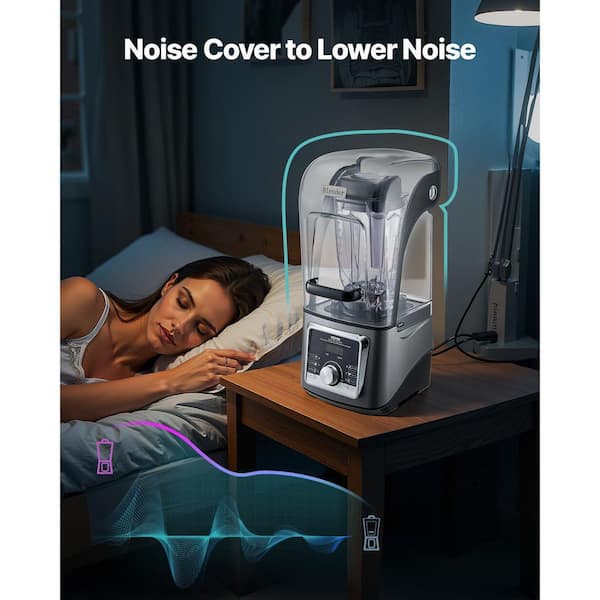
- Sound enclosure: Blenders with a built-in cover or dome block noise.
- Motor size: Smaller motors often make less noise, but can be less powerful.
- Blade design: Smooth blades cause fewer vibrations.
- Container material: Thick glass or insulated plastic dampen sound.
Extra features can also help. For example, some quiet blenders use a double-wall container, which traps sound between two layers. Others come with special “quiet” modes that run the motor at a slightly lower speed, lowering noise without reducing blending quality too much.
Here is a comparison of three popular quiet blenders:
| Blender Model | Noise Level (dB) | Sound Enclosure | Container Material |
|---|---|---|---|
| Hamilton Beach Professional Quiet Blender | 65 | Yes | Thick Glass |
| Vitamix Explorian Series | 85 | No | Plastic |
| Blendtec Stealth 885 | 67 | Yes | Insulated Plastic |
You’ll notice that both the Hamilton Beach and Blendtec models have sound enclosures and much lower decibel levels than the Vitamix. This is a clear sign that a sound enclosure really helps, even when the motor is strong.
Avoid Common Buyer Mistakes
- Don’t assume high price means less noise.
- Avoid blenders without noise ratings if quiet operation is important.
- Try to test the blender in-store or watch video reviews with sound demonstrations.
Another mistake is focusing only on motor power. High-wattage motors are great for smoothies, but they often create more noise. For small kitchens, consider what you blend most often. If you mainly make soft-food smoothies, a lower-powered (and quieter) blender is often enough.
Some buyers also overlook warranty and service. A blender that is hard to repair can become noisier over time if parts wear out and can’t be replaced. Choose brands with good support and clear warranties.

Credit: www.amazon.com
Smart Placement: Where You Put Your Blender Matters
The spot you choose for your blender in a small kitchen can make a big difference.
Best Practices For Placement
- Choose a corner: Corners absorb and reflect less sound than open spaces.
- Keep away from walls: Placing the blender right next to a wall can amplify noise. Leave a gap of at least 5 cm.
- Use thick mats: Place your blender on a rubber mat or silicone pad. This absorbs vibrations.
If you have an island or a movable cart, try placing your blender there instead of fixed counters. Mobile surfaces can sometimes absorb and break up sound differently, reducing how it travels through the kitchen.
Here’s how placement affects noise:
| Placement | Noise Perceived | Vibration Reduction |
|---|---|---|
| Direct on countertop | High | None |
| On rubber mat, away from wall | Medium | Moderate |
| In kitchen corner, on thick mat | Low | High |
Practical Example
A small kitchen with tiled walls and floors can make blenders sound much louder. By moving the blender to a corner and placing a thick mat underneath, one homeowner reduced perceived noise by about 30%. In another case, a renter used a stack of cork trivets under the blender and noticed less noise traveling to the downstairs neighbor.
Corners work well because two walls help trap and block the sound. If you can, use the corner farthest from bedrooms or living spaces. Even small changes in location—just a meter or two—can make a difference in how much noise is heard in other rooms.
Diy Solutions For Blender Noise
You don’t always need to buy a new appliance. There are simple ways to reduce noise at home.
Make A Soundproof Box
You can build a box to cover your blender while it’s running. Use materials like:
- Foam board
- Rubber sheets
- Thick cardboard
Cut panels to fit around your blender, leaving space for airflow. Line the inside with foam or rubber for extra absorption.
A hinged lid or a simple flap can allow easy access to the blender controls. For better looks, cover the box with fabric that matches your kitchen. Just remember to keep vents open so the motor doesn’t overheat.
Use Towels And Mats
Wrap a towel around the blender base (not the motor vents) or place a folded towel underneath. This reduces vibration transfer to the counter.
Layering several towels or using a yoga mat can boost the effect. It’s a quick fix when you need to blend early in the morning or late at night.
Reduce Ingredient Size
Cut ingredients into smaller pieces before blending. This reduces blade impact and makes the motor work less hard.
For example, large frozen fruit chunks or whole ice cubes can make loud crashing sounds. Breaking them into smaller pieces before blending means less noise and a smoother result.
Blend At Lower Speeds
Start blending at a low speed, then increase if needed. This lowers initial noise and reduces sudden spikes.
Pulsing the blender instead of running it continuously can also help. Give the motor a rest between pulses so it doesn’t strain and make more noise. Some blenders even have a “soft start” feature—use it if your model offers one.
Credit: www.homedepot.com
Upgrading Your Kitchen For Noise Control
If you’re committed to a quieter kitchen, some upgrades can help.
Acoustic Panels
Install acoustic panels on the walls near your blender. These absorb sound and prevent echo. Panels can be found at hardware stores or online.
Acoustic panels come in different shapes and colors, so you can choose ones that match your kitchen style. Even small panels, placed right behind or above the blender, can make a noticeable difference.
Cabinet Inserts
Place foam or felt inside nearby cabinets. This helps dampen sound waves bouncing around your kitchen.
Self-adhesive foam sheets are easy to install inside cupboard doors and drawers. As a bonus, they also protect your cabinets from banging noises when you close them.
Window Treatments
Use thick curtains or blinds. They help keep noise inside your kitchen and reduce disturbance to neighbors.
If your kitchen has glass doors, adding a heavy curtain can cut noise transfer between rooms. This is useful in open-plan apartments or studios where sounds travel easily.
Real-world Data: How Much Noise Reduction Is Possible?
Studies and user reports show that combining several techniques can reduce blender noise by 15–40%. The biggest improvements come from:
- Using a blender with a sound enclosure (up to 25 dB reduction)
- Placing on vibration-absorbing mats (up to 10 dB reduction)
- Soundproofing with DIY boxes (up to 15 dB reduction)
Consistency matters. Using just one method helps, but using two or three together is even better. For example, a quiet blender on a thick mat, placed in a kitchen corner, can sound very different from the same blender on a bare counter.
Here’s a summary of noise reduction methods and their effectiveness:
| Noise Reduction Method | Estimated Decibel Reduction | Cost |
|---|---|---|
| Sound enclosure blender | 20–25 | High |
| Rubber mat | 5–10 | Low |
| DIY soundproof box | 10–15 | Low |
| Acoustic panels | 10–20 | Medium |
| Cutting ingredients smaller | 2–5 | None |
Remember, every few decibels make a difference. The human ear hears each 10 dB increase as “twice as loud,” so cutting even 10 dB is a big improvement.
Non-obvious Insights For Beginners
Many people overlook these useful facts:
- Noise travels through floors and walls—not just air. If you live in an apartment, placing a mat under your blender can prevent noise from disturbing neighbors below.
- Blender lids can amplify sound if they are loose or made from thin plastic. Check if your lid fits tightly and consider replacing it with a thicker one.
Another tip: check the blender’s feet. If they are hard plastic, swap them for rubber stick-on pads. This simple change can reduce noise traveling into your countertops and floors.
Also, running your blender with less liquid can make it louder. Try adding a bit more water or milk to help ingredients move smoothly, reducing strain and noise.
Expert Tips For Small Kitchens
- Use your blender during daytime hours to avoid disturbing others.
- If you have kids or pets, keep them away from the kitchen while blending.
- Clean your blender regularly; food build-up can make blades vibrate more.
- For very sensitive spaces, combine several noise reduction methods for best results.
Don’t forget to check for loose parts before every use. A loose blade or jar can make extra noise and wear out the blender faster. Tighten parts before blending, and replace worn gaskets or seals.
Consider talking to your neighbors if you blend often. A simple heads-up can prevent complaints and show you care about their comfort.
Frequently Asked Questions
How Loud Is A Typical Blender?
Most blenders produce 88–95 decibels, similar to city traffic or a loud conversation. Quiet models can drop to 65–70 decibels, which is about as loud as a normal conversation.
Will Buying A New Blender Always Solve Noise Problems?
Not always. Some expensive blenders are powerful but loud. Look for models with sound enclosures and check noise ratings before buying.
What Is The Best Material For Dampening Blender Noise?
Rubber is excellent for absorbing vibrations. Thick glass containers also help reduce noise compared to thin plastic.
Can I Soundproof My Kitchen Without Major Renovations?
Yes. Simple changes like adding mats, acoustic panels, and thick curtains can make a big difference without remodeling your kitchen.
Are There Health Risks From Blender Noise?
Long exposure to loud noise can cause stress or hearing problems. If your blender is very loud, take breaks or use noise reduction methods to protect your hearing. For more information, visit CDC Hearing Loss.
Making your small kitchen quieter doesn’t have to be complicated. With the right blender, thoughtful placement, and a few simple upgrades, you can enjoy blending without loud distractions. Try combining several techniques for the best results and choose solutions that fit your budget and space.
A quieter kitchen means happier mornings, less stress, and a better home experience.