Skip to content
Cooking with a slow cooker is popular because it’s simple and brings out rich flavors. But sometimes, you want delicious results without waiting all day. If you’ve ever asked yourself how to reduce cooking time in a slow cooker without losing taste or texture, you’re not alone.
With the right techniques and a few smart adjustments, you can enjoy your favorite slow-cooked meals in less time. Let’s dive into practical ways to speed up your slow cooker without sacrificing quality.
Why Slow Cookers Take Time
A slow cooker, also called a crockpot, works by heating food at a low temperature over several hours. This gentle process helps tenderize tough cuts of meat and blend flavors. Most recipes suggest 6–8 hours on “low” or 3–4 hours on “high.
” But not everyone can plan that far ahead, especially on busy days.
The secret to reducing cooking time starts with understanding how your slow cooker works. It heats from the sides, not just the bottom, so the food inside warms up slowly. The lid traps steam, keeping the moisture and heat in.
If you want faster results, you’ll need to adjust both your ingredients and your methods.
Use The High Setting Wisely
One of the easiest ways to shorten cooking time is to use the high heat setting. Most slow cookers have two main options: “low” and “high.” The high setting cooks food roughly twice as fast.
Here’s a quick comparison:
| Recipe Time (Low) | Recipe Time (High) |
|---|---|
| 8 hours | 4 hours |
| 6 hours | 3 hours |
| 4 hours | 2 hours |
If your recipe calls for 8 hours on low, you can usually cook it for 4 hours on high. This works for most soups, stews, and shredded meat recipes.
Non-obvious tip: Some delicate dishes, like custards or recipes with dairy, don’t do well on high heat—they may curdle or separate. For these, consider other shortcuts instead.
Cut Ingredients Smaller
The size of your ingredients affects how fast they cook. Large chunks of potato, carrot, or meat take longer to heat through. Cutting ingredients into smaller, even pieces helps them cook more quickly and evenly.
For example:
- Cut potatoes into 1-inch cubes instead of quarters.
- Slice carrots and onions thinly.
- Chop meat into bite-sized pieces.
Smaller pieces absorb heat faster, reducing overall cooking time. Just be careful not to cut vegetables too thin, or they may turn mushy.
Preheat The Slow Cooker
Most people toss in cold ingredients and start the slow cooker from room temperature. But if you preheat your slow cooker while prepping ingredients, you can shave off 15–30 minutes.
How to do it:
- Turn the slow cooker to “high” while you chop and measure.
- Add hot (not boiling) water for a few minutes, then pour it out before adding food.
- Add ingredients to the warmed crock.
Starting with a hot base helps food reach a safe temperature quickly. This is especially helpful for recipes with meat, reducing the risk of bacteria growing during the warm-up phase.
Brown Meat And Sauté Vegetables First
Browning meat and sautéing vegetables in a skillet before adding them to the slow cooker can save time and boost flavor. Searing meat caramelizes the outside, adds depth, and helps it cook faster in the slow cooker.
Steps:
- Heat a pan over medium-high heat.
- Brown meat on all sides (about 2–3 minutes per side).
- Sauté onions, garlic, or carrots until slightly soft.
- Transfer everything to the slow cooker.
Pro insight: The browned bits (fond) left in the pan are full of flavor. Deglaze the pan with a bit of broth or wine and pour it into the slow cooker for extra taste.
Use Less Liquid
Slow cookers create a sealed environment, so moisture doesn’t escape like in oven or stovetop cooking. If you use too much liquid, it takes longer to come to temperature and can make your food watery.
How to adjust:
- Use just enough broth or sauce to cover the bottom of the crock and barely cover the ingredients.
- For soups or stews, you can add more liquid at the end if needed.
Reducing liquid means the food heats up and cooks faster, and you get thicker, more flavorful results.
Choose Quick-cooking Ingredients
Some ingredients naturally cook faster than others. If you’re short on time, select tender cuts of meat, small beans, or canned vegetables. Here’s a simple breakdown:
| Ingredient | Slow Cook Time | Faster Alternatives |
|---|---|---|
| Beef Chuck Roast | 8 hours | Chicken Thighs (4 hours) |
| Dried Beans | 8 hours (after soaking) | Canned Beans (2 hours) |
| Whole Potatoes | 6 hours | Potato Slices (3 hours) |
Using pre-cooked, pre-soaked, or canned ingredients can cut cooking time in half.
Don’t Overfill The Crock
A slow cooker works best when it’s half to three-quarters full. Overfilling slows down cooking because the heat can’t circulate. If you load the crock to the top, expect longer cooking times and uneven results.
Tips:
- For faster meals, cook smaller batches.
- If you need to double a recipe, use two slow cookers or cook in batches.
Leaving extra space inside the crock allows steam and heat to move freely, speeding up the process.
Use A Programmable Slow Cooker
Modern slow cookers come with programmable settings that switch from “high” to “keep warm” when your meal is done. These can help you avoid overcooking and allow you to set a higher heat for the first part of cooking, then switch to low.
Some advanced models even have “turbo” or “express” settings for soups and stews. If you use your slow cooker often, investing in a programmable model gives you more control over cooking times.
Add Dairy And Fresh Herbs Near The End
Milk, cream, cheese, and fresh herbs can break down or lose flavor during long cooking. If your recipe includes these, add them in the last 30–60 minutes. This way, you can cook the main ingredients on high for speed, then finish with the delicate items at the end.
Combine Slow Cooker And Stovetop/oven
If you’re really short on time, you can combine cooking methods. Start your recipe in the slow cooker, then finish it on the stove or in the oven to save time and add texture.
Examples:
- Start stew or chili in the slow cooker on high, then simmer uncovered on the stove for the last 20–30 minutes to reduce liquid and concentrate flavors.
- Cook a whole chicken in the slow cooker, then broil it in the oven for crisp skin.
- For pasta dishes, cook the sauce in the slow cooker and boil the pasta separately.
This hybrid approach gives you slow-cooked flavor with less waiting.
Speed Up With Hot Liquids
Whenever possible, use hot liquids (boiling water or hot broth) instead of cold when adding to your slow cooker. Starting with hot liquids brings the crock up to temperature faster, reducing the initial warm-up period.
:max_bytes(150000):strip_icc()/Simply-Recipes-Slow-Cooker-Pot-Roast-LEAD-1-849e074ff6324f53b0b6a13a986c6629.jpg)
Credit: www.simplyrecipes.com
Plan Ahead With Meal Prep
Meal prep can help you get dinner on the table faster, even when using a slow cooker. Here are some ideas:
- Pre-cut vegetables and store them in the fridge.
- Marinate meat overnight, so it’s ready to go in the morning.
- Assemble ingredients in the crock the night before and keep it in the fridge. In the morning, place the crock in the slow cooker base and start cooking.
Just remember to let the crock come to room temperature before turning on the heat if it’s been in the fridge, to avoid cracking.
Common Mistakes To Avoid
Even when trying to speed things up, it’s easy to make mistakes that slow down cooking or ruin your meal.
- Lifting the lid often: Every time you open the lid, heat escapes, and it can add 15–20 minutes to the total cook time.
- Overcrowding: Packing too much food slows cooking. Stick to the “half to three-quarters full” rule.
- Skipping browning: Browning meat and veggies adds flavor and reduces cooking time. Don’t skip this step if possible.
- Using frozen meat or veggies: Always thaw ingredients before adding to the slow cooker. Frozen food lowers the temperature and increases cooking time, and can be unsafe.
Real-world Example: Faster Beef Stew
Let’s see these tips in action with a classic beef stew.
- Original recipe: 2 lbs chuck roast, 4 cups beef broth, 3 potatoes, 4 carrots, 2 onions, 1 cup peas, 2 tbsp tomato paste, 2 tsp salt, 1 tsp pepper, 2 tsp dried herbs.
- Slow cook time: 8 hours on low.
How to reduce to 4 hours:
- Cut beef into small, 1-inch cubes.
- Brown beef and onions in a skillet.
- Slice carrots and potatoes thinly.
- Use hot beef broth.
- Preheat the slow cooker while prepping.
- Use canned peas (add in the last 30 minutes).
- Cook on high for 4 hours.
Result: Tender stew with full flavor in half the time.
Advanced tip: If you want the stew even faster, try pressure cooking instead of slow cooking. Modern multi-cookers can do both functions, giving you more flexibility.
When Not To Rush
While these techniques help in most cases, some recipes truly benefit from slow, gentle cooking. Tough cuts like brisket, pork shoulder, or beef short ribs develop their best texture over time. If you rush these, you might get chewy or dry results.
Knowing when to speed up—and when to let the slow cooker do its thing—comes with experience.
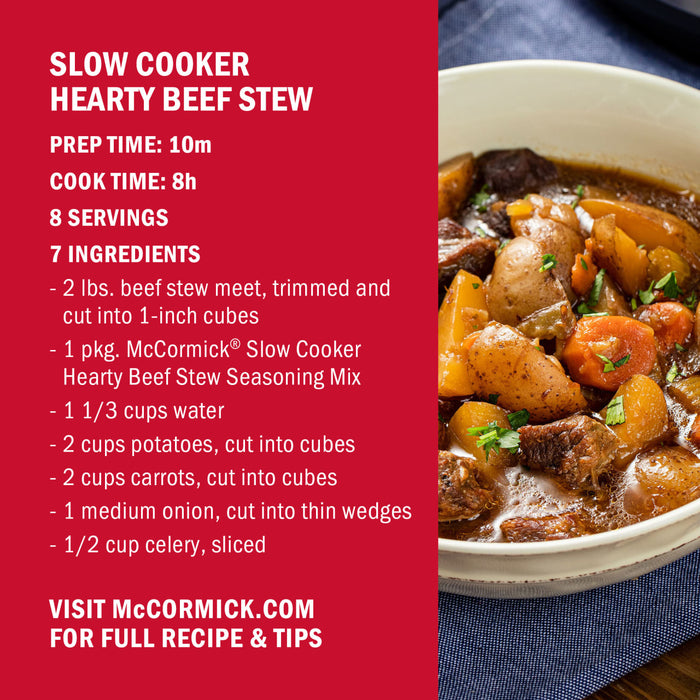
Credit: www.mccormick.com
Quick Reference: Time-saving Strategies
Here’s a summary of the top strategies to reduce cooking time in your slow cooker:
- Use the “high” setting.
- Cut ingredients into small pieces.
- Preheat the slow cooker.
- Brown meat and sauté vegetables.
- Use less liquid.
- Choose quick-cooking or canned ingredients.
- Don’t overfill the crock.
- Invest in a programmable slow cooker.
- Add dairy and herbs at the end.
- Combine slow cooker with stove or oven.
- Use hot liquids.
- Plan ahead with meal prep.
Frequently Asked Questions
How Much Can I Reduce Slow Cooker Time By Using The High Setting?
Usually, the high setting cooks food in half the time as the low setting. For example, 8 hours on low equals about 4 hours on high. But always check for doneness, as some recipes and older slow cookers may vary.
Is It Safe To Cook Meat On High In A Slow Cooker?
Yes, as long as the food reaches a safe internal temperature. Browning meat first and using hot liquids helps speed up the process. Avoid starting with frozen meat, as it may not heat evenly.
Can I Open The Lid To Check On Food?
It’s best not to open the lid unless necessary. Each time you do, you lose heat and extend cooking time by 15–20 minutes. If you need to check, do it quickly and only toward the end.
Are There Foods That Shouldn’t Be Rushed In A Slow Cooker?
Yes. Tough cuts of meat (like brisket or pork shoulder) and certain beans develop texture and flavor best with low, slow cooking. Delicate dishes with dairy or eggs can curdle on high heat.
Where Can I Find More Slow Cooker Safety Tips?
You can read more about slow cooker safety and cooking times at the official USDA Food Safety and Inspection Service website.
Cooking with a slow cooker doesn’t have to mean waiting all day. With these strategies, you can enjoy hearty, flavorful meals in less time—perfect for busy nights or last-minute plans. Try a few of these tips next time, and you’ll see that your slow cooker can be as fast as it is convenient.

Credit: www.recipetineats.com