Keeping your water bottle clean is more important than you might think. Every time you refill it, bacteria, mold, and even viruses can build up inside. If you skip proper cleaning, you could end up drinking harmful germs without realizing it.
A dirty water bottle doesn’t just taste bad—it can make you sick. Whether you use a reusable plastic, glass, or stainless steel bottle, knowing how to sanitize it the right way is key for your health and peace of mind.
Why Sanitizing Water Bottles Matters
Many people believe rinsing with water is enough. It’s not. Studies have found that reusable water bottles can contain more bacteria than an average dog bowl or kitchen sink. In one test, researchers found over 300,000 colony-forming units (CFUs) per square centimeter in some bottles. That’s a lot of germs! These bacteria can cause stomach upsets, sore throats, or even more serious health problems.
A properly sanitized bottle also keeps your water tasting fresh. Unpleasant smells or cloudy water are signs that your bottle needs more than just a quick rinse. Cleaning your bottle well removes buildup, prevents stains, and extends the life of your favorite bottle.
Materials And Cleaning Agents You’ll Need
To sanitize your water bottle, you don’t need expensive products. Most people already have the basics at home:
- Dish soap (mild, unscented is best)
- Clean sponge or bottle brush
- White vinegar or baking soda (for deep cleaning)
- Unscented bleach (for serious sanitizing)
- Warm water
- Towel or drying rack
- Bottle cleaning tablets (optional, for convenience)
A bottle brush is especially helpful. It reaches inside narrow bottles where hands and regular sponges can’t go.
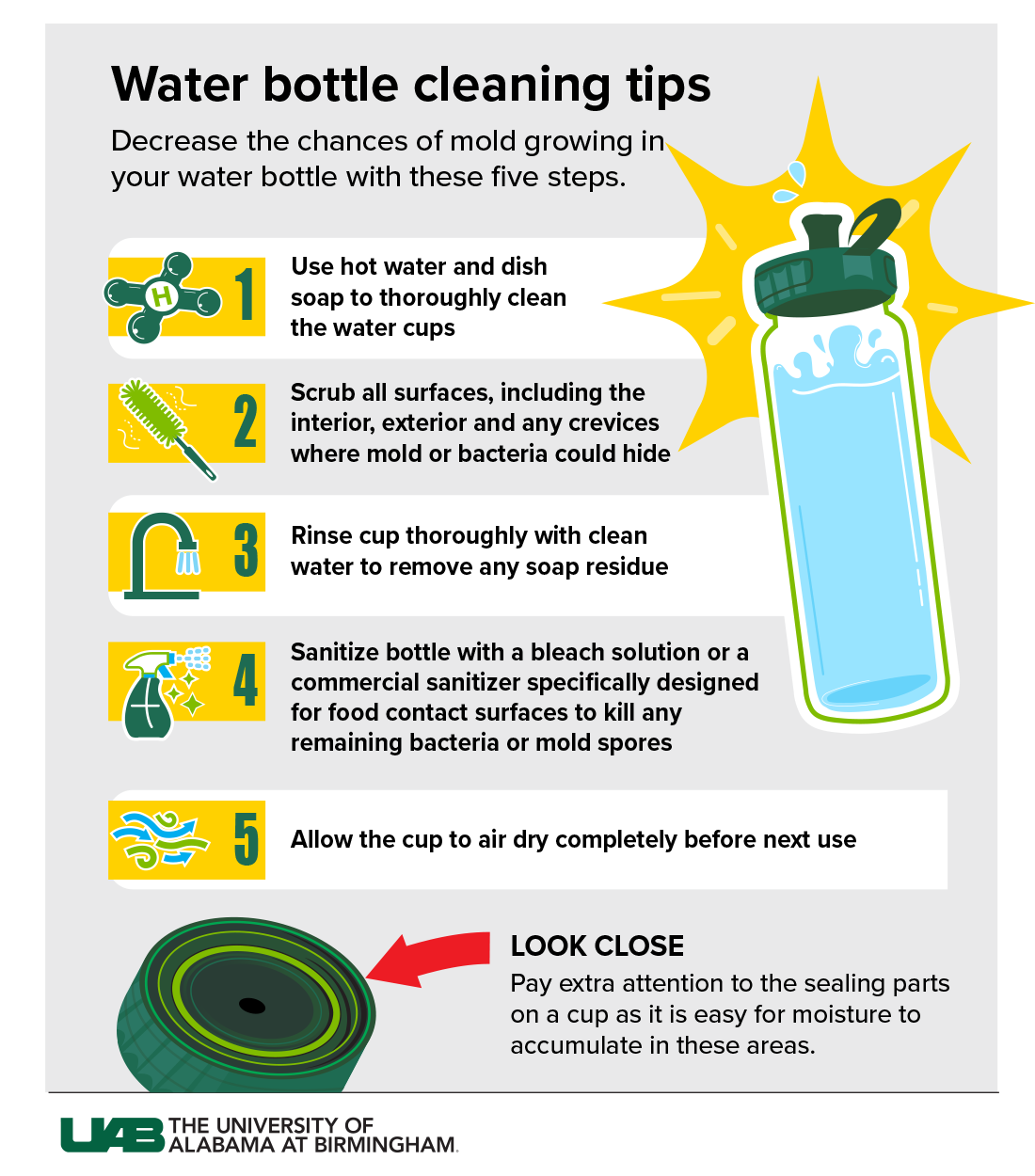
Credit: www.uab.edu
Step-by-step Guide To Sanitizing Water Bottles
Let’s break down the process for everyday cleaning and deeper sanitizing.
Daily Cleaning
- Empty the Bottle: Pour out any leftover water.
- Rinse with Warm Water: Shake to loosen residue.
- Add Dish Soap: Use a drop or two of mild, unscented soap.
- Scrub with a Bottle Brush: Reach all corners, especially the bottom and neck.
- Rinse Thoroughly: Make sure no soap is left behind.
- Air Dry: Place the bottle upside down on a clean towel or drying rack.
Deep Sanitizing (weekly Or After Sickness)
For a deeper clean, use white vinegar, baking soda, or unscented bleach. Choose one method at a time.
Vinegar Method
- Fill the bottle halfway with white vinegar.
- Top off with warm water.
- Let it soak for 10–15 minutes.
- Scrub with your brush, then rinse thoroughly.
- Air dry fully.
Baking Soda Method
- Add 2 tablespoons of baking soda to the bottle.
- Fill with warm water.
- Shake well and let sit for 15 minutes.
- Scrub, rinse, and dry as above.
Bleach Method (use With Caution)
This is best for serious sanitizing, such as after illness. Never mix bleach with vinegar or other cleaners.
- Add 1 teaspoon of unscented bleach to 1 quart of water.
- Pour into the bottle and let stand for 2 minutes.
- Rinse at least three times with clean water.
- Air dry completely.
Don’t Forget The Lid And Straw
Lids, caps, and straws often hide bacteria. Take them apart if possible. Clean with soapy water and a small brush. For deep cleaning, soak them with the bottle. Let all parts dry separately.
Comparing Cleaning Methods
Different methods work better for certain bottle types or levels of dirtiness. Here’s a quick comparison:
| Method | Best For | Time Needed | Pros | Cons |
|---|---|---|---|---|
| Dish Soap & Water | Everyday cleaning | 5 minutes | Easy, safe for all bottles | May not kill all germs |
| Vinegar | Odor and mild stains | 15 minutes | Natural, removes smells | Strong vinegar odor |
| Baking Soda | Stubborn residue | 15 minutes | Gentle scrub, safe | Not a sanitizer |
| Bleach | After illness, mold | 2 minutes + rinsing | Kills most germs | Needs careful rinsing |
| Cleaning Tablets | Quick sanitizing | 15–30 minutes | Convenient, effective | Costly, not always available |
How Often Should You Sanitize Your Water Bottle?
For most people, a daily wash with soap and water is enough. But you should do a deep sanitize at least once a week. If you’ve been sick, deep clean your bottle before using it again. If you see mold, stains, or a bad smell, sanitize right away.
Some extra tips:
- After using your bottle for juice, milk, or sports drinks, deep clean immediately. Sugar encourages bacteria and mold.
- If your bottle sits unused for more than a day, wash before refilling.
Special Considerations By Bottle Material
Not all bottles are the same. The cleaning method can depend on the material.
Plastic Bottles
Most plastic bottles are easy to clean but can stain or keep smells. Check if yours is BPA-free and dishwasher safe. Avoid using very hot water or bleach on thin plastic, as it can warp.
Stainless Steel Bottles
These are tough and less likely to stain. They can handle most cleaning methods, but don’t use bleach often—over time, it damages the finish. Many are dishwasher safe, but check the label.
Glass Bottles
Glass is easy to sanitize and doesn’t hold odors. It can go in the dishwasher, but handle with care. Clean the lid well, as it may have rubber or plastic parts.
Insulated Or Painted Bottles
Hand wash only. Dishwashers can damage the seal or paint. Avoid bleach or harsh scrubbing.
Here’s a quick look at which methods suit each material:
| Bottle Material | Dishwasher Safe | Bleach Safe | Vinegar/Baking Soda |
|---|---|---|---|
| Plastic | Check label | Occasional, not thin plastic | Yes |
| Stainless Steel | Usually | Sparingly | Yes |
| Glass | Yes | Yes | Yes |
| Insulated/Painted | No | No | Yes |

Credit: www.youtube.com
Common Mistakes To Avoid
It’s easy to get lazy with cleaning, but some mistakes can make things worse:
- Not drying completely: Damp bottles grow bacteria faster. Always air dry upside down with the lid off.
- Ignoring the cap and straw: These parts collect germs. Clean them every time.
- Using too much bleach: A little goes a long way. Rinse well to avoid bad taste and health risks.
- Mixing cleaning products: Never mix bleach and vinegar—it creates toxic fumes.
- Using scented soaps: These leave behind flavors that ruin your water taste.
- Washing too infrequently: Bacteria multiply fast, especially in warm, damp bottles.
Signs Your Bottle Needs Deep Sanitizing
You don’t have to guess when it’s time for a deep clean. Watch for these warning signs:
- Unpleasant smells even after washing
- Cloudy residue inside the bottle
- Slimy or sticky feeling
- Visible mold (often black or pink spots)
- Water tastes odd
If you notice any of these, sanitize immediately before using the bottle again.
Quick Reference: Sanitizing Steps
For busy days, here’s a simple checklist:
- Rinse with warm water.
- Add a drop of mild soap.
- Scrub with a bottle brush (including lid and straw).
- Rinse well.
- For deep cleaning: Fill with vinegar or baking soda solution, soak, scrub, rinse.
- Air dry completely, lid off.
When To Replace Your Water Bottle
Even with regular cleaning, bottles don’t last forever. Replace your water bottle if:
- Cracks or chips appear (bacteria can hide here)
- The inside is scratched or cloudy and can’t be cleaned
- Rubber seals are moldy or broken
- It smells bad even after sanitizing
A worn-out bottle is hard to sanitize fully. Investing in a new one is safer for your health.
Extra Tips For Staying Safe
- Keep a second bottle so you always have a clean one ready.
- Take apart all parts before washing—don’t forget the gasket or silicone ring.
- Use hot water (but not boiling) if your bottle allows.
- Store your bottle open so it dries completely and stays fresh.
- Consider special bottle cleaning tablets for travel or busy weeks.
Practical Example: Sanitizing After A Hike
Imagine you’ve spent the day hiking, and your bottle has been filled from a stream (using a water filter). Here’s what you should do:
- Rinse out any dirt and debris as soon as you get home.
- Fill with vinegar and warm water, soak for 15 minutes.
- Scrub all parts, especially the mouthpiece.
- Rinse well and air dry.
- Store with the lid off until the next use.
This extra care prevents bacteria from natural water sources sticking around and keeps your bottle safe for your next adventure.
Frequently Asked Questions
How Often Should I Sanitize My Water Bottle?
A daily wash with soap and water is enough for most people. Do a deeper sanitize with vinegar or bleach once a week, and always after being sick or if the bottle smells or looks dirty.
Can I Put My Water Bottle In The Dishwasher?
Many bottles are dishwasher safe, but always check the label. Lids and straws may need hand washing. Painted, insulated, or thin plastic bottles are usually not dishwasher safe.
Is It Safe To Use Bleach For Sanitizing?
Yes, but use only a small amount (1 teaspoon per quart of water), rinse thoroughly, and never mix with vinegar. Bleach is effective but should not be overused, especially on metal bottles.
What If My Bottle Still Smells Bad After Cleaning?
Try a deep clean with vinegar or baking soda. If the smell returns, the material may be damaged or bacteria are hiding in scratches. Consider replacing the bottle.
Are Cleaning Tablets Better Than Soap Or Vinegar?
Cleaning tablets are convenient and effective, especially for hard-to-reach spots. However, they are not always necessary—regular soap or vinegar works well for most bottles. For more info about cleaning agents, see this CDC guide.
Caring for your water bottle doesn’t have to be a chore. With these practical steps, you’ll drink fresher, safer water every day. Taking a few minutes for proper sanitizing can make a real difference for your health and peace of mind.