When you buy a new electric griddle, you want it to last for years and give you perfect pancakes, eggs, or grilled sandwiches every time. But many people don’t realize that seasoning a new electric griddle is a key first step. Without it, your food can stick, the surface may rust, and cleaning becomes much harder. If you just plug in your griddle and start cooking, you might run into these problems. With the right seasoning method, though, your griddle becomes non-stick, easier to clean, and much more reliable.
Seasoning is not difficult, but it does require some simple steps. In this guide, you’ll learn exactly how to season a new electric griddle, why it matters, and how to keep it in great condition. You’ll also find practical tips, things beginners often overlook, and answers to common questions.
Whether you’re new to electric griddles or want to improve your cooking results, this article will help you get the most out of your kitchen investment.
Why Seasoning Matters For Your Electric Griddle
A new electric griddle often comes with a shiny, clean surface. But this surface can be sticky and unprotected. Seasoning adds a thin layer of oil, which bonds to the metal or nonstick coating. This oil creates a protective barrier against rust, helps food release easily, and makes cleaning simpler.
Some griddles have a factory nonstick coating. Even then, seasoning adds extra protection and improves performance. For cast iron or steel griddles, seasoning is essential. If you skip this step, food may stick, and the cooking surface can become dull or rusty.
Two less obvious benefits: seasoning can make your griddle heat more evenly and reduce the need for extra cooking oil. Over time, a well-seasoned griddle gets better with every use.
What You’ll Need To Season A New Electric Griddle
Before you start, gather these items. Preparing in advance makes the process faster and easier.
- Mild dish soap (for the first wash)
- Soft sponge or cloth (no abrasives)
- Paper towels or a clean lint-free towel
- High-smoke-point oil (see table below)
- Tongs (for handling hot paper towels)
- Heat-resistant gloves (optional but useful)
The type of oil you choose is important. Some oils withstand high heat better than others.
Here’s a quick comparison of common oils for seasoning:
| Oil Type | Smoke Point (°F) | Recommended for Seasoning? |
|---|---|---|
| Canola Oil | 400 | Yes |
| Grapeseed Oil | 420 | Yes |
| Vegetable Oil | 400-450 | Yes |
| Olive Oil | 375-410 | Sometimes (not ideal for high heat) |
| Peanut Oil | 450 | Yes |
| Coconut Oil | 350 | No (smoke point too low) |
For most people, canola, grapeseed, or vegetable oil are easy to find and give the best results.
Step-by-step Guide: How To Season A New Electric Griddle
Let’s walk through each step. Take your time — good seasoning sets up your griddle for success.
1. Wash The Griddle
Start by washing the griddle surface with mild dish soap and a soft sponge. Even if it looks clean, new griddles may have oils or residues from the factory. Rinse well with warm water and dry completely with paper towels or a lint-free cloth.
Pro tip: Never soak an electric griddle in water. Wipe the surface only. Keep electrical parts dry.
2. Preheat The Griddle
Plug in your griddle and set it to medium-high heat (usually 350–400°F or 175–200°C). Let it heat for about 10 minutes. This opens the pores of the metal, helping the oil bond better.
If your griddle has a nonstick coating, use a slightly lower setting (around 325°F/160°C) to avoid damage.
3. Apply The First Layer Of Oil
Pour about 1–2 tablespoons of oil onto the heated surface. Use a folded paper towel or lint-free cloth to spread the oil evenly over the entire cooking area, including the corners and edges.
Use tongs to hold the towel if the griddle is hot. Wipe away any excess oil so only a thin, shiny layer remains. Too much oil can make the surface sticky.
4. Let The Oil Smoke And Bake In
Allow the griddle to heat until the oil begins to smoke lightly. This usually takes 10–15 minutes. The oil will darken and bond to the surface, forming the first layer of seasoning.
If your griddle is nonstick, you may not see much smoke — that’s okay. Just heat for 10 minutes.
Important: Watch your griddle during this step. Some oils can smoke quickly. Turn on your kitchen fan or open a window for ventilation.
5. Cool And Repeat
Turn off the griddle and let it cool for a few minutes. Then, repeat the oiling and heating steps 2–3 more times. Each layer builds up the nonstick surface and protection.
Some cast iron or steel griddles may need more layers for a perfect result. Nonstick griddles usually need only 1–2 layers.
6. Wipe Off Any Residue
Once the final layer cools, wipe the surface with a clean, dry towel to remove any sticky spots or extra oil.
7. Your Griddle Is Ready
After seasoning, your griddle should look slightly darker and feel smooth. Now you’re ready to cook! The first few times, use a bit of extra oil or butter to help the seasoning set fully.
Seasoning Different Types Of Electric Griddles
Not all electric griddles are the same. The seasoning process is similar, but there are a few key differences.
| Griddle Type | Seasoning Needed? | Special Notes |
|---|---|---|
| Cast Iron | Yes (essential) | Needs multiple layers; never use soap after first seasoning |
| Steel/Carbon Steel | Yes | Similar to cast iron but may season faster |
| Nonstick Coated | Recommended | Use low/medium heat; less oil; do not overheat |
| Ceramic Coated | Optional | Seasoning can add protection but not always required |
Two insights many beginners miss:
- With nonstick griddles, seasoning helps fill in tiny scratches, making the coating last longer.
- For cast iron, never use soap for regular cleaning after seasoning. Soap will strip away the protective layer.

Credit: www.wincous.com
Common Mistakes To Avoid When Seasoning
Seasoning is easy, but small mistakes can cause problems. Here are some issues and how to fix them:
- Using too much oil: A thick layer becomes sticky and uneven. Always wipe away extra oil before heating.
- Not cleaning the griddle first: Leftover factory oil or dust can ruin the seasoning. Always wash and dry.
- Overheating nonstick surfaces: Too much heat can damage nonstick coatings. Keep the temperature under 350°F.
- Using the wrong oil: Butter or low-smoke-point oils (like coconut) can burn and leave residue.
- Skipping repeats: One layer is not enough for cast iron or steel. Multiple thin layers work best.
If your griddle feels sticky after seasoning, heat it again for 10–15 minutes. This usually solves the problem.
How To Maintain Seasoning After The First Use
Seasoning isn’t a one-time process. Every time you cook, especially with a little oil or fat, you’re adding to the protective layer. With proper care, your griddle gets better and more nonstick over time.
Follow these maintenance tips:
- Wipe clean after each use with a paper towel. Avoid soaking or scrubbing.
- For stuck-on food, use a plastic scraper or a damp cloth while the griddle is still warm.
- If you must wash, use only water or a small drop of mild soap, then re-season as needed.
- Store the griddle in a dry place. Moisture can cause rust, especially on cast iron or steel.
- If you notice food sticking, repeat the seasoning process.

Credit: brentwoodus.com
How Often Should You Reseason An Electric Griddle?
There’s no fixed schedule. Reseason your griddle if:
- Food starts sticking more often
- The surface looks dull, rusty, or uneven
- After deep cleaning or using soap
For frequent cooks, a quick reseasoning every 1–2 months keeps the griddle in top shape. For occasional use, 2–3 times a year is usually enough.
Practical Tips For Better Seasoning
Here are a few extra tips from experienced cooks:
- Always use high-smoke-point oils for seasoning. Save flavored oils or butter for cooking.
- If possible, season your griddle outdoors or with good ventilation, as oil smoke can fill your kitchen.
- For large griddles, work in sections to apply oil evenly.
- Let the griddle cool slowly after seasoning. Sudden temperature changes can damage the surface.
- Don’t worry if the griddle darkens over time. This is a sign of a well-seasoned surface.
Comparing Electric Griddle Seasoning To Other Cookware
You might wonder if seasoning a griddle is the same as seasoning a cast iron skillet or pan. The method is similar, but griddles have a larger flat surface, which means even coverage is more important.
Here’s a quick comparison:
| Cookware Type | Seasoning Needed? | Main Difference |
|---|---|---|
| Electric Griddle | Yes | Larger area; must avoid heating controls and wires |
| Cast Iron Skillet | Yes | Can be heated in oven; usually smaller surface |
| Stainless Steel Pan | Optional | Seasoning not always needed; less nonstick result |
| Nonstick Pan | Not required | Factory coating; seasoning adds little benefit |
Frequently Asked Questions
How Long Does It Take To Season A New Electric Griddle?
It takes about 45–60 minutes to fully season a new electric griddle. Each layer of oil needs 10–15 minutes to bake in, plus cooling time between layers.
Can I Use Butter To Season My Electric Griddle?
No, butter is not recommended for seasoning. It has a low smoke point and can burn, leaving sticky residue. Use high-smoke-point oils like canola or grapeseed.
Do I Need To Season A Nonstick Electric Griddle?
It’s not required, but it’s helpful. Seasoning a nonstick griddle adds extra protection and can improve nonstick performance over time. Just use lower heat and less oil.
How Do I Clean My Griddle After Seasoning?
Wipe the surface with a paper towel after each use. For tough spots, use a plastic scraper or a damp cloth. Avoid harsh soaps or abrasive pads.
Where Can I Learn More About Cookware Seasoning?
You can find more details about cookware seasoning at Wikipedia.
When you season your electric griddle the right way, you’ll enjoy easier cooking, better-tasting food, and a tool that lasts for years. With a few simple steps and regular care, your griddle will become one of your favorite kitchen helpers.
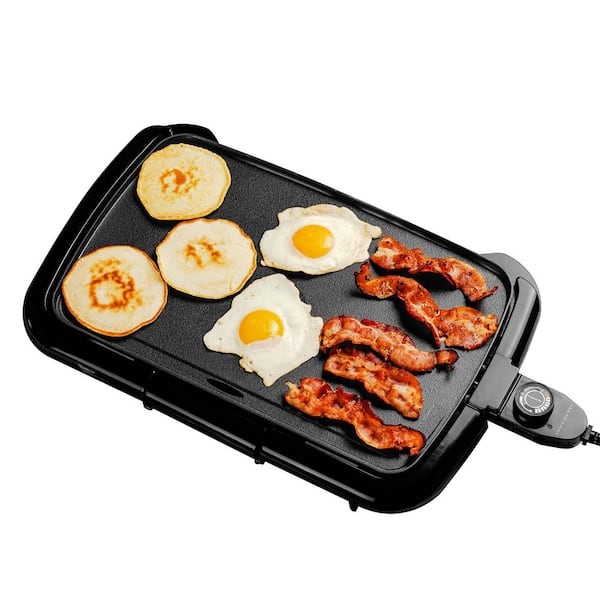
Credit: www.homedepot.com