Steaming vegetables in a rice cooker might sound a little unusual, but it’s a super easy way to cook them, especially if you’re just starting out in the kitchen. Sometimes figuring out the best way to cook veggies can feel a bit tricky, but don’t worry. We’re going to show you exactly how to steam vegetables in rice cooker using simple steps.
You’ll be making perfectly steamed veggies in no time!
Key Takeaways
- You can easily steam vegetables using your regular rice cooker.
- Steaming in a rice cooker is a healthy and quick cooking method.
- Different rice cooker models might have slightly different features.
- Preparing your vegetables and water is the first step to success.
- Timing is important for getting perfectly cooked, tender vegetables.
- You can add flavor to your steamed vegetables easily.
Steaming Vegetables In Your Rice Cooker A Simple Guide
Many people think rice cookers are only for rice. But they are really handy kitchen gadgets that can do much more. One of the best things they can do is steam food.
This is a wonderful method because it keeps all the good stuff in your vegetables. Steaming is also super healthy. You don’t need much oil, or any at all.
It’s a great way to get your daily dose of vitamins and fiber.
When you want to learn how to steam vegetables in rice cooker, it’s good to know why this method is so popular. It’s gentle on the vegetables, keeping them bright and crisp. It also means less mess.
You often use just one pot, your rice cooker. This makes cleanup a breeze. For beginners, it’s often easier than other methods like pan-frying or boiling, where it’s easier to overcook or undercook your veggies.
This guide will walk you through everything you need to know. We will cover what you need, how to prepare your veggies, and the simple steps to get them perfectly steamed. You’ll discover that mastering how to steam vegetables in rice cooker is simpler than you might think.
Let’s get started and make healthy eating a little bit easier.
Why Steam Vegetables In A Rice Cooker
Steaming is one of the best ways to cook vegetables. It helps keep their natural flavors and nutrients. When you boil vegetables, some vitamins can escape into the water.
Steaming uses moist heat to cook them through. This means more of the good stuff stays right where it belongs, in your food.
Using a rice cooker for this is smart. It has a simple on/off switch and usually a timer. This makes it easy to control the cooking process.
You don’t have to watch it constantly like you might a pot on the stove. It’s a hands-off approach. This is perfect when you are busy or want to do other things while your food cooks.
Plus, it’s a very clean way to cook. Most rice cookers have a non-stick inner pot, which makes cleaning simple. You avoid the splattering of oil from frying or the potential for water spills from boiling.
It’s a tidy solution for healthy meals.
What You Will Need
To start steaming vegetables in your rice cooker, you don’t need much. The most important item is, of course, your rice cooker. Most modern rice cookers have a steam function or at least a basic pot that can be used for steaming.
You will also need a way to hold your vegetables above the water. Many rice cookers come with a steaming basket. This basket usually fits inside the main pot.
If your rice cooker didn’t come with one, you can often buy a universal steaming basket that fits most models. Alternatively, you can use a heat-safe colander or a metal sieve that fits inside your rice cooker pot.
You will need water. Tap water is perfectly fine for steaming. The amount of water depends on your rice cooker and how long you plan to steam.
We’ll cover that in detail later.
And finally, you need your vegetables! Choose fresh vegetables for the best results. Wash them well before you begin.
Preparing Your Vegetables
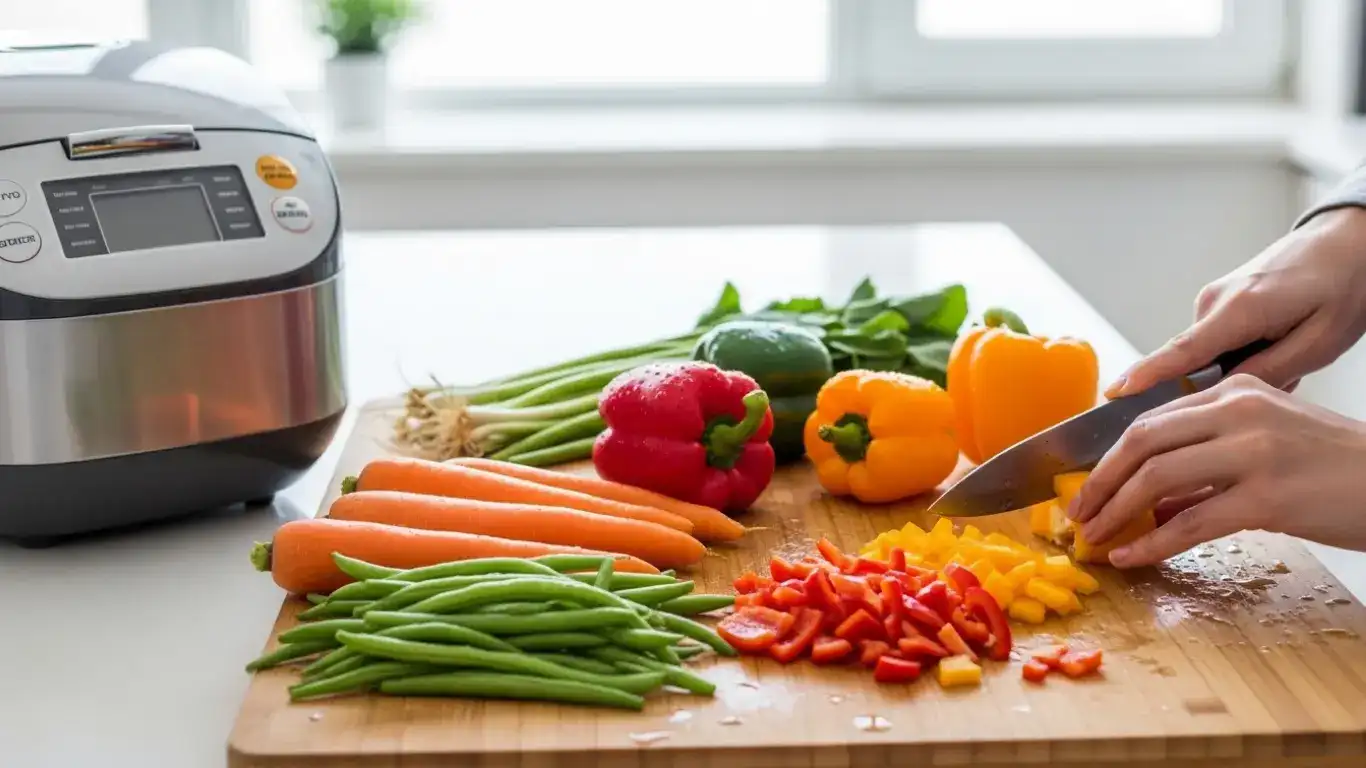
Getting your vegetables ready is a key step in learning how to steam vegetables in rice cooker. Start by selecting the vegetables you like. Good choices include broccoli, carrots, green beans, asparagus, cauliflower, peas, corn, and bell peppers.
You can also steam leafy greens like spinach or kale, but they cook much faster.
Wash all your vegetables thoroughly under cool running water. This helps to remove any dirt or residues. After washing, you need to cut them into pieces.
The size of the pieces will affect how long they take to cook. Aim for similar-sized pieces so they all cook evenly.
For harder vegetables like carrots or broccoli stems, cut them into smaller, thinner pieces. Softer vegetables like broccoli florets or asparagus spears can be left a bit larger. If you are steaming something like whole green beans, you can leave them as they are.
Remember to remove any tough stems or cores. For example, with broccoli, cut off the thickest part of the stem and then chop the rest into bite-sized florets. This preparation ensures that your vegetables are ready for the steam and will cook to perfection.
The Simple Steps To Steam Vegetables
Now that you have your vegetables prepared and know what you need, let’s get to the steps on how to steam vegetables in rice cooker.
Step 1 Add Water to the Rice Cooker
Pour water into the inner pot of your rice cooker. The amount of water needed depends on your rice cooker model and how long you plan to steam. A good starting point is usually 1 to 2 cups of water.
You want enough water to create steam but not so much that it touches the bottom of your steaming basket.
Check your rice cooker’s manual for specific recommendations on water levels for steaming. If you don’t have a manual, err on the side of less water. You can always add more if needed, but it’s harder to remove excess water once it’s hot.
Step 2 Place the Steaming Basket
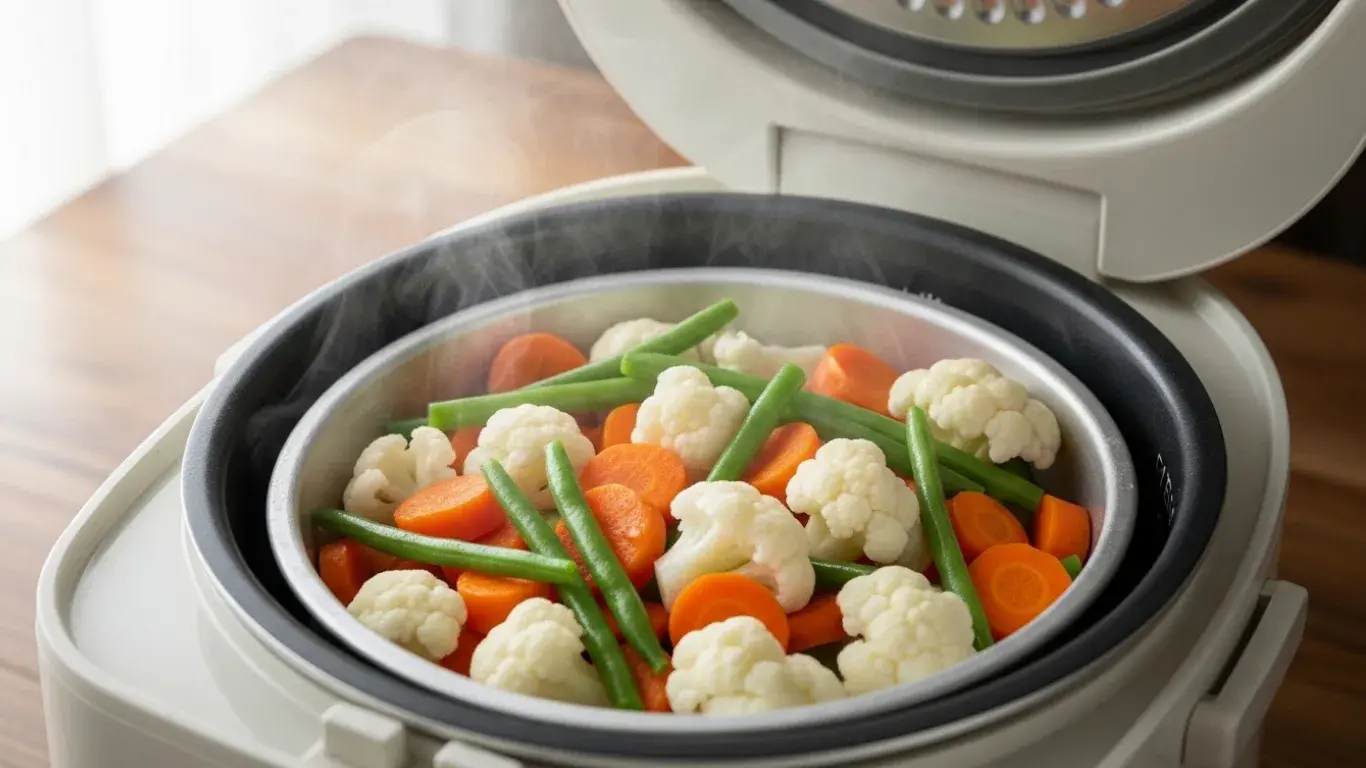
Put your steaming basket, colander, or sieve into the rice cooker pot. Make sure it sits securely above the water level. The steam will rise from the water and cook the vegetables in the basket.
Step 3 Add Your Vegetables
Arrange your prepared vegetables in the steaming basket. Try not to overcrowd the basket. If you have a lot of vegetables, it’s better to steam them in batches.
Overcrowding can prevent steam from circulating properly, leading to uneven cooking.
Spread the vegetables out in a single layer as much as possible. This allows the steam to reach all sides of the vegetables, ensuring they cook evenly and efficiently.
Step 4 Start the Steaming Process
Close the lid of your rice cooker. If your rice cooker has a specific “Steam” function, select that. If not, you can often use the “Cook” or “White Rice” setting.
The rice cooker will heat the water to boiling, creating steam.
The cooking time will vary depending on the type and size of your vegetables. Most vegetables will take between 5 to 15 minutes. Harder vegetables like carrots and broccoli florets will take longer, while softer vegetables like peas or leafy greens will cook much faster.
It’s a good idea to check your vegetables for doneness after about 5-7 minutes. You can do this by carefully opening the lid and poking a vegetable with a fork. It should be tender but still have a slight bite.
Step 5 Remove and Serve
Once your vegetables are cooked to your liking, carefully open the rice cooker lid. Use oven mitts or tongs to remove the steaming basket. Be cautious of the hot steam that will escape when you open the lid.
You can then season your steamed vegetables with a little salt, pepper, herbs, or a drizzle of olive oil. Serve them immediately as a healthy side dish.
Tips for Perfect Steamed Vegetables
Here are some extra tips to help you master how to steam vegetables in rice cooker every time:
- Cut vegetables into uniform sizes This is crucial for even cooking. Small pieces cook faster than large ones.
- Don’t overcook Vegetables should be tender-crisp, not mushy. They continue to cook a little after being removed from the steam.
- Add flavor You can add herbs like parsley or dill to the water for extra flavor. Some people also add a squeeze of lemon juice or a touch of garlic powder to the vegetables before serving.
- Layering vegetables If steaming different types of vegetables, place the ones that take longer to cook (like carrots or dense broccoli stems) at the bottom of the basket, and the faster-cooking ones (like peas or spinach) on top.
- Check water levels For longer steaming times, you might need to add more water. Be careful when opening the lid to do this.
- Experiment with your rice cooker Each rice cooker is a bit different. You may need to adjust steaming times based on your specific model and how your vegetables turn out.
Common Rice Cooker Steam Settings
Many modern rice cookers come with a dedicated “Steam” setting. This setting is usually designed to heat the water quickly and maintain a consistent steaming temperature for a set period or until you manually stop it. You might also find a timer function associated with this setting.
If your rice cooker doesn’t have a specific “Steam” button, don’t worry. You can still use it effectively. The “Cook” or “White Rice” function will heat the water to boiling, which is what you need for steaming.
You will just need to monitor the cooking time yourself rather than relying on an automatic shut-off for steaming.
Some advanced rice cookers might even have pre-set steaming options for specific foods. However, for general vegetable steaming, the basic “Steam” or “Cook” function is all you need. Always refer to your rice cooker’s manual for the best way to utilize its features for steaming.
Steaming Different Types Of Vegetables
The time it takes to steam vegetables varies greatly. Knowing these differences will help you get perfectly cooked veggies. Here’s a general guide:
- Leafy Greens (Spinach, Kale): 1-3 minutes. They wilt very quickly.
- Asparagus Spears: 3-5 minutes. They should be bright green and tender.
- Broccoli Florets: 5-8 minutes. Tender but still firm and bright green.
- Green Beans: 5-10 minutes. Tender and bright green.
- Peas (in pods or shelled): 3-7 minutes. Sweet and tender.
- Carrots (sliced): 7-12 minutes. Should be tender when pierced with a fork.
- Cauliflower Florets: 7-10 minutes. Tender but not mushy.
- Bell Pepper Strips: 5-8 minutes. Slightly tender but still crisp.
Remember, these are just estimates. The size of your pieces and your rice cooker’s power will affect the actual cooking time. It’s always best to check a few minutes before the estimated time.
FAQ Section
Question: Can I steam frozen vegetables in my rice cooker
Answer: Yes, you can absolutely steam frozen vegetables in your rice cooker. You typically do not need to thaw them first. Place the frozen vegetables directly into the steaming basket.
You might need to add a minute or two to the cooking time compared to fresh vegetables.
Question: How much water should I use
Answer: A good starting point is 1 to 2 cups of water. You need enough to create steam, but the water should not touch the bottom of your steaming basket. Check your rice cooker manual for specific recommendations.
Question: What if my rice cooker doesn’t have a steam function
Answer: No problem. You can use the ‘Cook’ or ‘White Rice’ setting. These settings will bring the water to a boil, which is all you need to generate steam.
You will just need to manually time your vegetables.
Question: How do I know when the vegetables are done
Answer: The best way is to carefully open the lid and test them. They should be tender but still have a slight firmness or ‘bite’ to them. They should not be mushy.
A fork should pierce them easily.
Question: Can I steam multiple types of vegetables at once
Answer: Yes, you can. For best results, steam vegetables that have similar cooking times together. If you are steaming different vegetables, place the ones that take longer to cook at the bottom of the basket and the quicker-cooking ones on top.
Final Thoughts
You’ve learned how simple it is to steam vegetables in your rice cooker. This healthy and easy method is perfect for busy days. Just add water, your veggies in the basket, and let the cooker do its magic.
You’ll get delicious, nutritious vegetables every time. Give it a try tonight!

I’m Loretta Evans, and I lead the Rice Cooker and Kitchen Tools section. I test every product in real home kitchens to see how it truly performs in everyday use.
My goal is simple: to give you clear, honest advice so you can choose reliable tools that make cooking easier.