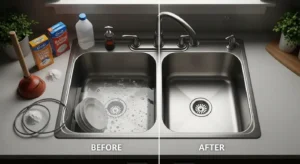
It can be really frustrating when your kitchen sink is backed up with water. This problem is common for many people, especially if you’re not used to fixing plumbing issues. Don’t worry, though!
You can totally fix this. We’ll walk you through an easy, step-by-step guide on how to unclog kitchen sink with standing water. Get ready to make your sink drain like new again.
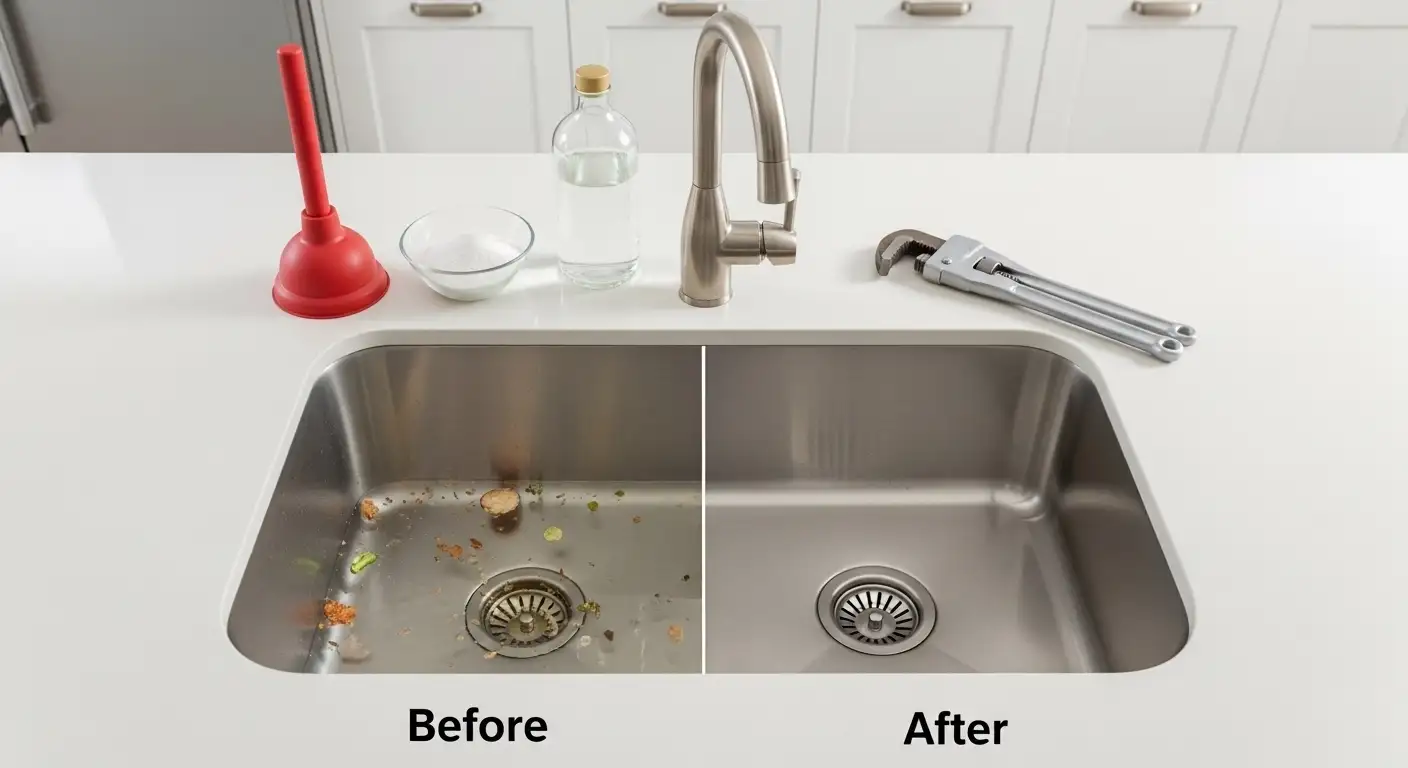
Simple Ways To Fix A Clogged Kitchen Sink With Water
A clogged kitchen sink is a common household problem. It happens when food scraps, grease, and other gunk build up in the pipes. When water can’t drain, it just sits there, making the situation worse.
This can be a messy and unpleasant surprise. But most clogs are not too hard to fix with a few simple tools and steps. We’ll show you easy ways to get your sink working again.
Why Does My Kitchen Sink Have Standing Water?
Standing water in your kitchen sink means the drain is blocked. This blockage stops water from flowing down into the drain pipes. Common culprits include:
- Food particles that are too large for the drain
- Grease, oil, and fat that solidify in the pipes
- Soap scum buildup
- Foreign objects that accidentally fall down the drain
- Issues further down the main sewer line
When the water can’t go anywhere, it stays put in the sink basin. This is usually a sign that something is stuck somewhere along the path from your sink drain to the main sewer line.
Gather Your Tools
Before you start, grab a few handy items. Having these ready will make the job much smoother. You’ll need:
- Rubber gloves to protect your hands
- A bucket or old towels to catch water and mess
- A plunger (a cup plunger works well for sinks)
- Baking soda and vinegar (for a natural cleaning solution)
- A coat hanger or similar tool for reaching small clogs
- A wrench or pliers if you need to take apart the P-trap
Having these items on hand means you can tackle the clog without a trip to the store.
Step-By-Step Guide: How To Unclog Kitchen Sink With Standing Water
Fixing a clogged kitchen sink with standing water might seem tricky, but it’s usually quite manageable. We’ll go through each step clearly so you can get your sink draining freely again. Don’t worry if you’re new to this; these methods are beginner-friendly.
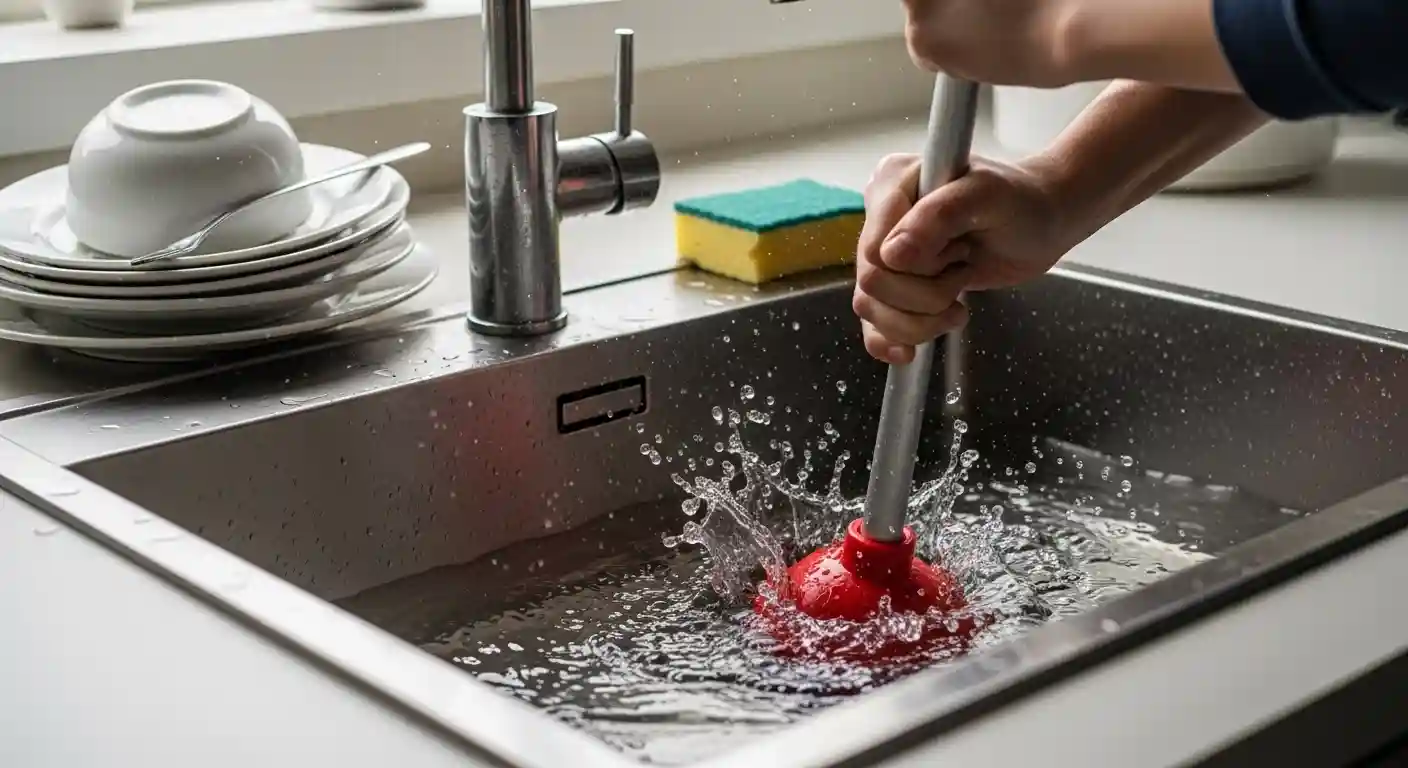
Method 1: Using A Plunger
A plunger is often the first and most effective tool for a clogged sink. It creates suction to dislodge the blockage. Here’s how to use it when water is standing:
- Prepare the Sink: If there’s a lot of standing water, try to bail out as much as you can into a bucket. Leave a few inches of water in the sink; this helps the plunger create a good seal. If you have a double sink, block the drain opening of the other sink with a wet cloth or stopper. This is important so the suction doesn’t escape.
- Position the Plunger: Place the plunger cup directly over the drain opening. Make sure it covers the drain completely to create a tight seal.
- Plunge Vigorously: Push down and pull up with the plunger handle firmly and rapidly. Do this for about 20-30 seconds. You want to create strong suction and pressure to break up the clog.
- Check the Drain: Remove the plunger and see if the water starts to drain. If it does, run hot water down the drain for a few minutes to flush out any remaining debris.
- Repeat if Necessary: If the water still isn’t draining, repeat the plunging process a few more times. Sometimes it takes a few tries to loosen a stubborn clog.
Using a plunger is a physical method that can often clear blockages without any chemicals.
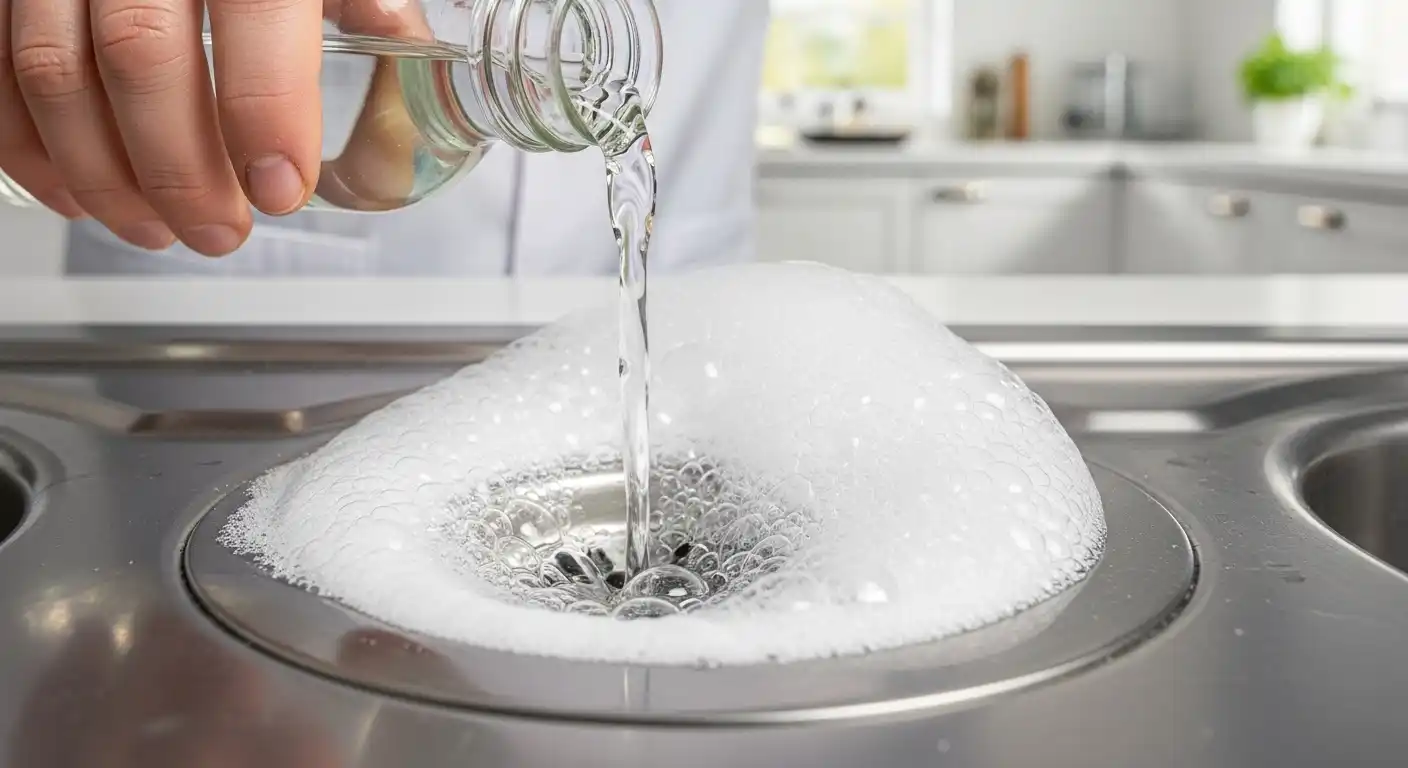
Method 2: The Baking Soda and Vinegar Trick
This is a natural and safe way to tackle many kitchen sink clogs. It works by creating a fizzy reaction that can help break down grease and grime.
- Remove Standing Water: Bail out as much standing water as you can from the sink.
- Add Baking Soda: Pour about half a cup to one full cup of baking soda directly into the drain opening.
- Add Vinegar: Follow with an equal amount of white vinegar. You’ll hear it fizz and bubble. This is the reaction that helps clean the pipes.
- Cover the Drain: Immediately cover the drain opening with a stopper or a wet cloth. This traps the fizzing action inside the pipe, allowing it to work on the clog.
- Let It Sit: Allow the mixture to sit and work for at least 30 minutes. For tougher clogs, you can let it sit for an hour or even overnight.
- Flush with Hot Water: After the waiting period, pour a kettle of very hot (but not boiling) water down the drain. This helps to wash away the loosened debris. Run hot tap water for a few minutes afterward to ensure the drain is clear.
This method is great for breaking down grease and soap scum, which are common causes of sink clogs. It’s also eco-friendly and doesn’t harm your pipes.
Method 3: Using Boiling Water
Hot water can be surprisingly effective at melting away grease and soap buildup, which are frequent culprits behind sink clogs.
- Remove Standing Water: First, remove as much standing water as possible from the sink.
- Boil Water: Boil a kettle or pot of water. Be careful when handling hot water.
- Pour Slowly: Slowly and carefully pour the boiling water directly down the drain. Do this in stages, letting the water work for a few seconds between pours.
- Repeat if Needed: If the water starts to drain, continue running hot tap water for a few minutes to fully clear the pipes. You might need to repeat this process a few times for stubborn clogs.
Important Note: This method is generally safe for most pipes. However, if you have very old or brittle pipes, or if you’ve recently used chemical drain cleaners, it’s best to avoid boiling water. Extremely hot water could potentially damage weak pipes or react with leftover chemicals.
Method 4: The Wire Coat Hanger Trick
Sometimes, the clog is close to the drain opening and can be physically removed. A straightened wire coat hanger can be a handy tool for this.
- Straighten the Hanger: Take a wire coat hanger and straighten it out as much as possible.
- Create a Hook: Bend a small hook at one end of the hanger. This hook will help you grab onto the clog.
- Insert into Drain: Carefully insert the hooked end of the hanger into the drain opening.
- Probe and Pull: Gently probe the drainpipe, trying to hook onto any debris you can feel. Pull out anything you can grab. Be careful not to push the clog further down.
- Run Hot Water: Once you’ve removed as much debris as possible, run hot water down the drain to flush out any remaining blockage.
This method works best for clogs that are located within reach of the drain opening.
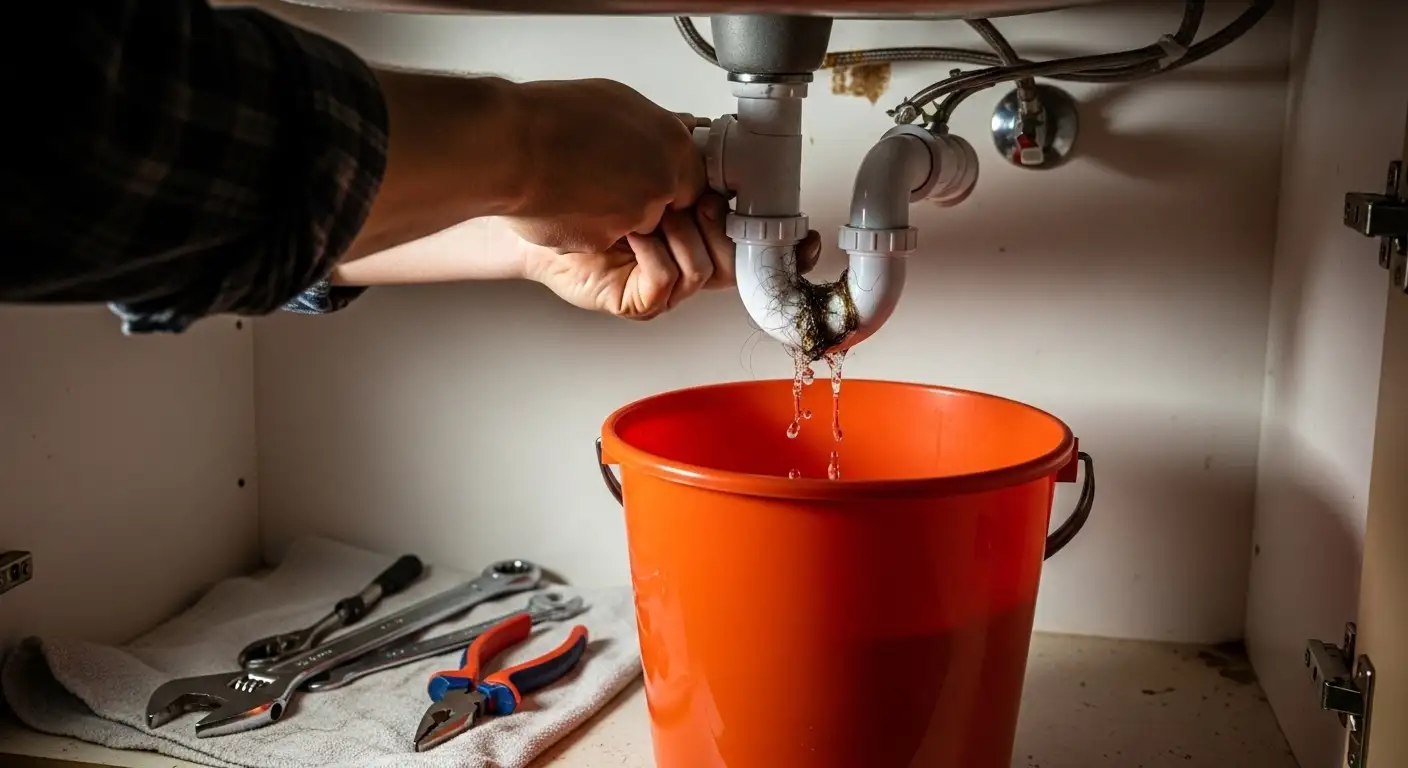
Method 5: Cleaning the P-Trap
The P-trap is the U-shaped pipe under your sink. It’s designed to hold water and prevent sewer gases from coming up into your home. It’s also a common place for clogs to form.
- Prepare for Mess: Place a bucket directly underneath the P-trap. This is crucial because a lot of water and gunk will come out when you disconnect it.
- Loosen the Slip Nuts: The P-trap is usually held in place by two large plastic or metal nuts called slip nuts. You might be able to loosen these by hand, but if they’re tight, use a pipe wrench or pliers.
- Remove the P-Trap: Once the nuts are loose, carefully remove the P-trap. Let the water and debris fall into the bucket.
- Clean the Trap: Take the P-trap to another sink or outside and clean it thoroughly. Use a brush, hot water, and possibly dish soap to remove all the gunk. Check the pipes on either side of where the P-trap was for any lodged debris.
- Reassemble and Test: Reattach the P-trap, making sure to tighten the slip nuts securely. Run water into the sink to check for leaks and to ensure the drain is now clear.
Cleaning the P-trap is a more involved step, but it often resolves stubborn clogs by getting directly to the source.
When To Call A Professional
If you’ve tried these methods and your sink is still clogged, or if you suspect a larger plumbing issue, it might be time to call a plumber. Some problems, like clogs deep in your main sewer line or issues with your plumbing system, require professional tools and expertise. Don’t hesitate to seek help if you’re unsure or uncomfortable with any of these steps.
Frequently Asked Questions
Question: How long should I plunge the sink?
Answer: You should plunge vigorously for about 20-30 seconds at a time, repeating the process if necessary.
Question: Can I mix baking soda and vinegar with other cleaners?
Answer: It’s best not to mix baking soda and vinegar with chemical drain cleaners, as this can create dangerous fumes or damage your pipes.
Question: How often should I clean my kitchen sink drain?
Answer: Regularly pouring hot water down the drain or using the baking soda and vinegar method once a month can help prevent clogs.
Question: Is it safe to pour grease down the kitchen sink?
Answer: No, it is not safe to pour grease down the kitchen sink. Grease solidifies in pipes and is a major cause of clogs.
Question: What if the clog is in the garbage disposal?
Answer: If you have a garbage disposal, ensure it is turned off. Try using the plunger or the reset button on the disposal first. If these don’t work, you may need to consult your disposal’s manual or call a plumber.
Final Thoughts
Dealing with a clogged kitchen sink, especially with standing water, is a common annoyance. You’ve learned several effective, step-by-step ways to tackle this problem yourself. From using a simple plunger to the natural power of baking soda and vinegar, you have options.
Don’t forget the P-trap as a likely spot for blockages. With these techniques, you can restore your sink’s function and avoid calling a professional for many common clogs. Give these methods a try, and you’ll likely have your sink draining smoothly again soon.

I’m Loretta Evans, and I lead the Rice Cooker and Kitchen Tools section. I test every product in real home kitchens to see how it truly performs in everyday use.
My goal is simple: to give you clear, honest advice so you can choose reliable tools that make cooking easier.