Using a mandoline slicer can transform the way you prepare potatoes at home. Whether you want perfectly thin chips, even slices for gratins, or matchsticks for fries, a mandoline makes the job fast and easy. But many cooks feel nervous about using this tool because it looks sharp and tricky. With the right knowledge, you can use a mandoline confidently and safely, unlocking crispier textures and more professional-looking dishes.
What Is A Mandoline Slicer?
A mandoline slicer is a kitchen device designed to cut vegetables and fruits into uniform slices or strips. It features a flat platform with an adjustable blade. By sliding food over the blade, you get consistent thickness—something hard to achieve by hand.
Most mandolines let you choose slice thickness, from ultra-thin to chunky. Some have extra attachments for crinkle cuts or julienne strips. For potatoes, this tool is especially helpful for dishes like potato chips, scalloped potatoes, and French fries.
Choosing The Right Mandoline Slicer For Potatoes
Not all mandolines are the same. Here’s how to pick one that works well for potatoes:
- Blade Material: Stainless steel blades stay sharp longer and resist rust.
- Adjustable Settings: Look for thickness control—usually a knob or lever.
- Safety Guard: A hand guard or food holder keeps your fingers safe.
- Stability: Non-slip feet or grips help keep the slicer steady.
- Ease of Cleaning: Removable blades and dishwasher-safe parts make cleanup easier.
Here’s a quick comparison of popular mandoline types:
| Mandoline Type | Blade Adjustability | Safety Features | Price Range |
|---|---|---|---|
| Basic Plastic | Limited | Hand guard | $15–$30 |
| Metal Professional | Wide range | Hand guard, non-slip feet | $40–$100 |
| Compact Handheld | Fixed | Small guard | $10–$20 |
Tip: Avoid models without a guard, especially if you are new to using mandolines.
Preparing Potatoes For Slicing
Before you slice, proper prep makes a big difference:
- Wash potatoes to remove dirt. Scrub if needed.
- Peel (optional): Some recipes need peeled potatoes, others keep the skin for texture.
- Dry them: Water can make slicing slippery and uneven.
- Trim ends: Cut off any knobbly tips for smooth sliding.
For large potatoes, cut them in half for safer handling. If making fries, square off edges to help them fit the mandoline platform.
Setting Up The Mandoline Slicer
Setup is simple but important:
- Place the mandoline on a flat, stable surface.
- Adjust the blade to your desired thickness. For potato chips, 1–2 mm works best. For gratins, 3–5 mm is common.
- Attach the safety guard or food holder.
- Keep a bowl or tray nearby to catch slices.
Here’s a quick look at common slice thicknesses:
| Potato Dish | Recommended Thickness | Texture Result |
|---|---|---|
| Potato Chips | 1–2 mm | Extra crispy |
| Scalloped Potatoes | 3–5 mm | Soft, layered |
| French Fries | 6–10 mm (julienne) | Crunchy outside |
How To Slice Potatoes Using A Mandoline
Follow these steps for safe, effective slicing:
- Fit the potato into the guard or holder. If your mandoline doesn’t have one, hold the potato firmly—but keep fingers away from the blade.
- Set your thickness. Check the knob or lever.
- Slide the potato smoothly over the blade. Move from top to bottom, applying gentle pressure.
- Collect slices in a bowl. Don’t let them pile up on the slicer, as this can cause slipping.
Repeat until the potato is finished. For very thin slices, be careful—they can break easily.
Non-obvious insight: If you want extra crispiness, soak sliced potatoes in cold water for 30 minutes, then dry thoroughly before cooking. This removes excess starch.
You might find this helpful: Best Mandoline Slicer for Eggplant
Common Mistakes When Using A Mandoline Slicer
Many beginners run into trouble with these mistakes:
- Ignoring the guard: This is the biggest cause of injuries. Always use the guard, even for small potatoes.
- Rushing the process: Slicing too fast can make uneven cuts and lead to accidents.
- Wrong thickness: Too thick for chips or too thin for gratins ruins the texture.
- Poor cleaning: Potato residue can dull the blade and make the slicer slippery.
- Leaving scraps: Trying to slice tiny ends leads to finger cuts—stop when the potato gets too small.
Experience-based guide: Don’t try to slice the last bit of potato. Instead, use it in soups or salads.
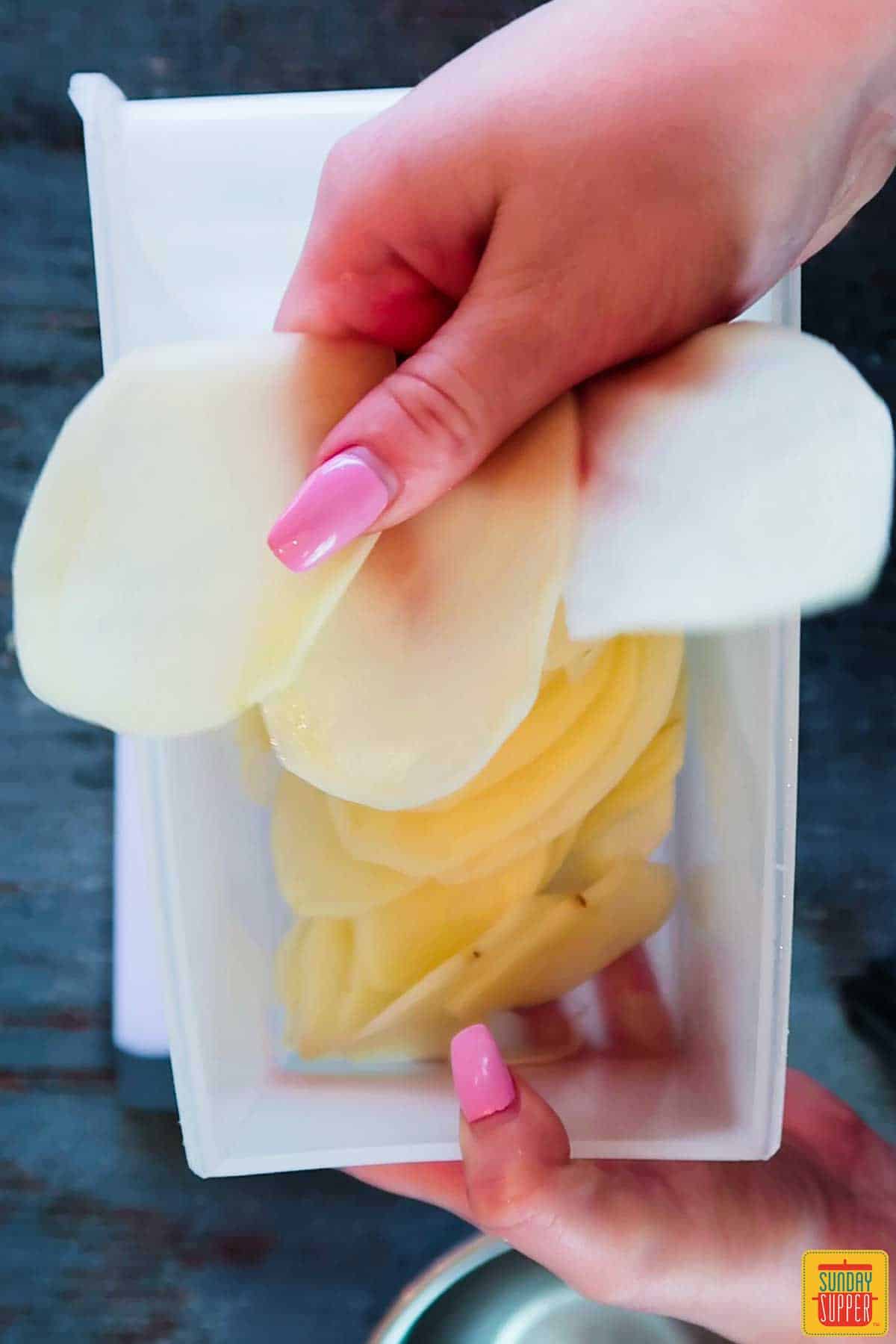
Credit: sundaysuppermovement.com
Cleaning And Maintaining Your Mandoline Slicer
After slicing, clean-up is essential. Here’s how:
- Remove blades carefully: Use gloves if possible.
- Wash with warm, soapy water: Avoid harsh scrubbing, which can dull blades.
- Dry completely: Moisture can cause rust, especially on metal parts.
- Store with guard attached: This protects both the blade and your fingers.
Some mandolines are dishwasher-safe, but check your manual first. If your slicer has removable blades, store them separately for safety.
Using Potato Slices In Different Recipes
Mandoline-sliced potatoes work well in many dishes. Here are some examples:
- Potato chips: Thin slices fried or baked until crisp.
- Scalloped potatoes: Layered slices baked with cream and cheese.
- Au gratin: Similar to scalloped, but with a crunchy cheese topping.
- French fries: Julienne-cut potatoes fried or baked.
- Hash browns: Shredded or thinly sliced potatoes cooked in a skillet.
Data point: Uniform slices lead to even cooking. For example, potato chips cook in 2–3 minutes per batch when sliced at 1 mm, versus up to 6 minutes for uneven hand-cut chips.

Credit: www.amazon.com
Safety Tips For Using A Mandoline Slicer
Mandolines are sharp and require respect. Follow these rules:
- Always use the guard: This cannot be stressed enough.
- Wear cut-resistant gloves: Especially if slicing large batches.
- Keep children away: Mandolines are not for young helpers.
- Don’t force the potato: If it’s too hard, try a softer variety or microwave briefly.
- Focus while slicing: Don’t multitask or get distracted.
Non-obvious insight: If your mandoline blade gets dull, replace it. Sharpening is not practical for most models.
Comparing Mandoline Slicer To Other Tools
Why Choose A Mandoline Over A Knife Or Food Processor?
| Tool | Speed | Slice Uniformity | Safety | Cleanup |
|---|---|---|---|---|
| Mandoline Slicer | Very fast | High | Medium (with guard) | Easy |
| Chef’s Knife | Slow | Low (depends on skill) | High | Easy |
| Food Processor | Fast | Medium | High | Medium |
Mandolines offer the best balance between speed and uniformity. They are much faster than hand slicing and more consistent than most food processors.
Practical Tips For Better Results
- Chill potatoes before slicing: Cold potatoes hold their shape better.
- Work in small batches: Don’t overload the slicer or bowl.
- Oil the blade lightly: If slices stick, a tiny bit of oil can help.
- Keep slices separated: For chips or fries, spread out slices so they don’t clump.
If you’re making chips, consider using Yukon Gold or Russet potatoes—they crisp well and taste great.
Troubleshooting Common Problems
Some issues are easy to fix:
- Slices are uneven: Adjust blade or clean out stuck pieces.
- Potato keeps slipping: Dry it more thoroughly, check slicer stability.
- Slices break: Try a thicker setting or a firmer potato.
- Blade feels dull: Replace the blade or buy a new slicer.
Friendly mentor advice: Don’t be discouraged by a few broken slices—practice makes perfect.
:max_bytes(150000):strip_icc()/__opt__aboutcom__coeus__resources__content_migration__serious_eats__seriouseats.com__2018__04__20180309-french-fries-vicky-wasik-slicer-and-knife-1500x1125-46c6625ece474c438d1bb2a1089646b5.jpg)
Credit: www.seriouseats.com
Frequently Asked Questions
How Do I Choose The Right Thickness For Potato Chips?
For chips, aim for 1–2 mm. This gives crisp results without burning. Many mandolines have preset thicknesses—check your model for chip settings.
Is It Necessary To Peel Potatoes Before Slicing?
No, peeling is optional. Potato skin adds texture and flavor but can affect crispiness. For chips, many people leave the skin on.
What’s The Best Potato Variety For Slicing?
Russet potatoes and Yukon Gold are top choices. They are firm and hold their shape well. Avoid waxy varieties for chips or fries.
Are Mandoline Slicers Safe For Beginners?
Yes, if you use the hand guard and follow safety tips. For extra safety, wear cut-resistant gloves and work slowly.
How Do I Clean A Mandoline Slicer After Use?
Remove the blade, wash with warm, soapy water, and dry completely. Check your manual for dishwasher compatibility. Store with guard attached.
With these insights, you’re ready to slice potatoes like a pro. A mandoline slicer is a powerful tool for anyone who loves cooking, but safety and patience matter. Practice with small batches, and soon you’ll enjoy crisp chips, perfect fries, and beautiful gratins at home. If you want more in-depth comparisons or reviews, you can check Serious Eats for expert advice.